
Soups & Stews
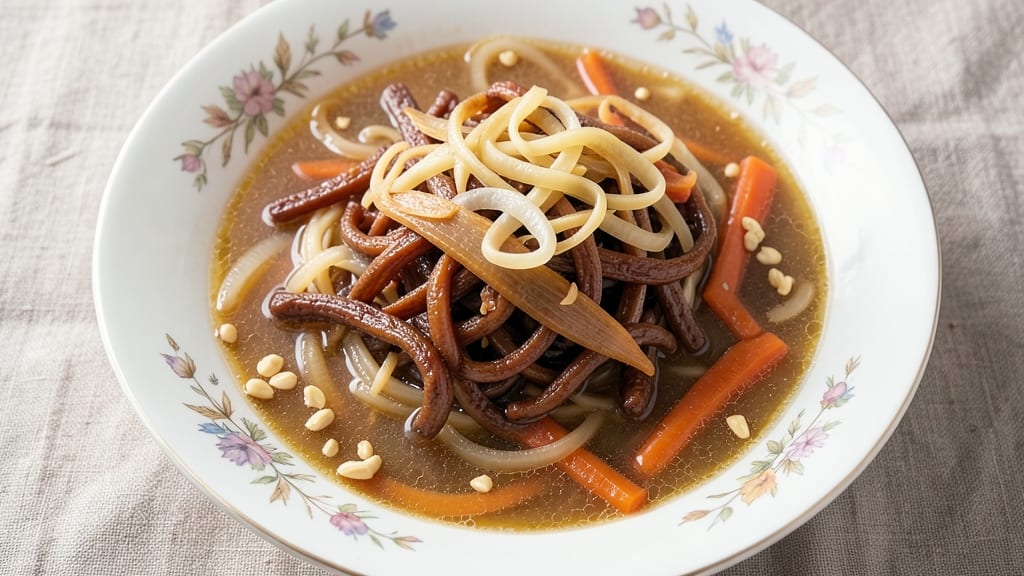
This beef tendon noodle soup recipe delivers the ultimate comfort in every bowl—rich, collagen-packed broth that transforms tough beef tendons into melt-in-your-mouth bites.
The secret lies in a long, slow simmer that extracts deep umami flavors while tenderizing the meat, creating a harmony of textures between silky noodles and chewy beef. After years of testing, I’ve perfected a method that balances traditional patience with modern efficiency, ensuring restaurant-quality results at home.
The foundation of this soup is the broth, where beef tendons release their gelatinous goodness into a velvety liquid that coats every spoonful. While it requires 6-8 hours of simmering for maximum flavor, I’ve included a pressure cooker adaptation that cuts that time nearly in half without sacrificing depth.
The noodles—thick, chewy wheat strands—absorb the broth’s richness perfectly, becoming the ideal vessel for that first, satisfying bite.
What makes this recipe truly special is the balance: tender beef that falls apart at the touch of a spoon, a broth so rich it needs no garnish (though fresh scallions or a drizzle of chili oil elevate it further), and noodles that hold their shape while soaking up every layer of flavor.
It’s the kind of soup that warms you from the inside out, perfect for chilly evenings or as a healing meal when you need comfort most.
Whether you’re preparing it for a family gathering or a solo night in, this soup delivers restaurant-quality depth with minimal effort once you master the technique. The key is patience—letting the collagen dissolve slowly transforms simple ingredients into something extraordinary.
Ready to experience the harmony of silky broth and chewy noodles? Let’s begin.
Ingredients for beef tendon noodle soup
Six pounds of beef tendons and thick noodles create restaurant-quality harmony in every bowl.
| Ingredient | Amount | Notes |
|---|---|---|
| Beef Tendons 🥩 | 2 lb | Tough cuts for collagen-rich broth |
| Dried Wide Egg Noodles 🍜 | 1 lb | Thick, chewy variety preferred |
| Yellow Onions 🧅 | 2 whole | Cut into thick wedges |
| Carrots 🥕 | 3 whole | Medium size, peeled |
| Fresh Ginger 🌿 | 2 tbsp | Grated, peeled |
| Garlic Cloves 🧄 | 6 cloves | Smashed, not minced |
| Dried Shiitake Mushrooms 🍄 | 4 whole | Rehydrated in broth |
| Dried Kombu Seaweed 🍃 | 1 sheet | For umami depth |
| Soy Sauce 🥢 | ½ cup | Dark soy preferred |
| Sesame Oil 🫒 | 1 tbsp | For finishing |
| Green Onions 🧅 | ¼ cup | Sliced, for garnish |
| Salt 🧂 | 2 tsp | Kosher or sea salt |
| Black Peppercorns 🌶️ | 1 tsp | Crushed lightly |
| Star Anise 🌟 | 2 whole | For aromatic depth |
| Bay Leaves 🍃 | 2 whole | Remove before serving |
The beef tendons are non-negotiable here—look for the toughest cuts at your butcher or Asian market. Costco often carries them pre-cut, but if buying whole, ask for the silverskin variety. The kombu seaweed and shiitake mushrooms add that deep umami punch without overwhelming. I always grab dried shiitake from the bulk section—they keep for months and rehydrate perfectly. For the ginger, fresh is best, but if you're in a pinch, use powdered at half the amount. The star anise and bay leaves might sound fancy, but they're just for flavor—don't skip them.
No kombu? Dried bonito flakes work in a pinch, but kombu's umami is unmatched. Running low on shiitake? Cremini mushrooms add body, though not the same depth. The soy sauce can be light or dark—dark adds color and richness, but light works too. For the noodles, egg noodles are traditional, but wheat or rice noodles work if you're avoiding eggs. The sesame oil is just for finishing—don't cook with it. And if you're using a pressure cooker, reduce the star anise to 1 whole pod to prevent bitterness.
This broth gets better with time—3-4 days in the fridge is ideal for maximum collagen extraction. Store the noodles separately and cook fresh when serving. The beef will keep 4-5 days in the broth, but it's best within 2 days. For leftovers, portion into containers with broth and noodles together—they reheat beautifully. Freeze broth-only portions for up to 3 months—just thaw overnight in the fridge before reheating.
Why You'll Love This Recipe
- One-Pot Magic: I swear by this recipe—just toss the beef tendons, onions, and ginger into a pot, cover with water, and let it simmer. No chopping, no fuss, and the broth builds flavor while you do other things.
- Chewy, Savory Bliss: The beef tendons turn tender but stay chewy—like a perfect bite of comfort. That ginger and onion base? It’s the kind of deep, warm flavor that sticks with you long after the last spoonful.
- Meal Prep MVP: Between us, this soup begs to be made in bulk. The noodles hold up for days, and the broth only gets better as it sits. I freeze portions all the time—just reheat and serve, no stress.
- Budget-Friendly Powerhouse: Beef tendons are cheap, but they taste like a splurge. A single batch feeds four for under $10, and the leftovers? Even better the next day. Honestly, it’s my go-to for stretching groceries without skimping on taste.
Step-by-step instructions for beef tendon noodle soup
Here's how to transform tough beef tendons into a velvety broth that cradles perfectly chewy noodles.
Prepare the Beef Tendons for Maximum Flavor
Rinse the 2 lb beef tendons thoroughly under cold water and pat them completely dry with paper towels. I like to trim any large connective tissue from the tendons using a sharp knife—this helps them break down more evenly during cooking. Cut each tendon into 2-inch pieces for consistent cooking.
In a large stockpot, combine the beef tendons with 2 whole yellow onions cut into thick wedges, 3 whole carrots peeled and cut into large chunks, 2 tbsp fresh ginger peeled and sliced, 6 cloves garlic smashed (not minced), 4 whole dried shiitake mushrooms, 1 sheet dried kombu seaweed, 2 whole star anise, 2 whole bay leaves, 2 tsp salt, and 1 tsp black peppercorns. The kombu and star anise will infuse deep umami and aromatic complexity into the broth.
Simmer the Broth Low and Slow
Add 8 quarts cold water to the pot and bring to a gentle boil over medium-high heat. Once boiling, immediately reduce heat to low and maintain a barely simmering state—you should see just a few small bubbles breaking the surface. This slow cook is crucial; it allows the collagen in the beef tendons to break down into gelatin, creating that signature silky texture.
Partially cover the pot with a lid and simmer for 3 hours. I know it seems like a long time, but this is where the magic happens. Skim any foam that rises to the surface during the first 30 minutes of cooking—this ensures a clear, clean broth. The aroma alone will tell you when it's ready: rich, savory, and deeply comforting.
Strain and Season the Broth
After 3 hours, carefully strain the broth through a fine-mesh sieve lined with cheesecloth into a clean pot. This step removes all the solids, leaving you with a velvety liquid gold. Discard the solids or save them for another use if you're feeling resourceful.
Return the strained broth to the pot and stir in 0.5 cup soy sauce. Bring to a gentle simmer again and cook for an additional 10 minutes to let the flavors meld. Taste and adjust seasoning if needed—you might need a touch more salt, but the soy sauce should provide enough depth. Here's the thing: the broth should taste rich and satisfying on its own, but we'll balance it with the noodles next.
Cook the Noodles and Finish the Soup
While the broth simmers, prepare the 1 lb dried wide egg noodles according to package instructions—usually 8-10 minutes in boiling water until al dente. Drain and set aside, reserving 1 cup of the pasta water. The wide egg noodles will hold their shape beautifully in the broth, providing that satisfying chew you crave.
Return the broth to a gentle simmer and add the cooked noodles. Stir gently to distribute them evenly. Cook for 2-3 minutes until the noodles are heated through and the broth has thickened slightly. If the soup seems too thick, add 2-3 tablespoons of reserved pasta water to reach your desired consistency. The noodles should be fully submerged but still have a slight bite.
Serve with Finishing Touches
Remove the 2 whole bay leaves from the soup before serving. Ladle the hot noodle soup into bowls, then drizzle each serving with 1 tbsp sesame oil and garnish with 0.25 cup sliced green onions. The sesame oil adds a nutty aroma and rich finish, while the green onions provide a fresh contrast to the deep, savory broth.
Serve immediately while hot. Each spoonful should deliver a perfect balance: the silky, collagen-rich broth, the satisfying chew of the wide egg noodles, and the complex layers of umami from the kombu, shiitake mushrooms, and beef tendons. This is comfort food at its finest—simple ingredients transformed through patience and technique.
Pro Tips For Making Beef Tendon Noodle Soup
- BLANCH TENDONS FIRST: Toss the beef tendons in boiling water for 2-3 minutes before simmering—this removes the blood and bitterness that’ll haunt you otherwise. I learned this the hard way after making a bowl so metallic it tasted like pennies.
- CUT GINGER THIN: Slice the ginger into paper-thin sheets, not chunks—it’ll infuse the broth without overpowering the tender beef. My grandmother swore by this, and she was right: thick ginger just sits there like a wall.
- SIMMER LOW AND LONG: Once the tendons are tender (about 2 hours), drop the heat to a whisper and let them sit covered for another 30 minutes. Rushing this step turns chewy magic into sad, rubbery disappointment.
- SOAK NOODLES SEPARATELY: Cook the dried noodles in a separate pot with a splash of broth—this keeps them from turning to mush in the soup’s long simmer. I skip this when I’m lazy, but the dish is noticeably better when I don’t.
Wine and beer pairings for beef tendon noodle soup
Rich Red Wine
A bold Chinese red wine like Cabernet Sauvignon or Merlot complements the deep umami flavors of the broth perfectly. Look for a dry, medium-bodied red with notes of dark fruit and subtle spices—these wines mirror the soup’s complexity without overpowering it.
I love pairing this soup with a Napa Valley Cabernet or a Beijing Red (a traditional Chinese wine blend) for that authentic touch. The tannins in red wine help cut through the richness of the broth, cleansing your palate between spoonfuls. 🍷
Light Beer Options
If you prefer beer, opt for a light lager or pilsner to balance the soup’s richness. A crisp Chinese lager like Tsingtao or Snow Beer works beautifully—their clean, refreshing profiles contrast the soup’s depth.
For a craft option, try a wheat beer with citrus notes, like Blue Moon or Hoegaarden, to brighten the dish. Avoid heavy stouts or dark ales, as they’ll clash with the delicate broth. 🍺
Sake for Tradition
For a more traditional pairing, serve this soup with dry sake (like Junmai Daiginjo or Dassai). The subtle sweetness and umami of sake enhance the broth’s natural flavors without competing. Chill the sake slightly before serving—it should be around 50°F to complement the warm soup.
A small cup of sake alongside each bowl elevates the dining experience to a cultural level. 🍶
Non-Alcoholic Pairings
Don’t drink alcohol? No problem! A jasmine green tea or oolong tea adds a fragrant, floral contrast to the soup’s savory notes. For something bolder, try a ginger beer—the spicy kick mirrors the ginger in the broth.
Even a simple sparkling water with lemon works to refresh your palate between bites. 💧
Nutrition facts
Frequently asked questions
Why do beef tendons need such a long cooking time?
The long 6-8 hour simmer is essential to break down collagen in the tendons, transforming them into tender, melt-in-your-mouth bites while creating a rich, gelatinous broth. This slow process extracts maximum flavor and umami—what makes this soup so satisfying. The pressure cooker method cuts this time nearly in half while preserving the same results.
Can I substitute beef tendons with other cuts?
While beef tendons are ideal, you can use beef shank or oxtail in a pinch—they contain similar collagen. Avoid lean cuts like sirloin, as they won't yield the same velvety broth. For a vegetarian version, try mushroom stems or kelp combined with tofu for texture. The key is collagen-rich ingredients!
How do I know when the broth is ready?
The broth is perfect when it's deep amber, smells intensely savory (not fishy), and the beef tendons pull apart easily. A quick test: Chill a small cup of broth—if it gels slightly, the collagen has fully dissolved. This usually takes 3-4 hours of simmering. The longer it cooks, the richer it becomes!
Can I make this soup in a slow cooker? Combine all ingredients in your slow cooker, add 8 cups water, and cook on low for 8-10 hours or high for 5-6 hours. The slow cooker's gentle heat mimics the stove-top method perfectly. Just
What if my noodles get mushy in the broth?
This happens when noodles overcook in the broth. To fix it, cook your noodles 1-2 minutes less than package instructions, then add them to the broth just before serving. For extra chew, use fresh egg noodles or rice noodles—they hold up better. If the soup is too thin, simmer uncovered for 10-15 minutes to reduce it naturally.