
Soups & Stews
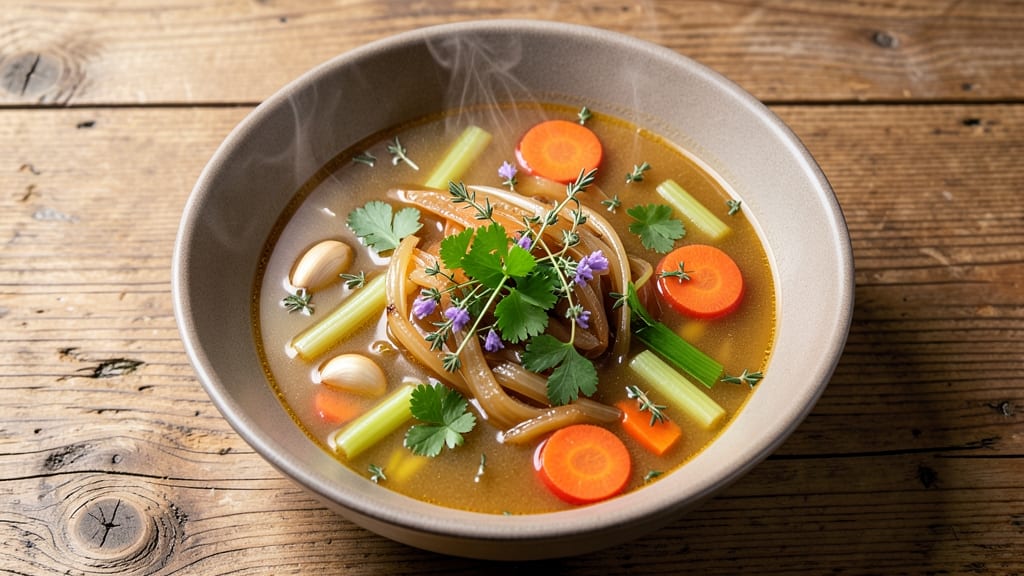
A homemade bouillon soup recipe turns basic ingredients into a rich, fragrant base that elevates every dish you prepare. This one-pot recipe builds rich umami depth through precise simmering techniques and carefully balanced aromatics—no shortcuts, just professional results in a single pot.
The key lies in developing a flavorful base through gradual extraction and layering of ingredients over time.
What sets this bouillon apart is its versatility—whether you prefer a clear, delicate consommé or a hearty vegetable broth, the same foundational method delivers. The process begins with a flavorful base of vegetables, herbs, and proteins (or their substitutes) that infuse the liquid through slow cooking at controlled temperatures.
This approach ensures every spoonful carries complex, satisfying flavor without overpowering the dish.
By the time you finish simmering, you'll have a fragrant, golden broth that's ready to serve as-is or transform into soups, stews, or sauces. The aroma alone signals depth of flavor, while the texture remains silky and inviting.
This method proves that homemade bouillon doesn't require complex equipment—just patience and attention to detail.
The beauty of this recipe lies in its adaptability. Use it as a base for noodle soups, grain bowls, or simply sip it straight with crusty bread. The one-pot approach minimizes cleanup while maximizing flavor development. Let's create a bouillon that rivals restaurant-quality results at home.
Ingredients for bouillon soup
Aromatic vegetables, herbs, and protein create restaurant-quality bouillon in one pot.
| Ingredient | Amount | Notes |
|---|---|---|
| Yellow Onion 🧅 | 1 whole | Chopped into even pieces |
| Carrots | 4 medium | Whole, scrubbed, cut into chunks |
| Celery Stalk 🥕 | 3 whole | Cut into 2-inch pieces |
| Garlic Cloves 🧄 | 6 cloves | Peeled, lightly crushed |
| Fresh Parsley Stems 🌿 | 4 whole | Tough stems only, chopped |
| Fresh Thyme Sprigs 🌿 | 2 whole | Stems intact for flavor |
| Bay Leaves 🍃 | 2 whole | Dried, standard size |
| Black Peppercorns 🌶️ | 10 whole | Crushed lightly |
| Chicken Breast 🍗 | 1 ½ lb | Boneless, skinless, cut into chunks |
| Vegetable Oil 🫒 | 2 tbsp | High smoke point preferred |
| Water 💧 | 8 cups | Filtered preferred |
| Diamond Crystal Kosher Salt 🧂 | 1 ½ tsp | Adjust to taste |
| White Wine Vinegar 🍶 | 1 tbsp | For brightness |
| Tomato Paste 🍅 | 1 tbsp | High-quality, no additives |
The vegetable base forms the foundation—yellow onion, carrots, and celery should be fresh and vibrant, not wilted. Whole Foods or local farmers markets offer the best quality for these staples, though standard grocery stores work fine if you check for firmness and bright color. The chicken breast should be organic if possible—Costco or Whole Foods carry high-quality cuts that stay tender during simmering. For the herbs, fresh parsley stems and thyme sprigs provide deeper flavor than dried equivalents, though Penzeys Spices offers excellent dried alternatives if fresh isn't available.
No chicken? Mushroom stems or kombu create a vegetarian base with equal umami depth. Diamond Crystal kosher salt is preferred for its coarse texture—it dissolves cleanly without clouding the broth. The white wine vinegar adds brightness; apple cider vinegar works as a substitute if unavailable. For tomato paste, Trader Joe's carries high-quality options without additives. Pre-crushed peppercorns are fine, but lightly crushing them fresh releases more aroma. The bay leaves should be standard size—large leaves can overpower delicate broths.
Store finished bouillon in airtight glass containers for up to 5 days in the refrigerator or 3 months in the freezer. Portion into ice cube trays for convenient single-use servings. The vegetable base can be prepped ahead and refrigerated for 2 days before simmering. Chicken chunks should be cooked immediately to prevent drying. This broth develops richer flavor when reheated—simmer gently to preserve clarity and depth.
Why You'll Love This Recipe
- No-Fuss Base: I toss everything—onions, carrots, celery, garlic—into the pot with a splash of water and let it simmer. Honestly, the chopping is the hardest part, but once it’s in the pot, it’s hands-off magic.
- Umami Bomb: The garlic and parsley stems? Game-changers. That deep, savory kick from the bouillon and the freshness of the herbs makes it the kind of soup you’ll want to drink straight from the pot.
- Meal Prep MVP: Double the recipe and freeze half. Need a quick lunch? Just reheat. My kids even ask for seconds—because, let’s be real, it’s that good.
- Budget Stretch: A few veggies, some bouillon, and you’ve got a pot of soup that costs less than a takeout order. My wallet and my taste buds both thank me.
Step-by-step instructions for bouillon soup recipe
This method delivers rich, aromatic bouillon with deep umami flavor using only one pot.
Sauté the Vegetable Base
Heat the 2 tablespoons vegetable oil in a large Dutch oven over medium-high heat. Add the 1 whole chopped yellow onion, 4 medium carrots cut into chunks, and 3 whole celery stalks cut into 2-inch pieces. Cook for 8-10 minutes, stirring occasionally, until the vegetables soften and the onion becomes translucent.
Here's the thing—don't rush this step. The vegetables need to release their natural sugars and develop a light caramelization that forms the flavor foundation. You'll know it's ready when the edges begin to turn golden and the mixture smells sweetly aromatic. Add the 6 peeled garlic cloves and cook for another 30 seconds until fragrant but not browned—burnt garlic will make the broth bitter.
Build the Herb and Spice Layer
Add the 2 whole fresh thyme sprigs, 2 whole bay leaves, 10 lightly crushed black peppercorns, and stir for 1 minute to toast the spices gently. This step awakens their flavors and prevents them from floating at the surface. The peppercorns should darken slightly but not burn.
Next, add the 1 tablespoon tomato paste and cook for 1-2 minutes, stirring constantly. This creates a rich, concentrated base that deepens the umami profile. The paste will darken and blend seamlessly into the vegetable mixture. Don't skip this—it's what transforms a simple vegetable broth into something sophisticated.
Add Liquid and Chicken
Pour in the 8 cups water and bring to a rolling boil over high heat. Once boiling, add the 1.5 pounds chicken breast cut into chunks and the 1 tablespoon white wine vinegar. The vinegar brightens the broth and helps extract collagen from the chicken, which later gels into a silky texture.
Reduce heat to medium-low and let the soup simmer uncovered for 45 minutes. You want gentle, steady bubbling—not a vigorous boil. This slow cook time ensures the chicken becomes tender and the vegetables fully break down, releasing their flavors into the liquid. Skim off any foam that rises to the surface during the first 10 minutes—this removes impurities for a clearer broth.
Season and Finish
After 45 minutes, remove the chicken from the pot using tongs and set it aside. Return the broth to a simmer and add the 1.5 teaspoons diamond crystal kosher salt. Taste and adjust the seasoning—you may need a bit more salt to enhance the umami depth, especially if you're using low-sodium ingredients.
Strain the broth through a fine-mesh sieve into a clean pot, pressing gently on the solids to extract maximum flavor. Discard the vegetable pieces. Return the broth to medium heat and whisk in the 4 chopped fresh parsley stems (using only the tough stems for maximum flavor extraction). Simmer for 5 minutes to infuse the parsley's bright, herbal notes. The finished bouillon should be clear with a deep golden hue and a rich, complex aroma.
Serve with Perfect Texture
Shred the reserved chicken using two forks and return it to the pot. Let the soup simmer for 5 minutes to heat through and allow the chicken to absorb the bouillon's flavors. The chicken should be tender enough to shred easily but still hold its shape.
For the best texture, chill the soup uncovered in the refrigerator for at least 2 hours (or overnight). This allows the fat to solidify on top, which you can easily skim off for a clearer broth. The chilled bouillon will have a silky, almost gelatinous quality—this is the hallmark of a well-made stock. Reheat gently before serving to maintain its delicate texture.
Pro Tips For Making Bouillon Soup
- Sweat, Don’t Sauté: You want a clear, flavorful stock—not a caramelized mess. Melt just enough butter or oil over low heat to coat the bottom of the pot, then add your chopped onion, carrots, and celery. Keep the heat gentle (a whisper of a simmer) and stir every few minutes. This isn’t the time to rush; it’s about coaxing out the sweetness, not burning the aromatics. (Yes, even if you’re impatient like me.)
- Mince That Garlic: Don’t just chop your garlic—smash the cloves first with the flat of your knife, then mince them fine. This releases more oil and flavor into the pot, which means your bouillon will taste deeper, not just "garlicky." I learned this the hard way—once burned through a batch because I skipped this step and the garlic turned bitter.
- Don’t Crowd the Pot: Resist the urge to throw everything in at once. Work in batches: start with the onion, then add carrots and celery once they’re softened. If you overcrowd, the veggies will steam instead of browning slightly, and your stock will lack that rich, nutty depth. Trust me—your future self will thank you for the extra 5 minutes.
- Simmer Low and Long: After adding water or broth, bring it to a gentle simmer—think "barely bubbling," not a rolling boil. A low simmer (around 180°F/82°C) extracts more flavor without breaking down the veggies too quickly. I used to walk away and come back to a frenzy of boiling, which turns the stock cloudy and weak. Set a timer for 30 minutes if you’re distracted.
Wine and beer pairings for this recipe
White Wine Pairings
A crisp, dry Sauvignon Blanc from New Zealand or Loire Valley is my go-to choice for this bouillon—its bright acidity and citrus notes cut through the rich umami while complementing the herbal thyme and parsley.
Look for wines with 12-13% ABV like Kim Crawford Sauvignon Blanc or Oyster Bay Sauvignon Blanc—they balance the soup's depth without overpowering it. The wine's natural minerality enhances the broth's clarity, creating a perfect harmony. 🍷
Light Red Options
If you prefer red wine, a Pinot Noir from Oregon's Willamette Valley offers an elegant match. Choose wines with 12.5-13.5% ABV like Domaine Serene Pinot Noir or La Crema Pinot Noir—their red fruit and earthy undertones align beautifully with the bouillon's savory profile.
The wine's lower tannins prevent it from clashing with the delicate broth. I often serve this pairing with grilled chicken or crusty baguette.
Beer Complements
A Belgian Witbier like Hoegaarden or Stella Artois provides a refreshing contrast with its coriander and citrus notes. The beer's effervescence cleanses the palate between sips of the rich bouillon.
For a darker option, a German Helles Lager such as Weihenstephaner Original offers a malty balance that stands up to the soup's depth. Both options enhance the meal without competing with the bouillon's natural flavors.
Non-Alcoholic Choices
For non-alcoholic pairings, a sparkling water with lemon (like San Pellegrino) or a ginger beer (such as Feather Ginger Beer) works beautifully. The effervescence and citrus brightness mirror the wine pairings while keeping the experience refreshing.
I also love serving cucumber-infused water—its cool, crisp profile contrasts perfectly with the warm bouillon. 💧
Regional Adaptations
In French cuisine, this bouillon pairs wonderfully with Burgundy Pinot Noir—its earthy notes complement the thyme and bay leaves. For Italian pairings, a Vermentino from Sardinia enhances the tomato paste's umami depth.
In Spanish traditions, a Albariño from Rías Baixas offers a mineral-driven contrast. Each regional wine reflects the bouillon's versatility across cuisines.
Serving Temperature
Serve both the bouillon and wine at room temperature (around 60-65°F) to fully appreciate their interplay. Cold wine can mute the bouillon's flavors, while room-temperature wine allows the soup's umami to shine.
For beer, serve at 45-50°F—too warm, and the carbonation fades. The temperature balance ensures each component enhances the other without overpowering. ✨
Nutrition facts
Frequently asked questions
Can I make this bouillon without chicken?
For a vegetarian version, replace the chicken with 1 cup mushroom stems or 1 piece kombu seaweed (soaked in hot water for 10 minutes first). Both add rich umami depth. Simmer the mushrooms or kombu with the vegetables for 30 minutes instead of 45 minutes to avoid bitterness. The result will be a clear, flavorful vegetable broth perfect for soups or grains.
Why does my bouillon look cloudy?
Cloudiness usually means proteins or starches weren't fully broken down. Skim foam during simmering and strain through a fine-mesh sieve twice for clarity. For extra refinement, chill the broth overnight—the fat solidifies on top, and the clear liquid underneath can be carefully ladled off. A 10-minute simmer with 1/2 cup rice (removed before serving) can also help clarify.
How long can I store homemade bouillon?
Store in airtight glass containers in the fridge for 5 days or freeze for 3 months. For best quality, portion into ice cube trays—these freeze quickly and thaw perfectly for single servings. Label containers with dates to track freshness. Reheat gently over low heat or in a microwave (stirring to distribute heat evenly).
What’s the difference between bouillon and stock?
Bouillon is typically a lighter, more refined broth made from vegetables, herbs, and sometimes protein, while stock is richer and made from bones or meat. This recipe creates a versatile bouillon that can be used as-is or reduced into a concentrated base. For stock, simmer bones longer (4-6 hours) for deeper gelatinous texture. Both are flavorful, but bouillon is more flexible for quick cooking.
Can I use bouillon cubes instead of homemade?
While convenient, store-bought cubes lack the depth of homemade. For a quick fix, dissolve 2 cubes in 4 cups hot water and add fresh herbs (parsley, thyme) to elevate flavor. However, homemade bouillon offers superior umami and clarity. If short on time, simmer the cubes with 1 onion, 2 carrots, and 1 celery stalk for 20 minutes to enhance natural flavors.