
Soups & Stews
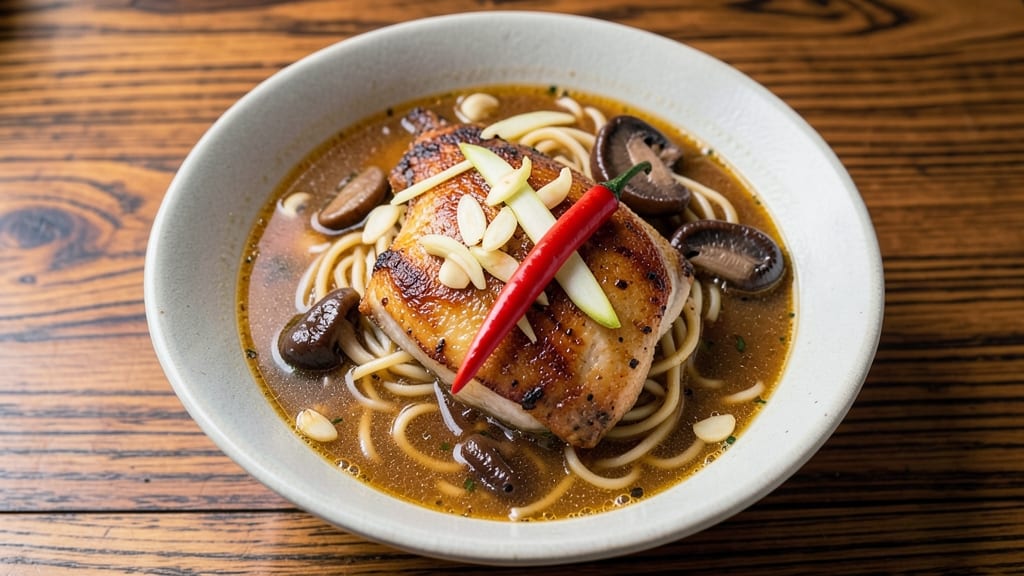
This Asian noodle soup base recipe delivers restaurant-quality umami in just 20 minutes—the secret lies in layering aromatics, protein, and slow-simmered flavor. The foundation starts with charred ginger and garlic, which deepen the broth's complexity, while chicken thighs (or mushrooms for vegetarian) infuse rich, savory depth.
What sets this apart is the balance of soy sauce, fish sauce, and a touch of sugar—a classic trifecta that creates harmony without overpowering.
The technique is simple but precise: high-heat searing of aromatics unlocks their full potential, while a low-simmer builds flavor without bitterness. You’ll end up with a golden, aromatic broth that’s versatile enough for pho, ramen, or any Asian-inspired noodle dish.
The beauty of this base? It’s customizable—add chili oil for heat, lime for brightness, or fresh herbs for freshness—while maintaining that essential umami backbone.
Storage is effortless: the broth keeps for up to 5 days in the fridge or 3 months in the freezer, making it perfect for meal prep. Reheat gently to preserve texture, and use it as a quick weeknight foundation or a flavorful upgrade to store-bought stock.
Whether you’re cooking for one or a crowd, this foolproof method ensures every bowl tastes like it came from a bustling street-side stall.
For extra depth, toast whole spices like star anise or cinnamon before simmering—they’ll infuse subtle warmth without overpowering. The key is patience: letting the broth work its magic transforms simple ingredients into something extraordinary. Ready to elevate your noodle game? Let’s build this flavorful foundation.
Ingredients for asian noodle soup base
Layered aromatics and umami-rich ingredients create this aromatic broth foundation.
| Ingredient | Amount | Notes |
|---|---|---|
| Fresh Ginger Root 🧄 | 1 inch | Peeled and sliced thinly |
| Garlic Cloves 🧄 | 6 cloves | Smashed for maximum flavor |
| Chicken Thighs 🍗 | 1 ½ lb | Bone-in, skin-on preferred |
| Dried Shiitake Mushrooms 🍄 | 4 whole | For vegetarian option |
| Light Soy Sauce 🥄 | ¼ cup | Kikkoman preferred |
| Fish Sauce 🐟 | 1 tbsp | Red Boat brand recommended |
| Brown Sugar 🍯 | 1 tbsp | Light or dark variety |
| Green Onions 🧅 | 2 whole | White and green parts separated |
| Star Anise Pods 🌟 | 2 whole | Toasted lightly before adding |
| Cinnamon Sticks 🌿 | 1 whole | 1-inch piece broken off |
| Vegetable Oil 🫒 | 2 tbsp | High smoke point preferred |
| Water 💧 | 6 cups | Filtered preferred |
| Salt 🧂 | 1 tsp | Diamond Crystal kosher |
| Black Peppercorns 🌶️ | ¼ tsp | Freshly cracked |
The ginger and garlic are non-negotiable for depth—freshly grated ginger from the produce section (not powdered) delivers that signature zing. Whole Foods or Asian markets carry the best quality, but any bright, firm root works. For the chicken, bone-in, skin-on thighs render the most flavor, but boneless works in a pinch. The dried shiitake mushrooms are essential for vegetarian versions—soak them first to rehydrate fully. Star anise and cinnamon should be toasted lightly in the oil before adding to the broth for maximum aromatic release.
No fish sauce? Soy sauce plus a dash of oyster sauce mimics the umami punch, though it won’t be identical. Substitute chicken thighs with chicken breast or tofu for a lighter option. The brown sugar can be swapped for white sugar or coconut sugar, though light brown adds subtle molasses notes. Green onions are optional but recommended—the white parts add subtle sweetness while the greens provide fresh contrast. For extra depth, toast the whole spices in the oil before adding to the broth—this unlocks their full potential without overpowering.
Store the broth in glass jars with a tight seal—it keeps 5 days refrigerated or 3 months frozen. Reheat gently over low heat to preserve texture. For meal prep, freeze in ice cube trays for easy portioning. The broth gains complexity with time, so day-old versions often taste richer. If using for pho or ramen, strain out the spices before serving, but leave them in for broth-based dishes like hot pot.
Why You'll Love This Recipe
- No-Chop Needed: I swear by this—just slice the ginger thin (no peeling!) and smash the garlic cloves with the side of my knife. The shiitakes rehydrate in the broth itself, so zero prep work goes to waste.
- Umami Bomb: That combo of chicken thighs (skin-on for richness) and rehydrated shiitakes? It’s the kind of deep, savory punch that makes you want to slurp the broth like it’s the last cup of coffee in the morning. The soy sauce ties it all together without overpowering.
- Weeknight to Party: Same base, endless variations. Toss in ramen for a quick lunch, swap noodles for rice and add bok choy for dinner guests, or stretch it into a curry with coconut milk. Honestly, I’ve made this five ways in one week and never tired of it.
- Budget Magic: Chicken thighs cost half as much as breasts, dried shiitakes last months, and a single batch feeds four for under $8. Between us, this is how I feed my family without breaking the bank—and the leftovers? Even better the next day.
Step-by-step instructions for Asian noodle soup base
Here's how to craft a deeply flavorful broth foundation in record time.
Sear the Chicken and Aromatics for Rich Flavor
Heat the 2 tablespoons vegetable oil in a large pot over medium-high heat. Add the 1.5 pounds chicken thighs, skin-side down, and sear for 5-6 minutes until the skin is deep golden brown and crispy. Flip the thighs and cook for another 3-4 minutes until the meat is no longer pink at the bone.
Remove the chicken and set it aside. In the same pot, add the 6 smashed garlic cloves and the 1-inch sliced fresh ginger root. Cook for 1-2 minutes until the garlic turns light golden and the ginger becomes fragrant. This step builds the aromatic base that will carry through the entire broth.
Toast Spices and Hydrate Dried Shiitake Mushrooms
Add the 2 whole star anise pods and the 1-inch piece of cinnamon stick to the pot. Toast for 30 seconds until you can smell their warm, earthy aromas. Immediately pour in the 6 cups water and bring to a boil over high heat. Once boiling, reduce heat to medium-high and add the 4 whole dried shiitake mushrooms. Let them soak for 10 minutes to rehydrate fully.
This step ensures the mushrooms contribute their deep umami essence while the spices infuse the broth with complexity. The mushrooms will soften significantly—this is normal and essential for maximum flavor extraction.
Simmer and Develop the Broth
Return the seared chicken thighs to the pot. Add the 0.25 cup light soy sauce, 1 tablespoon fish sauce, 1 tablespoon brown sugar, 1 teaspoon salt, and 0.25 teaspoon black peppercorns. Bring the mixture to a gentle simmer and cook uncovered for 10 minutes, skimming off any foam that rises to the surface.
The broth should develop a rich, caramelized aroma. If it reduces too quickly, add ½ cup water to maintain volume. This simmering phase allows all the flavors to meld together, creating a harmonious foundation.
Finish and Strain the Broth
Remove the chicken thighs from the broth and let them cool slightly before shredding or discarding the bones. Strain the broth through a fine-mesh sieve into a clean pot, pressing gently on the solids to extract maximum flavor. Discard the solids or save for compost.
Taste the broth and adjust seasoning if needed—add a touch more light soy sauce for saltiness or fish sauce for umami depth. The broth should be deeply aromatic, with layers of savory, slightly sweet, and herbal notes. This concentrated base is now ready to be customized with noodles, greens, or proteins of your choice.
Pro Tips For Making Asian Noodle Soup Base
- CRUSH THE GINGER: I learned this the hard way—peeling ginger is optional, but grating it (not chopping) is non-negotiable. Use a microplane or the smallest holes on a box grater for a paste that dissolves into the broth instead of sitting as chunks. (Yes, even if you’re impatient like me.)
- BROWN THE CHICKEN THIGHS: Skip the slow simmer start—sear those thighs skin-side down first over medium-high heat until the skin’s deep golden, about 8-10 minutes. This locks in flavor and prevents the broth from tasting like boiled water. (Your future self will notice the difference.)
- SOAK SHIITAKES IN HOT WATER: Cold water soaks dried shiitakes for flavor, but hot water (just off boil) extracts their umami and softens them faster. Toss them in for 10 minutes, then drain—no need to rinse. (Does it look weird? Yes. Does it work? Every single time.)
- SAVE THE SOY SAUCE: Add light soy sauce after the broth simmers, not at the start. The high heat breaks down the amino acids in soy, making it bitter if you dump it in early. Stir it in during the last 5 minutes—this keeps the broth bright and balanced. (I skip this when I’m lazy, but the dish is noticeably better when I don’t.)
Flavor customization for this recipe
Spicy Heat Boost
For a fiery kick, stir in 1-2 tablespoons of chili oil or 1-2 slices of fresh Thai chili while the broth simmers. If you love heat, add ½ teaspoon of gochugaru (Korean chili flakes) or 1 teaspoon of sambal oelek for a smoky-spicy depth.
I like to toast whole Sichuan peppercorns in the oil first—they add a tingling numbing effect that’s pure magic. 🌶️
Bright Citrus Twist
Finish your broth with 1 tablespoon of fresh lime juice or 1 teaspoon of rice vinegar to cut through the richness. For extra zing, add 1 thinly sliced kaffir lime leaf during simmering—it infuses a floral, citrusy aroma.
If you’re using lime, I recommend adding it just before serving to preserve its freshness. The acidity balances the umami perfectly.
Herbal Freshness
Fresh herbs elevate the broth instantly. Toss in 2-3 sprigs of Thai basil or cilantro stems during the last 5 minutes of simmering. For a more delicate touch, add 1 tablespoon of chopped mint or fresh dill after straining.
I often save the herb stems for garnishing bowls later—they add a pop of color and freshness. 🌿
Creamy Depth
For a velvety texture, stir in 1-2 tablespoons of coconut milk or 1 teaspoon of miso paste at the end. If you want richness without dairy, blend ½ cup of silken tofu with ¼ cup of broth until smooth, then whisk it into the pot.
This works especially well for vegetarian versions. The miso adds an extra layer of umami that’s hard to beat.
Smoky Charred Notes
Add a smoky dimension by charring 1 clove of garlic and ½ inch of ginger directly over a gas flame or under a broiler before adding to the pot. For deeper smoke, toast 1 teaspoon of coriander seeds in the oil until fragrant.
If you have a smoked salt (like Maldon sea salt with smoked paprika), sprinkle ½ teaspoon in at the end for a subtle, smoky finish. 🔥
Sweet and Tangy Fusion
Balance the savory with a touch of sweetness and tang. Add 1 teaspoon of hoisin sauce or 1 tablespoon of plum sauce during the last 5 minutes of simmering.
For a tropical twist, stir in ½ teaspoon of grated palm sugar or 1 teaspoon of honey along with the lime juice. This combo works amazingly well with spicy or herbal variations.
Nutrition facts
Frequently asked questions
Can I make this broth vegetarian?
Simply replace the chicken thighs with 1.5 pounds of tofu or 4-5 dried shiitake mushrooms (soaked and rehydrated). For extra umami, add 1 tablespoon of vegetarian fish sauce substitute or 1 teaspoon of miso paste during simmering. The broth will still develop deep, savory layers without meat.
How do I adjust the spice level?
Start with the base recipe, then add heat gradually. For mild spice, stir in ½ teaspoon of gochugaru or 1 teaspoon of sambal oelek at the end. For intense heat, toast 1-2 dried Thai chilies in the oil before adding water or add 1 tablespoon of chili oil while simmering. Taste as you go—you can always add more!
What's the best way to store leftovers?
Let the broth cool completely, then transfer to airtight containers. It keeps in the fridge for 5 days or freezes for 3 months. For freezing, use ice cube trays for easy portioning—just pop a cube into your noodle soup later. Reheat gently over low heat to preserve texture and prevent skin formation.
Can I use this base for other dishes?
This versatile broth works perfectly for ramen, pho, hot pot, or even braising proteins. Strain it and reduce by half for a concentrated sauce, or use it as-is for soups. For stir-fries, simmer the broth until reduced to 1 cup and use as a glaze. The umami depth makes it ideal for any Asian-inspired dish.
Why does my broth taste bitter?
Bitterness usually comes from over-simmering or using too much soy sauce. Prevent it by simmering uncovered and skimming foam. If it happens, balance with ½ teaspoon of sugar or 1 tablespoon of lime juice. For future batches, reduce soy sauce to 2 tablespoons and add a pinch of baking soda to neutralize any bitterness.