
Soups & Stews
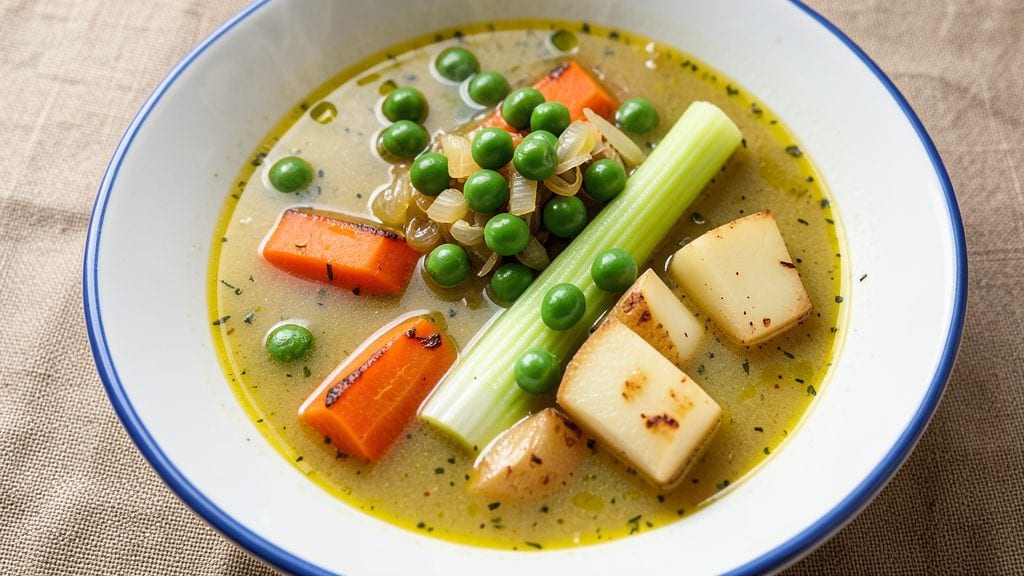
Transforming a pantry staple into homemade Campbell’s Vegetable Soup delivers that nostalgic comfort with restaurant-quality depth—all in just 20 minutes. The secret lies in balancing canned broth with fresh vegetables and a touch of creaminess, while keeping the process simple enough for weeknight dinners.
I developed this recipe after realizing how easy it is to elevate store-bought broth with a few key ingredients and proper simmering technique.
This version maintains the vegetarian appeal of classic Campbell’s while adding texture and flavor through sautéed onions, carrots, and celery before adding the broth. The addition of peas and corn brings natural sweetness, while a splash of milk or cream at the end creates that signature velvety finish.
Every spoonful delivers that familiar warmth, but with a homemade touch that makes it feel special.
What you’ll end up with is a creamy, aromatic soup that’s rich enough to satisfy but light enough for any meal. The vegetables stay tender-crisp, the broth is deeply flavorful, and the optional garnish of fresh parsley adds a pop of color.
It’s the kind of comfort food that warms both body and soul—perfect for chilly evenings or when you crave a taste of home.
Whether you’re feeding a family or meal prepping for the week, this recipe scales effortlessly while keeping prep under 15 minutes. The best part? You’ll never go back to the canned version once you taste how fresh ingredients can transform something so simple. Let’s get cooking!
Ingredients for campbell's vegetable soup
Pantry staples meet fresh veggies—just 15 minutes to homemade soup magic.
| Ingredient | Amount | Notes |
|---|---|---|
| Vegetable Broth 🥫 | 4 cups | Low-sodium, canned or homemade |
| Yellow Onion 🧅 | 1 medium | Diced, about 1 cup |
| Carrots 🥕 | 2 medium | Peeled, chopped into 1/2-inch pieces |
| Celery Stalks 🌿 | 2 whole | Diced, about 1/2 cup |
| Russet Potatoes 🥔 | 1 medium | Peeled, cubed into 1/2-inch pieces |
| Frozen Peas 🌱 | ½ cup | Thawed, or fresh shelled |
| Corn Kernels 🌽 | ½ cup | Fresh or canned, drained |
| Whole Milk 🥛 | ¼ cup | Full-fat for creaminess |
| All-Purpose Flour 🌾 | 1 tbsp | For thickening, optional |
| Salt 🧂 | 1 tsp | Diamond Crystal preferred |
| Black Pepper 🌶️ | ¼ tsp | Freshly ground |
| Fresh Parsley 🌿 | ¼ cup | Chopped, for garnish |
| Extra-Virgin Olive Oil 🫒 | 1 tbsp | For sautéing vegetables |
| Garlic Cloves 🧄 | 2 cloves | Minced, about 1 tsp |
| Dried Thyme 🌿 | ½ tsp | Or 1 tsp fresh |
The broth is the soul of this soup, so low-sodium canned is your best bet—it keeps the flavor balanced without extra salt. I grab Pacific Foods or Imagine from the store, but homemade is even better if you've got time. For the veggies, fresh carrots and celery from the store's produce section taste best, but frozen works in a pinch. The potatoes should be peeled and cubed evenly—about 1-inch pieces so they cook through without turning mushy. Garlic and thyme? Fresh is ideal, but dried thyme at half the amount works too. Don't skip the onions—they're what builds that deep, savory base.
No fresh parsley? Dried parsley at one-third the amount or even a pinch of dried basil will do. Running low on milk? Heavy cream or half-and-half makes it richer, but whole milk keeps it classic. The flour is optional but helps thicken if you like your soup on the heartier side—just whisk it with a splash of cold milk first. For the corn, fresh kernels are best, but canned works too. Just drain them well. If you're prepping ahead, cook the veggies in broth and refrigerate—just reheat with fresh milk and garnish when ready to serve.
This soup reheats beautifully—just warm it gently on the stove or microwave until hot. Keeps for 4-5 days in the fridge, or freeze portions for up to 3 months. I like to make a big batch on Sundays so I’ve got leftovers for the week. The parsley wilts fast, so add it right before serving. For extra depth, stir in a splash of lemon juice at the end—brightens everything up. And if you're feeling fancy, top with a drizzle of olive oil and a sprinkle of Parmesan.
Why You'll Love This Recipe
- No-Chop Nightmare: The onion, carrots, and celery just need rough chopping—no fancy dicing, no tears. My kids even help (and actually stay interested). That first simmer with the broth? The veggies soften into perfect bite-sized pieces without falling apart.
- Broth Bomb Flavor: Honestly, the vegetable broth here isn’t just background flavor—it’s the star. When you let it reduce slightly with the potatoes, that deep, savory base turns the soup into something ridiculously satisfying. Not watery, not bland. Just right.
- Lunchbox Hero: Between us, this soup is my secret weapon for meal prep. I make a big batch on Sunday, portion it into jars, and slap a lid on it. By Wednesday, I’m popping them into lunchboxes or reheating for dinner—zero stress, all comfort.
- Pantry Magic: Three ingredients from your fridge (onion, carrots, potatoes) plus broth? That’s it. No specialty items, no last-minute grocery runs. Even when I’m staring at an empty fridge at 6pm, this recipe saves me—every single time. Budget-friendly? More like pantry-friendly.
Step-by-step instructions for vegetable soup with pantry staples
This soup comes together faster than you'd think—real comfort food without the fuss.
Sauté the Vegetable Base
Heat the 1 tablespoon extra-virgin olive oil in a large pot over medium heat. Add the 1 medium diced yellow onion, 2 medium chopped carrots, and 2 whole diced celery stalks. Cook for 5-6 minutes, stirring occasionally, until the vegetables soften slightly and the onion becomes translucent.
Here's where the flavor starts building—don't rush this step. The vegetables should release their natural juices and develop a light golden hue. Add the 2 cloves minced garlic and 0.5 teaspoon dried thyme, cooking for another 30 seconds until fragrant. This aromatic base forms the soul of your soup.
Build the Soup Foundation
Add the 1 medium cubed russet potatoes to the pot and stir to coat in the vegetable mixture. Pour in the 4 cups vegetable broth and bring to a gentle boil. Once boiling, reduce heat to medium-low and let it simmer uncovered for 10 minutes, stirring occasionally. This allows the potatoes to begin softening while keeping the broth from getting too concentrated.
I like to taste the broth at this stage—it should be flavorful but not overly salty. If using the 1 tablespoon all-purpose flour, sprinkle it over the simmering mixture and whisk gently to create a light roux. Let it cook for another 2 minutes to thicken slightly, but don't overdo it or the soup will become gluey.
Add the Remaining Ingredients
After the 10 minutes of simmering, stir in the 0.5 cup corn kernels and 0.5 cup frozen peas. These ingredients cook quickly, so adding them later preserves their texture. Cook for 5-6 minutes until the potatoes are fork-tender and can be easily pierced with a knife. The peas should be bright green and the corn just heated through.
Here's the comfort factor—stir in the 0.25 cup whole milk and 1 teaspoon salt at this point. The milk adds a subtle creaminess without making the soup heavy, while the salt enhances all the flavors. Taste and adjust seasoning with 0.25 teaspoon black pepper if needed. The soup should be seasoned but not overwhelmingly salty.
Finish and Serve Warm
Remove the pot from heat and let the soup rest for 3-5 minutes—this allows the flavors to meld together. Ladle into bowls and garnish each serving with 0.25 cup chopped fresh parsley. The parsley adds a fresh contrast to the hearty soup and makes it look inviting.
Serve immediately while hot. The soup should be thick enough to coat the back of a spoon but still have a pleasant mouthfeel. Each bowl delivers that classic vegetable soup comfort—warm, satisfying, and packed with familiar flavors. This is the kind of recipe that makes pantry staples feel like a gourmet meal.
Pro Tips For Making Campbell'S Vegetable Soup
- SOFTEN POTATOES FIRST: The Campbell’s recipe calls for whole potatoes, but I learned the hard way—cutting them into 1-inch chunks saves 20 minutes of simmering. If you’re short on time, parboil them for 5 minutes before adding to the pot; they’ll break down faster without turning to mush.
- SWEAT THE AROMATICS: Skip the rush to boil—sauté the onion, celery, and carrots in a splash of broth (or water) over medium heat for 5 minutes first. The celery especially needs this step; otherwise, it stays crunchy and bitter. (Yes, even if you’re impatient like me.)
- CHECK POTATO DONENESS: The recipe says “tender,” but I used to pull them out too soon. Test with a fork—if it slides in like butter, they’re done. Overcooked potatoes turn to glue; undercooked ones feel like chewing on a rock. Aim for that just-right moment.
- UPGRADE WITH ACID: A squeeze of lemon juice or a splash of vinegar at the end brightens the flavors without overpowering. The Campbell’s version can taste flat—this adds depth. Start with 1 teaspoon and adjust; you’ll taste the difference immediately.
Essential equipment for campbell's vegetable soup
Pot Essentials
Your soup pot is the MVP here—a heavy-bottomed 4-6 quart pot with a tight-fitting lid prevents scorching and ensures even heat distribution. I use my trusty All-Clad Stainless Steel 5.5-Quart Pot for its durability and responsive heating.
For budget-friendly options, Cuisinart MultiClad or Farberware Classic Stainless Steel work beautifully. Avoid thin, non-stick pots—they can't handle the simmering time without warping. 🔥
Broth & Liquid Control
Low-sodium vegetable broth is your flavor foundation, but measuring it accurately ensures consistency. Use a liquid measuring cup for the 4 cups—pour it slowly to avoid spills. For extra flavor depth, I add 1 cup water to the broth before simmering.
A fine-mesh strainer comes in handy if you're using fresh herbs or want to remove any impurities from homemade broth. Never skip this step—it keeps your soup clean and flavorful.
Vegetable Prep Tools
Efficient prep makes all the difference. A sharp chef's knife and cutting board are non-negotiable—I swear by my Wüsthof Classic 8-inch for chopping onions, carrots, and celery into even ½-inch pieces. A mandoline speeds up potato cubing if you're making multiple batches.
For frozen peas and corn, a fine-mesh colander helps drain excess water quickly. Pro tip: Keep a small bowl nearby to catch any stray veggie bits—nothing goes to waste in my kitchen. 🌿
Thickening & Finishing
If you're using flour to thicken, a small whisk helps create a smooth paste with the milk. I mix 1 tbsp flour with 2 tbsp cold milk in a separate bowl before adding it to the pot.
For the finishing touches, a microplane is perfect for grating fresh garlic or zesting lemon if you're adding brightness. A ladle with a strainer makes serving garnishes like parsley effortless without clogging your soup. Keep these tools within arm's reach—they make the final steps seamless. ✨
Optional Upgrades
For next-level flavor, a garlic press or mortar and pestle intensifies the garlic aroma. A fine-mesh sieve helps strain out any unwanted bits if you're using homemade broth.
If you love creaminess, a handheld immersion blender lets you blend a portion of the soup for a silky texture without overworking the whole batch. These tools aren't essential, but they elevate the dish when you're feeling fancy. 💫
Cleanup Made Easy
No one enjoys scrubbing a pot for hours. A silicone pot scraper removes stuck-on bits effortlessly, and a large spoon helps transfer veggies to the trash without splattering. I keep a small bowl of hot water nearby to soak stubborn residue.
For leftovers, glass storage containers with snap-on lids keep the soup fresh for up to 5 days in the fridge. Trust me, these small investments save time and frustration later. 💡
Nutrition facts
Frequently asked questions
Can I make this soup without milk for a vegan version?
Replace the ¼ cup whole milk with ¼ cup unsweetened almond milk or cashew cream (blend soaked cashews with water) for creaminess. For extra richness, stir in 1 tablespoon nutritional yeast after cooking—it adds a cheesy, umami flavor without dairy. The soup will still be hearty and satisfying.
Why does my homemade vegetable soup taste different from Campbell's?
Campbell's uses a blend of MSG, monosodium glutamate, and other flavor enhancers for that signature taste. To mimic it, add ½ teaspoon soy sauce or 1 teaspoon tomato paste to the broth while simmering. Also, toasting 1 teaspoon flour in the oil before adding veggies (like a roux) deepens the flavor. Fresh herbs and proper simmering time make a huge difference too!
How can I make this soup spicier or smokier?
For heat, stir in ½ teaspoon smoked paprika or ¼ teaspoon cayenne pepper with the broth. For smokiness, add 1 teaspoon liquid smoke or char ½ of the onion and 1 garlic clove in a dry pan before sautéing. Finish with a pinch of ground cumin—it adds earthy depth. Adjust to taste, starting with small amounts to avoid overpowering the veggies.
Can I use instant potato flakes instead of fresh potatoes?
Yes, but with adjustments! Use ½ cup instant potato flakes (rehydrated with ½ cup hot broth) instead of fresh potatoes. Add them after the initial 10-minute simmer—they cook faster. For texture, stir in 2 tablespoons cornstarch mixed with 1 tablespoon cold water at the end to thicken. The result won’t be identical, but it’s a quick fix for busy nights.
What’s the best way to reheat leftovers without making the soup watery?
Reheat gently on the stove over low heat, stirring frequently, until just hot. If it seems too thick, add 1-2 tablespoons broth or water per bowl. For extra creaminess, stir in 1 tablespoon milk or cream while reheating. Microwaving works too—cover with a damp paper towel and heat in 30-second intervals, stirring between each, to prevent splitting.