
Soups & Stews
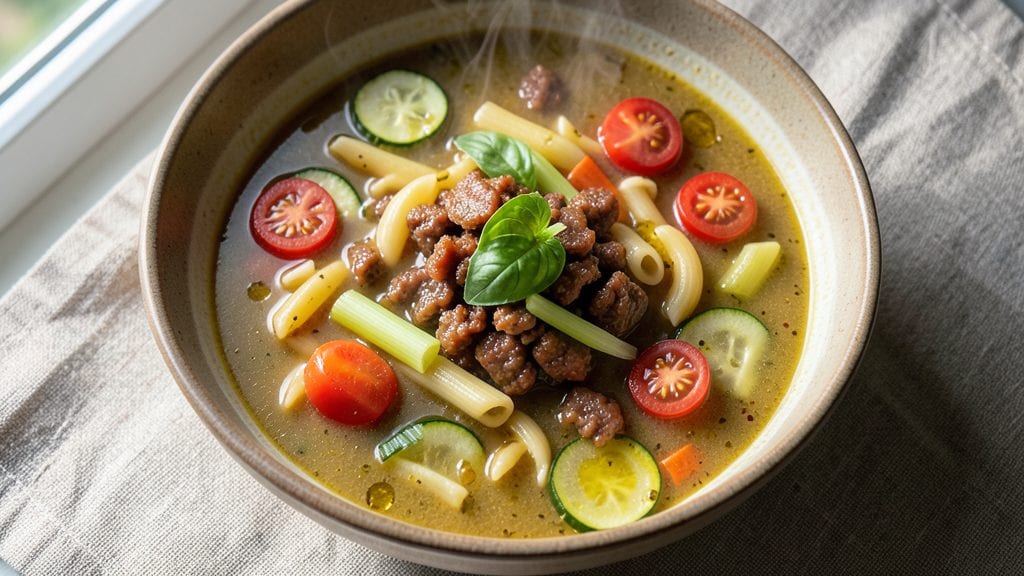
This Carrabba's minestrone soup copycat recipe delivers the same hearty, herb-infused symphony you'd expect from their Italian restaurant menu. The secret lies in balancing tender vegetables, al dente pasta, and flavorful protein like Italian sausage—all simmered in a rich broth infused with fresh herbs.
I've replicated their signature technique of building layers of flavor through careful sautéing and slow simmering, ensuring every spoonful tastes like a trip to the restaurant.
The recipe begins with browning Italian sausage to develop deep, savory notes that form the foundation of the soup. Fresh vegetables like carrots, celery, and zucchini are sautéed just enough to soften while preserving their natural sweetness, then simmered until tender.
Cannellini beans add hearty texture, while small pasta shapes like ditalini cook perfectly in the broth. The finishing touches—fresh basil, grated parmesan, and a splash of lemon—elevate the dish to restaurant-quality perfection.
What makes this minestrone truly special is its ability to satisfy even the most discerning soup lovers. The combination of smoky sausage, vibrant vegetables, and creamy beans creates a harmonious balance of flavors and textures.
Each bite delivers tender pasta, perfectly cooked vegetables, and a rich broth that's packed with aromatic herbs. This is the kind of comforting, flavorful soup that becomes a family favorite and a go-to meal for any occasion.
Ready in about an hour, this copycat recipe is perfect for chilly evenings or when you're craving a taste of Italy. The best part? It's easy to customize—swap in different vegetables or proteins to suit your preferences.
Once you try this version, you'll never settle for anything less than Carrabba's signature minestrone again.
Ingredients for carrabba's minestrone soup copycat
Pantry staples meet Italian restaurant magic for this Carrabba's copycat minestrone.
| Ingredient | Amount | Notes |
|---|---|---|
| Italian Sweet Sausage 🥓 | 1 ½ lb | Remove casings, crumbled for browning |
| Ditalini Pasta 🍝 | 1 cup | Uncooked, small shells |
| Carrots 🥕 | 3 whole | Medium size, peeled and sliced |
| Celery Stalks 🧅 | 3 whole | Medium size, chopped |
| Zucchini 🍆 | 2 whole | Medium size, sliced |
| Yellow Onion 🧅 | 1 whole | Medium size, diced |
| Cannellini Beans 🌱 | 2 cups | Canned, drained and rinsed |
| Garlic Cloves 🧄 | 4 cloves | Fresh, minced |
| Fresh Basil 🌿 | ½ cup | Chopped, for finishing |
| Fresh Parsley 🌿 | ¼ cup | Chopped, for finishing |
| Vegetable Broth 💧 | 6 cups | Low-sodium preferred |
| Tomato Paste 🍅 | 1 tbsp | Smooth texture |
| Extra-Virgin Olive Oil 🫒 | ½ cup | For sautéing |
| Dried Oregano 🌿 | 1 tsp | Italian variety preferred |
| Ground Black Pepper 🌶️ | ½ tsp | Freshly cracked |
| Sea Salt 🧂 | 1 ½ tsp | Kosher preferred |
| Lemon Juice 🍋 | 1 tbsp | Freshly squeezed |
| Parmesan Cheese 🧀 | ½ cup | Freshly grated |
The Italian sausage is non-negotiable here—Johnsonville brand or Trader Joe's varieties work perfectly. Look for the sweet kind, not spicy. For the vegetables, farmers market finds have the best flavor, but grocery store veggies work fine. The carrots and celery should be firm with vibrant color—no limp or rubbery ones. I always grab extra basil and parsley since they're used for both cooking and garnishing. The cannellini beans? Mutti brand from the Italian aisle keeps its creaminess better than store brands.
No Italian sausage? Chicken sausage or smoked turkey sausage works in a pinch, but the flavor won't be identical. Fresh herbs wilt fast, so dried basil and oregano at half the amount can substitute if needed. For the broth, low-sodium is key—you'll be adding plenty of salt. The tomato paste can be from a tube or can, but Rao's brand is my go-to for that restaurant-quality consistency. No Parmesan? Pecorino Romano has a sharper bite that works well too.
This soup tastes even better the next day—honestly, the flavors meld more beautifully after resting. Store leftovers in the fridge for up to 5 days, or freeze portions for 3 months. I always make a double batch because it disappears fast. The pasta keeps well too, so you can cook it ahead and reheat it in the broth. For serving, I like to keep the Parmesan and lemon on the side so everyone can customize their bowl.
Why You'll Love This Recipe
- One-Pot Magic: I swear by this recipe when I’m too tired to wash a million dishes. Sausage browns in the same pot where the veggies simmer—no extra pans, no stress. Just chop, toss, and let it bubble while you chop more veggies or stir a pot of garlic bread.
- Sausage-Crisped Goodness: That Italian sweet sausage? It’s the star—frayed and browned until the edges are caramelized, then melting into the broth with every spoonful. The ditalini soaks up the smoky, herby goodness like a sponge, and the zucchini adds that perfect tender-crisp bite.
- Potluck Hero: I bring this to gatherings because it’s always a hit—vegetarians can skip the sausage, meat lovers dive in, and it reheats beautifully. Plus, the ditalini holds up better than noodles in a shared bowl, so no one’s left with sad, mushy pasta at the bottom.
- Budget-Friendly Feast: A pound of sausage, a bag of carrots, and a box of celery lasts me weeks—this recipe stretches ingredients without sacrificing flavor. Leftovers? Even better the next day, when the broth deepens and the pasta gets that perfect al dente chew. My wallet and my freezer both thank me.
Step-by-step instructions for Carrabba's minestrone soup copycat recipe
Here's how to recreate that iconic restaurant flavor at home—rich, hearty, and packed with Mediterranean warmth.
Brown the Italian Sweet Sausage for Deep Flavor
Heat the 0.5 cup extra-virgin olive oil in a large Dutch oven over medium-high heat. Remove the casings from the 1.5 lb Italian sweet sausage and crumble it into the pot, breaking it into small, even pieces. Let it brown undisturbed for 5-6 minutes until the edges turn golden and crispy—this builds the foundation of flavor. Here's the thing—don't stir too soon. You want those meat bits to develop a deep brown crust that'll infuse the entire soup with savory richness.
Once the sausage is nicely browned, use a wooden spoon to scrape up all those flavorful browned bits from the bottom of the pot. These are packed with caramelized meat essence that'll make your soup taste like it came straight from Carrabba's kitchen. Transfer the browned sausage to a plate and set it aside temporarily—we'll add it back later.
Sauté the Vegetable Base for Aromatic Depth
In the same Dutch oven, add the diced 1 whole yellow onion, chopped 3 whole celery stalks, and sliced 3 whole carrots. Cook over medium heat for 8-10 minutes, stirring occasionally, until the vegetables soften and begin to release their natural juices. This step is where the soup's aromatic foundation takes shape—you'll notice the kitchen filling with that classic vegetable medley scent.
After the vegetables have softened, add the sliced 2 whole zucchini and minced 4 cloves garlic. Stir everything together and cook for another 3-4 minutes until the zucchini begins to soften slightly and the garlic releases its pungent aroma. This is the moment that matters: the garlic should be fragrant but not burnt—just a whisper of its bold character. If you notice the garlic starting to brown too quickly, reduce the heat slightly to prevent bitterness.
Build the Rich Broth Base
Stir in the 1 tbsp tomato paste and cook for 1-2 minutes until it darkens slightly and loses its raw taste. This step deepens the soup's color and adds a subtle umami richness that's characteristic of Carrabba's version. Pour in the 6 cups vegetable broth and bring everything to a gentle simmer. Add the 1.5 tsp sea salt, 1 tsp dried oregano, and 0.5 tsp ground black pepper, stirring to combine.
Return the browned sausage to the pot and add the drained 2 cups cannellini beans. Let the mixture simmer gently for 15 minutes, allowing all the flavors to meld together. The soup should be developing that signature rustic appearance—vegetables softened but still holding their shape, with the sausage pieces evenly distributed throughout. Here's where it gets fun: taste the broth now. It should be seasoned but not overwhelming—you'll have opportunities to adjust later.
Finish with Pasta and Fresh Herbs
Add the 1 cup ditalini pasta to the simmering soup and cook according to package directions until al dente—usually about 10-12 minutes. The pasta should have a slight bite to it, as it'll continue cooking slightly when removed from heat. Real talk: don't overcook the pasta or it'll turn mushy in the finished soup. While the pasta cooks, prepare the finishing touches by chopping the 0.5 cup fresh basil and 0.25 cup fresh parsley—these herbs will brighten the soup with their fresh, vibrant flavors.
Once the pasta is cooked, stir in the 1 tbsp lemon juice and adjust the seasoning if needed. The acidity from the lemon juice brightens all the rich flavors in the soup, creating that perfect balance. Taste and add more salt or pepper if necessary—this is your chance to fine-tune the seasoning to your personal preference. The soup should be hearty yet balanced, with each ingredient contributing to the overall harmony.
Serve with Classic Italian Touches
Ladle the soup into bowls and top each serving with 0.5 cup freshly grated parmesan cheese. The parmesan adds a salty, nutty finish that elevates the soup from good to restaurant-quality. Garnish with the chopped fresh basil and parsley, sprinkling them evenly over each bowl. These herbs not only add visual appeal but also bring a fresh contrast to the rich, savory broth.
Serve immediately while the soup is hot, with crusty bread on the side for dipping. Each spoonful should deliver that perfect balance of textures—tender sausage, al dente pasta, and soft vegetables—all bathed in a flavorful broth that's rich yet refreshing. This is the moment you'll know you've nailed the copycat recipe: when your guests can't tell the difference between your homemade version and the restaurant original.
Pro Tips For Making Carrabba'S Minestrone Soup Copycat
- Brown the Sausage First: Don’t skip browning those Italian sweet sausage casings—it’s where the flavor happens. After you remove the casings (yes, do that first), let the meat crisp in the pot for 4-5 minutes until it turns a deep golden brown. This isn’t just for show; it’s what gives Carrabba’s soup its rich, meaty depth. I used to rush this and wonder why my soup tasted more like "soup" than "hearty Italian comfort."
- Chop Celery Like a Pro: The celery stalks in this recipe aren’t just filler—they’re the backbone of flavor. Cut them into even ¼-inch dice (yes, measure it) and toss them in the pot after browning the sausage but before adding the broth. Uneven pieces mean some get mushy while others stay crunchy, and that’s a flavor crime. Trust me, I’ve fought with celery before.
- Add Pasta Late: Ditalini pasta is small and fast—don’t let it turn into mush. Wait until the broth is simmering gently (not boiling hard) and the veggies are tender but still holding their shape before adding the pasta. Stir it in, then cover the pot and let it cook for just 8-10 minutes. Overcooking turns your soup into a sad, gluey mess.
- Zucchini Goes In Early: Zucchini is sneaky—it absorbs liquid like a sponge. Toss the chopped zucchini into the pot with the broth (not at the end), but pull it out 2-3 minutes before serving. This keeps it tender but not waterlogged. I learned this the hard way when my zucchini turned into a sad, slimy blob. Now I just fish it out early and stir it back in at the table.
Pro cooking tips for this dish
Sautéing Secrets
Start by browning the Italian sausage over medium-high heat for 5-6 minutes without stirring—this creates a Maillard reaction that develops deep, caramelized flavors. Use a large Dutch oven (like All-Clad Stainless Steel) to ensure even browning.
After removing the sausage, scrape up those fond-rich browned bits from the bottom—they're packed with flavor that'll infuse your entire soup. 🔥
Vegetable Timing
Cook your onion, celery, and carrots for 8-10 minutes until they soften but don't brown—this prevents bitterness. Add zucchini and garlic only in the final 3-4 minutes of sautéing to preserve their natural sweetness and fresh aroma.
Overcooking vegetables here makes them mushy and dulls the flavor. I always use fresh vegetables for the brightest taste, but frozen work in a pinch if you add them later in the simmering process.
Broth Balance
Use low-sodium vegetable broth (like Pacific Foods brand) to control seasoning—you'll add 1.5 tsp sea salt later. Simmer the soup gently for 15 minutes after adding beans to let flavors meld without breaking down the vegetables.
Taste the broth before adding pasta—it should be seasoned but not salty, with a subtle herbal note from the oregano and garlic. Adjust salt gradually to avoid over-seasoning.
Pasta Perfection
Add ditalini pasta only in the final 10-12 minutes of cooking to prevent mushiness. Stir occasionally and taste at 10 minutes—it should have a slight bite. For extra restaurant-style texture, I sometimes add ½ cup cooked pasta separately to each bowl after serving.
The pasta continues cooking in the hot broth, ensuring perfect al dente texture every time. 🍲
Herb Finishing
Chop fresh basil and parsley just before serving to preserve their vibrant flavors—they wilt quickly when cooked. Toss them into the soup off-heat for 30 seconds to infuse aroma without overcooking.
For extra brightness, add 1 tbsp lemon juice right before serving. This acidity cuts through the richness and mimics Carrabba's signature tangy finish.
Equipment Essentials
A large Dutch oven (at least 6-quart capacity) is non-negotiable for even cooking and flavor development. I use All-Clad for its even heat distribution, but Le Creuset works beautifully too. For browning sausage, a wooden spoon helps scrape up fond without scratching your pot.
A fine-mesh strainer comes in handy for rinsing cannellini beans—this removes excess starch that can make the soup gummy. 💡
Nutrition facts
Frequently asked questions
Can I make this minestrone soup vegetarian?
Simply omit the Italian sausage and add 1 cup diced mushrooms or 1 cup crumbled tofu to replace the protein. For extra depth, stir in 1 tbsp soy sauce or 1 tsp smoked paprika when sautéing the vegetables. The bean-heavy base already provides plenty of heartiness, so the texture will remain satisfying without meat.
How do I prevent the pasta from getting mushy in the soup?
Add the ditalini pasta only in the final 10-12 minutes of cooking, not at the beginning. Stir occasionally and taste at 10 minutes—it should have a slight bite. For extra insurance, cook the pasta separately for 1 minute less than package instructions, then add it to the hot broth where it'll finish cooking perfectly. Never let it simmer uncovered for more than 15 minutes total after adding.
Can I prepare this soup ahead of time?
This soup actually tastes better the next day! Store leftovers in an airtight container in the fridge for up to 5 days. For freezing, cool the soup completely, then portion into freezer bags for up to 3 months. Thaw overnight in the fridge and reheat gently on the stove, adding a splash of water or broth if it thickens too much. The flavors meld beautifully after resting.
What's the best way to adjust the seasoning?
Taste the broth before adding pasta—it should be seasoned but not salty. Start with 1.5 tsp sea salt and adjust gradually, adding ¼ tsp at a time. For extra depth, add ½ tsp red pepper flakes or 1 tsp balsamic vinegar if you prefer more complexity. Remember that canned beans and broth already contain sodium, so go easy with additional salt.
Why does my copycat version taste different?
Restaurant soups often use homemade broth and fresh herbs that store-bought versions can't match. For better results, use low-sodium broth and fresh herbs whenever possible. Brown the sausage thoroughly for deeper flavor, and don't skip scraping up the fond from the bottom of the pot. Even small differences in ingredient quality can make a big impact on the final taste.