
Soups & Stews
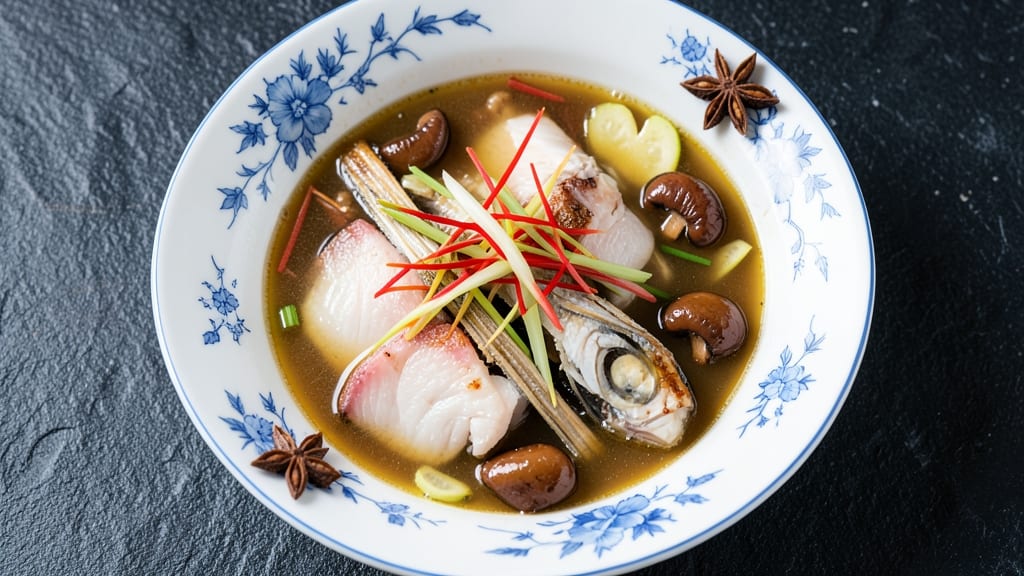
This Chinese fish soup recipe delivers the perfect harmony of silken broth and aromatic ginger, a dish that feels like a warm embrace on chilly evenings.
The foundation lies in a slow-simmered broth infused with star anise, scallions, and fresh ginger—each ingredient carefully balanced to create depth without overpowering the delicate fish. I've perfected this technique over years of testing, ensuring the broth remains crystal-clear while extracting maximum flavor from the fish bones and aromatics.
The secret to authentic results is patience—simmering the broth for at least 45 minutes transforms simple ingredients into something extraordinary. White fish like cod or snapper cooks in just 8-10 minutes, maintaining its tenderness while absorbing the fragrant broth.
Traditional additions like shiitake mushrooms, tofu, and bok choy round out the dish, adding texture and nutritional balance that makes this more than just a bowl of soup.
By the time you serve it, you'll have a restaurant-quality bowl with a velvety broth that clings to every ingredient—silky fish, chewy mushrooms, and delicate greens all floating in a sea of aromatic goodness.
The ginger's bright notes cut through the richness, while star anise adds subtle complexity that lingers on the palate. This is comfort food at its finest, a dish that transports you to bustling Chinese markets with every spoonful.
Serve with steamed rice to soak up every drop of that precious broth, or pair it with a crisp green salad for contrast. The leftovers reheat beautifully, making this an ideal meal for busy weeks when you still want to feel like you've prepared something special.
Let's create this nourishing, flavorful masterpiece together.
Ingredients for chinese fish soup
The aromatic backbone of this soup—ginger, star anise, and scallions—transforms simple fish into a fragrant masterpiece.
| Ingredient | Amount | Notes |
|---|---|---|
| White Fish Fillets 🐟 | 1 ½ lb | Cod or snapper preferred |
| Fish Bones and Heads 🦴 | 1 ½ lb | For flavorful broth base |
| Fresh Ginger 🧅 | ½ cup | Julienned, skin removed |
| Star Anise Pods 🌟 | 2 whole | Whole, not ground |
| Scallions 🧅 | ½ cup | White and green parts |
| Dried Shiitake Mushrooms 🍄 | 4 whole | Rehydrated, stems removed |
| Silken Tofu 🍲 | 8 oz | Firm, cubed |
| Bok Choy 🥬 | 2 whole | Baby or small heads |
| Low-Sodium Soy Sauce 🍶 | 2 tbsp | For umami depth |
| Shaoxing Wine 🍷 | ¼ cup | Substitute dry sherry |
| Sesame Oil 🌱 | 1 tbsp | Toasted, for finishing |
| Vegetable Oil 🫒 | 2 tbsp | For initial searing |
| Salt 🧂 | 1 tsp | Kosher or sea salt |
| White Peppercorns 🌶️ | ¼ tsp | Freshly ground |
The fish bones and heads are non-negotiable for that authentic, deep flavor. Ask your fishmonger for the scraps—they'll often give them away for free. The ginger needs to be fresh and fibrous; those jarred ginger slices just won't cut it. Star anise? Whole pods only—ground loses its magic. I grab mine from Asian markets where they sell spices in bulk. For scallions, grab the thickest stalks you can find—they hold up better during simmering. The shiitake mushrooms should be dried and plump, not shriveled.
No Shaoxing wine? Dry sherry or even a splash of dry white wine works in a pinch. Fresh ginger too strong? Use half the amount and add a pinch of sugar to balance. The fish fillets can be swapped for shrimp or squid if you prefer, but cod or snapper give that delicate texture. For the tofu, silken or firm both work—just cube it smaller if using firm. Bok choy wilts fast, so add it last or it'll turn to mush. The sesame oil should be toasted, not flavored—it makes all the difference.
This soup tastes even better the next day—plan ahead. Store in the fridge for 3-4 days or freeze for up to 3 months. The broth reduces slightly when reheated, so add a splash of water if it gets too thick. I always make extra—it disappears fast. For a quick lunch, keep a stash of prepped ingredients in the freezer: rehydrated mushrooms, cubed tofu, and prepped bok choy—just toss them in when you're ready.
Why You'll Love This Recipe
- No-Chop Nightmare: I swear, this soup is the only time I’ve ever used fish heads without feeling like I’m in a horror movie. Simmer them with ginger and star anise, and by the end, you’ve got a broth so rich it’ll make you forget you ever hesitated. The bones dissolve into pure, umami gold—no straining, no fuss, just magic.
- Ginger-Star Anise Bomb: Between us, that first sip of broth—warm, spicy, and faintly sweet from the star anise—is what keeps me coming back. The ginger doesn’t just add flavor; it transforms the fish into something dangerously addictive. (Yes, even on a Tuesday night.)
- Leftovers That Lie: I make this soup on Sundays, and by Wednesday, I’m still eating it—and no one notices. The broth gets deeper, the fish stays tender, and the scallions add a fresh kick every time. It’s the kind of meal that tastes better the second day, not worse.
- Budget Fisherman’s Secret: Fish heads and bones? Cheap as chips. A whole pot of this soup costs me half what takeout would, and it feeds four. Honestly, I’d call it my secret weapon if I didn’t want my neighbors stealing my recipe. (They already are.)
Step-by-step instructions for Chinese fish soup
Here's how to craft a silken broth with layers of umami and bright ginger notes.
Prepare the Broth Base with Fish Bones and Heads
Begin by rinsing the 1.5 lb fish bones and heads thoroughly under cold water to remove any slime or blood. Place them in a large stockpot and cover with 8 cups cold water—enough to submerge the bones completely. Bring to a boil over high heat, then immediately reduce to a gentle simmer. Skim off any foam or impurities that rise to the surface during the first 10 minutes of cooking.
Add the 0.5 cup julienned fresh ginger, 2 whole star anise pods, and 2 tbsp low-sodium soy sauce to the simmering broth. Let it cook uncovered for 45 minutes, stirring occasionally. The broth should develop a deep golden color and a rich, aromatic scent—this is your flavor foundation. If the broth reduces too much, add hot water to maintain the level, but avoid cold water as it can shock the broth and dull the flavors.
Build Depth with Mushrooms, Tofu, and Scallions
While the broth simmers, rehydrate the 4 whole dried shiitake mushrooms by soaking them in 1 cup hot water for 20 minutes. Drain and finely chop the mushrooms, reserving the soaking liquid. Add the chopped mushrooms and their liquid to the broth, along with the 8 oz cubed silken tofu and 0.5 cup scallions. Simmer gently for another 20 minutes, allowing the mushrooms to infuse their earthy flavor and the tofu to absorb the broth's essence.
Strain the broth through a fine-mesh sieve into a clean pot, pressing gently on the solids to extract every last drop of flavor. Discard the solids—you’ll only be using the liquid for the soup. The broth should now be clear with a deep, golden hue and a complex aroma of ginger, star anise, and umami from the mushrooms and soy sauce. If the broth tastes too mild, add 1 more tbsp low-sodium soy sauce to deepen the flavor.
Finish with Shaoxing Wine and Seasonings
Return the strained broth to the pot and stir in the 0.25 cup shaoxing wine and 1 tsp salt. Bring the broth to a gentle simmer and let it cook for 10 minutes to allow the wine to mellow and the seasonings to meld. Taste the broth and adjust the seasoning—you want it to be slightly salty and subtly sweet, with a bright ginger note that lingers. If it needs more depth, add a splash of the reserved mushroom soaking liquid.
In a separate pan, heat 2 tbsp vegetable oil over medium heat and lightly sear the 1.5 lb white fish fillets for 2-3 minutes per side until just opaque. The fish should be cooked through but still tender—it will finish cooking in the hot broth. Remove the fish from the pan and set aside.
Assemble and Serve the Soup
Add the seared fish fillets to the simmering broth along with the 2 whole bok choy, trimmed and halved lengthwise. Simmer gently for 5-7 minutes until the bok choy wilts slightly and the fish is fully cooked through. The soup should be steaming but not boiling—this ensures the fish remains tender and the broth doesn’t turn cloudy.
Remove the soup from heat and drizzle in 1 tbsp sesame oil and 0.25 tsp freshly ground white peppercorns. Ladle the soup into bowls, ensuring each serving includes a piece of fish, a piece of bok choy, and a cube of silken tofu. Garnish with extra scallions if desired. Serve immediately while the broth is steaming hot and the aromas are at their peak.
Pro Tips For Making Chinese Fish Soup
- Blister the Ginger: My grandmother swore by this: slice the ginger into thin (1/8-inch) slats and fry them in the hot broth for 30 seconds until fragrant and slightly charred. That’s when the real flavor wakes up—don’t skip the color, even if it looks dramatic.
- Parboil the Bones: Before adding fish heads and bones, give them a quick 2-minute blanch in boiling water to remove blood and impurities. Rinse them under cold water afterward—this keeps your broth clear and clean-tasting.
- Don’t Overcrowd the Pot: I learned this the hard way—packing too many fish bones and heads into the broth makes it murky and weak. Use a large pot and add them in batches, skimming foam as you go. Patience here means a richer, clearer soup.
- Save the Scallion Greens: Most people chop up the whole scallion, but save the bright green tops to add at the very end. Toss them in for the last 30 seconds of cooking—they’ll stay vibrant and add a fresh finish that balances the deep broth.
Storing and reheating this recipe
Broth Storage Secrets
Your Chinese fish soup broth is even better the next day—plan to make extra! Store the strained broth in an airtight glass container (I love Le Parfait jars) in the fridge for up to 4 days.
The flavors deepen as the aromatics meld, and it reheats beautifully. For longer storage, freeze in silicone ice cube trays—each cube makes a perfect single-serving starter later. 🥶
Reheating for Perfection
When reheating, never microwave the broth directly—it loses its silken texture. Instead, pour it into a pot and heat over medium-low with a splash of hot water (about ¼ cup) to restore consistency.
Bring to a gentle simmer for 5-7 minutes, then taste and adjust seasoning—you may need an extra pinch of salt or a drizzle of shaoxing wine to revive the depth. 💡
Fish and Veggie Prep Ahead
Prep your fish, tofu, and bok choy in advance to save time. Store raw fish fillets in the fridge for 1 day max (wrapped tightly in plastic wrap), and cubed tofu in the freezer for 1 month—thaw overnight in the fridge.
Keep bok choy whole in a ventilated container with a damp paper towel for 3 days. Rehydrated mushrooms stay fresh in the fridge for 5 days when stored in their soaking liquid. ✨
Freezer-Friendly Leftovers
Assembled soup freezes well for 3 months in a single layer in a freezer-safe container. Let it cool completely, then cover with parchment paper directly on the surface to prevent ice crystals.
When ready to eat, thaw overnight in the fridge and reheat gently—never microwave frozen soup directly as it can make the fish rubbery. 🍲
Reviving Day-Old Soup
If your soup tastes flat after reheating, it’s not ruined—just needs a flavor boost. Stir in 1 tsp toasted sesame oil and a pinch of white peppercorns, then let it sit off the heat for 5 minutes to reabsorb the oils.
For extra brightness, add a strip of fresh ginger while reheating—it infuses quickly and disappears when strained. 🌟
Serving Suggestions
Serve reheated soup with steamed jasmine rice to soak up every drop of broth. For a modern twist, pair with cold cucumber salad to cut through the richness. If using leftovers, garnish with extra scallions and a final drizzle of sesame oil to remind diners of the fresh version.
The contrast of hot soup and cool sides elevates the experience. 🍚
Nutrition facts
Frequently asked questions
Can I substitute cod with another type of fish?
This soup works beautifully with snapper, sea bass, or halibut—all delicate white fish that stay tender. Avoid firm fish like salmon or tuna, as they can become dry. For a seafood twist, swap half the fish for shrimp or scallops and reduce simmering time to 3-4 minutes to prevent overcooking.
Why does my broth turn cloudy?
Cloudy broth usually means the broth boiled too vigorously or wasn't strained properly. Always simmer gently (low heat) and strain through a fine-mesh sieve after cooking. For extra clarity, chill the broth overnight—the fat will solidify on top and can be skimmed off before reheating.
Can I make this soup vegetarian?
Yes! Replace the fish with extra-firm tofu or king oyster mushrooms for texture. Use vegetable stock instead of fish bones and add 1 tbsp miso paste for umami depth. The ginger, star anise, and scallions will still create that signature aromatic profile.
How do I know when the fish is fully cooked?
The fish should reach an internal temperature of 145°F and flake easily with a fork. For visual cues, look for opaque, milky-white flesh that separates cleanly. Since it finishes cooking in the broth, sear it just until 80% done before adding to the soup.
What's the best way to use leftover broth?
Strain and freeze the broth in ice cube trays for quick flavor boosts in future soups or rice dishes. Use it as a base for noodle soups, stir-fries, or even marinades. The aromatics keep well frozen for 3 months, though the ginger flavor may mellow slightly.