
Soups & Stews
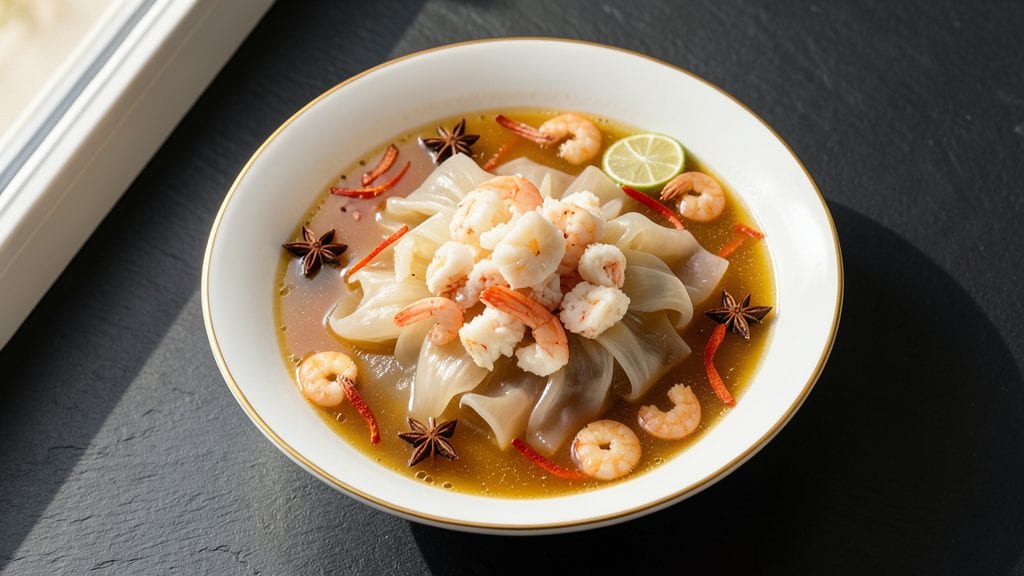
This Cantonese crab meat and fish maw soup delivers the velvety texture and delicate balance that makes it a centerpiece of luxury dining. The secret lies in transforming tough fish maw into silken strands through precise preparation, while sweet crab meat adds richness without overpowering.
I've refined this recipe over years of testing, ensuring every element comes together for a soup that feels both traditional and approachable.
The foundation begins with a clear, aromatic broth—light enough to let the seafood shine but flavorful enough to stand alone. Cantonese tradition calls for star anise, dried tangerine peel, and a touch of rock sugar to create depth, while fresh ginger and scallions brighten the final dish.
The fish maw requires careful soaking and simmering to achieve that signature melt-in-your-mouth texture, a process that transforms it from chewy to luxurious.
What you'll end up with is a bowl of soup where each spoonful reveals layers of flavor: the subtle sweetness of crab, the delicate chew of fish maw, and the harmony of seasonings.
The presentation matters too—garnished with scallions and a drizzle of sesame oil, it becomes a dish worthy of celebration. This is comfort food elevated, where technique meets tradition to create something truly special.
Perfect for gatherings or a luxurious weeknight dinner, this soup pairs beautifully with steamed rice and a simple green salad. The recipe balances authenticity with practicality, ensuring you can recreate this Cantonese classic without compromising on quality. Let's bring this luxurious dish to your table.
Ingredients for crab meat and fish maw soup
Four luxurious ingredients transform into a Cantonese masterpiece—silken fish maw and sweet crab take center stage.
| Ingredient | Amount | Notes |
|---|---|---|
| Dried Fish Maw 🐟 | ½ lb | Soaked 24 hours, rinsed |
| Sweet Crab Meat 🦀 | 1 lb | Lump or claw meat preferred |
| Dried Shrimp 🦐 | ¼ lb | Soaked 1 hour, drained |
| Dried Tangerine Peel 🍊 | 1 tbsp | Thin slices, no pith |
| Star Anise Pods 🌟 | 4 whole | Lightly crushed |
| Fresh Ginger Root 🧄 | 2 oz | Peeled, sliced into coins |
| Rock Sugar 🍬 | 1 tbsp | Or substitute white sugar |
| Dried Shiitake Mushrooms 🍄 | 4 whole | Rehydrated, stems removed |
| Green Onions 🧅 | ½ cup | White and green parts separated |
| Sesame Oil 🫒 | 1 tbsp | Toasted, for finishing |
| Light Soy Sauce 🍶 | 2 tbsp | Kikkoman preferred |
| Shaoxing Wine 🍷 | ¼ cup | Or dry sherry substitute |
| Chicken Stock 🍲 | 4 cups | Homemade or high-quality store |
| Cornstarch Slurry 🌾 | 1 tbsp | 1 tbsp cornstarch + 2 tbsp water |
Fish maw is the star here, so don't cut corners. Look for dried fish maw at Asian markets—the thicker, whiter pieces are ideal. Soak it for 24 hours in water changes, then simmer gently until it becomes silky. Costco or H Mart often carry pre-soaked versions if you're short on time, but fresh prep makes all the difference. The crab meat should be sweet and firm—Blue Crab or Dungeness work best, and always buy live if possible for peak freshness. For dried shrimp, Asian grocery stores have the best selection, but any dried shrimp will do if soaked properly.
No dried tangerine peel? Substitute orange zest—it won’t be identical, but it’ll add brightness. Star anise pods are non-negotiable for that signature aroma, but if you can’t find them, a pinch of anise extract works in a pinch (literally). Shaoxing wine is traditional, but dry sherry or even a splash of white wine will keep the dish balanced. The rock sugar? White sugar works fine, though it lacks the subtle depth. For shiitake mushrooms, fresh ones work too—just slice them thin and skip the soaking. And if your crab meat is pre-cooked, pat it dry before adding to avoid a watery soup.
This soup tastes even better the next day as flavors meld. Store it in an airtight container in the fridge for up to 3 days, or freeze for 2 months. Reheat gently on low—never boil, or the fish maw will toughen. Garnish with fresh scallions and a drizzle of toasted sesame oil right before serving. The cornstarch slurry is your secret weapon for that signature silky finish—whisk it well and add it off the heat for the smoothest texture.
Why You'll Love This Recipe
- No-Fuss Prep: I’ll admit, the fish maw needs soaking—but honestly, that’s it. Toss it in cold water for 30 minutes while you chop a single onion, and you’re done. No last-minute grocery runs, no hidden steps.
- Umami Bomb: That first sip? The crab meat melts into the broth while the fish maw soaks up the star anise and tangerine peel, leaving you with a sweet-savory depth. The dried shrimp adds a briny crunch that makes every bite worth it.
- Weeknight to Dinner Party: Same recipe, totally different vibes. Serve it steaming in bowls with jasmine rice for a lazy Tuesday, or plate it elegantly with steamed greens for guests. The fish maw’s silky texture and crab’s luxury feel foolproof for any occasion.
- Leftovers That Last: This soup tastes even better the next day—if there is a next day. The flavors meld into something richer, and the fish maw stays tender. Between us, I’ve reheated mine three times, and it’s still my go-to for quick lunches. Budget-friendly? Absolutely.
Step-by-step instructions for crab meat and fish maw soup
Here's how to create that signature Cantonese silkiness—layer by layer, heat by heat.
Prepare the Key Ingredients for Maximum Texture
Begin by soaking the 0.5 lb dried fish maw in cold water for 24 hours, changing the water every 8 hours. This transforms it from rubbery to silken. After soaking, rinse thoroughly to remove any impurities—you want it clean but still hydrated. The fish maw should feel tender when pressed gently between your fingers, like a well-cooked egg white.
Meanwhile, soak the 0.25 lb dried shrimp for 1 hour in warm water, then drain and rinse. For the 4 whole dried shiitake mushrooms, cover them with hot water and let them soak until pliable (15-20 minutes). Remove stems and slice caps into ¼-inch pieces. These ingredients form the soup's luxurious body—don't skip the proper soaking or they'll turn to mush later.
Build the Aromatic Base with Precision
In a large pot, combine the 4 cups chicken stock, 2 oz sliced fresh ginger root, 4 lightly crushed star anise pods, 1 tbsp dried tangerine peel, and 1 tbsp rock sugar. Bring to a gentle simmer over medium heat—you want just small bubbles breaking the surface, not a rolling boil. This low-and-slow approach extracts maximum flavor from the aromatics without burning them.
Simmer uncovered for 15 minutes until the liquid reduces slightly and the fragrance fills your kitchen. The star anise should be fragrant but not bitter, and the ginger should perfume the air like a spa. This is your flavor foundation—if it tastes bland now, the final soup will be flat. Taste and adjust seasoning with 1 tbsp light soy sauce if needed, but hold the rest until later.
Add the Silken Components with Care
Drain and rinse the soaked fish maw and dried shrimp, then add them to the simmering broth. Return to a gentle simmer and cook for 8-10 minutes—just until the shrimp turns opaque and the fish maw becomes translucent but still holds its shape. Overcooking here turns it to rubber. You're aiming for that signature silken bite, not a mushy texture.
Add the rehydrated shiitake mushrooms and 0.25 cup shaoxing wine, then simmer for another 5 minutes. The wine should mellow out any sharpness from the mushrooms. Remove the star anise pods at this point—they've done their job. The soup should now have a delicate balance of umami from the seafood and bright citrus notes from the tangerine peel.
Finish with the Crab Meat for Perfect Texture
Gently stir in the 1 lb sweet crab meat—this is where the magic happens. Simmer for just 2-3 minutes—any longer and the crab turns rubbery. You want it heated through but still tender, with that signature melt-in-your-mouth quality. The crab should be barely cooked, just warmed through from the surrounding broth. Remove from heat immediately after this brief cooking.
Stir in the 1 tbsp cornstarch slurry and let it thicken slightly for 1 minute—this creates that signature velvety consistency without making the soup gluey. If it thickens too much, add 1-2 tablespoons hot water to adjust. The soup should coat the back of a spoon but still be light enough to sip easily.
Plate with Elegance for Maximum Impact
Divide the soup among 4 bowls, arranging each serving with 2-3 slices of green onion whites at the bottom for texture. Ladle the soup carefully over the onions, then finish with 1 teaspoon toasted sesame oil and a sprinkle of green onion tops. The oil should float on top like a golden sheen—this is your visual cue that it's ready to serve.
Serve immediately with steamed jasmine rice on the side. The contrast of the silken soup against the fluffy rice is what makes this dish truly special. Each spoonful should deliver that perfect balance of seafood sweetness, aromatic depth, and delicate texture—no single ingredient should overpower the others. That's the hallmark of a well-made Cantonese fish maw soup.
Pro Tips For Making Crab Meat And Fish Maw Soup
- Soak Fish Maw Twice: First soak dried fish maw in warm water for 30 minutes to break up the fibers, then transfer to fresh cold water for 2+ hours. I learned this the hard way—skipping the second soak leaves it chewy, no matter how long you boil it later.
- Boil Shrimp First: Toss dried shrimp into the broth before adding fish maw or crab meat. They’ll release flavor faster and won’t overcook into rubbery bits. (Yes, even if it looks like you’re starting the soup early—trust me.)
- Watch the Star Anise: Smash the star anise pods lightly with the side of a knife before adding them. This releases the aroma without turning the broth bitter—my grandmother’s trick, and it actually changes the outcome.
- Add Crab Meat Last: Stir in the sweet crab meat only in the final 2 minutes of simmering. Any longer, and it’ll turn mushy. (I know, I know—you want to rush it, but your future self will thank you.)
Pro cooking tips for this recipe
Silken Fish Maw Mastery
Transforming fish maw from rubbery to silken requires patience and precision. Start by soaking it for 24 hours with water changes every 8 hours—this removes impurities and hydrates the fibers. After soaking, rinse thoroughly and press gently; it should feel tender like a well-cooked egg white.
For the final texture, simmer it in broth for just 8-10 minutes—any longer and it turns to mush. I use a large pot with a tight-fitting lid to trap steam and ensure even cooking. 🌊
Broth Temperature Control
The broth must simmer at a gentle bubble (small bubbles breaking the surface) to avoid burning the aromatics. I maintain this by using medium-low heat and never letting it boil vigorously. A thermometer helps—I aim for 185-195°F.
If the broth boils, the fish maw will toughen and lose its delicate texture. For extra clarity, I strain the broth after simmering the aromatics to remove any sediment before adding the seafood. ⚡
Crab Meat Timing
Add crab meat only in the final 2-3 minutes of cooking—this keeps it tender and sweet. Overcooking turns it rubbery and dulls its natural flavor. I stir gently to prevent breaking the delicate pieces.
For extra insurance, I preheat the crab meat in the broth for just 1 minute before the final simmer to ensure even warming without overcooking. 🦀
Cornstarch Slurry Secrets
The cornstarch slurry (1 tbsp cornstarch + 2 tbsp water) is your texture game-changer. Whisk it vigorously to eliminate lumps, then stir it into the soup off the heat for 1 minute—this prevents a gluey consistency.
If the soup thickens too much, add 1-2 tbsp hot water to adjust. The goal is a light, velvety coat on your spoon, not a thick paste. I use a wire whisk for smooth results. ✨
Garnish Placement
Arrange green onion whites at the bottom of each bowl before ladling the soup to add subtle texture. Finish with green onion tops and a drizzle of toasted sesame oil—this creates visual appeal and enhances aroma.
The oil should float like a golden sheen, signaling the dish is ready. I garnish right before serving to preserve freshness and aroma. 🌟
Heat Adjustments
If your kitchen runs hot, reduce the heat to low once the broth begins simmering to maintain control. For electric stoves, I use the back burner for more stable heat. Gas stoves require slightly higher attention—adjust the flame to a small blue flame rather than a roaring yellow one.
The key is consistency; even slight temperature fluctuations can affect the fish maw's texture. 🔥
Nutrition facts
Frequently asked questions
Why does fish maw need 24 hours of soaking?
The extended soaking removes impurities and hydrates the collagen fibers, transforming tough fish maw into silken strands. Skipping this step results in chewy, rubbery texture. Change the water every 8 hours to prevent cloudiness. This preparation is non-negotiable for authentic Cantonese texture.
Can I substitute fresh crab meat with canned?
Fresh sweet crab meat is ideal for its delicate flavor, but high-quality canned lump crab works in a pinch. Drain and rinse thoroughly to remove excess brine. Avoid pre-cooked crab cakes or imitation crab—they lack the natural sweetness and texture. If using canned, add it just 1 minute before serving to maintain tenderness.
What if my fish maw turns out mushy?
Overcooking is the usual culprit. Simmer fish maw at a gentle bubble for no more than 10 minutes—it should remain translucent with slight resistance. If it's already mushy, strain the broth and try again with fresh fish maw. A tight-fitting lid helps maintain even heat distribution. This is why proper soaking matters most.
How can I make this soup vegetarian?
Replace crab meat with 1 lb king oyster mushrooms (sliced) or firm tofu> (pressed and cubed). For fish maw, use dried wood ear mushrooms> (soaked 1 hour). Keep the same cooking times but reduce simmering to 5-7 minutes for the mushrooms. The broth and aromatics remain identical—just adjust the protein timing.
Can I prepare this soup ahead of time?
Yes! Store the soup (without crab meat) in an airtight container for 3 days> in the fridge or 2 months> frozen. Reheat gently on low heat—never boil. Add crab meat fresh when serving to preserve its tenderness. The flavors actually improve overnight as they meld. Garnish just before eating for maximum aroma.