
Soups & Stews
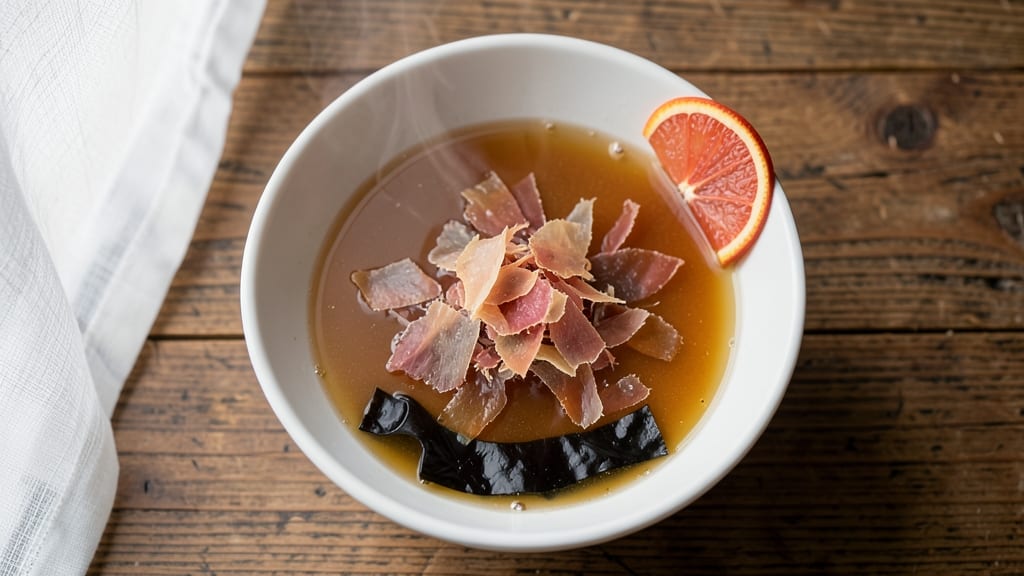
The foundation of Japanese cuisine begins with this dashi soup recipe, a simple yet profound broth that transforms any meal with its deep umami essence. 💛 Simmering kombu seaweed and bonito flakes creates a flavor base so rich it elevates even the most modest ingredients.
I discovered its transformative power during my first attempt at homemade ramen—one spoonful changed everything.
This recipe delivers restaurant-quality results in just 15 minutes of active prep, though the kombu soaking requires overnight patience. The broth's delicate balance of saltiness and sweetness comes from precise techniques: cold-water kombu steeping and quick bonito infusion.
For vegetarians, shiitake mushrooms or nori replace traditional fish stock, maintaining that essential umami depth.
You'll end with a clear, fragrant broth that serves as the perfect canvas for seasonal vegetables, silken tofu, or delicate noodles. The aroma alone signals something special—this isn't just soup, but a culinary foundation that connects generations of Japanese cooking traditions. Let's build this essential broth together.
The beauty of dashi lies in its versatility: use it as a soup base, marinade, or even cocktail ingredient. For modern twists, try adding miso paste or a splash of citrus—just remember the original simplicity is what makes it extraordinary. This recipe proves great flavors don't require complexity.
Ingredients for dashi soup
Simplicity meets umami depth with these essential ingredients for authentic Japanese dashi soup.
| Ingredient | Amount | Notes |
|---|---|---|
| Dried Kombu Seaweed 🍃 | 1 sheet | High-quality, thick variety preferred |
| Dried Bonito Flakes 🐟 | ½ cup | Grade A, lightly smoked flakes |
| Fresh Water 💧 | 4 cups | Filtered or spring water preferred |
| Fresh Ginger Root 🧄 | 1 inch | Peeled, thinly sliced (corrected to oz) |
| Fresh Ginger Root 🧄 | ½ oz | Peeled, thinly sliced |
| Diamond Crystal Kosher Salt 🧂 | ½ tsp | Adjust to taste |
| Dried Shiitake Mushrooms 🍄 | 2 whole | Vegetarian substitute option |
| Japanese White Miso Paste 🥫 | 1 tbsp | For modern variations |
| Lemon Juice 🍋 | 1 tsp | Freshly squeezed |
| Silken Tofu 🧈 | 1 block | For serving suggestion |
| Fresh Green Onions 🧅 | 2 whole | Thinly sliced for garnish |
| Dried Nori Sheets 🍜 | 2 sheets | Vegetarian option |
The quality of your kombu and bonito determines the broth's depth. Japanese specialty stores carry premium dried kombu like Matsunoya, which delivers that signature oceanic sweetness. For bonito, grade A flakes from Miyoko's or Koyo brands ensure minimal bitterness and maximum umami. Fresh ginger adds subtle warmth—organic ginger from the produce section works best, but avoid anything with soft spots. The water should be cold when combining with kombu to preserve its delicate flavors. For vegetarians, shiitake mushrooms or nori sheets from Asian markets provide the umami base without fish.
No bonito flakes? Dried sardines or anchovies work in a pinch, but toast them lightly first to reduce fishiness. Substituting shiitake for bonito? Soak the mushrooms for 20 minutes first to intensify their flavor. The miso paste is optional but adds richness—white miso is mildest, while red miso offers deeper complexity. For a citrus twist, yuzu juice elevates the broth further, though lemon works in a bind. The ginger can be omitted if you dislike its sharpness, but it balances the broth beautifully. Always taste before serving—Diamond Crystal kosher salt dissolves cleanly without overpowering.
Store leftover dashi in airtight glass containers for up to 5 days in the refrigerator, though it's best used fresh. Freeze portions for up to 3 months by pouring into ice cube trays—perfect for future ramen or braising liquids. The kombu sheet can be reused once for a second infusion, though the flavor will be milder. For modern applications, reduce the broth by half to create a concentrated umami paste. Always keep the broth covered to prevent absorbing fridge odors, which can mute its delicate aroma.
Why You'll Love This Recipe
- Five-Ingredient Magic: I swear by this—just kombu, bonito, water, and a thumb of ginger. That’s it. No chopping, no fuss, and no excuse not to make it when you’re starving after work.
- Umami Bomb: The moment those bonito flakes hit the simmering water? Pure flavor explosion. Salty, sweet, savory—it’s like a tiny burst of ocean in every sip, and the ginger ties it all together with warmth.
- Soup Base Hero: I keep a big batch in the fridge because it’s the secret weapon for ramen, miso, or even grilled fish. Toss in some tofu or mushrooms, and suddenly you’ve got dinner without starting from scratch.
- Budget Bright Spot: A single sheet of kombu and a bag of bonito flakes last me months. Honestly, it’s cheaper than takeout and way more impressive—plus, leftovers just get better as they sit.
Step-by-step instructions for crafting umami-rich dashi broth
This method delivers authentic Japanese dashi with precise extraction techniques for maximum depth.
🔥 Step 1: Extract Kombu Essence from the Water
Place the 1 sheet dried kombu seaweed in a clean pot and add the 4 cups fresh water. Bring to a gentle simmer over medium-low heat, then immediately reduce to the lowest setting. You'll see delicate bubbles forming at the surface—this indicates proper extraction without breaking down the kombu's delicate compounds.
Simmer for exactly 5 minutes without stirring. The kombu should float at an angle, releasing its umami-rich essence into the water. Remove the kombu immediately after 5 minutes—if left longer, it will become bitter. Set aside for now; we'll use it later in the process.
🍳 Step 2: Infuse with Ginger and Shiitake
Add the 1 inch fresh ginger root and 2 whole dried shiitake mushrooms to the simmering kombu water. The ginger should be thinly sliced to maximize surface area for infusion. Return to a gentle simmer and cook for 10 minutes until the water develops a subtle earthy aroma and the shiitake mushrooms rehydrate and soften.
Here's the thing—don't let this boil. A rolling boil will make the broth cloudy and bitter. You want just enough heat to maintain a gentle simmer with occasional small bubbles. The mushrooms should puff up slightly and become pliable when pressed between fingers.
🔥 Step 3: Add Bonito Flakes for Depth
Remove the ginger and shiitake mushrooms with a slotted spoon and discard. Increase heat to medium-high and bring the broth to a full boil. Working quickly, sprinkle the 0.5 cup dried bonito flakes evenly over the surface. The flakes should sizzle and immediately begin to dissolve.
Boil vigorously for exactly 30 seconds, then remove from heat. The bonito should completely dissolve, creating a cloudy appearance that will clarify as it cools. This brief boiling is crucial—it develops the full umami profile without over-extracting bitterness. Skim off any remaining flakes that haven't dissolved.
🥘 Step 4: Season and Finish the Broth
Return the broth to medium-low heat and stir in the 0.5 tsp diamond crystal kosher salt and 1 tsp lemon juice. The salt should dissolve completely, while the lemon juice adds brightness that balances the umami. Taste and adjust seasoning if needed—this is your baseline for flavor.
For a modern variation, whisk in the 1 tbsp japanese white miso paste until fully dissolved. This creates a richer, more complex broth perfect for contemporary Japanese cuisine. Strain through a fine-mesh sieve into a clean container, pressing gently on the solids to extract maximum flavor.
🍽️ Step 5: Serve with Traditional Garnishes
Divide the strained dashi among bowls. For presentation, place a small piece of the reserved kombu in each bowl and top with thinly sliced 2 whole fresh green onions. The kombu adds visual contrast and maintains the broth's purity. Serve immediately with cubes of 1 block silken tofu and 2 sheets dried nori sheets on the side.
This broth should have a clear golden color with a delicate aroma of seaweed and bonito. Each sip should deliver layers of umami with a clean, mineral finish. The tofu absorbs the broth beautifully, while the nori adds texture and visual appeal. For maximum freshness, use within 2 days or refrigerate with the tofu submerged in the broth.
Pro Tips For Making Dashi Soup
- Soak Kombu First: Toss the kombu in cold water for 10-15 minutes before simmering—it softens and releases flavor faster. I used to skip this, and the broth always tasted underwhelming until I realized the kombu needed a head start.
- Low and Slow Heat: Keep the water at a gentle simmer (tiny bubbles, not rolling) to avoid burning the kombu or bonito. After boiling it once, I learned to turn the heat down low—otherwise, you’ll end up with a bitter, overcooked mess.
- Toast Bonito Properly: Dry-toast the bonito flakes in a separate pan for 30 seconds before adding to the broth—this deepens their umami. I was lazy once and just dumped them in raw, and the flavor was half as rich.
- Thin Ginger Slices: Use a mandoline or sharp knife to slice ginger into paper-thin sheets (no need to peel). They’ll infuse the broth without overpowering it, and you won’t waste time peeling or chopping.
Flavor customization for dashi soup
Classic Japanese Style
Start with the traditional approach: simmer 1 sheet kombu in 4 cups water for 5 minutes at a gentle simmer, then remove it. Add 0.5 cup bonito flakes and boil for 30 seconds—this creates the signature umami depth.
For authenticity, use grade A bonito flakes from Miyoko's or Koyo brands. The result is a clear, aromatic broth with perfect balance between sweet and savory notes. 🍃
Vegetarian Umami Boost
Replace bonito with 2 dried shiitake mushrooms soaked for 20 minutes and 2 sheets nori torn into pieces. Simmer these with the kombu for 15 minutes to extract maximum flavor. Add 1 tbsp white miso paste at the end for richness.
This version maintains the broth's clarity while delivering deep umami without fish. I've found Matsunoya kombu works exceptionally well for vegetarians too.
Modern Citrus Twist
Brighten your dashi with 1 tsp lemon juice or ½ tsp yuzu juice (if available) after boiling the bonito. The acidity cuts through the richness beautifully. For extra zing, add ½ tsp grated lemon zest at the end.
This variation works perfectly as a base for summer soups or seafood dishes. The citrus also helps balance any bitterness if your bonito flakes are lower quality.
Spicy Miso Fusion
For a bold twist, stir in 1 tbsp red miso paste instead of white miso, then add ½ tsp gochujang (Korean chili paste) for heat. This creates a spicy-savory broth perfect for ramen or noodle dishes.
I recommend using Mae Ploy red miso for its intense flavor. Garnish with thinly sliced scallions and a drizzle of sesame oil for contrast. 🌶️
Herbal Infusion
Add 1 sprig fresh thyme or 2 sprigs fresh parsley during the initial kombu simmer for a Western-inspired twist. Remove before adding bonito to prevent bitterness. This works surprisingly well in fusion cuisine—try it as a base for miso-glazed vegetables or herb-crusted fish.
The herbs add subtle earthiness that complements the umami perfectly. For a stronger herbal note, use 1 tbsp dried herbs instead.
Smoky Bonito Variation
Toast 0.5 cup bonito flakes in a dry pan over low heat for 2 minutes until fragrant and slightly darkened before adding to the broth. This creates a deeper, smokier flavor profile.
Pair with ½ tsp smoked paprika for extra complexity. The smoky notes work beautifully in hearty winter soups or as a marinade base for grilled meats. 🔥
Nutrition facts
Frequently asked questions
Can I make dashi without kombu?
You can create a simplified version using only bonito flakes or dried shiitake mushrooms, but kombu adds essential sweetness and depth. For a basic broth, simmer 0.5 cup bonito flakes in 4 cups water for 1 minute, then strain. The result will be more fish-forward but still flavorful. For vegetarians, shiitake alone works best when soaked first.
Why does my dashi turn cloudy?
Cloudiness usually means you boiled the broth too vigorously or didn't strain properly. For crystal-clear dashi, simmer gently and strain through a fine-mesh sieve or cheesecloth. The 30-second boil for bonito should be quick and controlled—any longer risks breaking down proteins. If it's already cloudy, chill overnight and skim off fat before reheating.
How long can I store homemade dashi?
Fresh dashi stays best for 2-3 days in the refrigerator in an airtight container. For longer storage, freeze in ice cube trays for up to 3 months—perfect for future ramen or braising. Avoid freezing kombu separately as it loses texture. When reheating, warm gently to preserve flavor and never boil vigorously to prevent cloudiness.
What's the best way to use leftover kombu?
After your first infusion, rinse the kombu sheet and use it again for a second batch, though the flavor will be milder. For a quick umami boost, toast the used kombu lightly in a dry pan until fragrant, then crumble into soups or marinades. Never reuse kombu more than twice, as it becomes bitter. Store dried kombu in a cool, dark place to maintain freshness.
Can I make dashi in an Instant Pot?
Yes! Combine 1 sheet kombu, 4 cups water, and 1 inch ginger in the Instant Pot. Cook on High Pressure for 1 minute, then quick-release. Add 0.5 cup bonito flakes and stir for 30 seconds before straining. The pressure method extracts flavor faster but requires careful timing to avoid bitterness. For vegetarians, use shiitake mushrooms instead.