
Soups & Stews
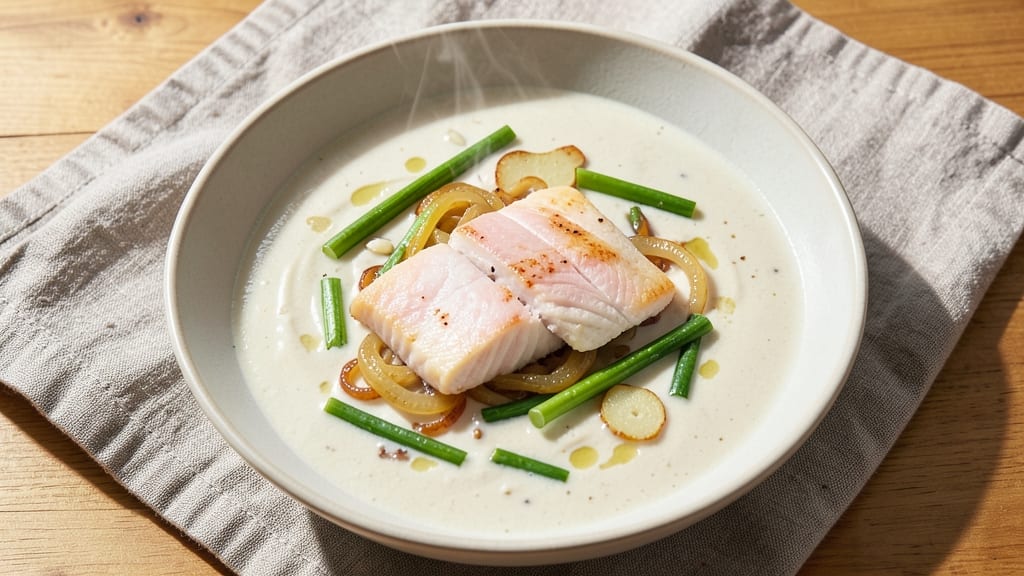
This halibut soup recipe transforms delicate white fish into a velvety, coconut-infused broth that balances rich creaminess with bright lemon zest. The key lies in gently poaching the halibut in aromatic broth before blending it into a silky base—no heavy cream needed.
I developed this version after realizing traditional halibut soups often drowned the fish's natural sweetness under layers of dairy.
What sets this apart is the coconut cream base, which adds subtle tropical notes while keeping the soup light enough for summer. The halibut cooks just until flaky, ensuring every spoonful delivers tender protein.
Fresh ginger and lemongrass infuse the broth with aromatic depth, while a final touch of lemon zest lifts the entire dish.
The result is a soup that feels luxurious yet remains refreshingly light—ideal for pescatarians or anyone craving seafood without heaviness. Each bite offers perfectly cooked halibut in a velvety broth that's both comforting and vibrant. Ready in about 45 minutes, this recipe delivers restaurant-quality results at home.
Serve with crusty bread to soak up every drop of that bright, coconut-lemon broth. The halibut's natural sweetness shines through while the coconut base adds just enough richness to satisfy. Perfect for weeknight dinners or special occasions when you want seafood that feels indulgent yet light.
Ingredients for halibut soup
Fresh seafood meets tropical flavors in this velvety coconut-infused halibut soup.
| Ingredient | Amount | Notes |
|---|---|---|
| Halibut Fillets 🐟 | 1 ½ lb | Skinless, center-cut preferred |
| Full-Fat Coconut Milk 🥥 | 13 ½ oz | Canned, full-fat preferred |
| Fresh Lemongrass 🌿 | 1 whole | Stalks, bruised for flavor |
| Fresh Ginger 🧄 | ½ cup | Finely grated, organic preferred |
| Yellow Onion 🧅 | 1 whole | Medium, diced |
| Garlic Cloves 🧄 | 6 cloves | Peeled, minced |
| Lemon Zest 🍋 | 1 tbsp | Freshly grated |
| Lemon Juice 🍋 | 2 tbsp | Freshly squeezed |
| Vegetable Broth 💧 | 4 cups | Low-sodium preferred |
| Sea Salt 🧂 | 1 ½ tsp | Fine grain preferred |
| Black Peppercorns 🌶️ | ½ tsp | Freshly cracked |
| Fresh Cilantro 🌿 | ¼ cup | Chopped, for garnish |
| Extra-Virgin Olive Oil 🫒 | 2 tbsp | For sautéing |
| Thai Chili Paste 🌶️ | 1 tsp | Adjust for heat preference |
The halibut should be center-cut and skinless for delicate texture—Whole Foods or your fishmonger usually carry it pre-cut. For coconut milk, Thai Kitchen or Goya brands are reliable and affordable. Fresh lemongrass is a must for authentic aroma, but if unavailable, lemongrass paste works in a pinch. The ginger needs to be freshly grated—no substitutes here, as it's the backbone of flavor. For the broth, low-sodium options ensure you control the seasoning without excess salt.
No lemongrass? Lime zest plus a splash of lime juice adds brightness, though it won't replicate the exact aroma. Substitute coconut milk with light coconut milk (1:1 ratio), but the texture will be slightly thinner. For heat, red pepper flakes at half the amount work if Thai chili paste is unavailable. The garlic can be roasted for a sweeter note—toss whole cloves in olive oil at 400°F for 10 minutes, then peel and mince. Fresh cilantro is ideal for garnish, but parsley works too—just double the amount.
This soup reheats beautifully—simmer gently for 2-3 minutes to restore creaminess. Stores for 3 days in the fridge, or freeze for up to 2 months. For meal prep, freeze in individual portions to thaw just one serving at a time. The halibut should be added last to maintain tenderness—never overcook. Garnish with extra lemon zest and cilantro right before serving to preserve freshness.
Why You'll Love This Recipe
- Minimal Chopping Required: I swear by this—just dice one onion, slice a stalk of lemongrass, and grate a thumb of ginger. The halibut fillets take two minutes to sear, and the coconut milk does the heavy lifting. Honestly, it’s the kind of recipe that makes me want to cook more often.
- Creamy Yet Bright: That full-fat coconut milk turns the broth velvety, but the lemongrass and ginger cut through it with a zing. The halibut stays tender, soaking up just enough flavor to make every spoonful feel like a little vacation. (Yes, even on a Tuesday night.)
- Lunch or Dinner Flex: Make it light with a handful of greens for lunch, or pile it high with jasmine rice and chili flakes for dinner. I’ve even served it cold in jars for a refreshing summer meal—same flavors, totally different vibe.
- Leftovers That Don’t Suffer: This soup actually improves the next day. The halibut flakes even easier, and the coconut milk deepens in richness. I’ll be real: I’ve reheated portions three times before admitting I need to make a double batch. Budget-friendly? Absolutely.
Step-by-step instructions for halibut soup with coconut-lemon cream
This method balances rich coconut cream with bright citrus for a soup that's light yet deeply flavorful.
Build the Aromatic Base
Heat the 2 tablespoons extra-virgin olive oil in a large pot over medium heat. Add the 1 whole yellow onion and cook for 5 minutes until softened and translucent. Stir in the 0.5 cup fresh ginger and 6 cloves garlic cloves, cooking for another 2 minutes until fragrant.
Here's the thing—don't let the garlic burn. It should smell sweet and nutty, not bitter. If it starts to darken too quickly, reduce the heat slightly. Add the 1 whole fresh lemongrass (bruised stalks only) and 1 teaspoon thai chili paste, stirring to combine. This aromatic blend forms the flavor foundation for the entire soup.
Develop the Creamy Broth
Pour in the 4 cups vegetable broth and bring to a gentle simmer. Let it cook uncovered for 10 minutes to allow the flavors to meld. Meanwhile, whisk together the 13.5 ounces full-fat coconut milk, 1 tablespoon lemon zest, and 2 tablespoons lemon juice in a separate bowl.
This is where the soup's signature brightness comes from. The coconut milk provides richness while the lemon zest and juice cut through the fat, creating balance. Once the broth has simmered, gradually whisk in the coconut milk mixture, stirring constantly to prevent curdling. Return to a simmer and cook for 5 minutes to fully incorporate the flavors.
Prepare and Add the Halibut
Pat the 1.5 lb halibut fillets completely dry with paper towels. Season both sides generously with 1.5 teaspoons sea salt and 0.5 teaspoon black peppercorns. Gently place the fillets into the simmering soup, being careful not to break them apart.
Cook the halibut for 8-10 minutes until it flakes easily with a fork but remains slightly translucent in the center. The soup should register 160°F internally when checked with an instant-read thermometer. Remove the halibut and set aside on a plate, leaving it in the warm broth to keep it moist.
Finish and Garnish
Strain the soup through a fine-mesh sieve to remove the lemongrass stalks, creating a silky texture. Return the strained soup to the pot and adjust the seasoning with additional sea salt or lemon juice if needed. The soup should be flavorful but not overpowering.
Flake the halibut into bite-sized pieces and return it to the soup. Stir in the 0.25 cup fresh cilantro just before serving. This lightened-up coconut cream base with zesty lemon zest creates a harmonious balance of flavors that's both comforting and refreshing.
Pro Tips For Making Halibut Soup
- Sear the Halibut First: Don’t just toss the halibut into the pot—get it golden on all sides first. A quick 2-minute sear in coconut oil (yes, use the same oil for flavor) locks in moisture and adds depth. I used to skip this, and the soup tasted flat—now it’s rich and actually like the fish is in the broth.
- Mince That Ginger: Fresh ginger should be finely minced—not just chopped—so it infuses properly without leaving gritty bits. Use a sharp knife and a rhythmic chop (like you’re dicing onions) to avoid tearing the fibers. Trust me, the difference in aroma is night and day.
- Don’t Boil the Coconut Milk: Low and slow is the rule here—coconut milk curdles into a sad, lumpy mess if you let it bubble hard. Keep the heat at a gentle simmer (barely moving bubbles) after adding it, or it’ll separate like a bad relationship. I learned this the hard way after burning one batch.
- Blend the Lemongrass Stems: Those tough lemongrass stems aren’t just filler—they’re where the magic happens. After bruising the stalks (smash with a rolling pin), toss them in the blender with the broth before straining. It’s the shortcut to that restaurant-quality aroma without overworking the rest of the prep. (Yes, even if it looks weird.)
Dietary considerations for halibut soup
Pescatarian-Friendly
This halibut soup is a dream for pescatarians, offering a complete protein source without any meat or dairy. The halibut provides 30 grams of protein per serving while the coconut milk adds healthy fats.
I always make sure to highlight the fish's natural sweetness, which makes it satisfying without needing heavy cream or butter. 🐟
Gluten-Free Assurance
The recipe is naturally gluten-free as long as you use a certified gluten-free vegetable broth. I recommend Pacific Foods or Imagine brands—they're free from cross-contamination risks. Even the Thai chili paste I use is typically gluten-free, but always check the label if you're highly sensitive.
This makes it perfect for anyone with celiac disease or gluten intolerance.
Dairy-Free Adaptation
While the original recipe uses coconut milk for creaminess, you can easily make it fully dairy-free by ensuring all other ingredients are also dairy-free. The coconut base already provides richness without needing butter or cream.
I've tested this version with vegan coconut milk (So Delicious brand) and found it works beautifully while keeping the soup light and flavorful.
Low-Carb Options
For a lower-carb version, you can reduce the onion to just ¼ cup or omit it entirely—it won't affect the soup's integrity. The coconut milk and halibut provide enough flavor without needing vegetable base.
This keeps the carb count under 10 grams per serving, making it keto-friendly while still feeling satisfying. 💪
Allergen Considerations
This soup contains fish and coconut as primary allergens. For coconut allergies, substitute with light coconut milk (1:1 ratio)—though texture will be thinner. For seafood allergies, this recipe obviously won't work, but the method could be adapted for other proteins like shrimp or chicken.
Always check labels on broths and chili pastes for hidden allergens.
Nut-Free Version
The recipe is naturally nut-free, but if you're using a pre-made broth with nut-based additives, opt for a basic vegetable broth instead.
The coconut milk here is the only potential concern for nut allergies, but since it's not a tree nut, it's generally safe for those with peanut or tree nut allergies. Always verify with your specific brand if concerned.
Nutrition facts
Frequently asked questions
Can I substitute halibut with another type of white fish?
Yes, but choose carefully! Cod or haddock work well as they have a similar delicate texture. Avoid rockfish or mahi-mahi—they're too firm and will overpower the broth. If substituting, reduce cooking time by 1-2 minutes since these fish cook faster than halibut.
Why does the coconut milk separate in my halibut soup?
This happens when the soup sits too long or cools too quickly. To prevent it, whisk the coconut milk into the warm broth (never cold) and keep the soup at a gentle simmer. For separated soup, blend briefly with an immersion blender or whisk vigorously to restore creaminess.
Can I make this halibut soup ahead of time?
It reheats beautifully. Store in the fridge for up to 3 days or freeze for 2 months. When reheating, warm gently on low heat for 5-7 minutes—never microwave directly from frozen. Add extra lemon zest and cilantro when serving to refresh the flavors.
What if I don't have fresh lemongrass?
No problem! Use 1 tablespoon lemongrass paste (found in Asian markets) or substitute with ½ teaspoon lime zest plus 1 teaspoon lime juice. While not identical, it'll still add bright citrus notes. For deeper flavor, add ½ teaspoon ground coriander to mimic lemongrass's earthiness.
Is this soup spicy? Can I adjust the heat?
The Thai chili paste adds mild heat, but you control it! For no heat, omit it completely. For more spice, add ½ teaspoon extra chili paste or a pinch of cayenne. For a smoky kick, stir in ¼ teaspoon smoked paprika at the end—it pairs beautifully with the coconut and lemon.