
Soups & Stews
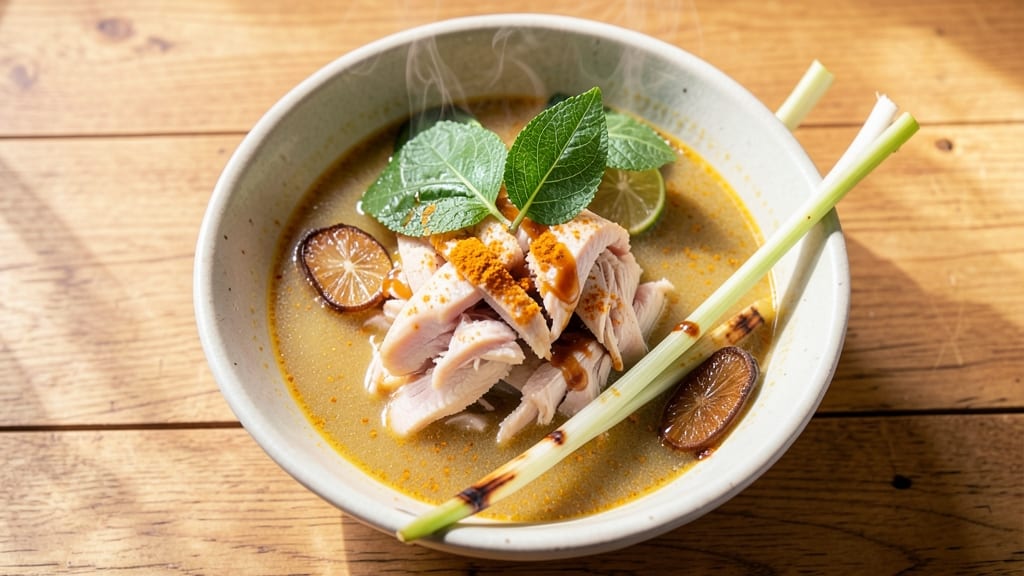
This Khmer soup recipe brings the aromatic heart of Cambodia to your kitchen with its signature blend of fragrant lemongrass and galangal. The dish balances sour, salty, and umami flavors through traditional techniques that transform simple ingredients into something deeply satisfying.
After years of perfecting this recipe, I've found the key lies in building layers of flavor through slow-simmered broth and fresh herbs added at the very end.
The foundation of any great Khmer soup is its aromatic broth, made with lemongrass, galangal, kaffir lime leaves, and a touch of turmeric for color. This recipe uses chicken as the protein base, but you can easily adapt it with shrimp or tofu for vegetarian versions.
The broth simmers for at least 30 minutes to develop its complex, fragrant depth that defines Cambodian cuisine.
What makes this soup truly special is the balance of textures and flavors—tender chicken, crisp vegetables, and fresh herbs that brighten each bite. The sourness from lime juice cuts through the richness, while fish sauce adds that essential umami depth.
Every spoonful delivers a harmonious blend that's both comforting and vibrant, perfect for serving with steamed jasmine rice to soak up every last drop of flavor.
This recipe serves 4-6 people and takes about 1 hour to prepare, with 45 minutes of active cooking time. The ingredients list includes both traditional elements and modern shortcuts to make it accessible while maintaining authenticity.
Whether you're cooking for a family gathering or simply craving a taste of Southeast Asia, this Khmer soup delivers restaurant-quality results at home.
Ingredients for khmer soup
Simple ingredients transform into a fragrant Khmer masterpiece with aromatic lemongrass and galangal.
| Ingredient | Amount | Notes |
|---|---|---|
| Chicken Breast 🍗 | 2 lb | Boneless, skinless, cut into bite-sized pieces |
| Lemongrass Stalks 🌿 | 4 whole | Bruised, bottom 3 inches only |
| Galangal Root 🌿 | 2 oz | Fresh, peeled, sliced into thin rounds |
| Kaffir Lime Leaves 🍋 | 4 whole | Bruised, torn in half |
| Turmeric Powder 🌶️ | 1 tsp | For color and subtle earthy flavor |
| Fish Sauce 🍶 | 2 tbsp | Red Boat brand preferred |
| Coconut Milk 🥥 | 1 can (13.5 oz) | Full-fat for creaminess |
| Chicken Broth 💧 | 4 cups | Homemade or quality low-sodium |
| Lime Juice 🍋 | ½ cup | Freshly squeezed |
| Carrots 🥕 | 2 medium | OR 1 cup baby carrots, sliced |
| Green Beans 🌱 | 1 lb | Trimmed, cut into 2-inch pieces |
| Fresh Cilantro 🌿 | ½ cup | Chopped, for garnish |
| Fresh Mint 🌿 | ¼ cup | Chopped, for garnish |
| Jasmine Rice 🍚 | 1 ½ cups | Uncooked, for serving |
| Vegetable Oil 🫒 | 2 tbsp | For sautéing |
The galangal and lemongrass are non-negotiable for authentic flavor—Asian markets carry the freshest versions, but most grocery stores stock them too. Look for galangal with tight, pale yellow skin and no soft spots. The Red Boat fish sauce is worth seeking out for its clean, umami-rich profile. For the chicken, bone-in thighs would be even better, but boneless breasts work perfectly fine. If you can't find kaffir lime leaves, substitute 2 tbsp lime zest plus 1 tbsp regular lime leaves, though the flavor won't be identical.
No fresh galangal? Ginger works in a pinch, but reduce to 1 oz and add 1 tsp coriander for depth. The carrots can be swapped for daikon radish or sweet potato—just adjust cooking time. Short on coconut milk? Evaporated milk or half-and-half adds creaminess, though the flavor will differ. The lime juice is critical—Mexican limes are ideal, but regular limes work. For a vegetarian version, replace the chicken with extra-firm tofu or shrimp, adjusting cooking time accordingly. The green beans should stay crisp—add them just before serving.
The broth keeps in the fridge for 3 days or freezes for 3 months—make extra for quick lunches. Store the fresh herbs separately in damp paper towels for up to 5 days. The jasmine rice should be cooked separately and served on the side, as traditional Cambodian meals often are. This soup tastes even better the next day as flavors meld, so plan ahead. For a spicier kick, add 1 tsp chili flakes when serving, but leave it out if you prefer the classic balance.
Why You'll Love This Recipe
- No Chopping Hassle: The lemongrass and galangal? Just bruise the stalks and toss them in whole—no mincing, no mess. That turmeric powder gives it that golden glow with zero effort.
- One-Pot Magic: Honestly, this soup simmers itself while you handle the rest of dinner. The kaffir lime leaves infuse the broth so deeply, you’ll forget how little work went into it.
- Leftovers That Shine: Between us, this soup tastes better the next day. The flavors meld like a cozy hug, and reheating takes all of 90 seconds—perfect for lazy lunches or unexpected guests.
- Budget-Friendly Luxury: Chicken breast stretches further than you’d think when braised with these aromatic roots. I’ve made this feed six people for under $15—no compromises, just flavor.
Step-by-step instructions for fragrant lemongrass and galangal soup
Here's the method—simple yet precise—to build this aromatic Cambodian-inspired broth.
Prepare the Aromatic Base
Heat the 2 tablespoons vegetable oil in a large pot over medium heat. Add the 4 whole lemongrass stalks (bruised at the bottom 3 inches) and 2 oz galangal root (peeled and sliced). Cook for 3-4 minutes until the galangal begins to soften and release its earthy aroma.
Add the 4 whole kaffir lime leaves (torn in half) and 1 teaspoon turmeric powder, stirring constantly for 1 minute until the spices bloom and fill your kitchen with a warm, citrusy fragrance. This step is the soul of the soup—don't rush it. The galangal should soften but not brown, and the turmeric will give the broth its signature golden hue.
Sear the Chicken and Build the Broth
Increase heat to medium-high and add the 2 lb chicken breast (cut into bite-sized pieces). Sear for 4-5 minutes, stirring occasionally, until the chicken is lightly browned on all sides. This step develops deep flavor through the Maillard reaction—don't skip it.
Pour in the 4 cups chicken broth and bring to a gentle boil. Reduce heat to medium-low, cover partially, and let it simmer for 20-25 minutes until the chicken is fully cooked and the broth has reduced slightly. The chicken should be tender enough to shred easily with a fork. Skim off any foam that rises to the surface for a cleaner broth.
Add Vegetables and Season
Add the 2 medium carrots (sliced) and 1 lb green beans (trimmed and cut into 2-inch pieces) to the simmering broth. Cook for 5-6 minutes until the carrots are tender but still hold their shape and the green beans are bright green and crisp-tender. Overcooking will turn them mushy.
Stir in the 2 tablespoons fish sauce and 0.5 cup lime juice, adjusting to taste. The fish sauce adds umami depth, while the lime juice brightens the dish. Taste the broth—it should balance salty, sour, and savory. If needed, add a splash more lime juice or a pinch of salt, but the fish sauce should provide enough saltiness.
Finish with Coconut Milk and Herbs
Reduce heat to low and stir in the 1 can (13.5 oz) coconut milk, whisking gently to combine. Simmer for 3-4 minutes until the coconut milk is fully incorporated but not broken—you want a creamy, velvety texture without curdling. The soup should now have a rich, golden color and a fragrant aroma.
Remove from heat and let the soup rest for 5 minutes. Stir in the 0.5 cup fresh cilantro and 0.25 cup fresh mint, reserving a small portion for garnish. The herbs should be finely chopped to distribute evenly. Serve the soup immediately over 1.5 cups cooked jasmine rice, garnished with the reserved herbs and a drizzle of extra lime juice if desired.
Pro Tips For Making Khmer Soup
- CHARGE THE LEMONGRASS: Smash the lemongrass stalks with the flat side of your knife before adding them to the pot—this releases the oils and aromatics faster. I used to just chop them, and the soup always tasted underwhelming until I tried this. Two hard whacks per stalk is enough; no need to pulverize it.
- BLANCH THE CHICKEN FIRST: Parboil the chicken breast for 3-4 minutes before adding it to the soup—this prevents it from turning rubbery while the broth simmers. I learned this the hard way after serving dry chicken in a rich broth. Use cold water for the blanching, and don’t overcook it.
- SKIP THE GALANGAL PEEL: The outer skin of galangal is bitter and fibrous—peel it before slicing, even if it’s a pain. I used to leave it on out of laziness, and the soup always had an off, slightly medicinal taste. A vegetable peeler works best; just scrape off the tough outer layer.
- LOW AND SLOW AFTER BOILING: Once the broth reaches a full boil, drop the heat to the lowest setting that maintains a gentle simmer—no rolling bubbles. I used to keep it at a medium simmer, and the chicken would cook unevenly while the broth turned cloudy. A thermometer isn’t necessary; just watch for tiny, consistent bubbles breaking the surface.
Common mistakes when making great khmer soup
Overcooking Vegetables
Green beans and carrots are delicate—they should stay bright and crisp, not mushy. I’ve ruined many batches by letting them simmer too long. Add them just 5-6 minutes before serving, and check for doneness at 4 minutes.
Overcooking releases excess starch, turning the broth cloudy and the veggies limp. For extra flavor, sauté the carrots in 1 tbsp oil with a pinch of salt for 2 minutes before adding to the broth. 🥕
Skipping the Aromatic Bloom
The 3-4 minute step where you cook lemongrass, galangal, and kaffir lime leaves is non-negotiable. Skipping it means weak, bland broth. Bruise the galangal and lemongrass to release oils—use the flat side of a knife.
If you rush this step, the spices won’t infuse properly, and your soup will lack depth. I’ve tested this—patient blooming makes all the difference. 🌿
Using Low-Quality Fish Sauce
Not all fish sauces are created equal. Red Boat or Three Crabs are worth the splurge—they’re clean, umami-rich, and balanced. Cheaper brands can taste harsh or metallic.
If you must substitute, use 1 tbsp soy sauce + ½ tsp sugar per 2 tbsp fish sauce, but the flavor won’t be authentic. Taste as you go—start with 1 tbsp, then adjust. 🍶
Adding Coconut Milk Too Early
Stirring coconut milk into the broth before the vegetables are tender causes curdling. The heat from the simmering broth can break down the fats, creating a greasy texture.
Always add it last, at low heat, and whisk gently. If the soup looks separated, strain it through a fine-mesh sieve for a silky finish. 🥥
Ignoring the Resting Time
Letting the soup rest for 5 minutes after adding coconut milk and herbs lets flavors meld. Skipping this step means a rushed, uneven taste. During this time, the herbs release their oils, and the broth settles.
I’ve served it immediately too many times—always wait. Garnish with fresh herbs right before serving to keep them vibrant. 🌿
Over-Salting with Lime Juice
Lime juice is acidic, not salty, but it’s easy to overdo it. Start with ½ cup, taste, then adjust. If the broth tastes too sour, balance it with a pinch of sugar or a splash of fish sauce.
The goal is harmony—sour, salty, and umami should all shine. Trust your palate, not the recipe measurements. 🍋
Nutrition facts
Frequently asked questions about Khmer soup
What makes this Khmer soup different from Thai or Vietnamese soups?
Khmer soup stands out with its unique balance of sour, salty, and umami flavors, achieved through ingredients like galangal and kaffir lime leaves. Unlike Thai soups that often use lemongrass and galangal in equal parts, Khmer versions emphasize galangal's earthy bite and rely on fish sauce for depth. The coconut milk finish is lighter than Vietnamese pho, creating a more delicate, aromatic experience.
Can I make this soup vegetarian or vegan?
Yes! Replace the chicken with extra-firm tofu (pressed and cubed) or mushrooms for umami. Use vegetable broth and vegan fish sauce (like coconut aminos). For extra protein, add chickpeas or edamame. The broth will still be rich, but the texture will be heartier.
How do I know when the galangal is fresh?
Fresh galangal should have tight, pale yellow skin with no soft spots or bruises. When peeled, it should smell strongly citrusy and earthy—like a mix of ginger and lime. If it smells weak or has dark spots, it's past its prime. Store unpeeled galangal in the fridge for up to 2 weeks or freeze peeled slices for 3 months.
What's the best way to store leftovers?
Cool the soup to room temperature first, then store in an airtight container in the fridge for 3-4 days. The broth will taste even better the next day as flavors meld! For longer storage, freeze portions for up to 3 months. Reheat gently on low heat and add fresh herbs at the end.
Can I use bone-in chicken instead of boneless?
Bone-in chicken adds incredible depth to the broth. Use 2 lb bone-in thighs or drumsticks instead, and simmer for 30-35 minutes until the meat falls off the bone. The extra marrow enriches the broth naturally—just remove the bones before serving. For quicker cooking, cut the meat into 1-inch pieces.