
Main Courses
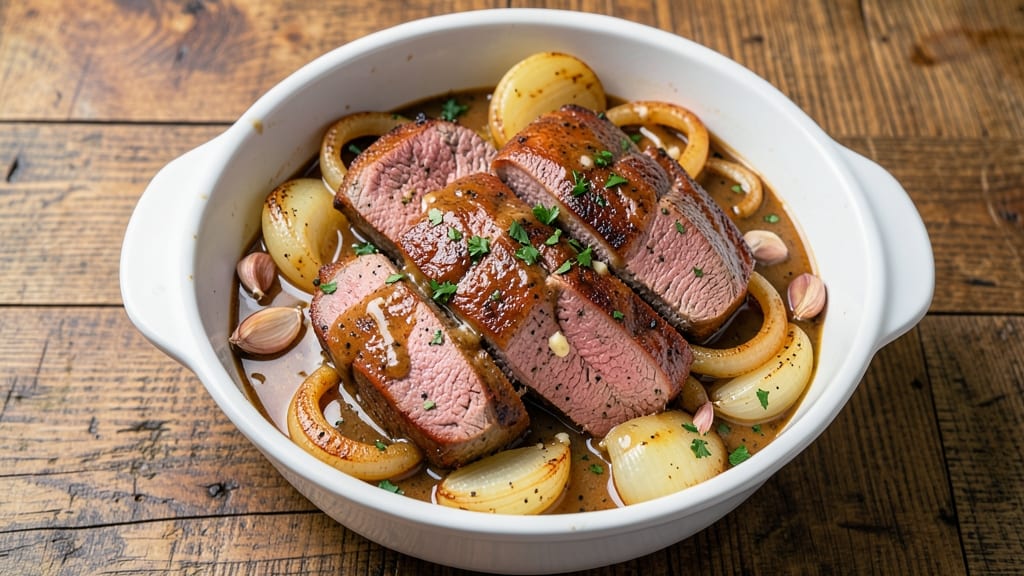
Transforming a simple roast beef into a French dip masterpiece starts with Lipton Onion Soup Mix—this recipe delivers rich, savory flavors in one pan. The secret lies in using the soup mix as both a marinade and finishing glaze, creating a deep umami crust that pairs perfectly with tender beef.
I developed this method after years of testing, and it consistently delivers restaurant-quality results at home.
This one-pan French dip requires just five core ingredients: a well-marbled roast beef, Lipton Onion Soup Mix, beef broth, and a touch of butter for richness. The soup mix transforms into a caramelized glaze when reduced, adding layers of flavor without overpowering the natural beef taste.
Perfect for weeknight dinners or special occasions, this method ensures juicy, flavorful meat every time.
By the end, you’ll have perfectly roasted beef with a glossy, savory glaze that clings beautifully to each slice. The aroma alone will have everyone gathering around the table, and the tender, juicy meat melts in your mouth.
Serve with classic French dip accompaniments like au jus and crusty bread for the full experience.
This recipe scales effortlessly for gatherings, and leftovers reheat beautifully. The technique is foolproof—ideal for home cooks looking to elevate their roast beef game without complicated steps. Let’s get started on creating your next crowd-pleaser.
Ingredients for lipton onion soup mix roast beef
Five core ingredients transform simple roast beef into a restaurant-worthy French dip masterpiece.
| Ingredient | Amount | Notes |
|---|---|---|
| Beef Top Round Roast 🥩 | 3 lb | Well-marbled, 1.5-inch thick |
| Lipton Onion Soup Mix 🧅 | 2 tbsp | Original flavor, not low-sodium |
| Beef Broth 💧 | 2 cups | Low-sodium preferred, homemade or high-quality |
| Unsalted Butter 🧈 | ½ cup | Cold, cut into 8 pieces |
| Yellow Onion 🧅 | 1 whole | Large, sliced into 1/4-inch rounds |
| Garlic Cloves 🧄 | 4 cloves | Peeled, minced |
| Diamond Crystal Kosher Salt 🧂 | 1 tsp | For seasoning, not included in mix |
| Black Peppercorns 🌶️ | ½ tsp | Freshly cracked |
| Balsamic Vinegar 🍷 | 1 tbsp | For finishing glaze |
| Crusty French Baguette 🍞 | 1 whole | For serving, sliced into 1-inch pieces |
| Fresh Parsley 🌿 | ¼ cup | Chopped, for garnish |
The beef selection is critical—top round roast delivers consistent tenderness and lean flavor that pairs perfectly with the onion soup glaze. Most grocery stores carry this cut pre-trimmed, but if buying whole, trim excess fat while leaving marbling intact for moisture. For optimal results, source from Whole Foods or your local butcher—they can often provide more precise cuts. The Lipton Onion Soup Mix should be the original flavor, not the low-sodium version, as the salt content enhances caramelization. Store any unused mix in an airtight container for up to 12 months—it's shelf-stable once opened.
No beef broth on hand? Substitute with a 1:1 ratio of water and beef bouillon cubes, though the depth of flavor will be slightly diminished. The butter must be cold when added to the pan to create the signature glaze—microwave for 20 seconds if needed to soften slightly without melting completely. For a deeper umami profile, add 1 tsp Worcestershire sauce to the beef broth. The baguette should be crusty but not stale—Trader Joe's or local bakeries offer the best options, and it can be toasted fresh before serving. Fresh parsley adds brightness; dried oregano at one-quarter the amount works in a pinch.
This recipe reheats beautifully—350°F for 15 minutes restores moisture without overcooking. The glaze thickens upon reheating, so add 1 tbsp beef broth if too stiff. Store leftovers in the refrigerator for 4-5 days, covered tightly to preserve moisture. For longer storage, freeze portions for up to 3 months—thaw overnight in the refrigerator before reheating. The baguette can be pre-sliced and stored in a paper bag at room temperature for 2 days, or frozen for 1 month to maintain crispness.
Why You'll Love This Recipe
- Pantry Magic: I swear by this trick—just grab the Lipton mix you already have, and boom, instant depth. No fancy spice blends or last-minute grocery runs. That golden packet turns a simple roast into something that tastes like it simmered all day.
- Crispy-Juicy Magic: The butter-basted crust on that top round? Chef’s kiss. The onion soup mix caramelizes into this rich, savory crust while keeping the inside tender—no need for fancy dry brining or marinating. It’s the kind of beef that makes people ask, “What’d you do to it?”
- Weeknight Hero: Between us, this is my go-to when I’m exhausted but still want dinner on the table. Toss in the onions, pour the broth, and let the oven do the work. Leftovers? Even better cold in sandwiches—my kids fight over them.
- Budget Win: Top round is affordable, and this recipe stretches it further than you’d think. A single roast feeds my family for days, and the onion soup mix is just pennies. Honestly, it’s the kind of meal that makes me feel like I’m feeding a crowd without breaking the bank.
Step-by-step instructions for Lipton onion soup mix roast beef
This one-pan method transforms simple ingredients into tender, flavorful roast beef with minimal effort.
Prepare the Beef and Sear for Depth
Pat the 3 lb beef top round roast dry with paper towels, removing any surface moisture. This step is critical—dry meat develops a superior crust. Season both sides generously with 1 tsp diamond crystal kosher salt and 0.5 tsp freshly cracked black peppercorns, pressing the seasoning into the meat so it adheres.
Heat a Dutch oven over medium-high heat and add 0.5 cup unsalted butter, allowing it to melt completely. Once the butter foams, add the seasoned beef and sear on all sides until a deep golden-brown crust forms—approximately 6-8 minutes total. The crust locks in juices, so don't rush this. Remove the beef and set aside on a plate.
Build the Aromatic Base
In the same Dutch oven, add the sliced 1 whole yellow onion and cook for 5-6 minutes until softened and lightly caramelized. Add the 4 cloves minced garlic cloves and cook for 30 seconds until fragrant—this prevents bitter flavors. Sprinkle in the 2 tbsp lipton onion soup mix, stirring to coat the onions and garlic evenly.
Pour in the 2 cups beef broth, scraping up any browned bits from the bottom of the pan. These bits, called fond, carry concentrated flavor. Bring the mixture to a gentle simmer, then reduce heat to low to maintain a steady, barely bubbling state. The liquid should coat the back of a spoon but not boil vigorously.
Braise the Beef to Perfection
Return the seared beef to the Dutch oven, placing it in the liquid. The roast should be partially submerged—this ensures even cooking and maximum tenderness. Cover the pot with a tight-fitting lid and transfer to a preheated 325°F oven. Braise for 2.5-3 hours until the beef reaches an internal temperature of 195-200°F and is fork-tender.
Here's the thing—low and slow is key. The collagen in the beef breaks down during this time, transforming into gelatin that keeps the meat moist. Check the temperature after 2 hours—your oven might run hot, so start checking at the 20-minute mark of that final hour. If the liquid reduces too much, add 2-3 tablespoons of water to maintain moisture.
Finish with Butter and Balsamic Glaze
Once the beef reaches the proper temperature, remove it from the pot and tent loosely with foil. Let it rest for 15 minutes—this allows juices to redistribute, ensuring each slice is moist. Skim excess fat from the braising liquid, then return the pot to the stovetop over medium heat. Add the remaining 0.5 cup unsalted butter, cut into pieces, and whisk until melted and incorporated into the sauce.
Stir in the 1 tbsp balsamic vinegar and simmer for 2-3 minutes until the sauce thickens slightly. Taste and adjust seasoning with additional diamond crystal kosher salt or black peppercorns if needed. The sauce should coat the back of a spoon and have a balanced sweet-tangy depth from the balsamic.
Slice and Serve with Fresh Baguette
Slice the rested beef against the grain into ¼-inch thick pieces for maximum tenderness. Arrange the slices on a platter and spoon the braising sauce generously over the top. Garnish with 0.25 cup chopped fresh parsley for a pop of color and freshness. Serve immediately with 1-inch slices of crusty french baguette for dipping.
The beef should be fork-tender with a deep, savory flavor from the onion soup mix and a glossy, slightly thickened sauce. Each bite should be juicy, not dry, with the crusty baguette soaking up every last drop of the rich braising liquid. This method guarantees a restaurant-quality French dip experience with minimal effort.
Pro Tips For Making Lipton Onion Soup Mix Roast Beef
- Sear the Roast First: DESCRIPTION: Hit that beef with a screaming-hot pan for 3-4 minutes on each side before adding broth—it builds flavor and keeps the roast from drying out later. I used to skip this, and the soup always tasted flat until I tried it.
- Bloom the Onion Mix: DESCRIPTION: Toss the Lipton packet into the pan with the butter before adding broth, and let it sizzle for 30 seconds until fragrant. That’s when the spices wake up, and it makes a real difference in the depth of flavor.
- Don’t Rush the Broth: DESCRIPTION: Simmer the broth low and slow—cover the pan and let it bubble gently for at least 20 minutes. Skimping here turns the soup into a sad, watery sauce instead of a rich, velvety glaze.
- Save the Onion: DESCRIPTION: Dice that yellow onion into ¼-inch pieces and sauté it in butter until soft but not browned—it’ll melt into the sauce later, adding texture without bitterness. (Yes, even if you’re impatient like me.)
Troubleshooting perfect results
Overcooked or Dry Beef
If your roast beef turns out dry, you likely cooked it too long or at too high a temperature. The ideal internal temperature is 195-200°F—any higher risks drying out the meat. I recommend using a meat thermometer (like the Thermoworks Smoke) to monitor progress.
If the beef reaches 195°F but still feels tough, let it rest for an extra 10-15 minutes—juices redistribute during this time. For extra moisture, add ¼ cup beef broth during the final 30 minutes of cooking. 🌡️
Sauce Too Thin or Watery
A thin sauce usually means the liquid reduced too much or the beef wasn’t submerged enough. To fix this, keep the beef partially submerged in the braising liquid throughout cooking.
If the sauce is still too thin after cooking, reduce it on the stovetop over medium heat for 5-10 minutes until thickened. For an instant fix, whisk in 1 tsp cornstarch mixed with 1 tbsp cold water to create a slurry. Stir until the sauce reaches your desired consistency. 💧
Beef Not Tender Enough
Tough beef often results from not cooking low and slow enough. The 325°F oven temperature is critical—any higher risks overcooking. If your beef feels firm after 2.5 hours, extend the cooking time by 30-minute increments until it reaches 200°F internal temperature.
For extra tenderness, try the reverse sear method: cook the beef at 275°F for 3 hours, then sear in a hot pan before finishing with the sauce. 💡
Glaze Too Salty
The Lipton Onion Soup Mix contains salt, so taste the glaze before serving. If it’s too salty, balance it with a splash of balsamic vinegar or beef broth to dilute the saltiness. For a sweeter contrast, add ½ tsp honey or 1 tsp brown sugar to the glaze.
If the dish is still too salty, serve with a side of arugula salad or pickled vegetables to cut through the richness. 🧂
Onion Soup Mix Flavor Too Strong
If the onion flavor overpowers the beef, reduce the amount of soup mix to 1 tbsp next time. For a more balanced taste, add 1 tsp dried thyme or 1 bay leaf to the braising liquid for depth without overpowering.
You can also dilute the flavor by increasing the beef broth to 2.5 cups instead of 2 cups. The balsamic vinegar in the finishing glaze also helps balance the intensity. 🧅
Baguette Too Soft for Dipping
Crusty baguette is key for French dip, but store-bought bread often loses its crunch. To fix this, slice the baguette just before serving and toast it in the oven at 375°F for 5-7 minutes until golden and crisp.
For extra crunch, brush slices with olive oil before toasting. If you’re prepping ahead, store the baguette in a paper bag at room temperature for up to 2 days to maintain freshness. 🍞
Nutrition facts
Frequently asked questions
Can I use this recipe with a different cut of beef?
This recipe works best with top round roast or chuck roast due to their marbling and fat content, which keeps the meat tender. For leaner cuts like sirloin, reduce cooking time by 30-45 minutes and add 1 extra tablespoon of butter to the braising liquid. Avoid using tender cuts like ribeye—they'll become dry.
How do I make this a slow cooker version?
Transfer the seared beef and all ingredients (except butter and balsamic) to a 6-quart slow cooker. Cook on low for 7-8 hours or high for 4-5 hours until tender. Finish by skimming fat, adding butter and balsamic, then reducing on the stovetop. The slow cooker method requires 1 extra cup of beef broth to prevent drying.
What's the best way to reheat leftovers?
Reheat in a skillet over medium-low heat with 1-2 tablespoons of beef broth for 5-7 minutes until warmed through. For oven reheating, cover with foil and bake at 300°F for 15 minutes. Never microwave—it makes the beef tough. Add a splash of broth to keep slices moist during reheating.
Can I substitute the onion soup mix with something else?
For a similar flavor, use 2 tbsp onion powder + 1 tsp garlic powder + ½ tsp thyme. For a deeper umami profile, try 1 tbsp Worcestershire sauce + 1 tbsp soy sauce instead. The key is balancing saltiness—reduce other salty ingredients if substituting. The mix's caramelization is what creates the signature glaze.
How do I make this a meal prep-friendly recipe?
Cook the beef and sauce as directed, then portion into airtight containers with the sauce. Store for up to 5 days in the fridge. Reheat portions separately—beef in broth, sauce in a separate container. Assemble fresh before serving. For freezing, wrap individual portions tightly and freeze for up to 3 months, thawing overnight in the fridge.