
Soups & Stews
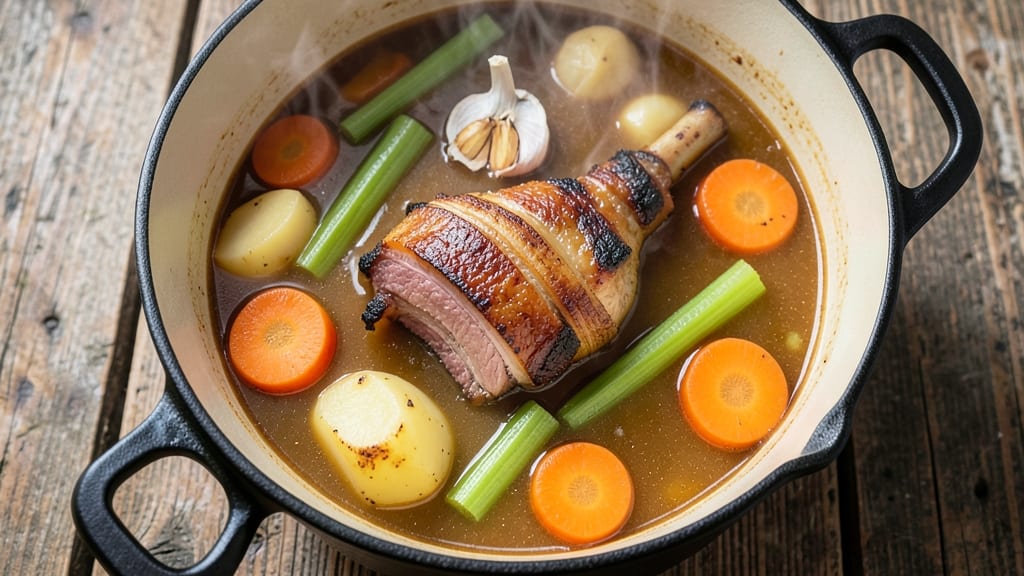
This old-fashioned ham hock soup recipe with potatoes delivers the kind of hearty, smoky comfort that turns weeknight dinners into family traditions. The ham hock infuses the broth with deep, savory richness while potatoes soften into tender chunks that soak up every flavor.
I first made this version after tracking down a vintage recipe card from my grandmother—it’s the same one she served during winter storms when the house needed warmth.
The secret lies in slow simmering, which transforms tough ham hock into melt-in-your-mouth meat while developing layers of umami in the broth. You’ll start with a simple base of onions, carrots, and celery, then let the ham hock work its magic over 2 hours—no shortcuts, just time and patience.
The potatoes absorb the smoky essence, creating a soup that’s both satisfying and nostalgic.
What you’ll end up with is a steaming bowl of restaurant-quality soup where every spoonful delivers crispy potato edges, tender ham, and a broth so flavorful it disappears too fast.
The aroma alone will have everyone gathering around the table, and leftovers reheat even better the next day. This is the kind of recipe that becomes a household staple.
Serve with crusty bread for dipping or a simple green salad to balance the richness. The ham hock’s gelatinous quality makes this soup especially comforting on cold days—exactly what you need when the weather turns chilly. Let’s get started on creating this timeless classic.
Ingredients for old fashioned ham hock soup recipe with potatoes
Gather these hearty ingredients for a soup that tastes like homecoming in a bowl.
| Ingredient | Amount | Notes |
|---|---|---|
| Ham Hock 🥓 | 1 lb | Smoked, uncooked preferred |
| Yellow Onion 🧅 | 1 whole | Medium size, chopped |
| Carrots 🥕 | 3 medium | Peeled, cut into chunks |
| Celery Stalks 🌿 | 3 whole | Trimmed, chopped |
| Russet Potatoes 🥔 | 2 lb | Peeled, cubed evenly |
| Garlic Cloves 🧄 | 4 cloves | Peeled, smashed |
| Tomato Paste 🍅 | 2 tbsp | No salt added |
| Dried Thyme 🌿 | 1 tsp | Or 1 tbsp fresh |
| Bay Leaves 🍃 | 2 whole | Fresh preferred |
| Black Peppercorns 🌶️ | ½ tsp | Freshly cracked |
| Kosher Salt 🧂 | 1 ½ tsp | Adjust to taste |
| Water 💧 | 8 cups | Or low-sodium broth |
| Apple Cider Vinegar 🍏 | 1 tbsp | For brightness |
| Fresh Parsley 🌿 | ¼ cup | Chopped, for garnish |
The ham hock is the soul of this soup. Look for smoked hocks at your local butcher—they’re often cheaper and more flavorful than grocery store versions. If you can’t find smoked, unsmoked works (just add 1/2 tsp smoked paprika). The potatoes should be uniform in size so they cook evenly. Russets or Yukon Golds are perfect—they hold up to long simmering. For the veggies, Trader Joe's pre-chopped mirepoix saves time, but fresh is better if you've got it. The bay leaves? Grab fresh ones if your grocery store sells them—they're worth the extra 50 cents for that subtle piney aroma.
No smoked ham hock? Substitute with a smoked turkey leg or pork shoulder—just add 10 minutes to the cooking time. Running low on thyme? Dried oregano at half the amount works in a pinch, but fresh thyme is ideal. The tomato paste can be swapped for 1/4 cup tomato sauce if you prefer. For extra depth, add a 1/2 tsp liquid smoke if you can't find smoked ham. The vinegar brightens everything—don't skip it. If you're using broth instead of water, low-sodium chicken or vegetable broth keeps the flavors balanced without overwhelming the ham's natural saltiness.
This soup tastes even better the next day as flavors meld. Store leftovers in the fridge for up to 5 days or freeze for 3 months. I like to portion it into quart-sized containers so I can grab a bowl straight from the freezer. The potatoes will get softer with reheating, but that's part of the charm. For serving, keep a loaf of crusty bread nearby—it's perfect for soaking up every last drop of that smoky broth.
Why You'll Love This Recipe
- One-Pot Wonder: I swear by this soup because it’s literally dump-and-simmer. No fancy gadgets—just a big pot, the ham hock’s natural collagen melting into the broth, and those potatoes softening right alongside the onions and carrots. Honestly, I’ve made it while scrolling through my phone.
- Rich Without Effort: That ham hock? It’s the secret weapon—slow-simmered, it turns the broth into liquid gold, salty-sweet with just a hint of smokiness. The potatoes soak up all that flavor, and the carrots and celery add a sweet, earthy crunch that’s ridiculously satisfying.
- Leftovers That Don’t Suck: Between us, most soups turn into sad, watery meals by day three. Not this one. The ham stays tender, the potatoes hold their shape, and the broth only gets better as it sits. I freeze half the batch—perfect for lazy nights when I don’t want to cook.
- Budget-Friendly Feast: A single ham hock stretches this soup to feed four (or five, if someone’s extra hungry). Onions, carrots, celery, and potatoes? They’re the kind of ingredients that don’t break the bank but make everything taste like you put in way more effort than you did. (Yes, even on a Tuesday night.)
Step-by-step instructions for old fashioned ham hock soup with potatoes
Here's how to build this comforting, smoky soup from scratch—layering flavors that develop beautifully over time.
Prepare and Sear the Ham Hock
Start by rinsing the 1 lb ham hock under cold water and patting it completely dry with paper towels. This step is crucial—any moisture will prevent proper browning. Place the ham hock in a large Dutch oven or heavy pot over medium-high heat and sear it on all sides until deeply golden brown, about 8-10 minutes. You'll see the fat begin to render and the skin develop a rich, caramelized crust.
While the ham hock sears, add 1 whole yellow onion, 3 medium carrots, and 3 whole celery stalks to the pot. These vegetables should sizzle in the rendered ham fat for 5-7 minutes until they soften slightly and begin to release their natural juices. The onions will turn translucent, and the carrots will start to brown at the edges. This step builds the foundation of your soup's flavor by developing a rich, aromatic base.
Build the Soup Base with Aromatics and Seasonings
Once the vegetables have softened, push them to the sides of the pot and add 4 cloves garlic cloves (peeled and smashed) and 2 tbsp tomato paste. Stir everything together and let it cook for 2-3 minutes until the garlic becomes fragrant and the tomato paste darkens slightly. This ensures the garlic doesn't burn and the tomato paste fully incorporates into the soup.
Add 8 cups water, 1 tbsp apple cider vinegar, 1.5 tsp kosher salt, 1 tsp dried thyme, 2 whole bay leaves, and 0.5 tsp black peppercorns to the pot. Stir well to combine, then bring the mixture to a gentle boil. Once boiling, reduce the heat to low and let the soup simmer uncovered for 1 hour. This initial simmer allows the ham hock to release its collagen and the vegetables to soften while the flavors meld together. You'll notice the soup develop a deep, smoky aroma—this is where the magic begins.
Add Potatoes and Simmer Until Tender
After the initial 1-hour simmer, carefully remove the ham hock from the pot and set it aside on a plate. Add the 2 lb russet potatoes (peeled and cubed evenly) to the soup. The potatoes should be fully submerged in the broth. Return the soup to a gentle simmer and cook for another 45-60 minutes, or until the potatoes are fork-tender and easily pierced with a knife. You'll know they're done when the edges soften and the center yields slightly to pressure.
During this time, the potatoes will absorb the rich, smoky flavors from the ham hock and vegetables. The broth should thicken slightly as the potatoes release their starch, creating a hearty, satisfying texture. If the soup appears too thin, you can reduce the heat slightly to allow more evaporation, but avoid boiling vigorously, as this can cause the potatoes to break apart.
Finish and Serve with Fresh Herbs
Once the potatoes are tender, return the ham hock to the pot and let the soup simmer together for an additional 15-20 minutes. This final step ensures the ham hock reabsorbs some of the broth, becoming more flavorful and tender. The ham hock should easily pull apart with a fork, and the broth should be infused with its deep, savory essence.
Remove the ham hock from the pot and let it rest for 5 minutes before shredding or slicing it into bite-sized pieces. Stir the 0.25 cup fresh parsley into the soup just before serving to add a bright, fresh contrast to the rich, smoky flavors. Taste the soup and adjust the seasoning with additional kosher salt or black peppercorns if needed. Serve the soup hot, with the ham hock pieces distributed throughout the bowls for each of the 4 servings. The result is a deeply satisfying, old-fashioned soup that's perfect for chilly days.
Pro Tips For Making Old Fashioned Ham Hock Soup Recipe With Potatoes
- Brown the Ham Hock: DESCRIPTION: Don’t just toss that ham hock into the pot raw—get it searing hot in a dry skillet first. The Maillard reaction here isn’t just for looks; it deepens the flavor by caramelizing the meat’s surface. I used to skip this, and the soup always tasted flat until I tried it.
- Dice Potatoes Evenly: DESCRIPTION: Cut those Russets into 1-inch chunks, not random sizes. Uneven potatoes mean some will turn to mush while others stay rock-hard. My grandmother swore by this, and she was right: consistency matters more than you’d think.
- Simmer, Don’t Boil: DESCRIPTION: Keep the soup at a gentle simmer, not a rolling boil. Too much heat breaks down the ham hock’s collagen faster, leaving you with a watery broth instead of rich, gelatinous goodness. After burning three batches, I finally figured out patience pays off.
- Roast the Veggies First: DESCRIPTION: Toss the onions, carrots, and celery in olive oil, salt, and pepper, then roast at 400°F for 20 minutes before adding them to the pot. The extra caramelization makes the soup taste like it simmered for hours—even if it didn’t. Sounds weird, but it works.
Perfect pairings for this recipe
Crusty Bread Pairings
Nothing complements this soup like a crusty baguette or sourdough loaf for dipping. I recommend a French-style baguette from your local bakery—its crispy crust soaks up the smoky broth perfectly.
For extra indulgence, try a garlic-herb focaccia with olive oil drizzled on top. The contrast between the warm, buttery bread and the rich soup is pure comfort food magic. 🥖
Sharpened Greens
A simple arugula or spinach salad with a lemon vinaigrette cuts through the soup’s richness. Toss 4 cups baby arugula with 2 tbsp olive oil, 1 tbsp lemon juice, and a pinch of salt.
Add ¼ cup shaved Parmesan for a salty crunch. The peppery bite balances the soup’s hearty flavors beautifully. 🌿
Cheesy Additions
For a decadent twist, top each bowl with shredded sharp cheddar or Gruyère cheese before serving. The cheese melts into the hot soup, creating a creamy, savory layer.
I like to use 2 cups shredded cheddar and sprinkle it on just before eating—it adds a satisfying gooeyness that pairs perfectly with the crispy potato edges. 🧀
Pickled Veggies
Add a tangy crunch with pickled jalapeños or quick-pickled red onions. Slice ½ cup red onions thinly and soak in ¼ cup apple cider vinegar with 1 tsp sugar for 15 minutes.
The acidity brightens the soup’s deep flavors, while the jalapeños add a subtle heat. Serve them on the side for dipping or sprinkle directly into bowls. 🌶️
Beverage Pairings
A bold amber ale or dry red wine like Cabernet Sauvignon complements the soup’s smoky, savory notes. For beer lovers, Samuel Smith’s Nut Brown Ale has malty sweetness that stands up to the ham hock’s richness. Non-alcoholic? A sparkling apple cider with a cinnamon stick adds a festive touch. 🍺
Extra Toppings
Finish each bowl with crispy fried shallots or toasted breadcrumbs for texture. I like to pan-fry 3 tbsp breadcrumbs in 2 tbsp butter until golden, then sprinkle them on top. A drizzle of hot honey adds a sweet-spicy contrast that elevates the dish to restaurant-quality. ✨
Nutrition facts
Frequently asked questions
Can I use regular ham instead of ham hock?
The ham hock is key for that authentic, smoky depth and gelatinous richness. For a substitute, try a smoked turkey leg or pork shoulder—just add 10 extra minutes to the cooking time. The collagen in the bone is what creates that velvety texture, so bone-in options work best. If you must use boneless ham, expect a thinner broth.
Why do the potatoes need to be peeled?
Peeled potatoes create a cleaner, smoother soup texture. The skins can turn tough and bitter during the long simmer. If you prefer rustic texture, leave them unpeeled—but reduce simmering time by 10 minutes to prevent them from falling apart. For extra flavor, try Yukon Golds instead of russets—they hold their shape better.
How can I make this soup ahead of time?
This soup actually tastes better the next day as flavors meld! Store leftovers in an airtight container in the fridge for up to 5 days. For freezing, portion into quart-sized containers and freeze for 3 months. Reheat gently on the stove over low heat—never microwave directly from frozen to preserve texture.
What if my soup tastes too salty?
Add 1 cup hot water or low-sodium broth to dilute the saltiness. If using broth, simmer for 10 extra minutes to let flavors rebalance. For prevention, taste the broth before adding potatoes—adjust salt gradually. The ham hock already contains salt, so go light on added kosher salt initially.
Can I make this soup in a slow cooker?
Brown the ham hock and veggies first, then transfer everything to the slow cooker. Cook on low for 6-7 hours or high for 3-4 hours. The potatoes will absorb more flavor during the extended cook time. For best results, add them during the last 1 hour of cooking to prevent mushiness.