
Soups & Stews
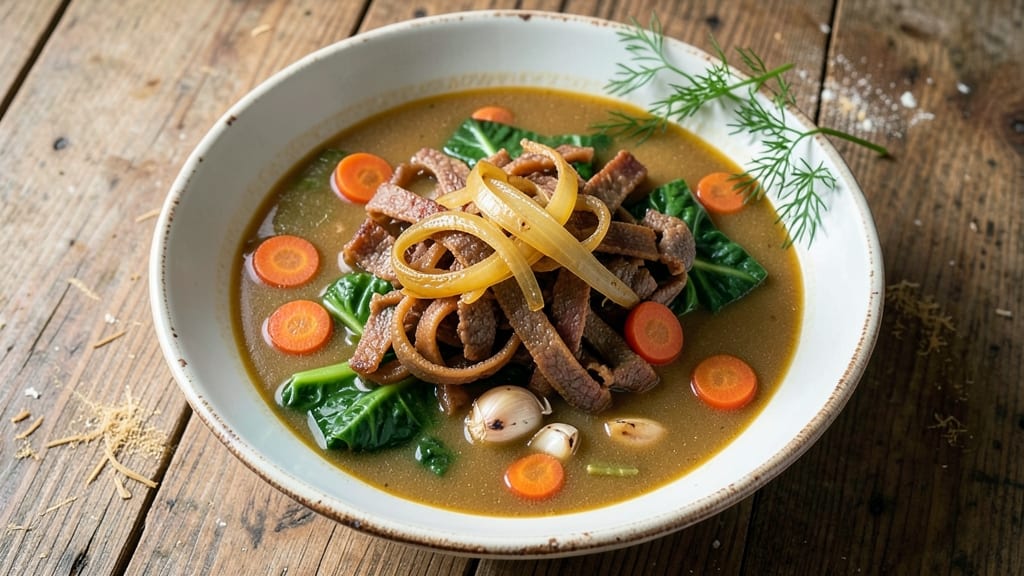
This Romanian tripe soup recipe delivers the bold, comforting flavors of a traditional ciorbă de burtă—where tender tripe, crisp vegetables, and aromatic spices create a dish that feels like a warm embrace.
The secret lies in slow simmering the tripe until it becomes fork-tender while building layers of tangy vinegar and earthy marjoram that define this classic.
I first tasted this soup in a rural Romanian home, where it was served steaming hot with crusty bread, and I knew it deserved a place in my kitchen.
The beauty of this recipe is its balance of textures—crisp cabbage and carrots contrast the tender tripe, while the broth absorbs deep, savory flavors from garlic, tarhon (a must-have herb for authenticity), and a touch of vinegar that brightens every spoonful.
Unlike many tripe soups, this version stays true to its roots without relying on heavy cream, making it both traditional and approachable for home cooks.
What you’ll end up with is a steaming bowl of soup where each bite delivers that satisfying crunch of vegetables, the tender pull of tripe, and a broth so rich it coats your spoon.
The aroma alone—garlic, herbs, and simmering meat—will fill your kitchen with the comforting scent of a Romanian countryside meal. Perfect for chilly evenings or family gatherings, this soup proves that simple ingredients can create extraordinary flavor.
Whether you serve it as a hearty starter or a complete meal with crusty bread, this recipe captures the soul of Romanian comfort food. The key is patience—the longer it simmers, the deeper the flavors develop. Let’s get cooking!
Ingredients for romanian tripe soup
Tripe, cabbage, and vinegar—simple ingredients for a soup that tastes like home.
| Ingredient | Amount | Notes |
|---|---|---|
| Tripe (Beef or Lamb) 🥩 | 1 ½ lb | Cleaned, cut into strips |
| Yellow Onions 🧅 | 2 whole | Thinly sliced, about 2 cups |
| Carrots 🥕 | 4 whole | Medium, sliced into rounds |
| Green Cabbage 🥬 | ½ head | Shredded, about 4 cups |
| Garlic Cloves 🧄 | 6 cloves | Minced, fresh preferred |
| Fresh Tarhon (Russian Tarragon) 🌿 | ¼ cup | Chopped, or substitute 1 tbsp dried |
| Fresh Marjoram 🌿 | ¼ cup | Chopped, or 1 tbsp dried |
| White Vinegar 🍶 | ½ cup | Distilled, for tangy brightness |
| Vegetable Oil 🫒 | ¼ cup | For sautéing tripe |
| Tomato Paste 🍅 | 2 tbsp | Squeeze tube preferred |
| Salt 🧂 | 1 ½ tsp | Kosher or sea salt |
| Black Pepper 🌶️ | ½ tsp | Freshly ground preferred |
| Crusty Bread 🍞 | 6 slices | For serving, optional |
| Water 💧 | 6 cups | For broth, or substitute beef broth |
Tripe is the star here, so don’t skip the cleaning step—it makes all the difference. Most butchers will clean it for you, but if you're doing it yourself, soak it in cold water with vinegar for 30 minutes before rinsing. Costco or local specialty stores usually carry it pre-cleaned, which saves time. I like to ask for it cut into strips—about 1-inch wide—so it cooks evenly. If you can't find tarhon (Russian tarragon), regular tarragon or even fresh dill works in a pinch, though it won’t be exactly the same. The cabbage should be crisp—green or red, whichever you prefer—but avoid wilted leaves.
No tarhon? Fresh marjoram or even a mix of thyme and parsley can stand in, though tarhon’s unique flavor is hard to replace. Short on vinegar? Lemon juice works at half the amount, but it won’t give the same depth. The tomato paste is non-negotiable—it adds a subtle sweetness that balances the tang. If you’re using beef broth instead of water, reduce the salt by half since broth is already seasoned. For extra richness, some cooks add a splash of sour cream or yogurt at the end, but traditionalists skip it—your call! The tripe will shrink as it cooks, so don’t stress if the initial amount looks generous.
This soup tastes even better the next day—flavors meld overnight, so make extra if you can. Store in the fridge for up to 5 days, or freeze portions for 3 months. I like to reheat it gently on the stove, adding a splash of water to keep it from getting too thick. The bread? Crusty, no-knead loaves from the freezer section work perfectly—just toast slices until golden for serving. Leftovers reheat beautifully, so this is the kind of recipe that rewards making a big batch.
Why You'll Love This Recipe
- One-Pot Magic: I swear by this recipe because it’s actually one-pot—no chopping boards to clean, no extra pans. Just toss in the onions, carrots, and cabbage, let the tripe simmer until tender, and boom. Done. The garlic cloves get minced in 30 seconds, and the rest? Pure hands-off comfort.
- Deep Umami Love: That first bite of properly simmered tripe—oh man—the collagen melts into the broth, turning it into this rich, almost velvety base. The cabbage adds a satisfying crunch, and the onions caramelize right in the pot. Honestly, it’s the kind of flavor that makes you forget it’s “just” soup.
- Weeknight to Potluck: Make a big batch on Sunday, and you’ve got lunch for three days. Too rich for a weeknight? Serve it with crusty bread at a holiday gathering—everyone will think you slaved over it. My college roommate still asks for the recipe, and she’s not Romanian.
- Budget That Feeds: Tripe stretches further than any other protein I’ve tried. A pound feeds four (or two very hungry people), and the veggies are cheap staples. Leftovers? Even better the next day—if there are any. Between us, I’ve reheated this soup so many times, I’ve memorized the perfect consistency.
Step-by-step instructions for Romanian tripe soup
Here's how to transform tough tripe into a rich, aromatic soup with layers of texture and flavor.
Prepare and Sear the Tripe
Start by rinsing the 1.5 lb tripe (beef or lamb) thoroughly under cold water and patting it completely dry with paper towels. This step is crucial—any moisture will prevent proper browning. Cut the tripe into ¼-inch thick strips using a sharp knife, working carefully to remove any remaining silver skin if present.
Heat the 0.25 cup vegetable oil in a large Dutch oven over medium-high heat. Add the tripe strips in batches, being careful not to overcrowd the pan. Sear for 3-4 minutes per side until the edges turn deep golden brown and the tripe develops a crisp texture. This browning creates the foundation for the soup's rich flavor. Remove the seared tripe and set aside temporarily.
Build the Flavor Base with Aromatics
In the same Dutch oven, add the 2 whole yellow onions that have been thinly sliced. Cook them over medium heat for 5-6 minutes until softened and beginning to caramelize at the edges. This process deepens their sweetness and prepares them to absorb the soup's flavors.
Next, add the 4 whole carrots sliced into rounds and the 6 cloves garlic cloves that have been minced. Stir everything together and cook for another 3-4 minutes until the carrots begin to soften slightly and the garlic becomes fragrant. Here's where the magic happens—the combination of these vegetables creates a sweet, savory base that balances the tripe's earthy taste.
Develop the Broth with Vinegar and Herbs
Pour in the 0.5 cup white vinegar and scrape up any browned bits from the bottom of the pot. This step is essential for adding tangy brightness to the soup. Add the 2 tbsp tomato paste and stir well to distribute it evenly. The vinegar will help tenderize the tripe while the tomato paste adds depth of flavor.
Now add the 6 cups water, bringing everything to a gentle boil. Once boiling, reduce the heat to low and return the seared tripe to the pot. Stir in the 1.5 tsp salt and 0.5 tsp black pepper, then add the 0.25 cup fresh tarhon (Russian tarragon) and 0.25 cup fresh marjoram. Let the soup simmer uncovered for 1 hour, stirring occasionally. This long simmer allows the tripe to become fork-tender while developing its rich, complex flavor profile.
Finish with Vegetables and Rest
After the initial hour of simmering, add the 0.5 head green cabbage that has been shredded. The cabbage will cook down significantly, adding a satisfying crunch and freshness to each bowl. Continue simmering for another 20-25 minutes until the tripe is completely tender and the cabbage is just wilted but still holds its shape.
Taste the soup and adjust the seasoning if needed. The tripe should be tender enough to cut easily with a fork, and the broth should be rich and flavorful. Remove from heat and let the soup rest for 10 minutes before serving. This resting period allows all the flavors to meld together perfectly.
Serve with Crusty Bread
Ladle the hot soup into bowls, making sure each serving contains a generous portion of tripe, vegetables, and broth. The 6 slices crusty bread are perfect for soaking up every last drop of that flavorful liquid. Serve immediately while the soup is hot and the bread is still crisp.
This Romanian tripe soup delivers a perfect balance of textures—tender tripe, crisp cabbage, and a rich, aromatic broth. The combination of vinegar, herbs, and slow cooking transforms simple ingredients into a hearty, satisfying meal that's perfect for cold weather or when you need something truly comforting.
Pro Tips For Making Romanian Tripe Soup
- TRIPE FIRST, SIMMER LONG: Tripe needs patience—start with a rolling boil for 10 minutes to loosen the fibers, then drop to a gentle simmer for at least 2 hours. I learned this the hard way when my first attempt turned out chewy; slow and steady wins with tripe.
- SLICE ONIONS THIN: Cut those yellow onions paper-thin—this isn’t a stew, it’s soup. Thick slices sit like rocks; thin ones melt into the broth and sweeten the whole dish. (Yes, even if you’re impatient like me.)
- DON’T SKIP THE CABBAGE PREP: Shred the green cabbage fine—no big chunks. It needs to soften completely, not just sit as decoration. My grandmother swore by this, and she was right: the texture matters more than you’d think.
- SAVE TIME WITH GARLIC: Crush the garlic cloves with the flat side of your knife instead of mincing—it releases flavor faster and doesn’t burn as easily. Less cleanup, better taste, and no waiting for it to soften. (Your future self will thank you.)
Flavor customization for this recipe
Sour vs. Sweet Balance
One of the most defining customizations is whether to make your tripe soup sour or mild. Traditional Romanian ciorbă often includes white vinegar for that signature tang, but you can dial it back by reducing the 0.5 cup vinegar to just 2 tbsp.
For a sweeter version, add 1 tbsp honey or 1 tsp sugar at the end—this balances the richness of the tripe while keeping the dish approachable. I once made a batch with extra vinegar and served it with a side of yogurt for guests who preferred less acidity. 💛
Herb Variations
While tarhon (Russian tarragon) is the star herb, it’s not always easy to find. I’ve successfully substituted 2 tbsp fresh dill or 1 tbsp dried marjoram when needed. For a bold twist, add 1 tsp smoked paprika during the searing step—it adds depth without overpowering.
My grandmother swore by a pinch of ground coriander for extra complexity, but that’s a personal preference.
Spicy Kick Option
If you love heat, stir in ½ tsp cayenne pepper or 1 diced jalapeño with the cabbage during the final 20 minutes of cooking. For a milder option, add 1 tbsp hot honey at the end—it’s sweet, tangy, and adds a subtle kick.
I once served a batch with crumbled chorizo on top for guests who wanted extra smokiness. The spice level is entirely up to you! 🌶️
Vegetable Swaps
Cabbage is traditional, but you can mix it with 2 cups shredded Brussels sprouts for a nutty twist or add 1 cup chopped celery for a fresh, crunchy bite.
For a seasonal variation, toss in 1 cup chopped kale during the last 10 minutes of cooking—it keeps its vibrant color and adds a peppery note. I love using red cabbage for a pop of color and a slightly sweeter taste.
Richness Adjustments
Traditionalists skip heavy cream, but if you want extra richness, stir in ¼ cup sour cream or 2 tbsp crumbled feta at the end. For a lighter option, add 1 tbsp olive oil during the final minutes of simmering.
I once made a version with ½ cup cooked lentils for extra protein—it turned out surprisingly hearty without losing the dish’s authenticity. The broth will always be the star, but these tweaks let you customize to your taste.
Nutrition facts
Frequently asked questions
Why does Romanian tripe soup need vinegar?
The white vinegar serves two key purposes: it tenderizes the tripe during simmering and adds that signature tangy brightness that defines authentic ciorbă de burtă. The acidity breaks down collagen in the tripe while enhancing the flavors of the herbs and vegetables. Even if you prefer milder soup, a small amount keeps the dish from tasting flat—just reduce it to 2 tablespoons if needed.
How do I substitute tarhon if I can't find it?
Tarhon (Russian tarragon) is the soul of this soup, but you can use 2 tablespoons fresh dill or 1 tablespoon dried marjoram as close substitutes. For a bolder twist, add ½ teaspoon smoked paprika during the searing step—it adds depth without overpowering. My grandmother also swore by a pinch of ground coriander for extra complexity!
Is tripe soup really tender after just 1 hour?
Yes! The key is searing the tripe first to develop flavor, then simmering it gently in the vinegar-infused broth. The acidity and long cook time break down the tough fibers, resulting in tender, melt-in-your-mouth strips. If your tripe still feels chewy after 1 hour, add 10-15 more minutes of simmering—just ensure the broth remains bubbling gently, not boiling hard.
Can I make this soup ahead of time?
This soup tastes even better the next day as the flavors meld together. Store it in an airtight container in the fridge for up to 5 days or freeze portions for 3 months. Reheat gently on the stove with a splash of water to restore its richness. The cabbage will hold its crunch better after chilling, and the broth becomes even more flavorful.
What's the best way to serve this soup?
Serve it steaming hot in deep bowls with crusty bread on the side for dipping. The bread soaks up the rich broth while providing a satisfying contrast to the tender tripe. For extra indulgence, top with a dollop of sour cream or crumbled feta—though purists prefer to keep it traditional. Pair it with a crisp white wine like Sauvignon Blanc to balance the tangy flavors.