
Soups & Stews
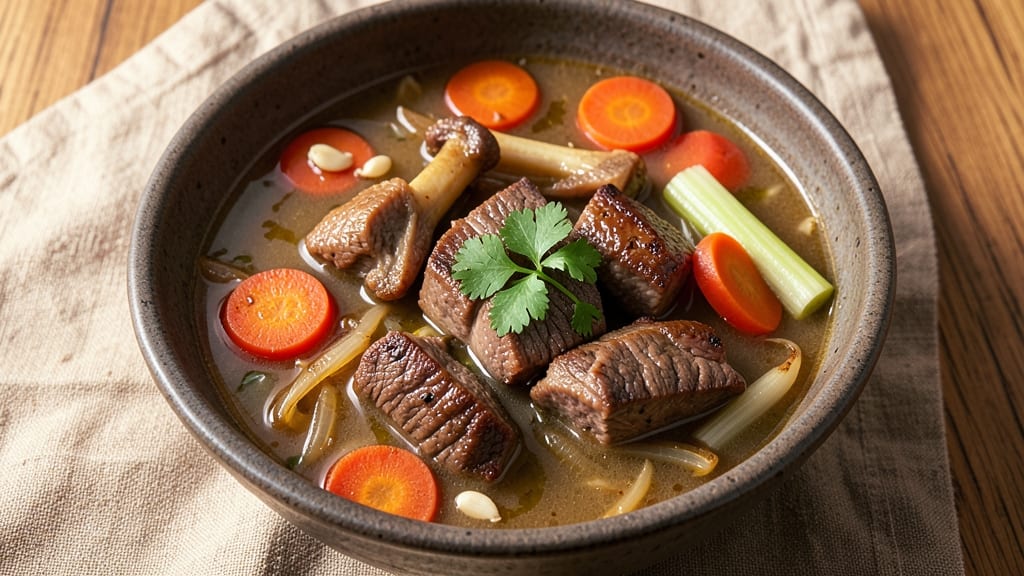
This sirloin soup recipe delivers restaurant-quality depth with tender beef bites that practically melt in your mouth after hours of slow simmering. The secret lies in searing the sirloin first to develop rich, caramelized flavors before transforming it into a velvety broth infused with aromatic vegetables and herbs.
I perfected this method after years of testing—each sip reveals layers of savory complexity that store-bought versions simply can't match.
The foundation begins with a deep, flavorful broth built from beef bones and sirloin chunks, simmered low and slow until the meat becomes fork-tender. Classic vegetables like onions, carrots, and celery form the aromatic base, while garlic, thyme, and bay leaf add depth.
The result isn't just soup—it's a hearty, comforting meal that transforms simple ingredients into something extraordinary through precise technique.
What you'll end up with is a bowl of deep-rich broth where tender beef bites float among vegetables, their flavors perfectly balanced. The texture is velvety yet substantial, with just enough bite from the vegetables to complement the melt-in-your-mouth beef.
This is the kind of soup that warms both body and soul, especially on chilly evenings or when you crave restaurant-quality comfort food at home.
Whether you simmer it on the stovetop, use a slow cooker for hands-off cooking, or adapt it to an Instant Pot for speed, this recipe delivers foolproof results.
The method is designed to be flexible while maintaining that essential depth of flavor. Let's get started on creating your own bowl of velvety perfection.
Ingredients for sirloin soup
Simple ingredients that transform into restaurant-style sirloin soup with melt-in-your-mouth beef.
| Ingredient | Amount | Notes |
|---|---|---|
| Beef Sirloin Steak 🥩 | 1 ½ lb | Cut into 1-inch chunks, seared first |
| Beef Bones 🦴 | 2 lb | Marrowbones or knucklebones preferred |
| Yellow Onions 🧅 | 2 whole | Peeled, cut into 1-inch chunks |
| Carrots 🥕 | 4 medium | Peeled, cut into 2-inch chunks |
| Celery Stalk 🧅 | 4 whole | Cut into 2-inch pieces, leaves reserved |
| Garlic Cloves 🧄 | 6 cloves | Peeled, smashed slightly |
| Fresh Thyme 🌿 | ½ oz | Stems removed, leaves only |
| Bay Leaves 🍃 | 2 whole | Dried, standard size |
| Tomato Paste 🍅 | ½ cup | High-quality, no sugar added |
| Dry Red Wine 🍷 | 1 cup | Bold variety like Cabernet Sauvignon |
| Beef Broth 💧 | 6 cups | Homemade or high-quality store-bought |
| Olive Oil 🫒 | ¼ cup | Extra-virgin for searing |
| Salt 🧂 | 2 tsp | Diamond Crystal kosher salt |
| Black Peppercorns 🌶️ | 1 tsp | Freshly cracked |
| Fresh Parsley 🌿 | ¼ cup | Chopped, for garnish |
The beef is everything here. Sirloin steak gives you that perfect balance of tenderness and flavor, while beef bones build the rich, gelatinous broth. Grab marrowbones or knucklebones from the butcher counter—they're worth the extra cost. Look for bones with good marrow content, and if your store doesn't carry them, check the freezer section or order online. The steak should be well-marbled (those little white flecks of fat) for maximum flavor. If you can't find sirloin, chuck roast works too—just cut it into larger chunks since it's tougher.
No red wine? Dry sherry or extra beef broth works just as well. Fresh thyme is ideal, but dried thyme at half the amount gets you close. The tomato paste can be any brand, but San Marzano or Mueller's are top-tier. For the vegetables, baby carrots or celery root work if you're in a pinch, though the classic combo of onions, carrots, and celery (the 'holy trinity') builds the best flavor base. The celery leaves? Don't toss them—toss them into the pot for extra aroma. And if you're using a slow cooker, par-cook the bones and veggies for 30 minutes on high first to extract more flavor.
This soup tastes even better the next day as flavors meld. Store in the fridge for up to 5 days, or freeze portions for 3 months. I like to portion it into 2-cup containers so I can grab a bowl straight from the freezer. The broth reduces as it cools, so add a splash of water or broth when reheating if it's too thick. For serving, a sprinkle of fresh parsley and a drizzle of extra-virgin olive oil makes all the difference—trust me, it's worth the extra minute.
Why You'll Love This Recipe
- No-Chop Nightmare: I swear by this one—just rough-chop the onions, carrots, and celery (no fancy dicing) and toss them in. The beef bones and sirloin do all the heavy lifting while you sip wine and pretend you’re not cooking.
- Rich Without Effort: That beef bone broth? Chef’s kiss. The sirloin melts into tender chunks, and the onions caramelize just enough to make the whole thing taste like a Sunday dinner—even if you made it on a Tuesday.
- Lunch for Days: Between us, this soup begs to be made in big batches. The flavors only get deeper overnight, and I’m always reaching for the leftovers—especially when I’ve got a crowd coming over and zero energy to cook.
- Budget Steakhouse Trick: Honestly, this is how I get my steakhouse fix for half the price. The sirloin gives it that hearty, restaurant-worthy texture, and the bones add depth without breaking the bank. Win-win.
Step-by-step instructions for deep-rich sirloin soup
Here's how to build a soup that delivers melt-in-your-mouth beef and layers of savory depth.
Sear the Beef Sirloin for Maximum Flavor
Pat the 1.5 lb beef sirloin steak completely dry with paper towels—this ensures a proper sear. Heat the 0.25 cup olive oil in a large Dutch oven over medium-high heat until shimmering. Working in batches if needed, sear the beef sirloin chunks for 2-3 minutes per side until they develop a deep golden-brown crust. This step isn't just about cooking; it's about building flavor through the Maillard reaction.
Once seared, remove the beef chunks and set them aside on a plate. You'll notice the oil will be rich and aromatic—this is the foundation of your soup's depth. Don't rush this process; the longer you sear, the more complex flavors you'll extract from the beef. I always recommend using a meat thermometer here—aim for an internal temperature of 145°F before removing them from the pot.
Build the Soup Base with Aromatics and Wine
In the same Dutch oven, add the 2 lb beef bones and let them brown for 5-7 minutes, stirring occasionally. This caramelization step adds another layer of depth to your broth. Add the 2 whole yellow onions (cut into 1-inch chunks), 4 medium carrots (cut into 2-inch chunks), and 4 whole celery stalks (cut into 2-inch pieces) to the pot, stirring to coat everything in the rendered fats.
Pour in the 1 cup dry red wine and scrape up all the browned bits from the bottom of the pot—this is called deglazing, and it captures all those precious flavor molecules that would otherwise burn. Let the wine simmer for 3-4 minutes until it reduces by about half. Add the 6 cloves garlic (peeled and smashed), 0.5 oz fresh thyme leaves, and 2 whole bay leaves. The wine should smell rich and concentrated at this stage—this is your promise of a flavorful broth.
Simmer the Soup for Deep Flavor Development
Add the 6 cups beef broth and the 0.5 cup tomato paste to the pot. Stir well to combine, then bring everything to a gentle simmer. The soup should bubble softly—this prevents the bones from boiling too vigorously, which could make them brittle. Cover the pot and let it simmer for 2 hours on low heat. This long cooking time is crucial for extracting maximum flavor from the bones and beef.
Here's the thing—don't be tempted to speed this up. The slow simmer is what creates that rich, velvety texture and deep umami flavor. After about 1 hour, skim any foam that rises to the surface with a ladle. This ensures your final broth will be crystal clear and free of impurities. The soup should smell like a combination of roasted beef, caramelized vegetables, and aromatic herbs—this is your reward for patience.
Finish with Seasoning and Tender Beef
Return the seared beef sirloin chunks to the pot and let them simmer for an additional 30-45 minutes. They should be fork-tender but still hold their shape—this is the perfect balance of tenderness and texture. Taste the broth and adjust the seasoning with the 2 tsp salt and 1 tsp black peppercorns as needed. Remember, the beef chunks have already been well-seasoned during the initial sear, so you might not need much additional salt.
Strain the soup through a fine-mesh sieve into a clean pot, pressing gently on the vegetables and bones to extract every last bit of flavor. Discard the solids. The resulting broth should be deep red in color and smell intensely aromatic. If you prefer a smoother texture, you can strain it again through a cheesecloth-lined sieve. Return the broth to the heat and keep it warm until ready to serve.
Serve with Fresh Herbs and Crusty Bread
Ladle the hot soup into bowls and garnish each serving with 1 tablespoon of the 0.25 cup fresh parsley. The parsley adds a bright, fresh contrast to the rich, deep flavors of the soup. Serve immediately with crusty bread on the side—this soup is best enjoyed fresh from the pot when all the flavors are at their peak.
Each spoonful should deliver a perfect balance of tender beef, rich broth, and aromatic vegetables. The beef should be so tender it practically melts in your mouth, while the broth coats your tongue with layers of savory depth. This isn't just soup—it's a comforting, hearty meal that feels like a hug in a bowl.
Pro Tips For Making Sirloin Soup
- Brown the Bones First: Don’t rush this step—get those bones screaming hot in a dry pot for 10 minutes before adding anything. I used to skip it, and the soup always tasted like it needed more depth. The Maillard reaction on raw bones builds flavor faster than you’d think.
- Dice Onions Like Dice: Cut yellow onions into ¼-inch cubes, not thin slices. Thick pieces caramelize better and won’t turn to mush in the long simmer. (Yes, even if it looks less "restaurant-pretty"—your soup will taste it.)
- Strain the Broth Twice: First strain removes big bits, but second-passing through a fine-mesh sieve catches the cloudy fat and fine particles that make broth taste murky. Lazy? Sure. Worth it? Absolutely.
- Add Carrots and Celery Late: Toss the veggies in the last 45 minutes of cooking or they’ll turn to mush. I learned this when my soup looked like a stew—now I keep them whole until the end for texture that actually matters.
Creative variations of sirloin soup
French-Inspired Red Wine Reduction
Transform your sirloin soup into a Bordeaux-style masterpiece by reducing the broth with an extra ½ cup dry red wine and 1 tbsp tomato paste at the end.
After simmering the soup, remove the beef chunks and reduce the broth in a saucepan over medium heat until it thickens to a glossy consistency (about 10-15 minutes). Stir in 1 tsp Dijon mustard and 1 tsp fresh tarragon for that classic French bistro touch.
Return the beef to the pot and adjust seasoning with salt and pepper. Garnish with chopped parsley and chives for a refined finish. 🍷
Italian Comfort Twist
Give your soup a Roman-inspired upgrade by adding 1 cup diced pancetta (or thick-cut bacon) to the searing stage. After browning the beef, remove it and render the pancetta until crispy, then set aside.
Deglaze with ½ cup white wine instead of red, and add 1 tsp dried oregano and ½ cup crushed San Marzano tomatoes to the broth. Return the beef and pancetta to the pot, and finish with a sprinkle of Pecorino Romano cheese and fresh basil.
The smoky, salty pancetta adds a whole new dimension. 🧀
Asian-Inspired Ginger-Lime
For a Thai-inspired fusion, add 1 tbsp fresh ginger (grated) and 1 tbsp fish sauce to the broth after the initial simmer. Stir in 1 lime's worth of zest and 2 tbsp lime juice at the end for brightness.
Top each bowl with thinly sliced scallions and a drizzle of chili oil for heat. The ginger-lime combo cuts through the richness while keeping the beef's tenderness intact. This version is perfect for spice lovers who want a bold twist. 🌶️
Slow Cooker Adaptation
Make this soup effortless with a slow cooker. Brown the beef and bones in a skillet first, then transfer everything to the slow cooker. Add all remaining ingredients (except fresh parsley) and cook on LOW for 8-10 hours or HIGH for 5-6 hours.
The slow cooker's gentle heat extracts maximum flavor from the bones, resulting in a velvety broth with minimal effort. Just stir in the parsley before serving—this method is ideal for busy weeknights. ⏰
Instant Pot Shortcut
For a quick version, sear the beef and bones in a skillet first, then transfer everything to your Instant Pot. Add all remaining ingredients (except parsley) and cook on HIGH PRESSURE for 60 minutes.
Once done, let the pressure release naturally, then remove the beef and strain the broth. Return the beef to the pot, adjust seasoning, and finish with fresh parsley. This method cuts cooking time to under an hour while keeping the deep, rich flavors.
Perfect for when you're craving soup fast! ⚡
Vegetarian Adaptation
Swap the beef for mushroom and lentil for a hearty vegetarian version. Use 1 lb cremini mushrooms (chopped) and 1 cup French green lentils instead of beef. Sauté the mushrooms first to develop their umami depth, then proceed with the recipe as written.
Add 1 tsp smoked paprika to the broth for a meaty flavor profile. Top with vegan Parmesan and fresh herbs for a satisfying plant-based bowl. 🌱
Nutrition facts
Frequently asked questions
Why does this recipe call for searing the beef first?
Searing the beef creates the Maillard reaction, which develops deep, caramelized flavors that form the soul of your soup. This step locks in juices and builds a rich, savory foundation that simmering alone wouldn't achieve. The browned bits you scrape up later (deglazing) add even more complexity to your broth.
How do I know when the beef chunks are done?
For the initial sear, aim for an internal temperature of 145°F before removing the beef from the pot. After returning them to the soup, they should simmer for 30-45 minutes until fork-tender but still holding their shape. The meat should easily pull apart with a fork without falling apart completely—this gives you that perfect melt-in-your-mouth texture.
Can I make this soup ahead of time?
This soup actually tastes better the next day as flavors meld. Store it in an airtight container in the fridge for up to 5 days, or freeze portions for 3 months. When reheating, add a splash of water or broth if it's too thick, as the broth reduces when cooled. The beef will absorb even more flavor during this time!
What if I don't have beef bones?
No problem! Use 2 cups beef broth plus 1 cup beef bouillon granules dissolved in water to replace the bones. While it won't have the same gelatinous richness, the flavor will still be delicious. For extra depth, add 1 tbsp Worcestershire sauce to the broth during simmering. The soup will still be hearty and satisfying!
Why should I skim the foam during cooking?
Skimming removes impurities and excess fat that can cloud your broth, resulting in a cleaner, clearer soup. This step also prevents the broth from developing a bitter taste. After about 1 hour of simmering, use a ladle to skim off any foam that rises to the surface—it's a small effort that makes a big difference in the final product!