
Soups & Stews
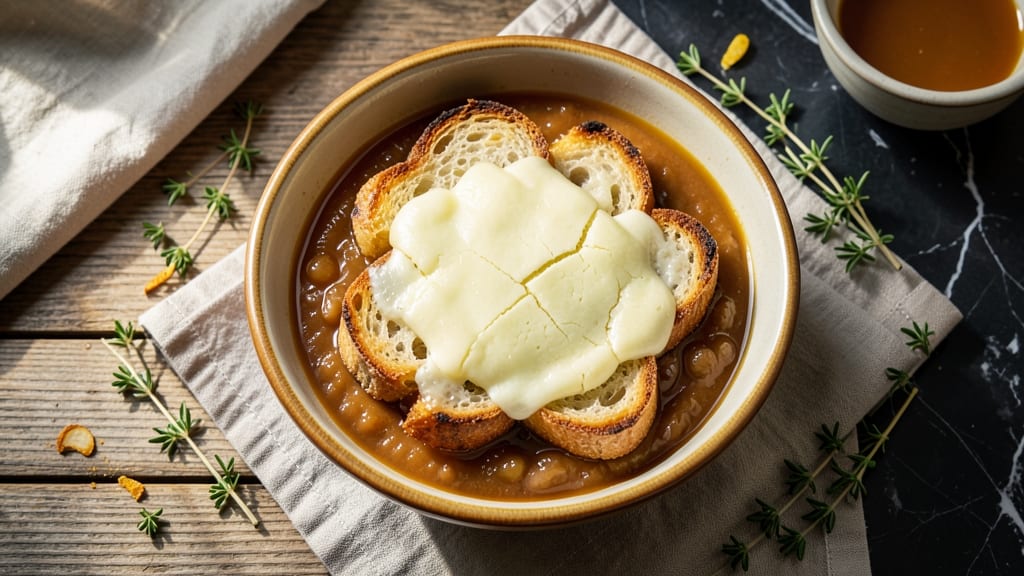
This bistro French onion soup recipe transforms humble ingredients into a restaurant-worthy masterpiece—where layers of caramelized onions and rich beef broth meet crispy celery crowns and melted Gruyère.
The secret lies in slow-cooking onions until deep amber, a process that unlocks their natural sweetness and forms the soul of this dish. Every spoonful delivers that perfect balance of savory, umami, and comforting warmth that defines classic bistro cuisine.
What sets this version apart is the attention to texture—golden, toasted baguette slices form delicate crowns over the soup, while the celery adds a crisp contrast that cuts through the creamy broth.
The slow simmering of beef broth with aromatics builds depth, while a touch of white wine brightens the flavors. This isn't just soup; it's a complete dining experience in a bowl, designed to impress without requiring advanced techniques.
The result is a dish that's both elegant and approachable, with a crispy celery crown that holds its shape even after baking. The Gruyère melts into a velvety blanket over the soup, while the caramelized onions create a sweet, complex base.
Whether served as a starter or a hearty main, this recipe delivers bistro-quality comfort that feels like a warm embrace on a chilly evening.
For those looking to elevate it further, a drizzle of truffle oil or a splash of cognac adds luxurious depth, while keeping the method simple ensures it remains accessible. The key is patience—letting the onions caramelize properly and toasting the bread just until golden creates that signature bistro finish.
This is French comfort food at its finest, where every element works in harmony.
Ingredients for bistro french onion soup
Layered flavors and textures transform simple ingredients into bistro-worthy French onion soup perfection.
| Ingredient | Amount | Notes |
|---|---|---|
| Yellow Onions 🧅 | 4 lb | Yellow or sweet onions preferred |
| Beef Broth 💧 | 6 cups | Homemade or high-quality store-bought |
| Baguette 🍞 | 1 whole | Crusty, day-old preferred |
| Celery Stalks 🥬 | 3 whole | Thinly sliced for crowns |
| Gruyère Cheese 🧀 | 1 ½ cups | Freshly grated, aged variety |
| Butter 🧈 | 4 tbsp | Unsalted, for caramelizing onions |
| White Wine 🍷 | ½ cup | Dry variety like Chardonnay |
| Garlic Cloves 🧄 | 4 cloves | Minced for aromatic base |
| Thyme Sprigs 🌿 | 2 whole | Fresh, for broth infusion |
| Bay Leaves 🍃 | 2 whole | Dried, for depth of flavor |
| Salt 🧂 | 2 tsp | Kosher or sea salt |
| Black Pepper 🌶️ | ½ tsp | Freshly ground for finish |
| Olive Oil 🫒 | 2 tbsp | For bread toasting |
The onions are the heart of this dish. Yellow onions caramelize best, developing that signature sweetness and depth. Look for large, firm onions at the market—avoid any with sprouting or soft spots. Whole Foods or local farmers' markets often carry the best quality, but your grocery store's produce section works too. For extra flavor, consider adding a pinch of sugar during caramelization, though the natural sweetness usually does the trick. The key is patience—this isn't a rush job. Slow cooking unlocks the onions' full potential, creating that rich, amber base that defines bistro French onion soup.
No homemade beef broth? High-quality store-bought works perfectly—just avoid the bouillon cubes. The Gruyère is non-negotiable for that signature melt; Comté is an excellent substitute if you can't find it. Short on celery? Substitute with endive leaves for the crowns, though celery's crisp texture is ideal. The white wine adds brightness—dry Chardonnay is classic, but any dry white will do. For a vegetarian version, swap the beef broth for mushroom broth and use vegetarian rennet cheese if concerned about dairy sources. The thyme and bay leaves infuse the broth with aromatic depth, so don't skip them.
Freshly grated Gruyère melts into a velvety blanket over the soup, so store it properly to maintain quality. Keep the cheese in an airtight container in the fridge for up to 2 weeks, or freeze for 6 months to preserve freshness. The caramelized onions can be made ahead and stored in the fridge for 3 days, though they're best used immediately. For the celery crowns, assemble them just before baking to maintain crispness. This soup reheats beautifully—simmer gently on the stove or warm in the oven at 350°F for 15 minutes. Leftovers keep for 3 days in the fridge, though the celery crowns will soften slightly.
Why You'll Love This Recipe
- I swear by this trick: just slice the onions and celery into thick rounds—no fancy dice work. Ten minutes later, you’ve got golden caramelized layers that taste like you spent hours.
- Minimal Chopping Required: I swear by this trick: just slice the onions and celery into thick rounds—no fancy dice work. Ten minutes later, you’ve got golden caramelized layers that taste like you spent hours.
- Caramelized Magic: That slow cook of onions until they’re sweet and jammy? Chef’s kiss. The beef broth ties it all together—deep, savory, and impossible to resist. (Yes, even on a Tuesday night.)
- Dinner Party Ready: Serve it in oven-safe bowls with crispy baguette tops, and suddenly you’re the host everyone wants to invite back. Honestly, it’s the one dish that feels fancy without trying too hard.
Step-by-step instructions for bistro French onion soup
This method delivers restaurant-quality French onion soup with perfectly caramelized onions and crispy celery crowns.
Caramelize the Onions Slowly
Heat a large Dutch oven over medium-low heat and melt the 4 tablespoons butter until foaming. Add the 4 pounds yellow onions, sliced into ¼-inch rounds, and spread them evenly in the pan. Cook for 15 minutes without stirring, allowing the onions to release moisture and begin caramelizing.
After 15 minutes, gently stir the onions and reduce heat to low. Continue cooking for another 45-60 minutes, stirring occasionally, until the onions are deep golden brown and sweet-smelling. This slow process develops the rich, complex flavors that define authentic French onion soup. If the onions start to stick, add a splash of water and scrape up the browned bits—they're packed with flavor.
Build the Flavorful Broth
Add the 4 cloves minced garlic, 2 whole thyme sprigs, and 2 whole bay leaves to the caramelized onions. Pour in the 0.5 cup white wine and cook for 2-3 minutes until the alcohol evaporates. Then add the 6 cups beef broth and bring to a simmer. Season with 2 teaspoons salt and 0.5 teaspoon black pepper.
Simmer the broth uncovered for 20-25 minutes to deepen the flavors. Skim off any foam that rises to the surface—this keeps the broth clear. The broth should reduce slightly and develop a rich, aromatic depth. Taste and adjust seasoning if needed, adding more salt or pepper as necessary. This step transforms the simple ingredients into a sophisticated base.
Prepare the Celery Crowns
While the broth simmers, prepare the celery crowns. Cut the 3 whole celery stalks into ½-inch thick slices. Arrange these slices in overlapping circles on a parchment-lined baking sheet to form crown shapes. Brush the tops lightly with the 2 tablespoons olive oil and sprinkle with a pinch of salt. Bake at 400°F for 10-12 minutes until golden brown and crispy.
Here's the trick—don't overcrowd the crowns or they won't crisp properly. You want each slice to develop a deep golden color and a satisfying crunch. These crispy crowns are the star of the dish, adding texture and visual appeal. Keep them warm while you assemble the soup.
Assemble and Melt the Cheese
Preheat your broiler to high. Ladle the onion broth into four oven-safe bowls or ramekins, leaving room at the top. Place the crispy celery crowns on top of each bowl. Sprinkle each crown generously with the 1.5 cups freshly grated Gruyère cheese, making sure the cheese covers the celery completely.
Place the bowls on a baking sheet and broil for 2-3 minutes until the cheese is bubbly and golden brown. Watch closely—the cheese melts quickly and can burn easily. The key is to get that beautiful, bubbly finish that signals perfect melting. Serve immediately while the cheese is still bubbly and the bread is crisp.
Toast the Baguette Slices
While the soup broils, slice the 1 whole baguette into ½-inch thick slices. Brush both sides with the remaining 2 tablespoons olive oil and toast in a dry skillet over medium heat for 1-2 minutes per side until golden brown and crispy. The toasted bread adds another layer of texture to the dish, balancing the creamy soup.
Serve each bowl of French onion soup with two slices of the toasted baguette on the side. The contrast between the crispy bread, the melted cheese, and the silky broth creates a perfect bite every time. This is the moment where all the hard work pays off—each spoonful delivers layers of flavor and texture that define bistro-style French onion soup.
Pro Tips For Making Bistro French Onion Soup
- SWEAT ONIONS LOW AND SLOW: I learned this the hard way—dumping chopped onions into a hot pan and walking away leads to burnt edges and raw centers. Instead, start with a cold pan, add just enough oil to coat the bottom (about 2 tablespoons), then layer onions in thin, even slices. Let them cook on medium-low for 20 minutes, stirring occasionally, until they’re deep golden and caramelized. Patience here makes the whole dish sing.
- TRIM ONIONS LIKE A PRO: Skip the messy peeling—yellow onions are easier to handle if you cut them in half first, then slice them thinly from root to stem. This way, you avoid the papery skin mess, and the slices cook evenly. Pro move: Save the trimmed papery ends for broth—toss them in with the celery and beef broth for extra depth.
- DON’T SKIP THE BROTH REDUCTION: After caramelizing the onions, add the beef broth and celery, then let it simmer uncovered for at least 30 minutes. This isn’t just about flavor—reducing the liquid by half concentrates the richness and deepens the onion’s sweetness. I used to rush this, and the soup always tasted thin and one-dimensional. Trust the process.
- TOAST BAGUETTE SLICES UNTIL GOLDEN: The bread is the soul of this soup, so don’t just toss it in raw. Cut the baguette into thick slices (about ½-inch), brush both sides with olive oil, and toast them in a 375°F oven for 8-10 minutes until they’re crisp and golden. This guarantees they’ll hold up under the cheese and stay sturdy when served. (Yes, even if you’re impatient like me—resist the urge to check too early.)
Flavor customization for this bistro french onion soup
Sweet & Smoky Twist
For a modern bistro twist, add 1 tbsp smoked paprika and 1 tsp maple syrup to the caramelizing onions. The smoky depth pairs beautifully with the sweetness, while the maple syrup enhances the natural caramelization.
I like to finish with a drizzle of balsamic glaze just before serving—it adds a tangy contrast that elevates the dish. 🔥
White Wine Reduction
Upgrade your broth by reducing 1 cup dry white wine to ¼ cup before adding it to the onions. Simmer the wine in a saucepan over medium-high heat for 5-7 minutes until syrupy.
This concentrated flavor adds complexity and richness that takes your soup from homey to restaurant-worthy. A splash of cognac (about 2 tbsp) at the end adds a luxurious touch.
Herb Variations
Swap thyme and bay leaves for other aromatic herbs based on what you have. Fresh tarragon or parsley add brightness, while rosemary brings earthy depth. For a French country touch, add 1 sprig fresh tarragon and 2 sprigs fresh parsley to the broth.
Garnish with extra herbs before serving for a pop of color and freshness. 🌿
Cheese Alternatives
Gruyère is classic, but other melty cheeses work beautifully. Try Comté for a nuttier flavor or Emmental for a milder taste. For a vegetarian option, use vegetarian-friendly Gruyère or nutritional yeast for a cheesy flavor without dairy. Mix cheeses for extra complexity—like Gruyère and Parmesan—for a layered taste experience.
Spicy Kick
Add heat with ½ tsp cayenne pepper or 1 tsp hot sauce to the broth. For a smoky-spicy twist, stir in 1 tbsp chipotle powder during the caramelization stage. Top with a sprinkle of fresh cilantro and a squeeze of lime for a fusion bistro-meets-Mexican vibe.
This works especially well with the white wine reduction for a balanced heat profile. 🌶️
Vegetarian Adaptation
Make this dish vegetarian by using mushroom broth instead of beef broth and adding 8 oz sliced cremini mushrooms to the caramelizing onions. The mushrooms absorb the flavors beautifully and add umami depth.
For extra richness, stir in 2 tbsp vegan butter** during the caramelization process. The celery crowns and Gruyère (or vegan cheese) still deliver that signature bistro texture and flavor. 🌱
Nutrition facts
Frequently asked questions
Can I make French onion soup ahead of time?
The caramelized onions and broth can be prepared up to 3 days ahead and stored in the fridge. Just reheat gently on the stove before assembling with the celery crowns and cheese. The celery crowns should be made fresh and toasted just before serving to maintain their crisp texture.
Why does my onion soup taste bitter?
Bitterness usually comes from overcooking the onions or using too much salt. For perfect flavor, caramelize onions over low heat for 45-60 minutes until golden brown, not burnt. Taste the broth before adding salt—it should be well-seasoned but not salty. If needed, balance with a splash of white wine or a pinch of sugar.
What's the best cheese substitute for Gruyère?
Comté is the closest substitute, offering a similar nutty flavor. For a milder taste, use Emmental or Swiss cheese. If you need a vegetarian option, try vegetarian-friendly Gruyère or a mix of Parmesan and mozzarella for a creamy melt. Always grate fresh for the best texture.
How do I make the celery crowns extra crispy?
Slice celery ½-inch thick and arrange in tight circles on a baking sheet. Brush lightly with olive oil and bake at 400°F for 10-12 minutes until golden. The secret is not overcrowding—leave space between crowns for even browning. For extra crunch, broil for 1-2 minutes at the end.
Can I use store-bought caramelized onions?
While it saves time, homemade caramelized onions develop deeper flavor. If using store-bought, sauté them in butter with a pinch of sugar for 5 minutes to enhance sweetness. For best results, make your own—the slow process is what creates that signature bistro taste.