
Soups & Stews
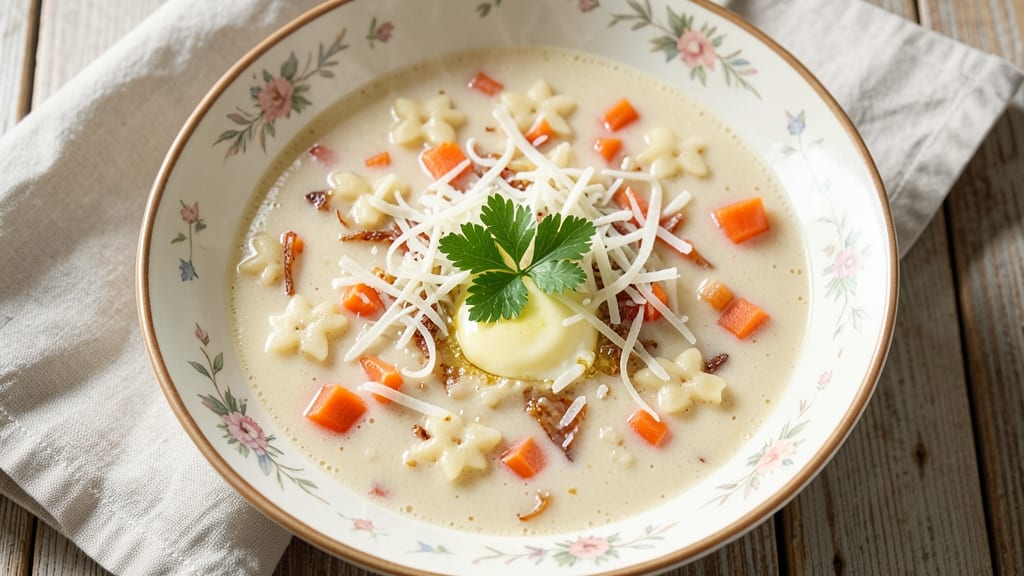
This traditional pastina soup recipe brings the comforting flavors of Italian nonna cuisine to your kitchen with its signature creamy broth and al dente star-shaped pasta.
The secret lies in simmering chicken broth with a touch of cream, creating a velvety texture that cradles the tiny pasta pieces—just like my nonna used to make. Every spoonful delivers that nostalgic warmth of Italian home cooking, where simplicity meets rich tradition.
The beauty of this recipe is its versatility—start with a classic chicken broth base, then let the star-shaped pastina cook just until it maintains that perfect crunch. A splash of cream at the end transforms the broth into something luxurious, while a sprinkle of Parmesan adds depth.
This is the kind of soup that warms both body and soul, especially on chilly evenings when you crave something hearty yet comforting.
What makes this traditional pastina truly special is how the tiny pasta pieces dance in the broth, each bite offering a perfect balance of texture and flavor. The broth remains rich and savory, while the pasta stays tender with just a hint of bite.
It’s the kind of dish that feels like a hug in a bowl—simple enough for a weeknight but impressive enough for company.
Whether you stick to the classic version or add vegetables like carrots and celery, this soup adapts beautifully to your preferences. The key is patience—letting the flavors meld and the pasta cook just right. Ready to recreate this taste of home? Let’s get started with the ingredients and instructions.
Ingredients for traditional pastina soup
Simple ingredients that transform into creamy, comforting Italian grandma-style pastina soup.
| Ingredient | Amount | Notes |
|---|---|---|
| Chicken Broth 🍗 | 4 cups | Homemade or quality low-sodium |
| Star-Shaped Pastina 🍝 | ½ cup | Al dente texture preferred |
| Heavy Cream 🥛 | ¼ cup | Full-fat for richness |
| Parmesan Cheese 🧀 | ¼ cup | Freshly grated from block |
| Butter 🧈 | 2 tbsp | Unsalted for flavor control |
| Carrots 🥕 | 1 medium | Peeled and finely diced |
| Yellow Onion 🧅 | 1 medium | Finely chopped |
| Celery Stalks 🥬 | 2 medium | Diced, for aromatic base |
| Garlic Cloves 🧄 | 2 cloves | Minced for aromatic depth |
| Salt 🧂 | 1 tsp | Kosher or sea salt |
| Black Pepper 🌶️ | ½ tsp | Freshly ground preferred |
| Fresh Parsley 🌿 | 2 tbsp | Chopped, for garnish |
The broth is the heart of this soup, so don’t skimp. Homemade chicken broth has the best flavor, but a quality low-sodium store-bought version works in a pinch. For the vegetables, Whole Foods or local markets often have fresher produce—look for carrots and celery with vibrant color and crisp texture. The pastina? De Cecco or Barilla brands are my go-to for that classic al dente bite. If you can’t find star-shaped, tiny shells or orzo work too—just adjust cooking time. The Parmesan needs to be freshly grated from a wedge; pre-grated tastes like sawdust in comparison.
No fresh parsley? Dried works at half the amount, but it won’t have that same bright finish. Short on cream? Half-and-half or a splash of milk keeps it lighter. The butter matters here—unsalted so you control the seasoning. If you’re making a big batch, double the broth and veggies but keep the cream and Parmesan proportions the same. The garlic can be roasted for a sweeter flavor—just wrap the whole cloves in foil with a drizzle of olive oil and roast at 400°F for 10 minutes. The onions and carrots can be swapped for frozen chopped veggies if you're in a hurry.
This soup tastes even better the next day as the flavors meld. Store leftovers in the fridge for up to 5 days—the pasta absorbs the broth beautifully. For freezing, portion into containers and keep for 3 months. I always make a double batch because it reheats like a dream. The cream might separate when reheated, so just stir it back together. Garnish with extra Parmesan and parsley right before serving—that’s non-negotiable
Why You'll Love This Recipe
- No-Prep Pantry Staples: I swear by this recipe because it uses things I already have—chicken broth, a block of butter, and that pastina I bought on sale last month. No chopping, no waiting for veggies to soften, just dump-and-stir magic.
- Creamy Cheese Kiss: That moment when the heavy cream swirls into the broth and the Parmesan melts into little salty clouds? It’s like a hug in a bowl. The star-shaped pastina soaks up the richness without getting mushy—textural perfection.
- Leftovers That Beg: Honestly, I make this on Sunday and eat it all week. The flavors only get better as it sits—deeper, creamier, like it’s secretly aging to perfection. My kids ask for it cold too, because even the next-day version is that good.
- Budget Dinner Hero: A single pot of broth, a handful of pasta, and a splash of cream stretch to feed four for under $8. It’s my go-to when I’m broke or lazy (or both), and somehow still feels fancy enough for company. The Parmesan makes it taste expensive.
Step-by-step instructions for traditional pastina soup
Here's how to create that comforting Italian classic with perfect al dente crunch.
Sauté the Aromatic Vegetable Base
Melt the 2 tablespoons butter in a large pot over medium heat. Add the 1 medium yellow onion, 1 medium carrot, and 2 medium celery stalks, all finely diced. Cook for 5-6 minutes until the vegetables soften and begin to release their natural juices, stirring occasionally to prevent browning.
Here's the thing—you want these vegetables to become tender but not mushy. They form the flavor foundation of your soup, so take your time. When they're just starting to caramelize slightly at the edges, add the 2 cloves minced garlic and cook for another 30 seconds until fragrant. This quick cooking prevents the garlic from becoming bitter.
Build the Flavorful Broth
Pour in the 4 cups chicken broth and bring the mixture to a gentle boil. Once boiling, reduce heat to medium-low and let it simmer uncovered for 10 minutes. This allows the flavors to meld together and develop depth. You'll notice the broth will reduce slightly, intensifying the vegetable flavors.
Season with 1 teaspoon salt and ½ teaspoon black pepper. Taste the broth—it should be seasoned but not overwhelming. If you're using homemade broth, you might need to adjust the salt slightly. This is your chance to balance the flavors before adding the delicate pastina.
Cook the Star-Shaped Pastina to Perfection
Add the ½ cup star-shaped pastina to the simmering broth. Stir gently to distribute it evenly. The key here is patience—bring the soup back to a gentle simmer (small bubbles around the edges) and cook for 8-10 minutes. You want the pastina to be al dente, meaning it should have a slight bite when you taste it.
I like to check the texture by tasting a piece every 2 minutes starting at the 6-minute mark. It should be tender but still hold its shape with a pleasant crunch. If you prefer softer pastina, you can cook it up to 12 minutes, but true al dente is what gives this soup its signature texture. Don't let it boil vigorously—keep it at a gentle simmer to prevent the pastina from becoming mushy.
Finish with Creamy Richness
Reduce the heat to low and stir in the ¼ cup heavy cream. Let it warm through gently for 2-3 minutes, stirring occasionally. The cream should blend smoothly into the broth, creating that luxurious texture without curdling. If you notice the cream starting to separate, reduce the heat even further or remove the pot from heat temporarily.
Finally, fold in the ¼ cup freshly grated parmesan cheese using a wooden spoon. The cheese should melt completely into the soup, adding a savory depth. If the soup seems too thick after adding the cream and cheese, you can thin it slightly with a splash of hot chicken broth—just 1-2 tablespoons at a time until you reach your desired consistency.
Serve with Fresh Herbs and Enjoy
Ladle the soup into bowls and garnish each serving with 2 tablespoons chopped fresh parsley. The parsley adds a bright, fresh contrast to the rich, creamy soup. Serve immediately while the pastina is still al dente and the cream maintains its velvety texture.
Real talk: This soup tastes even better the next day as the flavors continue to meld, but the pastina will be softer. For the perfect experience, enjoy it fresh with crusty bread on the side. The combination of creamy broth, al dente pastina, and aromatic vegetables makes this a truly comforting dish that reminds you of Nonna's kitchen.
Pro Tips For Making Traditional Pastina Soup
- Simmer, Don’t Boil: Pastina turns mushy when it fights the broth—keep the heat at a gentle simmer, just enough to see small bubbles breaking the surface. I used to crank the stove and ended up with gluey stars every time.
- Toast the Pastina First: Dry the star-shaped pasta in a hot pan with butter for 2-3 minutes before adding broth—this adds a nutty depth and prevents clumping. Sounds weird, but it works: the texture becomes richer, and the soup tastes more intentional.
- Whisk in Cream Slowly: Heavy cream curdles when it hits hot liquid, so temper it first: ladle a cup of hot broth into the cream while stirring, then mix it back in. This isn’t the prettiest method, but it’s the tastiest.
- Grate Parmesan Fresh: Pre-shredded cheese hides anti-caking agents that make it clump in soups—grate your own using the large holes of a box grater. It’s a 30-second job that makes the soup taste like it came from a nonna’s kitchen.
Dietary considerations for this traditional pastina soup
Gluten-Free Adaptation
Traditional pastina soup relies on wheat-based star-shaped pasta, but you can easily adapt it for gluten-free diets. Swap the regular pastina for gluten-free orzo or tiny gluten-free shells—brands like Barilla GF or Jovial work perfectly.
Cook these gluten-free pastas for 1-2 minutes less than wheat-based versions since they often soften faster. The texture remains delightful while keeping the dish safe for gluten-sensitive eaters. 🌱
Dairy-Free Version
For a dairy-free twist, replace the heavy cream with full-fat coconut milk or cashew cream (blend ½ cup soaked cashews with ½ cup water). Use nutritional yeast instead of Parmesan for that cheesy flavor—about 2 tablespoons adds depth without dairy.
The soup stays creamy and rich while accommodating lactose intolerance or vegan preferences.
Low-Fat Modifications
Cut calories without sacrificing flavor by reducing the cream to 2 tablespoons and using low-fat milk instead of heavy cream. Replace butter with olive oil (use 1 tablespoon) for sautéing the vegetables.
The broth will still be flavorful, and the soup retains its comforting texture—just lighter. Garnish with extra herbs to boost freshness.
Vegetarian Option
Skip the chicken broth and use vegetable broth instead. Boost umami with 1 teaspoon soy sauce or ½ teaspoon miso paste in the broth. Add white beans (½ cup) for protein and fiber, and finish with a sprinkle of nutritional yeast for a cheesy note.
The result is just as hearty and satisfying for plant-based eaters. 🥕
Protein Boost
Add lean protein to make this soup more filling. Stir in ½ cup cooked shredded chicken or crumbled turkey sausage during the final 5 minutes of cooking.
For a vegetarian option, use ½ cup chickpeas (drained and rinsed). These additions keep the soup balanced and nutritious while maintaining its creamy, comforting appeal.
Kid-Friendly Adjustments
Make this soup extra appealing for kids by blending ½ cup of the cooked soup until smooth, then stirring it back in. Reduce the garlic to 1 clove and omit any strong herbs like parsley.
Serve with buttered noodles on the side for dipping—it’s a fun way to get them excited about the classic flavors. The familiar textures make it a hit with little ones. 👶
Nutrition facts
Frequently asked questions
What makes this pastina soup different from other Italian soups?
The star-shaped pasta and creamy broth set this apart from classic Italian soups like minestrone or ribollita. The tiny pastina pieces stay al dente while absorbing the rich flavors, creating that signature crunch. The addition of cream and Parmesan transforms it from a simple vegetable broth into something luxuriously comforting.
Can I use regular orzo instead of star-shaped pastina?
Orzo works perfectly and is often used in similar Italian soups. For best results, reduce cooking time by 1-2 minutes since orzo tends to soften faster. The texture will be slightly different but still delicious. If you can't find star-shaped, tiny shells or acini di pepe also work well.
Why does the soup need to simmer uncovered?
Simmering uncovered allows the broth to reduce slightly, intensifying the vegetable flavors and preventing a skin from forming. This creates a more concentrated, aromatic base. If you must cover, leave the lid slightly ajar to allow some steam to escape.
What's the secret to keeping the pastina al dente?
Cook the pastina in a gentle simmer (small bubbles at edges) and taste-test starting at 6 minutes. The key is patience—overcooking turns it mushy. If using gluten-free pastina, reduce cooking time by 1-2 minutes as it softens faster.
Can I make this soup ahead of time?
Yes! It actually tastes better the next day as flavors meld. Store in an airtight container for up to 5 days in the fridge. For freezing, portion into containers and keep for 3 months. Reheat gently on low heat, stirring occasionally to prevent separation.