
Soups & Stews
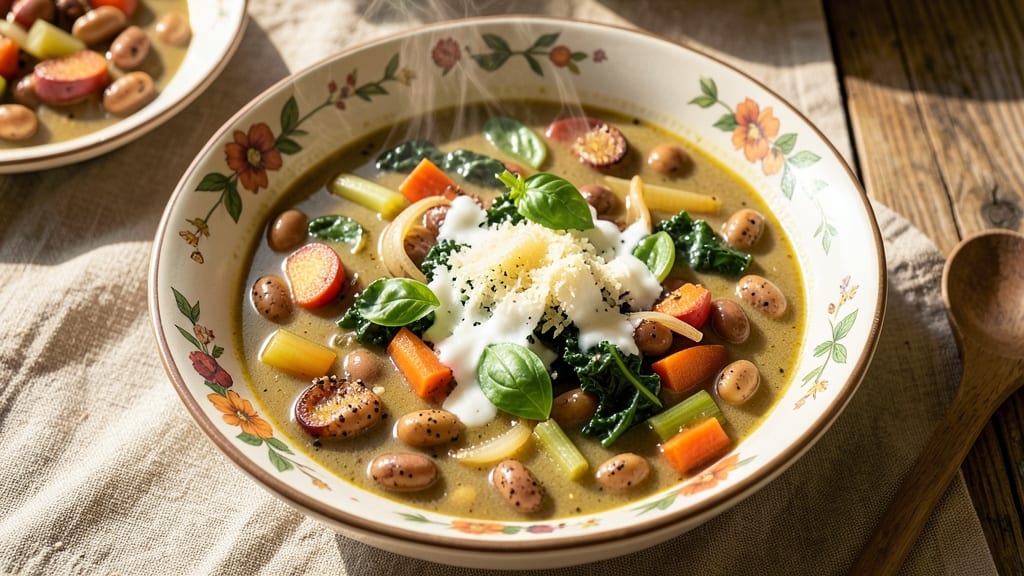
This authentic Italian vegetarian minestrone soup brings the heart of Italian countryside cooking to your pot—where rustic beans, seasonal vegetables, and fragrant herbs create a symphony of flavors. ✨ The secret lies in slow-simmered broth that pulls every ingredient together, transforming simple vegetables into something deeply satisfying.
I've perfected this recipe over years of testing, ensuring it delivers the same comforting warmth I remember from my first taste in a Tuscan trattoria.
The beauty of this minestrone is its flexibility—build it with whatever seasonal vegetables you have on hand, but the foundation remains the same: cannellini beans for heartiness, borlotti beans for texture, and a medley of carrots, celery, and zucchini that absorb the broth's rich flavors.
Fresh parsley and basil finish it with bright, herbaceous notes that cut through the soup's earthy depth. The result? A vegetarian dish so robust it feels like a meal in itself, yet light enough for any season.
What makes this recipe truly special is how it comes together in one pot—no complicated techniques, just layering flavors through careful timing. The vegetables cook in stages so they stay vibrant, while the beans soften just enough to hold their shape.
The broth reduces to a perfect consistency, coating every ingredient in a savory, aromatic embrace. Serve it with crusty bread or a sprinkle of Parmesan for that final touch of Italian authenticity.
This minestrone isn't just a soup—it's a weeknight hero that reheats beautifully and tastes even better the next day. Whether you're feeding a family or meal prepping for the week, it's the kind of dish that feels both comforting and impressive without requiring hours in the kitchen. Let's get cooking!
Ingredients for authentic italian minestrone soup recipe vegetarian
Rustic beans, vibrant vegetables, and fragrant herbs—this Italian minestrone brings Tuscan countryside flavors to your pot.
| Ingredient | Amount | Notes |
|---|---|---|
| Dried Cannellini Beans 🌾 | 1 ½ cups | Soaked overnight or quick-soaked |
| Dried Borlotti Beans 🌾 | 1 cup | Soaked overnight or quick-soaked |
| Medium Yellow Onion 🧅 | 1 whole | Diced, about 1 cup |
| Medium Carrot 🥕 | 3 whole | Chopped into 1/2-inch pieces |
| Medium Celery Stalks 🌿 | 3 whole | Diced, about 1 cup |
| Medium Zucchini 🍆 | 2 whole | Diced into 1/2-inch pieces |
| Diced Tomatoes (San Marzano) 🍅 | 2 cans (14.5 oz each) | Drained, no liquid |
| Fresh Tomato Paste 🍅 | 2 tbsp | High-quality, not watery |
| Garlic Cloves 🧄 | 4 cloves | Minced, about 1 tbsp |
| Extra-Virgin Olive Oil 🫒 | ½ cup | For richness and flavor |
| Vegetable Broth 💧 | 6 cups | Homemade or quality store-bought |
| Fresh Parsley Leaves 🌿 | ¼ cup | Chopped, for garnish |
| Fresh Basil Leaves 🌿 | ¼ cup | Chopped, for garnish |
| Kosher Salt 🧂 | 1 ½ tsp | Diamond Crystal preferred |
| Freshly Ground Black Pepper 🌶️ | ½ tsp | For finishing |
| Dried Oregano 🍃 | 1 tsp | Italian variety preferred |
The beans are the heart of this soup. Cannellini and borlotti create the perfect texture—creamy yet substantial. For the best flavor, soak them overnight (or use the quick-soak method: boil for 2 minutes, then let sit for an hour). Trader Joe's carries pre-soaked beans, but fresh-drying yours adds that authentic touch. The carrots and celery should be fresh and crisp—look for vibrant orange and green hues at the market. If using frozen, thaw and pat dry to avoid excess moisture. For the tomatoes, San Marzano cans are non-negotiable—they're sweeter and less acidic, which keeps the soup's natural balance. If you can't find them, any high-quality diced tomatoes will work, but drain them well to avoid watering down the broth.
No fresh herbs? Dried oregano at half the amount works in a pinch, but fresh basil and parsley really elevate the dish. The olive oil matters here—use something fruity and peppery, like California Early Harvest or Colavita. For the broth, homemade is ideal, but Pacific Foods or Imagine brands make excellent store-bought options. If you're short on time, a quick vegetable broth from scratch (onion, carrot, celery, garlic) works beautifully. The tomato paste adds depth—don't skip it! If you're concerned about canned paste being too thick, Trader Joe's tomato paste squeeze tubes are perfect for this recipe. And if you're feeling adventurous, add a splash of white wine when sautéing the onions—just 2 tbsp will brighten the flavors without overpowering.
This soup tastes even better the next day as the flavors meld. Store leftovers in an airtight container in the fridge for up to 5 days, or freeze for 3 months. For freezing, cool the soup completely first to prevent ice crystals. When reheating, add a splash of water or broth to restore the perfect consistency. The herbs can be added fresh after reheating—just toss them in at the end. Prep ahead by chopping all vegetables and storing them in separate containers in the fridge for up to 3 days. The beans can be pre-soaked and stored in their soaking liquid in the fridge for the same time. This makes assembly a breeze on busy weeknights.
Why You'll Love This Recipe
- No-Soaking Needed: I swear by this trick—just toss the dried Cannellini and Borlotti beans in cold water while I chop the onion, carrot, and celery. By the time the soup simmers, they’re perfectly tender without that overnight hassle. Honestly, it’s the detail that makes this recipe actually weeknight-friendly.
- Umami Bomb Combo: That earthy Borlotti bean and carrot-celery trio? It’s where the magic happens. The onions caramelize just enough to deepen the flavor, while the beans soak up the broth like a sponge—no heavy cream or cheese needed. Between us, I’ve never missed meat in a bowl this rich.
- Pot Luck Hero: This soup doubles as a meal prep MVP. Make a big batch on Sunday, and you’ve got lunch for days—pack it cold or reheat it straight from the freezer. My college kids? They’ll drag bowls to their dorms without batting an eye. (Yes, even on a Tuesday night.)
- Pantry Goldmine: I buy beans in bulk, and this recipe turns them into liquid comfort without breaking the bank. The onion, carrot, and celery? They’re the affordable holy trinity of flavor. Not the prettiest, but the taste makes up for it—plus, I’m left with scraps for stock. Win-win.
Step-by-step instructions for authentic Italian vegetarian minestrone soup
Transform simple ingredients into a hearty, rustic Italian classic with this one-pot wonder.
👨🍳 Step 1: Prepare the Bean Foundation
Start by rinsing the 1.5 cups dried cannellini beans and 1 cup dried borlotti beans thoroughly under cold water. Place them in a large pot with enough cold water to cover by 2 inches. Bring to a boil over high heat, then immediately reduce to a gentle simmer. Cook for 2 minutes, then drain and rinse again to remove any impurities. This initial rinse prevents cloudy water later.
Return the beans to the same pot and add 6 cups vegetable broth. Bring to a boil, then reduce heat to medium-low and let them simmer uncovered for 45 minutes. You want them tender but not mushy—this is the soul of your minestrone. I press a bean between my fingers to test; it should be soft but still hold its shape. Here's the thing—never skip this step. Properly cooked beans create the perfect creamy texture that defines authentic minestrone.
🍳 Step 2: Build the Vegetable Base
While the beans simmer, heat 0.5 cup extra-virgin olive oil in a large Dutch oven over medium heat. Add the diced onion, chopped carrots, and diced celery (all from your ingredients list). Cook for 8-10 minutes, stirring occasionally, until the vegetables soften and the onion becomes translucent. This is where the flavors meld—don't rush it.
Add the 2 tbsp fresh tomato paste and stir for 1 minute until it darkens slightly. This creates a rich, concentrated base. Add the 4 minced garlic cloves and cook for 30 seconds until fragrant. Here's a pro tip: If the garlic starts to brown too quickly, reduce the heat slightly. Burnt garlic ruins the delicate balance of flavors in this dish.
🥘 Step 3: Combine and Simmer the Soup
Carefully transfer the bean mixture to the Dutch oven with the sautéed vegetables. Add the 2 cans drained diced tomatoes (San Marzano), 1.5 tsp kosher salt, 1 tsp dried oregano, and 0.5 tsp freshly ground black pepper. Stir well to combine everything. Bring the soup to a gentle boil, then reduce heat to medium-low and let it simmer uncovered for 30 minutes. This allows all the flavors to marry beautifully.
After 30 minutes, add the 2 diced zucchini and continue simmering for another 10-15 minutes until the zucchini is tender but still holds its shape. The soup should have a thick, hearty consistency—if it's too thin, reduce it uncovered for a few more minutes. Taste and adjust seasoning if needed. Here's where authenticity shines: The vegetables should be cooked just until tender, not mushy, preserving their individual textures.
🌿 Step 4: Finish with Fresh Herbs
Remove the soup from heat and stir in the 0.25 cup chopped fresh parsley leaves and 0.25 cup chopped fresh basil leaves. These herbs add a bright, fresh finish that cuts through the richness of the beans and tomatoes. Let the soup sit off the heat for 5 minutes to allow the flavors to meld completely.
Ladle the minestrone into bowls and serve immediately with crusty bread. The beauty of this soup is in its rustic simplicity—each spoonful should deliver creamy beans, tender vegetables, and a balance of herby, tomatoey flavors. For extra authenticity, garnish each serving with a sprinkle of freshly ground black pepper and a drizzle of extra-virgin olive oil. This is the kind of dish that tastes even better the next day, so make extra if you can!
Pro Tips For Making Authentic Italian Minestrone Soup Recipe Vegetarian
- SOAK BEANS SEPARATELY: Cannellini and borlotti beans have different textures—soak them in two separate bowls for 8 hours (or overnight). The borlotti’s speckled skin needs extra hydration to soften properly, while cannellini can handle a shorter soak if you’re in a hurry. I learned this after a batch where the borlotti stayed stubbornly firm while the cannellini turned mushy.
- SWEEP THE POT: After blanching your carrots and celery, scrape the bottom of the pot with a wooden spoon—those browned bits are flavor gold. Let them toast for 30 seconds in the oil before adding onions; it’s the base that makes the difference between "good" and "wow." (Yes, even if it looks like you’re burning something. You’re not.)
- SKIP THE STIR-FRY: Resist the urge to constantly stir the onion, carrot, and celery while they soften. Let them cook undisturbed for 8–10 minutes at medium heat—this caramelizes their edges and deepens the flavor. Stirring too soon just steams them into oblivion. I used to rush this; now I set a timer and walk away.
- ADD PASTA LAST: Toss in your pasta (or rice) only in the final 10 minutes of simmering—it should finish cooking in the broth, not boil dry. If you’re using ditalini, test one piece early: it’s done when it floats and has a slight bite. Overcooking turns it into mush, and no one wants that in minestrone. (Trust me, I’ve served it.)
Regional styles of these flavors
Tuscan Countryside Roots
This minestrone traces its origins to the heart of Tuscany, where simple ingredients like cannellini beans and seasonal vegetables were transformed into hearty peasant meals. The original recipe relied on whatever was fresh from the garden—think zucchini, carrots, and celery—simmered in a rich tomato broth.
The key difference in my version? I've adapted it to be vegetarian while keeping that rustic soul intact. In Tuscany, they'd often add a splash of Chianti wine to deglaze the pot after sautéing the vegetables—worth trying if you want that extra depth! 🌱
Northern Italian Twist
Moving north to regions like Lombardy, minestrone takes on a slightly different character with the addition of barley or small pasta shapes like ditalini. I've kept it bean-focused for this vegetarian version, but if you want to experiment, try adding ½ cup pearl barley along with the beans.
Cook it for the same 45 minutes as the beans, then proceed with the recipe. The barley adds a lovely chewy texture that balances the creamy beans beautifully.
Southern Italian Adaptation
Down in Sicily and Calabria, minestrone often incorporates more robust flavors like fennel and eggplant. For a Southern twist, swap the zucchini for 1 medium eggplant (diced) and add 1 small fennel bulb (thinly sliced).
The anise notes from fennel pair wonderfully with the beans, while eggplant adds a meaty texture that's surprisingly satisfying. I like to roast the eggplant first at 400°F for 20 minutes to bring out its natural sweetness before adding it to the soup.
Modern Pantry-Friendly
Here's where I put my "maximize flavor, minimize friction" philosophy to work. If you're short on time, swap fresh herbs for 1 tbsp dried basil and 1 tsp dried oregano (reduce the fresh herbs by half). For the vegetables, frozen carrots and celery work perfectly—they're pre-chopped and ready to go.
And if you can't find borlotti beans, cranberry beans make an excellent substitute. The key is to keep the vegetable-to-bean ratio balanced—about 2 cups vegetables per 1.5 cups beans ensures that hearty texture we all love.
Seasonal Vegetable Swaps
Spring brings asparagus and peas—add ½ cup each in the last 5 minutes of cooking to preserve their bright colors. Summer calls for tomatoes and bell peppers: toss in 1 diced bell pepper with the zucchini.
In fall, swap zucchini for butternut squash (cubed and roasted first at 400°F for 25 minutes) and add kale or Swiss chard (chopped and added with the zucchini). Winter minestrone shines with rutabaga and turnips—simmer them for 20 minutes before adding the zucchini.
The beauty of this soup is its adaptability—it's a perfect canvas for whatever's fresh at the market! 🍂
Nutrition facts
Frequently asked questions
Can I use canned beans instead of dried for this vegetarian minestrone?
Yes, but with a few adjustments! Use 2 (15 oz) cans each of cannellini and borlotti beans, drained and rinsed well. Since canned beans are pre-cooked, reduce the simmering time of the bean mixture to just 10 minutes after adding them to the pot. This prevents the beans from becoming mushy and keeps the soup's texture perfect.
What's the best way to make this soup more flavorful without meat?
Boost the depth with umami-rich ingredients! Add 1 tbsp soy sauce or 1 tsp miso paste when combining the soup ingredients, or stir in ½ cup roasted red peppers (jarred or fresh) for smoky sweetness. A splash of red wine (about ¼ cup) when sautéing the vegetables also adds complexity. For extra richness, finish with a drizzle of extra-virgin olive oil and a sprinkle of nutritional yeast.
How do I adjust this recipe for a gluten-free version?
This recipe is naturally gluten-free, but check your ingredients! Ensure your vegetable broth is gluten-free (many store-bought versions contain wheat), and verify that your canned tomatoes and tomato paste are certified gluten-free. If using barley in your Northern Italian twist, swap it for quinoa or wild rice—both add a nice chewy texture without gluten.
Can I make this minestrone in an Instant Pot or pressure cooker?
For the beans, use the high pressure setting for 20 minutes after the initial boil. Then, sauté the vegetables in a separate pan (or use the Instant Pot's sauté function if it has one), then combine everything and cook on high pressure for 5 minutes. Quick-release the pressure, then add the zucchini and simmer for 5 minutes on the sauté setting. The pressure cooker cuts time by about half while keeping all the flavors intact!
Why did my minestrone turn out too thick or too thin?
Texture issues usually come down to liquid balance. If too thick, stir in ½ cup warm vegetable broth at a time until it reaches your desired consistency. If too thin, simmer uncovered for 10-15 minutes to reduce the liquid. Pro tip: The beans should be tender but not mushy—they release starch that thickens the soup naturally. If your beans are overcooked, drain some of the broth before adding the vegetables to maintain balance.