
Soups & Stews
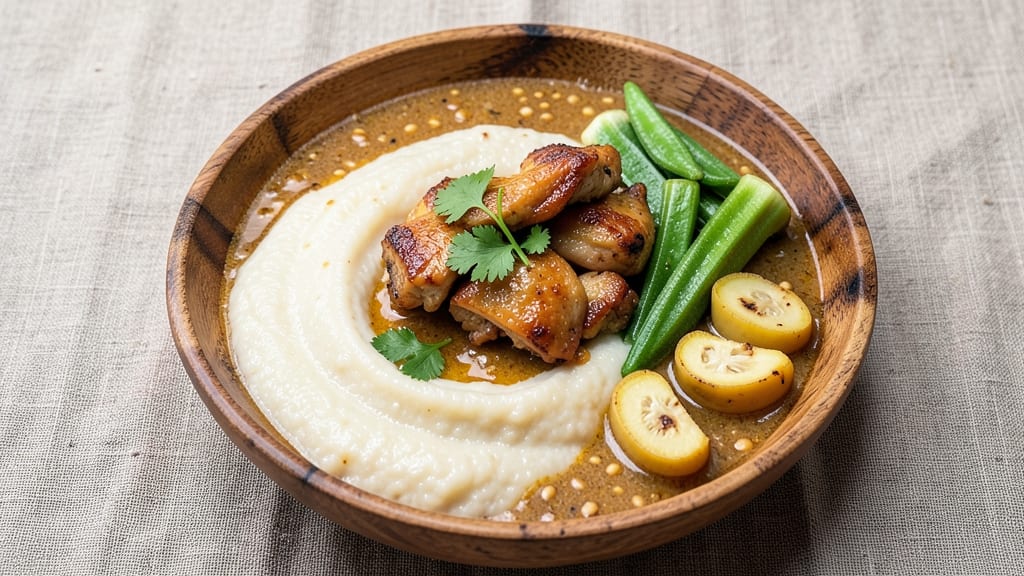
This African fufu soup recipe brings the soul-warming essence of West and Central African cuisine to your kitchen, where hand-pulled starch meets rich, hearty stews in perfect harmony. 🌟 The dish centers around fufu—a smooth, dough-like staple made from pounded cassava, yam, or plantain—paired with a flavorful broth like peanut stew, egusi, or okra-based soup.
What makes this recipe special is its cultural depth and the satisfying texture contrast between the soft fufu and the robust, savory soup.
The magic lies in the preparation: fufu requires traditional pounding techniques to achieve its signature elasticity, while the soup simmers with aromatic spices, tender proteins, and vegetables that create a deeply flavorful base.
Whether you use beef, chicken, fish, or plant-based alternatives, the result is a comforting meal that’s both nourishing and deeply satisfying. This recipe is designed to be authentic yet approachable, ensuring you capture the essence of African dining without compromising on simplicity.
By the time you’re done, you’ll have a dish that’s as visually appealing as it is delicious—steaming bowls of soup accompanied by smooth, glossy fufu, ready to be shared and savored.
The combination of textures and flavors makes this a complete meal, perfect for family gatherings, cultural celebrations, or a cozy weeknight dinner. Let’s dive into the steps to bring this traditional dish to life in your own kitchen.
This recipe isn’t just about the food; it’s about the experience. From the rhythmic pounding of the fufu to the aromatic spices simmering in the soup, every step is a celebration of African culinary tradition.
Whether you’re serving it as a centerpiece for a feast or enjoying it as a comforting solo meal, the result is a dish that’s as meaningful as it is delicious. Here’s how to make it.
Ingredients for african fufu soup
Six pounds of starchy tubers meet aromatic peanuts and spicy okra for a soulful African feast.
| Ingredient | Amount | Notes |
|---|---|---|
| Cassava Tubers 🍠 | 2 lbs | Fresh, peeled and chopped |
| Yam Tubers 🍠 | 1 ½ lbs | Medium-sized, peeled and chopped |
| Green Plantains 🍌 | 2 whole | Unripe, peeled and chopped |
| Chicken Thighs 🍗 | 1 ½ lbs | Bone-in, skin-on preferred |
| Ground Peanut 🥜 | ½ cup | Natural, unsweetened |
| Fresh Okra Pods 🌿 | 1 cup | Trimmed, sliced into rounds |
| Tomato Paste 🍅 | ¼ cup | San Marzano preferred |
| Onion 🧅 | 1 whole | Yellow, finely chopped |
| Garlic Cloves 🧄 | 6 cloves | Peeled, minced |
| Scotch Bonnet Peppers 🌶️ | 2 whole | Seeds removed, chopped |
| Fresh Ginger 🌿 | ½ inch | Peeled, grated |
| Vegetable Oil 🫒 | ½ cup | For frying fufu |
| Salt 🧂 | 1 ½ tsp | Diamond Crystal preferred |
| Ground Black Pepper 🌶️ | ½ tsp | Freshly ground |
| Thyme Leaves 🌿 | ¼ cup | Fresh, chopped |
The cassava and yams are the stars here—freshness is key. Look for firm tubers with no soft spots at African markets or specialty grocers like H Mart or Kalamazoos. If you can't find them, substitute extra plantains (about 1.5 lbs more) for texture. For the plantains, green is essential—they need to be unripe for that perfect doughy texture. Pre-peel and chop them while you prep the broth; they'll darken fast. The chicken thighs? Bone-in, skin-on stays juicier during the long simmer, but boneless works if you're in a hurry.
No Scotch bonnet peppers? Habanero or jalapeño at half the amount will work, but taste test first—these peppers pack serious heat. The peanut butter should be 100% natural (no sugar or oils added)—Skippy Natural or Crisco Natural Peanut Butter are solid choices. Short on okra? Substitute 1 cup chopped eggplant for a similar texture. The tomato paste can be the squeeze-tube kind from Trader Joe's—it's perfect for small batches and keeps forever. Fresh thyme is ideal, but dried at one-third the amount gets you close. Just don't skip it—the aroma is non-negotiable for that West African soul.
Fufu dough keeps best in an airtight container for 3 days in the fridge, but it's best used fresh. The soup base freezes beautifully—portion into ice cube trays for easy reheating. To reheat, add a splash of water or broth and simmer gently. The dough will dry out if left exposed, so always cover it tightly. For extra authenticity, serve with a side of spicy shito or pepper sauce—store-bought works, but homemade (blended peppers, garlic, and oil) is a game-changer. Make a double batch of dough; it disappears fast during celebrations.
Why You'll Love This Recipe
- No Pounding Required: Honestly, I used to dread the hours of pounding fufu—until I discovered boiling the cassava and yam first. The tubers soften into a doughy texture with just a fork, and the plantains add natural sweetness without extra work. My hands stay clean, and the kids don’t complain about "boring chores."
- Rich, Nutty Depth: That ground peanut isn’t just flavor—it’s the star. Toast it lightly first, and you get this irresistible aroma that clings to every spoonful. The chicken thighs stay juicy while the peanut sauce thickens into something dangerously addictive, like a hug in a bowl.
- Weeknight or Celebration: Between us, this feeds a crowd without stress. Double the batch for Sunday gatherings, or serve it as a humble weeknight dinner. The leftovers reheat beautifully, and the fufu’s texture holds up better than store-bought dumplings. (Yes, even on a Tuesday night.)
- Budget-Friendly Powerhouse: Cassava and yams stretch farther than you’d think, and chicken thighs cost half as much as breasts. The peanut sauce feels fancy but uses pantry staples. I’ve made this on grocery-store paychecks, and it’s still the dish my family fights over. Practical? Absolutely. Delicious? Ridiculously.
Step-by-step instructions for African fufu soup
Let's bring this West African classic to life with perfectly pulled fufu and rich, aromatic stew.
🍳 Step 1: Prepare the Fufu Base
In a large pot, combine the 2 lbs cassava tubers and 1.5 lbs yam tubers with 6 cups water. Bring to a rolling boil over medium-high heat, then reduce to a simmer for 20-25 minutes until the tubers are fork-tender. Drain thoroughly and return to the pot.
Add the 2 whole green plantains (peeled and chopped) and mash everything together with a potato masher until you achieve a smooth, dough-like consistency. Here's the thing - you want it slightly sticky but workable. If it's too dry, add 1 tablespoon water at a time. Cover and set aside while you prepare the stew.
🍳 Step 2: Cook the Chicken and Build the Stew Base
In a separate large pot, heat 0.25 cup vegetable oil over medium heat. Add the 1.5 lbs chicken thighs (skin-side down) and cook for 8-10 minutes until golden brown and slightly crispy. Remove chicken and set aside. In the same pot, add 1 whole onion and 6 cloves garlic cloves, cooking for 3 minutes until softened.
Stir in the 0.25 cup tomato paste, 0.5 inch fresh ginger, and 2 whole Scotch Bonnet peppers (seeds removed). Cook for 2 minutes until fragrant. Pour in 4 cups water and bring to a boil. Return chicken to the pot, reduce heat to low, cover, and simmer for 30 minutes until chicken is tender.
🥘 Step 3: Thicken and Season the Stew
Remove the chicken from the stew and shred the meat, discarding bones and skin. Return the shredded chicken to the pot. In a small bowl, mix 0.5 cup ground peanut, 0.25 cup thyme leaves, 1.5 tsp salt, and 0.5 tsp ground black pepper. Stir this mixture into the stew and simmer uncovered for 10 minutes until slightly thickened.
Add the 1 cup fresh okra pods (sliced) and simmer for another 5-7 minutes until okra is tender and the stew reaches your desired consistency. The okra will help thicken the stew naturally. Taste and adjust seasoning - you might need a pinch more salt or a dash of pepper to balance the flavors.
👨🍳 Step 4: Fry the Fufu to Perfection
Divide the fufu dough into 6 equal portions (about ½ cup each). Heat 0.25 cup vegetable oil in a small skillet over medium heat. Working with one portion at a time, flatten a piece of fufu into a smooth, round ball about 3 inches in diameter. Carefully slide it into the hot oil.
Fry for 2-3 minutes per side until golden brown and crispy on the outside while still soft inside. Real talk - this is where the magic happens. The fufu should be light and airy, not dense. Transfer to a paper towel-lined plate to drain. Repeat with remaining portions, keeping fufu warm in a 200°F oven while you fry the rest.
🍽️ Step 5: Serve with Confidence
Spoon the rich, peanut-infused stew over each portion of fufu and serve immediately. The contrast between the smooth, slightly elastic fufu and the hearty stew is what makes this dish so special. Each bite should deliver tender chicken, creamy peanut sauce, and the satisfying texture of perfectly pulled fufu.
Don't skip the crispy exterior - it's the best part! If you have leftovers, store them separately (fufu doesn't reheat well) and gently warm the stew portion. This dish serves 6 as written, but you'll likely find yourself making double batches once you taste it.
Pro Tips For Making African Fufu Soup
- Boil Tubers Separately: Cassava and yam behave differently—boil the yam first (it’s denser) until fork-tender, then add cassava (softer, absorbs water faster). I learned this the hard way when my fufu turned gluey because I boiled them together. Use a large pot with enough water to cover by 2 inches, and add salt only after boiling starts—otherwise, the skins toughen.
- Skin Chicken Thighs First: Pat the chicken thighs completely dry, then score the skin in a crosshatch, rub with salt, and let them sit 15 minutes before cooking. This keeps them juicy and crispy when you later fry or stew them. I used to skip this, and the meat always ended up dry, especially in the long simmer with peanuts.
- Toast Peanuts Low and Slow: Spread ground peanut in a thin layer on a dry skillet over low heat, stirring constantly. Toast until it smells nutty and deepens to a rich brown—about 5-7 minutes. High heat burns it fast, and you’ll taste the bitterness in the soup. Do this first while you prep other ingredients.
- Use Green Plantain Late: Don’t add sliced green plantains until the very end—just 5-7 minutes before serving. They’ll soften into a creamy, slightly sweet texture that blends perfectly with the peanut stew. If you add them too early, they’ll turn mushy and lose their subtle sweetness.
Serving suggestions for this dish
Traditional Serving Style
In West African households, fufu soup is served family-style with everyone sharing from a central bowl. The fufu is placed directly on a large platter or banana leaf, surrounded by the steaming stew.
I always use a banana leaf for an authentic touch—it adds aroma and keeps the fufu warm. Serve with extra shito (pepper sauce) on the side for those who want more heat. 🌿
Protein Variations
While chicken works beautifully, this dish shines with other proteins too. For beef, use 2 lbs beef chuck instead of chicken—simmer it for 2 hours until fork-tender. For fish, try catfish or tilapia (about 1.5 lbs) and reduce the simmer time to 15 minutes after adding it.
Vegetarians can swap in chickpeas or tofu, but increase the okra by ½ cup for better texture. 🍗
Garnish Like a Pro
Fresh herbs elevate this dish instantly. Sprinkle chopped cilantro or parsley over each serving for brightness. A drizzle of toasted peanut oil (heat 2 tbsp peanut oil until fragrant, then cool) adds depth.
For extra flair, top with crushed roasted peanuts—just 2 tbsp per bowl. The contrast of textures makes every bite exciting. ✨
Beverage Pairings
African palm wine is traditional, but modern pairings work too. A light lager like Safari Lager cuts through the richness, while a dry Riesling complements the peanut and okra flavors.
For non-alcoholic options, try hibiscus tea (zobo)—its tartness balances the dish perfectly. I always keep a pitcher of iced hibiscus tea on hand for guests. 🍺
Leftovers Strategy
Fufu doesn’t reheat well, but the stew can be stored for 3 days in the fridge or 3 months in the freezer. Reheat the stew with ½ cup water over low heat to prevent drying.
For fufu leftovers, shape them into small balls and pan-fry for 1 minute per side to revive crispiness. Serve with reheated stew and a side of fried plantains for a quick meal. ⏰
Cultural Presentation Tips
Presentation matters in African cuisine! Serve on a wooden platter with a small bowl of shito sauce at each place setting. Use hand-carved wooden spoons for serving—it feels authentic.
For special occasions, arrange fufu in a sunburst pattern on the platter. The key is warmth: keep everything covered until serving to maintain the perfect temperature. 💫
Nutrition facts
Frequently asked questions
What's the secret to getting fufu smooth and elastic?
The key is in the ratio of ingredients and the pounding technique. Use equal parts cassava and yam (like 2 lbs cassava to 1.5 lbs yam) and add just enough water to make it slightly sticky but workable. Pound in short bursts rather than continuously to develop gluten and elasticity. If it cracks while frying, your dough needs more moisture—add 1 tsp water at a time.
Can I make fufu without a mortar and pestle?
Use a food processor in pulse mode for 30-45 seconds at a time, scraping down the sides. For a smoother texture, pass it through a fine-mesh sieve to remove any grit. If you don't have a sieve, use a clean kitchen towel to strain it. The dough will be slightly less elastic but still delicious.
Why does my fufu turn out dense instead of light?
Dense fufu usually means overworking the dough or insufficient moisture. Stop pounding once it's smooth and slightly sticky—don't force it. If the dough feels dry, add 1 tbsp water at a time. Also, ensure your frying oil is at medium heat (not high) to prevent burning the exterior before the inside cooks through.
What's the best way to store leftover fufu?
Fufu doesn't reheat well, but you can store it for 3 days in an airtight container in the fridge. To revive it, shape into small balls and pan-fry for 1 minute per side in fresh oil. For longer storage, freeze the dough in 1-inch balls for up to 1 month. Thaw overnight in the fridge before frying. Never microwave—it makes fufu rubbery.
Can I make this soup vegetarian?
Yes! Replace the chicken with 1.5 lbs chickpeas or firm tofu (pressed for 15 minutes first). Increase the okra by ½ cup and add 1 cup spinach at the end for extra heartiness. Boost flavor with 1 tbsp soy sauce or ½ tsp smoked paprika to mimic the umami from meat. The peanut base will keep it rich and satisfying.