
Soups & Stews
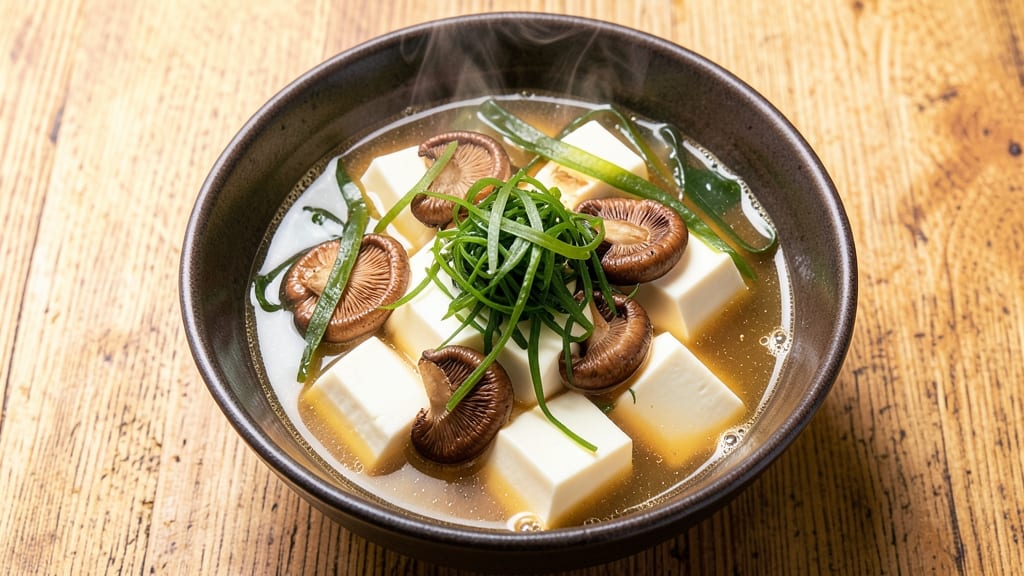
This awase miso soup recipe delivers the perfect balance of umami-rich flavors that define Japanese home cooking. The secret lies in combining two miso pastes—white (shiro) and red (aka)—for a depth of flavor that transforms simple ingredients into something extraordinary.
I’ve perfected this method over years of practice, ensuring every spoonful delivers that signature savory-sweet harmony.
The foundation begins with a traditional dashi broth, infused with kombu and shiitake mushrooms, which forms the aromatic base. Silken tofu adds delicate texture, while wakame seaweed contributes a briny, oceanic note. Green onions finish the dish with a fresh contrast, balancing the richness.
What makes this recipe stand out is its adaptability—whether you stick to classic ingredients or add modern twists like mushrooms or corn, the soul of awase miso remains intact.
What you’ll achieve is a clear, vibrant broth with miso paste beautifully dissolved, creating a velvety consistency that coats every bite. The tofu stays tender, the wakame plumps up perfectly, and the aroma alone will transport you to a bustling Tokyo kitchen.
This is the kind of soup that pairs effortlessly with rice, grilled fish, or even as a light lunch on its own.
For those seeking dietary flexibility, I’ll share how to adapt this recipe using vegan miso or adjusting ingredient ratios for a lighter touch. The key is precision—each element must harmonize to deliver that authentic, comforting bowl of awase miso. Let’s begin with the broth, where the magic starts.
Ingredients for awase miso soup
The perfect harmony of umami begins with these twelve essential ingredients.
| Ingredient | Amount | Notes |
|---|---|---|
| White Miso Paste (Shiro) 🧂 | 2 tbsp | High-quality, preferably organic |
| Red Miso Paste (Aka) 🧂 | 1 tbsp | For depth of umami flavor |
| Dried Kombu 🍃 | 1 piece | About 4x6 inches, no salt crystals |
| Dried Shiitake Mushrooms 🍄 | 4 whole | Stems removed, rehydrated |
| Silken Tofu 🧀 | 1 block | Firm, vacuum-packed preferred |
| Wakame Seaweed 🌊 | ½ oz | Dried, rehydrates quickly |
| Green Onions 🧅 | 2 whole | Thinly sliced, white and green parts |
| Fresh Ginger 🧄 | 1 tbsp | Finely grated, aromatic |
| Water 💧 | 4 cups | Filtered preferred for clarity |
| Diamond Crystal Kosher Salt 🧂 | ½ tsp | For seasoning, adjust to taste |
| Sesame Oil 🫒 | ½ tsp | Toasted, for finishing |
| Dried Bonito Flakes 🐟 | 1 tbsp | Optional, for extra umami |
The miso pastes are the soul of this dish—Miso Master or Hibiki brands deliver exceptional quality, but high-end grocery stores like Whole Foods carry reliable options. For kombu, seek out Japanese dried kombu from specialty Asian markets, as it provides the cleanest, most aromatic base. The shiitake mushrooms should be dried and whole, not powdered, to develop maximum flavor when rehydrated. Silken tofu is non-negotiable here; Natto brand offers the best texture, but any firm vacuum-packed variety works. Wakame should be dried and dark green, indicating freshness and proper drying techniques.
No red miso? Substitute with an extra tablespoon of white miso plus 1/2 teaspoon of beet powder for color. Kombu unavailable? Dashi powder at half the package's broth-making ratio suffices, though it lacks kombu's depth. Fresh ginger can be swapped for 1/2 teaspoon ground ginger, but the texture and aroma differ significantly. For a vegetarian alternative to bonito flakes, 1/2 teaspoon of soy sauce or mushroom powder provides umami without fish content. Green onions can be replaced with chives or scallions, though green onions offer the best balance of freshness and mild bitterness.
Store dried kombu and miso in airtight containers in a cool, dark place—they last 6-12 months this way. Rehydrated shiitake and wakame keep for 3-4 days in the fridge, but their texture degrades after 24 hours. Silken tofu should be used within 3 days of opening; portion leftovers into small containers to prevent surface drying. The finished soup reheats beautifully—simmer gently to avoid breaking the delicate tofu. For meal prep, make a large batch and freeze the broth separately; thaw and reheat before adding fresh tofu and wakame.
Why You'll Love This Recipe
- Five-Ingredient Magic: I swear by this recipe because it’s that simple—just soak kombu and shiitake, simmer, then stir in the miso. No chopping, no fuss, and honestly? The hardest part is waiting for the aroma to fill the kitchen.
- Umami Bomb: The combo of white and red miso? Chef’s kiss. Sweet, funky, and deep all at once, with the earthy shiitake and silken tofu adding texture. It’s the kind of bowl that makes you pour a second helping without thinking.
- Weeknight & Meal Prep: Between us, this is my go-to for lazy nights or busy mornings. Make a big batch—it reheats beautifully—and suddenly you’ve got lunch sorted for days. (Yes, even on a Tuesday night.)
- Budget-Friendly Powerhouse: Dried kombu and shiitake last forever, miso keeps for months, and tofu stretches further than fresh protein. I’ve fed a crowd for under $10 with this—no guilt, just flavor.
Step-by-step instructions for awase miso soup
Awase miso soup delivers a layered umami experience through careful preparation and layering of ingredients. This method ensures a balanced, restaurant-quality broth every time.
Prepare the Kombu and Water Base
Begin by rinsing the 1 piece dried kombu under cold water to remove any surface debris, then pat it dry with a paper towel. Place the kombu in a clean 4-quart pot and add the 4 cups water. Bring to a gentle simmer over medium-low heat—never a rolling boil, as kombu releases its flavor most effectively at 185-195°F. You'll notice the water develop a subtle oceanic aroma within 5 minutes. This initial infusion creates the broth's foundation.
Simmer uncovered for 10 minutes until you see tiny bubbles forming along the kombu's edges—this indicates the umami compounds are dissolving. Remove the kombu immediately to prevent bitterness. The broth should now have a clean, vegetal sweetness with no fishy aftertaste. Strain through a fine-mesh sieve into a clean pot if desired, though I prefer leaving it in for additional texture.
Rehydrate Shiitake and Prepare Wakame
While the kombu infuses, prepare the 4 whole dried shiitake mushrooms by removing their stems (save for broth if desired) and cutting each cap into 4 wedges. Place them in a heatproof bowl and cover with hot (not boiling) water. Let soak for 15 minutes until they plump and regain their original texture. Drain, reserving the soaking liquid for later use.
For the 0.5 oz wakame seaweed, rinse thoroughly under cold water to remove any grit, then tear it into 1-inch pieces. Place in a separate heatproof bowl and cover with 1 cup hot water (just off boil). Let soak for 5 minutes until it expands to about 3 times its original volume. Drain, squeezing gently to remove excess water, then set aside. Both mushrooms and wakame should now have a tender, slightly chewy texture ready for cooking.
Build the Umami Layers with Miso and Ginger
Return the kombu broth to medium heat and add the finely grated 1 tbsp fresh ginger and the 0.5 tsp Diamond Crystal kosher salt. Simmer gently for 3 minutes until the ginger becomes translucent and releases its aromatic oils. This step enhances the broth's complexity without overpowering it.
In a small bowl, combine the 2 tbsp white miso paste (shiro) and 1 tbsp red miso paste (aka). The white miso provides a smooth, mild sweetness while the red adds depth. Gradually whisk these pastes into the simmering broth, starting with the white miso first. The heat should be low—around 160°F—to prevent the miso from activating and losing its delicate flavor. Stir continuously for 2 minutes until fully dissolved. The soup should now have a velvety texture with visible miso swirls.
Incorporate Tofu and Finishing Touches
Cut the 1 block silken tofu into ½-inch cubes and gently fold them into the soup using a silicone spatula. The tofu should be added last to prevent it from absorbing too much liquid and becoming watery. Add the drained shiitake mushrooms and wakame, distributing them evenly throughout the broth. Return to a gentle simmer for 3 minutes to allow all ingredients to meld together.
Remove from heat and stir in the 1 tbsp dried bonito flakes (if using) and 0.5 tsp sesame oil. The bonito will dissolve almost instantly, adding a final umami punch, while the sesame oil creates a delicate, nutty aroma. Thinly slice the 2 whole green onions and divide them among 4 bowls. Ladle the hot soup over the green onions, allowing the layers of flavor to settle naturally. Serve immediately while the tofu remains warm and the broth retains its depth.
Pro Tips For Making Awase Miso Soup
- Soak Kombu First: Toss that dried kombu straight into cold water—it’ll soak up moisture and release umami faster. I used to boil it dry, and the soup tasted flat until I realized the kombu needs 10 minutes in cold water before even thinking about heat.
- Rehydrate Shiitake Properly: Skip the microwave—soak dried shiitake in hot water (not boiling) for 20 minutes. The texture stays meaty, not mushy, and the flavor absorbs better. I learned this after turning my first batch into a sad, watery mess.
- Dissolve Miso Slowly: Remove the kombu before adding miso—hot water kills its flavor. Instead, dissolve the miso paste in a ladle of broth first, then stir it back in. My first attempt had clumps, and the soup tasted like glue.
- Cube Tofu Last: Add silken tofu after the soup simmers—it falls apart in hot liquid. Cube it just before serving, so it stays silky and warm. I used to toss it in early, and it turned into a sad, waterlogged blob.
Common mistakes when making perfect results
Overheating Miso
Never let your broth exceed 160°F when adding miso paste—this is the critical threshold where miso begins to activate and lose its delicate, complex flavors. I’ve ruined countless batches by letting the broth boil vigorously before dissolving the miso.
Instead, maintain a gentle simmer using low heat and stir continuously for 2 minutes once the pastes are added. The goal is to warm the miso gradually, allowing it to blend smoothly without breaking down. 🔥
Skipping Kombu Infusion
Some recipes suggest using instant dashi powder, but kombu’s slow infusion is what creates that signature clean, oceanic depth in awase miso. If you skip it or boil the kombu, you’ll end up with a flat, one-dimensional broth.
I recommend simmering kombu at 185-195°F for exactly 10 minutes—no more, no less. Remove it immediately to avoid bitterness, then proceed with the shiitake and wakame. This step is non-negotiable for authentic flavor. ⚡
Adding Tofu Too Early
Silken tofu absorbs liquid like a sponge, and adding it too soon will turn your soup into a watery, flavorless mess. Always incorporate the tofu in the final 3 minutes of cooking—just before the finishing touches.
Cut it into ½-inch cubes and use a silicone spatula to gently fold it in, rather than stirring vigorously. This keeps the texture intact and prevents the broth from diluting. 🧀
Ignoring Miso Ratios
The balance between white (shiro) and red (aka) miso is what defines awase miso’s signature harmony. Using all white miso will make your soup too sweet and mild, while all red miso can overpower with bitterness.
Stick to the 2:1 ratio (shiro:aka)—this ensures a perfect marriage of smooth sweetness and deep umami. If you’re short on red miso, a pinch of beet powder can help mimic its color, but the flavor will differ slightly. 🧂
Over-Soaking Wakame
Wakame seaweed expands rapidly when rehydrated, and over-soaking it will turn it mushy and unappetizing. Soak for exactly 5 minutes in just-off-boil water, then drain and squeeze gently to remove excess moisture.
If you leave it soaking too long, the texture becomes slimy and loses its pleasant chew. For best results, use 1 cup hot water per 0.5 oz dried wakame—no more. 🌊
Boiling the Broth
A rolling boil destroys the delicate flavors in kombu, shiitake, and wakame, leaving your soup with a harsh, metallic taste. Always maintain a gentle simmer at 185-195°F throughout the entire process. If you notice bubbles forming vigorously, reduce the heat immediately.
The broth should shimmer lightly, not roar. This low-and-slow approach preserves the natural umami compounds and keeps the soup’s clarity intact. 💫
Nutrition facts
Frequently asked questions
Why does awase miso use two different miso pastes?
The combination of white (shiro) and red (aka) miso creates awase miso's signature depth—shiro provides a smooth, sweet base while aka adds rich umami complexity. This 2:1 ratio balances flavors perfectly, giving the soup both elegance and depth that single-miso versions can't match.
Can I make this soup without kombu?
Yes, but the flavor will be less authentic. For kombu-free versions, use instant dashi powder (½ package for 4 cups water) or shiitake broth from rehydrating the mushrooms. The kombu's oceanic notes are irreplaceable, though—it's the secret to that signature clean umami.
How do I adjust the recipe for fewer servings?
For 2 servings, halve all ingredients except the kombu (use ½ piece) and water (2 cups). Keep the miso ratio (2:1 shiro:aka) and simmer times the same. The key is maintaining proper proportions—never reduce the kombu infusion time below 10 minutes or the broth will lack depth.
What's the best way to store leftovers?
Store in an airtight container in the fridge for 2 days. Reheat gently on low heat—never microwave—to preserve the tofu's texture. For longer storage, freeze the broth separately (without tofu or wakame) for up to 3 months. Thaw overnight in the fridge before reheating.
Can I use regular tofu instead of silken?
Not ideal—regular tofu has a firmer texture that won't dissolve as beautifully in the broth. Silken tofu's delicate consistency is crucial for awase miso's velvety mouthfeel. If you must substitute, use extra-firm tofu cut into small cubes and add it just 1 minute before serving to minimize water absorption.