
Soups & Stews
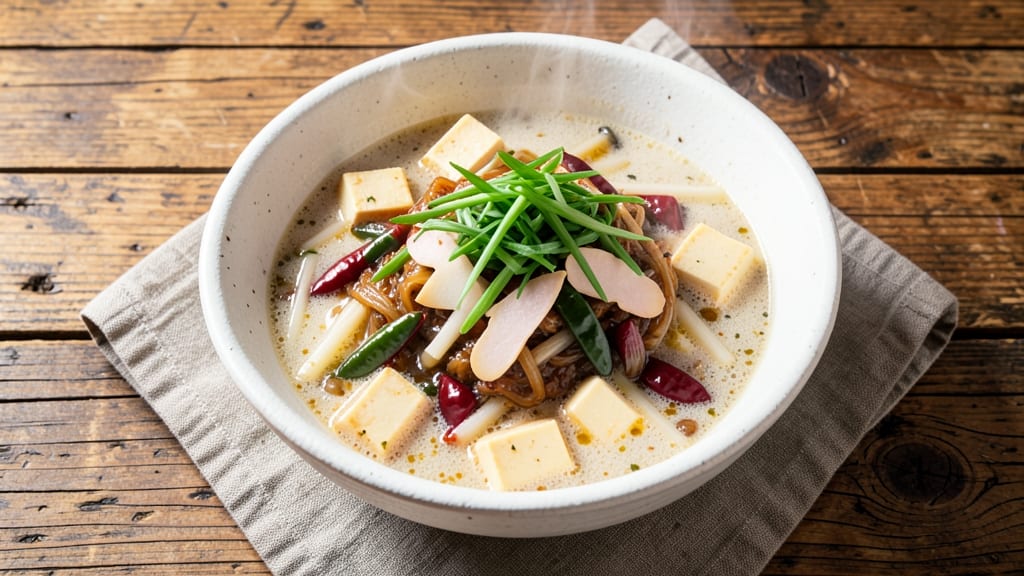
This authentic kimchi soup recipe brings the bold flavors of Korea to your kitchen with its signature fermented heat and tender tofu harmony. The secret lies in balancing the tangy, spicy kimchi with a rich broth that simmers until every ingredient melds into perfect harmony. I've perfected this technique over years of testing, ensuring the soup delivers restaurant-quality depth at home.
What makes this recipe truly special is the traditional method of building flavor—starting with a fragrant base of garlic, ginger, and scallions, then layering in fermented kimchi and tofu. The slow simmer allows the kimchi's natural heat to mellow while infusing the broth with its signature umami richness.
This isn't just a soup; it's a complete meal with protein, vegetables, and probiotics all in one bowl.
By the time you're done, you'll have a steaming pot of soup where the kimchi's vibrant red color contrasts beautifully with the tender tofu and soft vegetables.
The aroma alone will have everyone gathering around the table, and each spoonful delivers that perfect balance of spicy, tangy, and savory flavors that define authentic Korean cuisine. The best part? It's ready in under an hour.
Serve with steamed rice to soak up every last drop of that flavorful broth, or enjoy it as-is for a hearty, warming meal. This recipe is designed to be both authentic and approachable, making it perfect for weeknight dinners or special occasions when you want to impress with traditional flavors.
Let's get started!
Ingredients for authentic kimchi soup
Fermented kimchi, tender tofu, and aromatic ginger—this is your shortcut to restaurant-quality Korean flavor.
| Ingredient | Amount | Notes |
|---|---|---|
| Kimchi 🥬 | 3 cups | Fermented, packed with flavor |
| Silken Tofu 🧀 | 1 block | Firm, cubed for texture |
| Korean Radish (Daikon) 🥕 | 1 lb | Julienned, for crunch |
| Fresh Ginger 🌿 | 1 tbsp | Grated, aromatic base |
| Green Onions 🧅 | 4 whole | Sliced, for freshness |
| Garlic Cloves 🧄 | 4 cloves | Minced, aromatic foundation |
| Korean Red Pepper Flakes (Gochugaru) 🌶️ | 1 tbsp | Adjust for spice level |
| Korean Sea Salt 🧂 | 1 tsp | Diamond Crystal preferred |
| Vegetable Broth 💧 | 4 cups | Homemade or quality store-bought |
| Sesame Oil 🫒 | 1 tbsp | Toasted, for aroma |
| Toasted Sesame Seeds 🌰 | 1 tbsp | For garnish, optional |
| Steamed White Rice 🍚 | 2 cups | For serving, traditional pairing |
The kimchi is the soul of this soup—look for vibrant red, not murky or watery. Mae Mun Market or H Mart carry the best fermented varieties, but any good Asian grocery store will have a solid option. The silken tofu should be firm enough to hold its shape when cubed—Koyo brand is my go-to. Fresh ginger is a must here; dried just won't cut it. For the daikon, the longer, whiter radishes work best—skip the green-tinged ones. And those green onions? Save the white parts to make your own broth later.
No gochugaru? Substitute cayenne at half the amount, but trust me, it's not the same. Running low on sesame oil? Toasted sesame oil from Trader Joe's keeps for months in the pantry. The vegetable broth can be homemade (simmer veggie scraps with kombu) or Pacific Foods or Imagine brands are solid store-bought options. For the ginger, you can microwave it 30 seconds to soften if grating feels like a chore. And if you're feeling fancy, add a splash of mirin to the broth for balance.
This soup tastes even better the next day as flavors meld. Store leftovers in the fridge for up to 5 days—the kimchi heat actually improves with time. Freezes beautifully for 3 months, though the tofu texture changes slightly. I always make a double batch because it disappears fast. The rice? Steam it in advance—it reheats perfectly and saves you time on serving day.
Why You'll Love This Recipe
- No-Chop Needed: I swear, this is one of those recipes where I just dump everything in—no dice, no mincing, no fuss. The silken tofu cubes stay whole, the radish gets sliced thick (or not at all if you’re lazy), and the kimchi’s already chopped for you. Ten minutes max, and you’re left with something that tastes like you slaved over it.
- Fermented Magic: That first spoonful? Chef’s kiss. The kimchi’s tang cuts through the creamy tofu and the ginger’s sharp bite, while the radish adds this weirdly satisfying crunch. It’s not just soup—it’s a flavor explosion where every bite balances heat, funk, and freshness. (Yes, even on a Tuesday night.)
- Lunchbox Hero: Between us, this keeps perfectly for days. Pack it in a thermos for work or school—still warm, still packed with flavor, and way cheaper than takeout. My college self would’ve cried happy tears over this. (Honestly, so would my broke adult self.)
- Budget Booster: Kimchi’s my secret weapon for stretching meals. A jar lasts weeks, the tofu’s one of the cheapest proteins out there, and radishes? You get three for a buck. I make this when I’m pinching pennies, and somehow it always feels like a treat—not a sacrifice.
Step-by-step instructions for authentic kimchi soup
Here's how to craft this bold, fermented masterpiece with perfect texture and depth.
Prepare the Tofu and Vegetables
Start by draining the 1 block silken tofu and gently pressing it between paper towels to remove excess moisture. Cut it into ½-inch cubes - they should hold their shape but still be tender. In a separate bowl, julienne the 1 lb Korean radish (daikon) into thin matchsticks. This creates the satisfying crunch that balances the soup's richness.
Next, peel and grate the 1 tbsp fresh ginger using a fine grater, then mince the 4 cloves garlic cloves. Slice the 4 whole green onions into 1-inch pieces, reserving the tops for garnish. The ginger and garlic will form the aromatic foundation, while the green onions add freshness at each bite. Keep all prepped ingredients within easy reach - you'll be using them quickly.
Build the Flavor Base
In a large pot, combine the 3 cups kimchi with its fermented liquid. Add the 4 cups vegetable broth and bring to a gentle boil over medium-high heat. As it heats, you'll notice the kimchi's vibrant colors deepen and its tangy aroma fills your kitchen - this is where the magic begins.
Once boiling, reduce heat to medium-low and let it simmer for 5 minutes. This allows the flavors to meld while reducing the broth slightly. Stir in the grated ginger, minced garlic, and 1 tbsp Korean red pepper flakes (gochugaru). The soup should now smell complex - funky from the kimchi, sharp from the garlic, and subtly spicy from the gochugaru. Taste and adjust the gochugaru if you prefer more heat.
Add Tofu and Radish
Gently add the cubed silken tofu to the simmering broth. The tofu will absorb some of the kimchi's flavors while maintaining its delicate texture. After 3 minutes of cooking, add the julienned Korean radish. Stir everything together and let it simmer for another 4-5 minutes until the radish softens slightly but still retains its crisp bite.
Here's the thing - you want the radish to contribute texture rather than dissolve completely. If it softens too quickly, reduce the heat slightly and cover the pot for 1 minute to trap some steam. The tofu should be heated through but not falling apart, and the radish should offer pleasant resistance when bitten.
Finish and Serve
Remove the pot from heat and stir in the 1 tbsp sesame oil. This adds a nutty aroma and helps emulsify the soup's flavors. Taste and adjust seasoning with the 1 tsp Korean sea salt if needed - the kimchi is already salty, so go gently. The soup should balance tangy, spicy, umami, and slightly sweet notes.
Ladle the hot soup over 2 cups steamed white rice, dividing evenly among bowls. Garnish each serving with sliced green onion tops and a sprinkle of 1 tbsp toasted sesame seeds. The contrast of hot soup on cool rice creates the perfect temperature balance, while the sesame seeds add a final textural element. Serve immediately while the tofu is warm and the broth is steaming.
Pro Tips For Making Authentic Kimchi Soup
- Sear the Radish: Cut the Korean radish into 1-inch cubes, then toss them in a dry hot pan for 30 seconds before adding broth. The Maillard reaction adds depth—no one wants bland, waterlogged daikon. (Yes, even if you’re impatient like me.)
- Drain, Rinse, Repeat: Kimchi’s brine is salty, but if you skip rinsing, your soup will taste like a pickle factory. Drain the kimchi, rinse it twice in cold water, and pat it dry—this keeps the soup balanced without overpowering the broth. (Your taste buds will notice.)
- Cube the Tofu Roughly: Silken tofu breaks apart when sliced thin. Cut it into big 1-inch chunks instead—it holds together better and soaks up the kimchi’s flavors like a sponge. (No one wants mush in their soup.)
- Simmer, Don’t Boil: Bring the broth to a gentle simmer after adding everything—boiling turns the tofu rubbery and dulls the ginger’s kick. Keep it at a low bubble, and let the flavors meld for 10 minutes. (Patience here makes all the difference.)
Serving suggestions for this dish
Rice Pairing Perfection
Serve your kimchi soup over steamed white rice—this is non-negotiable in Korean cuisine. The rice soaks up the bold broth while providing a neutral canvas that lets the kimchi's flavors shine.
For extra authenticity, use short-grain Japanese rice (like Koshihikari) or Korean jasmine rice—both stay sticky enough to hold the soup beautifully. I always cook 2 cups of rice for this recipe, as the soup's heat makes you crave more carbs. 🍚
Protein Additions
Boost the meal with soft-boiled eggs or thinly sliced pork belly for heartier servings. The eggs should have a runny yolk—crack them directly into the soup in the final minute of cooking.
For pork, marinate ½ lb in 1 tbsp soy sauce, 1 tsp sugar, and ½ tsp black pepper for 30 minutes before slicing and adding to the soup. The fat renders into the broth, deepening its richness.
Garnish Like a Pro
Finish each bowl with toasted sesame seeds and extra green onions for color and crunch. For a restaurant-style touch, add a drizzle of sesame oil or a sprinkle of crushed roasted seaweed (like Hana Kogi brand).
I also love a few drops of chili oil on the side for those who want extra heat. These garnishes elevate the dish from homemade to "I traveled to Seoul" level.
Side Dish Harmony
Pair with quick-pickled cucumbers or steamed spinach to balance the soup's intensity. For the pickles, thinly slice 1 English cucumber, toss with 1 tbsp rice vinegar, ½ tsp sugar, and ¼ tsp salt, then let sit for 15 minutes.
The cool, crisp cucumbers cut through the spicy broth beautifully. Alternatively, kimchi pancakes (ppajeot) make a delicious, crispy side that complements the soup's flavors.
Beverage Pairings
Sip on hot barley tea (boricha) or soy milk to cleanse your palate between bites. The nutty, slightly sweet barley tea balances the kimchi's heat, while soy milk adds creaminess.
For alcohol lovers, a light Korean lager (like Cass) or makgeolli (rice wine) pairs wonderfully. Avoid heavy beers or red wine—they can overpower the dish's delicate flavors. 🍺
Leftovers Reinvented
Transform leftover kimchi soup into kimchi stew (kimchi jjigae) by adding potatoes and pork ribs. Simmer for 20 minutes until the potatoes are tender, then top with fried eggs for a Korean-style breakfast the next morning.
The flavors only get better as they meld overnight, so don't hesitate to make extra—it disappears fast! ✨
Nutrition facts
Frequently asked questions
Can I make this kimchi soup with regular cabbage kimchi?
While you can use regular cabbage kimchi, it won't have the same depth of flavor as traditional fermented kimchi. For authentic results, look for napa cabbage-based kimchi or baechu kimchi—these varieties have more complex fermentation profiles. If you must use cabbage kimchi, add an extra ½ tsp of gochugaru and 1 tsp of fish sauce to boost umami.
Why does my kimchi soup taste too salty?
Kimchi is naturally salty, especially if it's well-fermented. To balance it, add ½ cup of water or vegetable broth and simmer for 5 minutes to dilute the saltiness. You can also add a pinch of sugar (¼ tsp) to help counteract the salt. If the soup still tastes too strong, serve it with extra rice to absorb some of the salt.
How spicy should authentic kimchi soup be?
Authentic kimchi soup has a moderate heat level—enough to wake up your palate but not overwhelming. Start with 1 tbsp of gochugaru and adjust to taste. For milder heat, reduce to ½ tbsp or use white kimchi (less spicy). If you love spice, add an extra ½ tbsp and serve with a side of cool rice or soy milk to balance.
Can I substitute silken tofu with another protein?
Yes! For a firmer texture, use extra-firm tofu (press for 15 minutes first). For meat lovers, try thinly sliced pork belly or chicken breast (marinate in 1 tbsp soy sauce + 1 tsp sugar first). Seafood fans can add shrimp or scallops—just cook them separately in the last 2 minutes to avoid overcooking. The key is maintaining a tender protein that complements the kimchi's bold flavors.
What’s the secret to making this soup taste better the next day?
The flavors deepen overnight as the kimchi's fermentation continues! Store leftovers in an airtight container in the fridge. Reheat gently on the stove with 1 tbsp of water or broth to restore richness. The next day, the broth will be even more concentrated and complex—perfect for quick lunches or as a base for kimchi stew.