
Soups & Stews
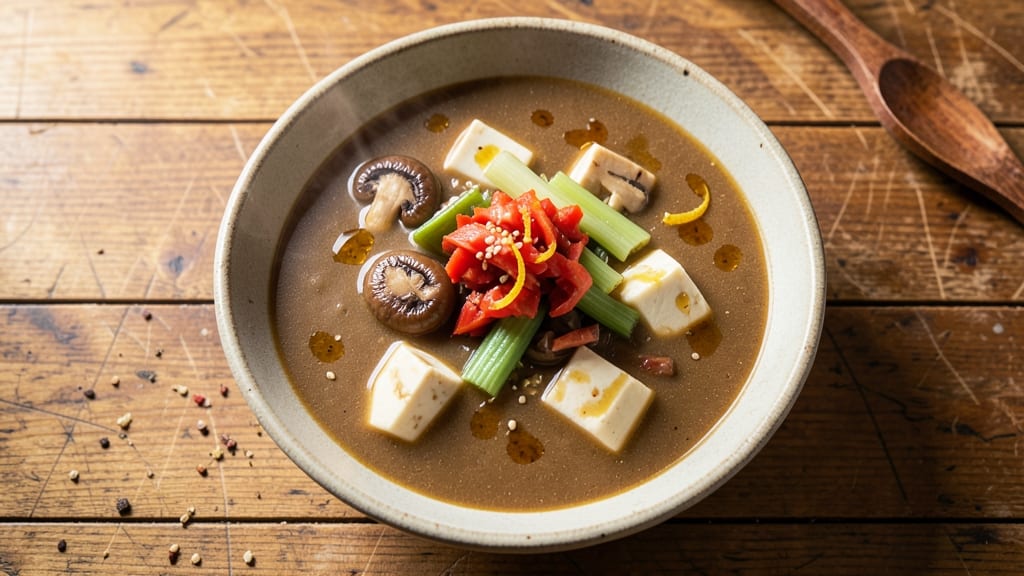
This bibibop miso soup recipe transforms classic Japanese comfort into a vibrant fusion experience that balances deep umami with crisp textures and bold flavors. The secret lies in fermented miso paste—rich, salty, and complex—paired with a modern twist: crispy celery crowns that add a satisfying crunch to every spoonful.
What sets this apart is the careful layering of ingredients, where traditional elements like dashi and tofu meet unexpected additions like kimchi and sesame oil for a dish that feels both nostalgic and fresh.
The foundation of this soup is a foolproof technique that ensures the broth remains clear and flavorful while developing layers of depth. We start with a simple dashi base—light, clean, and aromatic—before building the umami through miso paste, which is gently simmered to avoid bitterness.
The crispy celery crowns (a nod to bibimbap's textural contrast) are fried to a golden perfection, adding a crispy element that cuts through the soup's richness. This balance of flavors and textures makes it a complete dish, not just a side.
What you'll end up with is a bowl that's as visually striking as it is delicious—steaming broth with delicate tofu, vibrant kimchi, and those golden celery crowns floating on top.
The aroma alone will draw everyone to the table, while the first sip delivers a perfect harmony of salty, sweet, and umami notes. It's the kind of soup that feels like a hug in a bowl, yet still surprises with its modern twists.
Perfect for weeknight dinners or impressing guests, this recipe scales easily and keeps well in the fridge for up to three days. The crispy celery crowns can be prepped ahead, so assembly is quick—ideal for busy evenings when you still want something special.
Let's dive into the steps to make this fusion miso soup your new favorite.
Ingredients for bibibop miso soup
Fusion flavors start here—umami-rich miso meets crispy celery crowns and tangy kimchi.
| Ingredient | Amount | Notes |
|---|---|---|
| White Miso Paste 🧀 | ½ cup | Fermented, rich umami base |
| Dashi Stock 🍲 | 4 cups | Homemade or quality store-bought |
| Silken Tofu 🍫 | 1 block | Firm, unpressed for delicate cubes |
| Celery Stems 🧅 | 2 whole | Thick, for crispy crowns |
| Kimchi 🥬 | ½ cup | Spicy fermented cabbage |
| Sesame Oil 🫒 | 1 tbsp | Toasted for nutty aroma |
| Vegetable Oil 🫒 | ½ cup | For frying celery crowns |
| Green Onions 🧅 | 3 whole | Thinly sliced for garnish |
| Sesame Seeds 🌾 | 1 tbsp | Toasted for crunch |
| Rice Vinegar 🍶 | 1 tbsp | Balances miso richness |
| Sugar 🍬 | 1 tsp | White or brown |
| Salt 🧂 | ½ tsp | Adjust to taste |
| Garlic Cloves 🧄 | 2 cloves | Minced for dashi |
| Dried Shiitake Mushrooms 🍄 | 2 whole | Rehydrated for dashi |
The miso paste is non-negotiable—Miso Master or Hodo from Asian markets have the deepest flavor. For dashi, homemade with kombu and bonito flakes is ideal, but Marukome or Kikkoman instant dashi works in a pinch. Celery stems should be thick (about 1-inch diameter) for perfect crowns—Trader Joe's sells pre-cut celery sticks if you're short on time. Kimchi? Store-bought is fine, but homemade has more depth. The silken tofu needs to be firm, not soft—check the package label or grab the extra-firm kind if unsure.
No sesame oil? Toasted sesame seeds + neutral oil works, though it's not quite the same. Short on kimchi? Pickled radish or extra rice vinegar adds tang. The crispy celery crowns are the star—double-fry for extra crunch. For the dashi, if you can't find dried shiitake, mushroom powder (like Umami Bomb) is a good swap. The sugar balances the miso's saltiness—don't skip it, even if you're not sweet-toothed. And for the love of all things crispy, keep your oil hot when frying those celery crowns.
Miso paste keeps for 6 months in the fridge once opened, so buy extra. Celery crowns stay crisp for 2 days if stored in an airtight container—reheat in the oven at 350°F for 5 minutes. The broth reheats beautifully, but add a splash of water to restore richness. Freeze the soup base (without tofu) for 3 monthsmake extra kimchi while you're at it—it only gets better with time.
Why You'll Love This Recipe
- No-Fuss Assembly: I swear by this recipe because it’s actually simple—just simmer miso, dashi, and kimchi until the aroma hits you like a cozy hug. The celery stems add a subtle crunch without needing fancy prep (just rough chop if you’re feeling lazy), and the silken tofu cubes melt into creamy bliss with zero effort.
- Umami Bomb: That first spoonful? Chef’s kiss. The white miso and dashi create this deep, savory base that makes your taste buds sit up and take notice, while the kimchi adds a tangy kick that cuts through the richness. Honestly, it’s the kind of flavor that turns a basic lunch into something you’d happily eat every day—no guilt.
- Leftover Magic: This soup tastes better the next day, which is huge for me. I’ll make a big batch on Sundays, and by Wednesday, the flavors have melded into something even richer. Plus, it reheats in minutes—just stir and sip, no fuss. My roommates now consider it “the soup that saves dinner.”
- Budget Meal MVP: White miso, dashi, and kimchi stretch into a whole meal for pennies. I’ve fed four people for under $8 with this, and we always walk away full. The silken tofu adds protein without breaking the bank, and the celery stems? They’re the cheap veggie hero no one skips. Practical and delicious—what more could you want?
Step-by-step instructions for bibibop miso soup
Here's how to create this fermented umami masterpiece with perfectly crispy celery crowns.
Prepare the Dashi Base
Start by rehydrating the 2 whole dried shiitake mushrooms and 2 cloves garlic cloves in 2 cups of the 4 cups dashi stock. Bring to a gentle simmer for 10 minutes until the mushrooms soften and the garlic infuses the liquid. This step builds the aromatic foundation of your soup.
Strain out the mushrooms and garlic, then return the infused stock to your pot. Add the remaining 2 cups dashi stock and bring to a low simmer. The broth should be clear with subtle mushroom notes—this is your flavor base that will carry the rich miso and crispy elements.
Create Crispy Celery Crowns
Cut the 2 whole celery stems into 1-inch thick rounds, keeping the leaves attached. Heat the 0.5 cup vegetable oil in a small skillet over medium heat until it reaches 350°F. Fry the celery crowns in batches for 1-2 minutes per side until golden brown and crispy.
Drain on paper towels and sprinkle immediately with 0.25 tsp of the 0.5 tsp salt. The celery should be crisp enough to stand up to the silky broth—this is the textural star of your bibibop soup. Keep them warm while you prepare the rest of the components.
Assemble the Miso Broth
In a separate small saucepan, gently heat 2 cups of the prepared dashi stock until just simmering. Remove from heat and whisk in the 0.5 cup white miso paste until completely dissolved. The miso should create a velvety paste that coats the back of a spoon—this is your umami powerhouse.
Return the miso mixture to the main dashi pot and stir gently to combine. Add the 1 tsp sugar and 0.25 tsp remaining salt, stirring until dissolved. The broth should now have a deep, fermented aroma with a slightly sweet balance. Keep at a very gentle simmer—never boiling, as this would destroy the delicate miso flavors.
Prepare the Tofu and Garnishes
Cut the 1 block silken tofu into 1-inch cubes and gently place them into the simmering broth. They should float just below the surface. Add the 0.5 cup kimchi and let it warm through for 2-3 minutes—just enough to soften slightly while retaining its spicy crunch.
Meanwhile, thinly slice the 3 whole green onions and toast the 1 tbsp sesame seeds in a dry skillet over medium heat for 1 minute until fragrant. Add the 1 tbsp sesame oil and 1 tbsp rice vinegar to the broth just before serving to brighten the flavors.
Serve with Perfect Balance
Divide the hot broth among bowls, placing 2-3 crispy celery crowns in each. Top with tofu cubes, kimchi, and a drizzle of the sesame oil mixture. Garnish with toasted sesame seeds and green onions. The contrast of silky broth, crispy celery, soft tofu, and spicy kimchi creates a perfect bite every time.
Serve immediately while the celery crowns maintain their crisp texture. Each spoonful should deliver layers of umami from the miso, brightness from the vinegar, and satisfying crunch from the celery—this is what makes bibibop soup truly special.
Pro Tips For Making Bibibop Miso Soup
- Bloom the Miso: After dissolving the miso paste in a splash of cold dashi stock (about 1/4 cup), let it sit for 30 seconds—this prevents clumping and makes the soup silky. I used to just stir it in hot, and the texture always felt gritty.
- Cut Tofu Like Cubes: Dice the silken tofu into 1-inch pieces, not thin slices—it holds shape better and soaks up the broth instead of turning to mush. I learned this after serving soup where the tofu disintegrated like overcooked pasta.
- Ferment Kimchi First: If your kimchi tastes bland, let it sit at room temperature for 10 minutes before adding it to the soup—this wakes up the flavors. I used to just toss it in raw, and the dish always lacked that tangy punch.
- Simmer Celery Slow: Add the celery stems last and simmer for just 2 minutes—they should stay crisp, not soft. Overcooking turns them bitter, and that’s the last thing you want in a bright, umami-packed soup.
Make-ahead tips for leftovers
Broth Prep Ahead
Make the dashi base up to 3 days in advance and store it in an airtight container in the fridge. The flavors deepen as it sits, and you can reheat it gently on the stovetop before adding miso. I like to make a big batch—this broth works in other miso dishes too! Just
Celery Crowns Prep
These crispy stars can be made 2 days ahead and stored in an airtight container at room temperature. Reheat them in a 350°F oven for 3-5 minutes to restore crispness before serving. For extra crunch, double-fry them right before reheating—trust me, it makes all the difference. 🔥
Miso Paste Storage
If you're not using the entire 0.5 cup of miso paste right away, transfer the unused portion to a clean, airtight container. Store it in the fridge for up to 6 months—the longer it ferments, the deeper the flavor becomes.
Pro tip: Freeze any leftover miso paste in ice cube trays for easy portioning later. ✨
Kimchi Prep
Use store-bought kimchi, but if you have homemade, it’s even better! Store kimchi in its juice in the fridge for up to 2 weeks.
For this recipe, you only need 0.5 cup, but I always make extra—kimchi gets better with age and pairs perfectly with rice, eggs, and even burgers. 🥬
Tofu Pre-Cooking
Cut the silken tofu into cubes and store them in the fridge in a bowl of water for up to 24 hours before using. This keeps them fresh and ready to add to the broth whenever you’re ready.
When you’re ready to cook, simply drain and gently pat them dry before adding to the simmering soup. 💡
Full Soup Assembly
Assemble the soup just before serving to keep the celery crowns crispy. Store the broth (without tofu or kimchi) in the fridge for up to 3 days. When reheating, add a splash of water to restore richness.
I like to keep the tofu and kimchi separate until serving so they stay vibrant and full of flavor. 🌟
Nutrition facts
Frequently asked questions
Can I make this bibimbap-inspired miso soup vegetarian?
Simply omit the kimchi (or use vegan kimchi) and replace the tofu with extra-firm tofu cubes or mushroom slices like shiitake. For extra protein, add 1 cup cooked chickpeas or 1 block tempeh cut into cubes. The crispy celery crowns and umami broth will still shine!
Why does my miso broth taste bitter?
Bitterness usually means the miso paste was overheated. Always dissolve miso in a small amount of warm broth first, then gently stir it into the main pot—never let it boil after adding. For extra depth, add 1 tsp honey or sugar to balance the flavors. The broth should be rich, not harsh.
How do I adjust the spice level in the kimchi?
For milder heat, rinse the kimchi under cold water before adding it to the soup. For extra spice, add 1 tsp gochugaru (Korean red pepper flakes) directly to the broth. You can also serve extra kimchi on the side so everyone can adjust to their taste.
Can I use red miso instead of white miso?
Yes, but expect a deeper, slightly sweeter flavor with more body. Use half the amount (0.25 cup) since red miso is stronger. Add 1 extra tbsp rice vinegar to balance the richness. The color will be darker, but the technique remains the same.
What's the secret to keeping celery crowns crispy?
Double-fry them for 30 seconds each side after the first fry, and store in a paper bag (not plastic) to absorb moisture. Reheat at 350°F for 3-5 minutes—never microwave. The key is high heat and proper storage.