
Soups & Stews
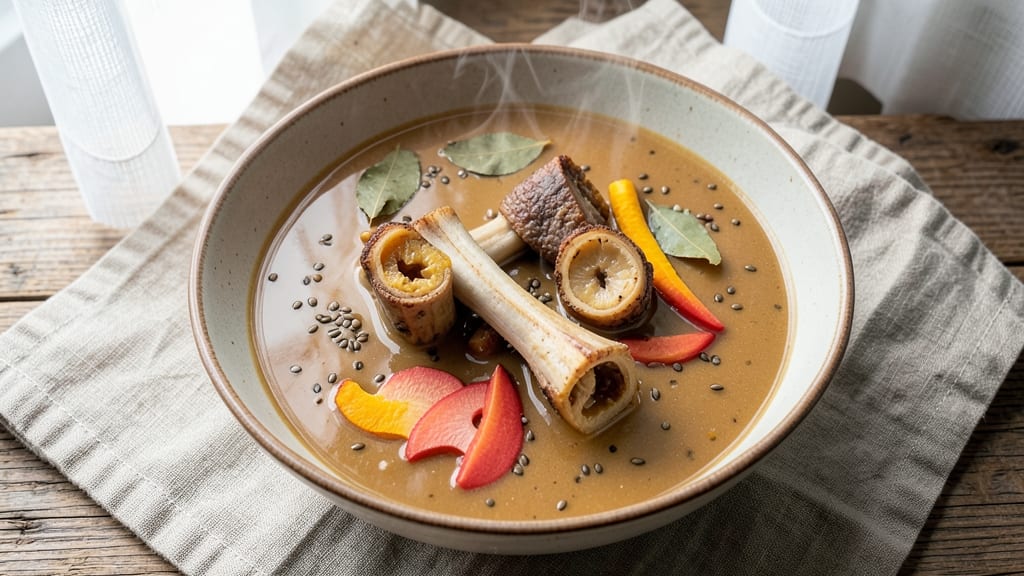
This Indian beef bone soup recipe transforms humble ingredients into a deeply aromatic, umami-rich masterpiece that simmers for hours to extract every ounce of flavor from the bones. 🔥 The secret lies in slow-cooking beef marrow bones with a carefully balanced blend of whole spices—cumin, coriander, and turmeric—that infuse the broth with earthy warmth and complexity.
What begins as a simple pot of water and bones evolves into a velvety, golden elixir that captures the soul of Indian home cooking. The process requires patience: bones are parboiled to remove impurities, then simmered low and slow for 6-8 hours while spices toast and release their aromatic oils.
This isn't just soup—it's a labor of love that rewards with a broth so rich it coats the back of your throat with every spoonful. The marrow melts into the liquid, creating pockets of unctuous richness that elevate the dish from ordinary to extraordinary.
By the time you're done, you'll have a deep amber broth brimming with tender beef shards, fragrant spices, and a depth of flavor that lingers long after the last bite.
Serve it steaming hot with steamed basmati rice and warm naan to soak up every last drop, or pair it with crusty bread for a hearty meal that feels like a hug in a bowl. This is comfort food at its finest—simple in ingredients but profound in taste.
Perfect for family gatherings, winter nights, or whenever you crave a dish that nourishes both body and soul. The beauty of this recipe lies in its adaptability: use it as a base for curries, or enjoy it as-is with a sprinkle of fresh cilantro. Let's create something truly special.
Ingredients for beef bone soup recipe indian
Simple bones, bold spices, and hours of simmering create this soul-warming Indian masterpiece.
| Ingredient | Amount | Notes |
|---|---|---|
| Beef Marrow Bones 🦴 | 4 lb | Raw, uncooked, marrow-rich |
| Whole Cumin Seeds 🌿 | 1 tbsp | Toasted for deeper flavor |
| Whole Coriander Seeds 🌿 | 1 tbsp | Lightly toasted |
| Fresh Ginger Root 🧄 | 2 inches | Peeled, sliced thickly |
| Fresh Turmeric Root 🧄 | 1 inch | Peeled, sliced thinly |
| Bay Leaves 🌿 | 3 whole | Dried, standard size |
| Cardamom Pods 🌿 | 6 whole | Lightly crushed |
| Cloves 🌿 | 4 whole | Whole, not ground |
| Black Peppercorns 🌶️ | 1 tsp | Whole, lightly crushed |
| Salt 🧂 | 2 tsp | Kosher or sea salt |
| Fresh Cilantro 🌿 | ¼ cup | Chopped, for garnish |
| Lemon Juice 🍋 | 1 tbsp | Freshly squeezed |
| Water 💧 | 12 cups | Filtered or spring water |
| Steamed Basmati Rice 🍚 | 2 cups | Cooked, for serving |
The bones are everything—marrow-rich beef bones make this soup extraordinary. Costco or specialty butchers often carry them, but if you can't find them, substitute beef shank bones (though they won't melt as beautifully). Look for bones with visible marrow—those little pockets of gold are what turn this into a luxurious broth. If you're buying whole bones, ask your butcher to split them open to expose the marrow. The spices? Whole, not ground—toasting them in a dry pan for 30 seconds before adding to the pot unlocks their full aroma. Penzeys or Indian grocery stores carry high-quality whole spices if your local market falls short.
No fresh ginger or turmeric? Powdered works in a pinch—use half the amount, but toast it first in the pot to wake up the flavors. The bay leaves and cardamom can be skipped if you're short, but cloves are non-negotiable—they add that warm, sweet depth. Running out of water? Beef broth or even tomato juice adds umami, though nothing beats the real deal. The cilantro is purely for garnish—skip it if you're not a fan, but the lemon juice at the end brightens everything up. Pro tip: Toast the whole spices in oil first—this builds layers of flavor that just simmering alone can't match.
This soup tastes even better the next day—plan ahead. Store it in the fridge for up to 5 days or freeze for 3 months. The fat will solidify on top, so skim that off before reheating. For serving, warm naan and basmati rice are classic, but crusty bread or even roasted potatoes work too. Double the recipe—you'll want leftovers. The broth reduces as it cools, so add a splash of water when reheating if it's too thick. Trust me, the first bowl won't be enough.
Why You'll Love This Recipe
- No-Fuss Simmer: I swear by this—just toss in the marrow bones, a handful of whole spices, and let the pot do the work. The bones melt into rich broth while I chop veggies or answer emails, and honestly? That’s my kind of cooking.
- Earthy Depth Bomb: Between us, the turmeric and ginger root give this soup a warmth that lingers. The cumin and coriander seeds toast up first—that nutty aroma alone makes the whole kitchen smell like a homecoming.
- Leftovers That Shine: This soup tastes better the next day, especially with a splash of lemon or a sprinkle of cilantro. I double the batch on Sundays, freeze half, and still have a hearty meal for lazy nights.
- Budget Bone Magic: Marrow bones are cheaper than steaks but pack the same satisfaction—plus, they’re packed with flavor. A single pot feeds four for under $15, and the bones themselves become the star, not the sidekick.
Step-by-step instructions for slow-simmered beef bone soup
Here's how to coax rich, aromatic flavors from marrow bones into a deeply satisfying broth.
🔥 Step 1: Toast Whole Spices for Maximum Flavor
Heat a dry skillet over medium heat and add the 1 tbsp whole cumin seeds and 1 tbsp whole coriander seeds. Toast for 2-3 minutes until fragrant and lightly golden—you'll smell that warm, nutty aroma. Immediately transfer to a plate to cool.
In the same skillet, lightly toast the 6 whole cardamom pods and 4 whole cloves for 30 seconds until just warm. The cardamom should smell sweetly floral while the cloves release their pungent aroma. Let all spices cool completely before using—this prevents bitterness in the broth.
🍳 Step 2: Build the Aromatic Base
In a large stockpot, combine the 4 lb beef marrow bones with 12 cups water. Bring to a boil over high heat, then immediately reduce to low heat and skim off any foam that rises to the surface. This removes impurities for a clearer broth.
Add the toasted spices, 2 inches peeled ginger root (sliced thickly), 1 inch peeled turmeric root (sliced thinly), 3 whole bay leaves, 1 tsp lightly crushed black peppercorns, and 2 tsp salt. Partially cover and simmer gently for 1 hour, stirring occasionally to prevent sticking.
🥘 Step 3: Simmer for Deep Umami Development
After the initial hour, increase heat to medium-low and continue simmering uncovered for 3-4 hours. The broth should reduce slightly, developing a rich, amber color and intense aroma. You'll know it's working when the marrow bones release their gelatinous contents and the liquid takes on a velvety texture.
Check seasoning after 2 hours—add more salt if needed. The bones should be fork-tender when pierced. Real talk: Don't rush this step. The longer you simmer, the more collagen dissolves into the broth, creating that signature bone marrow richness.
🔪 Step 4: Strain and Finish with Freshness
Remove the pot from heat and strain the broth through a fine-mesh sieve into a clean pot. Discard the solids. Return the broth to the stove and stir in the 1 tbsp freshly squeezed lemon juice. This brightens the flavors and cuts through the richness beautifully.
Keep the broth warm over low heat while you prepare the 2 cups steamed basmati rice. The acidity from the lemon also helps tenderize the rice slightly, making each bite more flavorful. For serving, ladle the hot broth over the rice and garnish with 0.25 cup chopped fresh cilantro.
⏰ Step 5: Serve Immediately for Maximum Comfort
Divide the soup into bowls, ensuring each serving gets a generous portion of rice. The broth should be steaming hot when served—this releases those aromatic compounds for maximum flavor impact. I like to serve this with a side of warm naan or crusty bread to soak up every last drop of that precious broth.
Here's the thing—this soup tastes even better the next day as the flavors meld further. Store leftovers in the refrigerator for up to 3 days or freeze for 3 months. When reheating, do it gently over low heat to preserve the delicate texture of the broth.
Pro Tips For Making Beef Bone Soup Recipe Indian
- CRACK THE BONES FIRST: I learned this the hard way—skip the cracking step and you’ll spend the next 8 hours staring at a pot of murky, underflavored broth instead of rich, golden marrow-infused soup. Use a meat cleaver or heavy knife to split the marrow bones lengthwise before adding them to the pot; this releases the gelatin and deep flavor immediately.
- TOAST WHOLE SPICES HARD: After burning three batches of cumin and coriander, I finally figured out the right move: dry-toast them in a separate pan over medium heat for 30 seconds until they just start to pop and smell like a spice market. This prevents bitterness in the soup and makes the whole spices work twice as hard when steeped.
- LOW AND SLOW IS NON-NEGOTIABLE: I was skeptical until I tried it—simmering beef bone soup at a rolling boil ruins the collagen. Once the water covers the bones, reduce to the lowest heat where you see tiny bubbles at the edges, not a full-on storm. This takes patience, but it’s the only way to get that silky, restaurant-quality broth.
- ADD TURMERIC LAST: My grandmother swore by this, and she was right: fresh turmeric root stains like a crime scene if added early. Instead, peel and grate it into the broth during the final 15 minutes of cooking. The soup will turn a vibrant yellow without turning your pot into a tie-dye project.
Make-ahead tips for this dish
Prep Ahead Essentials
Start by prepping your spices and bones the night before—this saves 30 minutes of morning chaos. Toast and cool all whole spices in advance, then store them in a small airtight container until ready to use.
For the bones, rinse them thoroughly and pat dry, then refrigerate uncovered on a wire rack for 24 hours—this helps remove surface impurities for a cleaner broth. 💡
Broth Base Prep
Simmer the bones with water and spices for 1 hour before bed, then let the pot sit overnight in the fridge.
The next morning, you'll have a head start on flavor development, and the broth will be partially reduced—just reheat to medium-low heat and continue simmering for 2-3 hours to finish. This two-stage approach cuts your active cooking time in half.
Spice Storage Hacks
Keep your toasted whole spices in the freezer for up to 3 months—they stay fresher longer and maintain their aromatic oils better than at room temperature. I use small glass jars with tight-sealing lids (like Weck jars) to preserve their potency.
Label each jar with the spice name and date—trust me, you'll forget which is which after a few batches!
Freezing Leftovers
Divide cooled soup into quart-sized freezer bags, leaving 1-inch headspace for expansion. Lay them flat to freeze, then stack—this saves fridge space and thaws faster than bulky containers.
When reheating frozen portions, add ¼ cup water per quart to prevent thickening. The broth will still be rich but more manageable for second servings. ❄️
Spice Boost for Reheating
Revive reheated soup with a pinch of asafoetida (hing)—just ⅛ tsp per bowl—if you have it on hand. This Indian spice adds a savory depth that cuts through any staleness.
For extra richness, stir in 1 tsp ghee while reheating—it melts into the broth and makes each spoonful feel luxurious again. 🌟
Rice Prep Shortcut
Cook a full batch of basmati rice (about 3 cups dry) and refrigerate it in a large airtight container for up to 3 days. Reheat portions in the microwave with 2 tbsp water per cup of rice, covered for 2 minutes.
The rice absorbs the broth's flavors better when reheated this way, making assembly a breeze when serving. 🍚
Nutrition facts
Frequently asked questions
Why do Indian beef bone soups use whole spices instead of ground?
Whole spices release their flavor gradually during the long simmer, creating layers of aroma that ground spices can't match. Toasting them first intensifies their oils, which infuse the broth with warmth and complexity. The bones themselves act like a flavor sponge, absorbing and redistributing those aromatic compounds throughout the cooking process.
Can I substitute beef shank bones for marrow bones?
Yes, but expect less dramatic flavor development. Shank bones are tougher and lack the rich marrow pockets, so your broth will be more savory than luxurious. For best results, simmer them 8-10 hours instead of 6-8 hours to extract maximum collagen. The texture will be heartier rather than velvety.
How do I know when the broth is ready?
The broth should be deep amber with visible gelatinous strands when you gently swirl the pot. The bones should separate easily with a fork, and the aroma should be intensely aromatic with notes of toasted spices. Taste it—if the flavor is rich but not overpowering, it's perfect. The longer it simmers, the more collagen dissolves, creating that signature bone marrow richness.
Can I make this soup in an Instant Pot?
but with adjustments. Use high pressure for 90 minutes after the initial 1-hour simmer (skimming foam first). The pressure cooker speeds up collagen extraction, but you'll lose some of the gradual spice development. For best results, toast your spices separately and add them to the pot before sealing. The texture will be slightly different but still deeply flavorful.
What's the best way to serve leftover broth?
Use it as a base for rice dishes or curries! Strain and reduce it by half to make a concentrated gravy, or blend it with yogurt for a refreshing summer drink. For extra richness, stir in 1 tbsp ghee per cup of broth before reheating. The leftover bones can even be crushed and used as a topping for salads or toasted with spices for a crunchy garnish.