
Soups & Stews
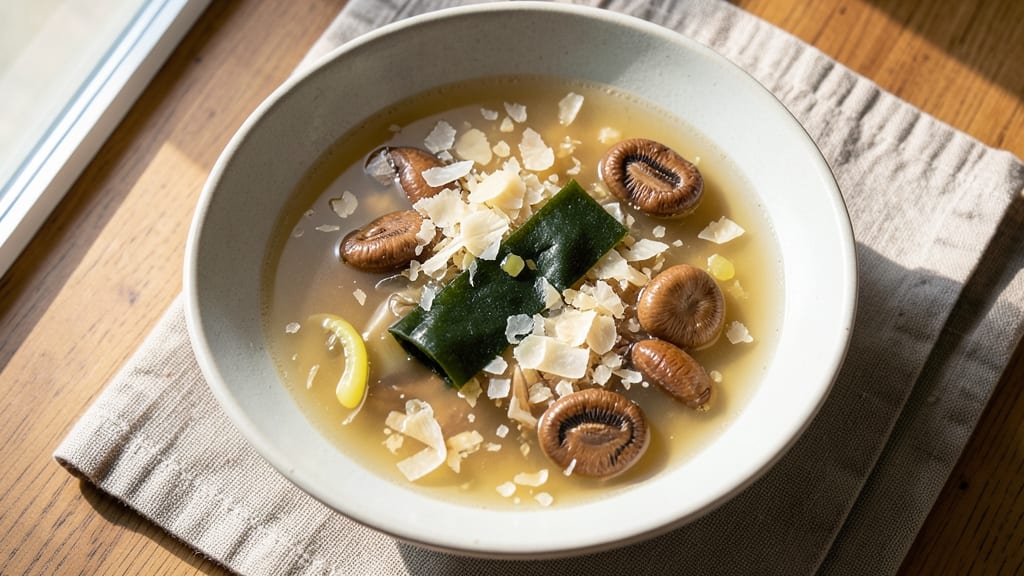
Creating the perfect dashi soup stock recipe is the secret to unlocking authentic Japanese flavors in every dish. This umami-rich foundation transforms simple recipes into restaurant-quality meals with just a few simple ingredients and precise techniques.
I’ve refined this method over years of testing, ensuring the balance of kombu and bonito delivers that signature depth without bitterness.
The beauty of dashi lies in its simplicity: just kombu (dried kelp), dried shiitake mushrooms, and awase bonito flakes for the classic version. Soaking the kombu first extracts its natural glutamates, while the shiitake adds earthy complexity.
The bonito flakes contribute a delicate, savory aroma that’s impossible to replicate. This method yields a clear, aromatic broth that’s the backbone of miso soup, ramen, and countless Japanese dishes.
What sets this recipe apart is its versatility—both vegan and non-vegan versions are equally effective. The vegan option skips bonito, relying solely on kombu and shiitake for umami, while the traditional version layers in that unmistakable fishy depth.
Proper straining ensures a silky texture, and storing it correctly preserves its freshness for up to a week in the refrigerator or months in the freezer.
Whether you’re simmering a pot of miso soup or elevating a stir-fry, this dashi stock is your culinary secret weapon. The instructions walk you through every step—from soaking to straining—to guarantee a flawless, aromatic base every time. Let’s get started on building your umami foundation.
Ingredients for dashi soup stock
Eight essential ingredients create this umami-rich Japanese foundation for soups and sauces.
| Ingredient | Amount | Notes |
|---|---|---|
| Dried Kombu (Kelp) 🌿 | 4 oz | High-quality, organic preferred |
| Dried Shiitake Mushrooms 🍄 | 2 oz | Stems removed, whole mushrooms |
| Awase Bonito Flakes 🐟 | ½ cup | Vegan substitute: omit or use vegan dashi powder |
| Water 💧 | 8 cups | Filtered for best clarity |
| Lemon Juice 🍋 | 1 tbsp | Freshly squeezed, optional for brightness |
| Salt 🧂 | ¼ tsp | Fine-grained kosher salt |
| Nutritional Yeast 🧀 | 1 tbsp | For umami depth in vegan version |
| Shiitake Dashi Powder 🍄 | 1 tsp | Vegan alternative to bonito flakes |
The quality of kombu dictates the depth of flavor—opt for thin, dark green sheets from specialty Asian markets or reputable online retailers like Koyo Foods or Nishiki Market. Organic kombu ensures no residual pesticides interfere with the delicate umami extraction. For dried shiitake, whole caps without stems yield the most robust flavor; Koyo Foods or Amazon Fresh carry reliable bulk options. The awase bonito flakes, traditionally used, can be replaced entirely in vegan versions—shiitake dashi powder provides comparable umami without animal products.
When substituting, nutritional yeast at 1 tablespoon mimics the savory notes of bonito flakes, while 1 teaspoon of vegan dashi powder (like Nishiki brand) replaces the traditional fish component. Fresh lemon juice brightens the broth, but 1 teaspoon of rice vinegar works in a pinch. For texture, 1 tablespoon of miso paste can be stirred in post-simmering to enhance complexity. Always ensure mushrooms are completely dry before soaking to prevent dilution of the stock's intensity.
Store the dashi in an airtight container in the refrigerator for up to 7 days, or freeze in 1-cup portions for 6 months. Thaw frozen dashi in the refrigerator overnight to preserve clarity. For optimal use, strain through a fine-mesh sieve immediately before adding to dishes to maintain a silky texture. The nutritional yeast should be added after simmering to prevent bitterness, as it can degrade with prolonged heat exposure.
Why You'll Love This Recipe
- Four-Ingredient Magic: The kombu and shiitake alone do the heavy lifting—no chopping, no stress, just soak and simmer. I swear, I’ve made this on days when I forgot to meal prep and still ended up with something that tasted like a Michelin-starred secret.
- Umami Bomb: That first sip? Pure flavor payoff. The kombu’s deep sea sweetness marries the earthy shiitake, then the bonito flakes hit like a bright, salty punch—no heavy seasoning needed. Honestly, I’ve used this stock in everything from ramen to braised greens, and it always steals the show.
- Weeknight Workhorse: Make a big batch on Sunday, and you’ve got the base for soups, rice dishes, or even a quick miso broth—all week long. My kids ask for "mom’s soup" without me even breaking a sweat, and the leftovers keep for days in the fridge.
- Budget Bright Spot: Dried kombu and shiitake last forever, and a little goes a long way. Between us, I’ve spent less than $10 on ingredients that’ve turned into dozens of meals. The lemon juice at the end? Just a little zing to keep it fresh—no waste, all flavor.
Step-by-step instructions for dashi soup stock
Mastering this foundational Japanese stock requires precision and patience—every element contributes to depth of flavor.
Prepare the Kombu and Water Base
Place the 4 oz dried kombu (kelp) in a clean, 8-quart stockpot and cover it completely with the 8 cups water. The kombu should be fully submerged—this prevents bitterness and ensures even extraction of its delicate umami compounds. Bring to a gentle simmer over medium-low heat, being careful not to boil vigorously.
Once simmering, immediately reduce heat to low and let the kombu steep for 5-7 minutes. You'll notice the water develop a subtle green tint and a faint oceanic aroma—this is the kombu releasing its natural glutamates. Remove the kombu with tongs and set aside for later use (it can be dried and reused once more). The broth should now have a clean, vegetal sweetness as its foundation.
Add Shiitake Mushrooms and Simmer
Add the 2 oz dried shiitake mushrooms (stems removed) to the simmering kombu water. These mushrooms contribute earthy depth and additional umami without overpowering the delicate kombu flavor. Return the broth to a gentle simmer and cook uncovered for 15-20 minutes, stirring occasionally to prevent the mushrooms from sticking to the bottom.
Watch for the mushrooms to rehydrate and release their rich, savory essence into the broth. The liquid should reduce slightly, intensifying the flavor concentration. When the mushrooms are fully tender and the broth has a noticeable mushroom aroma, remove them with a slotted spoon and discard. The resulting liquid should be clear with a subtle golden hue—this is your base umami foundation.
Incorporate Flavor Enhancers
Stir in the 0.5 cup awase bonito flakes and 1 tsp shiitake dashi powder, distributing them evenly throughout the broth. The bonito flakes will dissolve completely, adding a briny, fishy depth that's essential to traditional dashi. For a vegan version, omit the bonito flakes and increase the shiitake dashi powder to 2 tsp to compensate for the missing umami.
Simmer the broth uncovered for an additional 5 minutes to allow the flavors to meld. Then, remove from heat and stir in the 1 tbsp lemon juice (if using) and 1 tbsp nutritional yeast. The lemon juice brightens the broth with a subtle acidity, while the nutritional yeast adds a cheesy, savory note that enhances the umami profile. Let the broth sit off heat for 10 minutes to fully integrate these final elements.
Season and Finish
Return the broth to a gentle simmer and add the 0.25 tsp salt. Taste the broth carefully—traditional dashi should have a clean, umami-rich flavor without being overly salty. The salt should simply enhance the natural depth of the other ingredients. For a more refined finish, strain the broth through a fine-mesh sieve into a clean pot, removing any remaining solids.
Adjust the consistency by adding hot water if needed to return to 8 cups total. Traditional dashi is typically served at 185-195°F, so if you're using it immediately in recipes, maintain this temperature range. For storage, let the broth cool to room temperature, then refrigerate in airtight containers for up to 5 days or freeze for longer preservation. This stock serves as the aromatic backbone for countless Japanese dishes—ramen, miso soup, and steamed rice all benefit from its pure umami essence.
Pro Tips For Making Dashi Soup Stock
- Soak Kombu First: Toss that dried kombu straight into boiling water? Bad move. Soak it in cold water for 10-15 minutes first—it’ll soften, release its umami earlier, and prevent a bitter, over-extracted broth. (Yes, I’ve burned kombu. Don’t ask.)
- Trim Shiitake Stems: The stems of dried shiitake aren’t useless—they’re packed with flavor. But if you’re short on time, at least rinse them well to cut down on grit. Pro tip: Save the stems for a separate simmer if you’re making a big batch—they’ll give you an extra 20 minutes of flavor extraction.
- Simmer, Don’t Boil: Dashi isn’t tea—it’s delicate. Keep the heat low enough that you barely see bubbles, or you’ll scorch the kombu and turn your broth into bitter sludge. A gentle simmer at 180°F (82°C) is the sweet spot. (I learned this after a single failed batch that tasted like the ocean floor.)
- Strain Twice: First strain removes the kombu and mushrooms. Second strain? That’s for the bonito flakes. Use a fine-mesh sieve or cheesecloth to catch the tiny particles—they’ll cloud your soup and make it taste muddy. (Trust me, your future miso soup will thank you.)
Troubleshooting your dashi soup stock
Cloudy Broth Fix
If your dashi turns cloudy, it’s usually from over-simmering or using non-filtered water. For clarity, simmer at low heat and use filtered water—I recommend a Brita filter or reverse osmosis system.
If it’s already cloudy, strain through a cheesecloth-lined sieve after simmering. For extra polish, chill overnight and skim off any surface impurities before reheating. 💧
Bitterness Prevention
Kombu bitterness happens when it boils or steeps too long. Remove it immediately after 5-7 minutes of simmering—never let it boil. I’ve found organic kombu from Koyo Foods has the cleanest flavor.
If bitterness creeps in, balance it with 1 extra tbsp lemon juice or a pinch of sugar (just ½ tsp).
Mushroom Overpowering
Too much shiitake flavor? Reduce the amount to 1 oz instead of 2 oz for a subtler profile. If you accidentally overdo it, add ½ cup fresh kombu broth (from the reserved kombu) or 1 tbsp mirin to soften the earthiness.
Strain the mushrooms after 10 minutes of simmering for milder flavor. 🍄
Bonito Flakes Clumping
Bonito flakes clump when added too quickly. Sprinkle them gradually while stirring constantly over low heat. For a smoother texture, pulse them in a blender before adding. If using vegan substitutes like shiitake powder, whisk them into warm broth first to dissolve completely. 🐟
Weak Umami Flavor
Weak dashi often means insufficient steeping time. Extend the kombu soak to 10 minutes and shiitake simmer to 25 minutes. Boost umami with 1 tsp soy sauce or 1 tbsp miso paste (added at the end).
For vegan versions, use 2 tsp shiitake powder instead of 1 tsp. 💡
Freezer Burn Prevention
To avoid freezer burn, pour dashi into silicone ice cube trays or freezer-safe jars, leaving ½-inch headspace. Seal tightly with plastic wrap before the lid. Thaw in the fridge overnight—never microwave, as it destroys delicate aromas. Label containers with dates for tracking freshness. ❄️
Nutrition facts
Frequently asked questions
Can I make dashi without bonito flakes?
Traditional Japanese cuisine includes a vegan version called awase dashi that relies solely on kombu and shiitake mushrooms. Use 2 teaspoons of shiitake dashi powder instead of bonito flakes for equivalent umami depth. This version works perfectly in miso soup or as a base for vegan ramen.
How long can I store homemade dashi?
Fresh dashi stays vibrant in the refrigerator for 5-7 days in an airtight container. For longer storage, freeze in 1-cup portions for up to 6 months. Thaw overnight in the fridge—never microwave—to preserve its delicate aromas.
Why does my dashi taste bitter?
Bitterness usually comes from overcooking the kombu or letting it boil. Remove kombu after 5-7 minutes of simmering, never boiling. For balance, add 1 extra tablespoon of lemon juice or a pinch of ½ teaspoon sugar to counteract the bitterness while maintaining umami.
Can I use fresh shiitake mushrooms instead of dried?
Fresh shiitake won't work—they lack the concentrated umami of dried varieties. For equivalent flavor, use 4-5 fresh shiitake caps (stems removed) but soak them in 2 cups hot water for 20 minutes first, then strain and use the liquid as a substitute for dried shiitake in your recipe.
What's the best way to reuse kombu?
After your first use, rinse the kombu and dry it thoroughly. Store in an airtight container for up to 2 weeks before reuse. For the second batch, soak it in 4 cups water for 10 minutes—it'll yield about ½ cup of kombu broth with milder flavor. Perfect for adding to miso soup or rice dishes!