
Soups & Stews
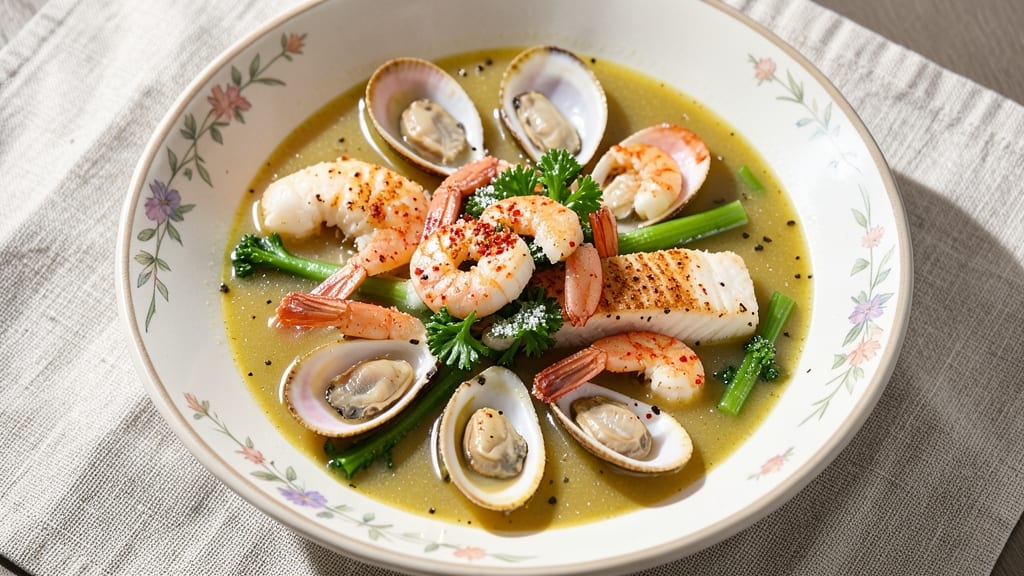
This 7 Mares seafood soup recipe brings the bold flavors of Sicilian coastal cuisine to your kitchen, where crispy celery crowns and tender seafood create a symphony of textures.
The dish honors tradition with fresh clams, shrimp, and fish simmered in aromatic broth, while crispy fried celery adds a signature crunch that sets it apart. What makes this recipe special is the balance of technique and simplicity—no shortcuts, just layers of flavor built through slow simmering and careful frying.
The secret to authentic results lies in the preparation: fresh seafood must be shucked and cleaned properly, while the celery crowns require precise frying to achieve that signature crispy texture. White wine and garlic infuse the broth with depth, while cilantro and chili flakes add brightness at the end.
This isn’t just soup—it’s a celebration of Sicily’s seafood heritage, where every spoonful tells a story of coastal traditions.
By the time you serve this dish, your kitchen will smell like the Mediterranean, and your table will be adorned with golden-brown celery crowns floating in a rich, briny broth. The seafood releases its sweetness as it cooks, while the crispy celery adds a satisfying contrast with every bite.
Perfect for a special dinner or a weekend gathering, this recipe delivers restaurant-quality results at home.
Whether you’re serving it as a main course or sharing it with friends, the key is patience—letting the flavors meld while maintaining that essential crispy texture.
The dish pairs beautifully with crusty bread to soak up every last drop of that aromatic broth. Here’s how to make it come together perfectly.
Ingredients for 7 mares seafood soup
Six fresh ingredients anchor this Sicilian classic, with crispy celery crowns and tender seafood creating a symphony of textures.
| Ingredient | Amount | Notes |
|---|---|---|
| Fresh Clams 🦪 | 1 ½ lb | Shucked, cleaned, and deveined |
| Shrimp 🦐 | 1 lb | Peeled, deveined, tails on |
| White Fish 🐟 | 1 lb | Cod or halibut, cut into chunks |
| Celery Sticks 🧅 | 2 cups | Cut into 3-inch lengths for crowns |
| Extra-Virgin Olive Oil 🫒 | ¾ cup | For frying celery crowns |
| Dry White Wine 🍷 | 1 cup | Bold and dry variety |
| Garlic Cloves 🧄 | 6 cloves | Minced for depth of flavor |
| Onion 🧅 | 1 medium | Diced, for aromatic base |
| Tomato Paste 🍅 | 2 tbsp | For rich, concentrated flavor |
| Fresh Cilantro 🌿 | ¼ cup | Chopped, for bright finish |
| Red Chili Flakes 🌶️ | 1 tsp | Adjust for heat preference |
| Seafood Stock 💧 | 4 cups | Homemade or high-quality store-bought |
| All-Purpose Flour 🌾 | ¼ cup | For dredging celery crowns |
| Salt 🧂 | 1 ½ tsp | Kosher or sea salt preferred |
| Crusty Bread 🍞 | 1 loaf | For serving, optional |
| Lemon Wedges 🍋 | 4 wedges | For serving, optional |
The seafood is the heart of this dish, so prioritize freshness. Local fish markets or high-quality seafood counters at Whole Foods or Trader Joe's are your best bets—look for clams with tightly closed shells and shrimp with a bright, clean smell. For the celery crowns, use thick, straight stalks (about 3 inches long) for even frying. The white wine should be dry and crisp, like a Pinot Grigio, to avoid overpowering the delicate seafood flavors. Garlic? Freshly minced makes all the difference—pre-minced jars lack the aromatic punch.
No white wine? Dry vermouth or extra seafood stock works in a pinch. Short on shrimp? Mussels or scallops hold up beautifully in the broth. The celery crowns require patience—dredge them thoroughly in flour and fry in small batches to avoid sogginess. For the tomato paste, San Marzano is ideal, but any quality brand will do. Fresh cilantro is best, but if you're using dried, reduce to one-third the amount. The chili flakes can be skipped entirely if you prefer a milder soup.
This soup tastes even better the next day as flavors meld. Store in an airtight container in the fridge for up to 3 days, or freeze for 2 months in portioned containers. The celery crowns lose crispness when reheated, so fry them fresh before serving. For a make-ahead tip, prepare the broth and seafood a day ahead, then add the fried celery crowns just before serving to maintain that signature crunch. Serve with crusty bread to soak up every last drop of that briny, aromatic broth.
Why You'll Love This Recipe
- No Chopping Chaos: I swear by the celery sticks—just roughly chopped, no fancy dice work. That’s it. The broth does all the heavy lifting while I sip wine and pretend I’m a chef.
- Brackish Magic: Between the briny clams, sweet shrimp, and delicate white fish, every spoonful is a flavor party. The olive oil finish? That’s where it gets ridiculously good—simple, but somehow more.
- Weeknight to Weekend: Same soup, different vibes. Weeknights? Serve it with crusty bread. Hosting? Add lemon zest and white wine for a restaurant-worthy bowl. No rules, just flexibility.
- Leftovers That Don’t Suck: Honestly, I make this twice—once for dinner, once for lunch. The fish stays tender, the broth deepens overnight, and it reheats like a dream. (Yes, even on a Tuesday night.)
Step-by-step instructions for Sicilian-inspired seafood soup
Here's how to create a rich, aromatic seafood soup with signature crispy celery crowns.
Prepare the Celery Crowns for Frying
Cut the 2 cups celery sticks into 3-inch lengths, keeping the leaves attached to form crowns. In a shallow bowl, mix the 0.25 cup all-purpose flour with 1 tsp salt and 1 tsp red chili flakes. Dredge each celery crown thoroughly in the flour mixture, shaking off any excess.
Heat 0.5 cup of the extra-virgin olive oil in a large skillet over medium-high heat until shimmering. Fry the celery crowns in batches for 2-3 minutes per side until deep golden brown and crispy. Transfer to a paper towel-lined plate to drain. These crispy crowns add texture and flavor—don't skip this step!
Build the Aromatic Base
In the same skillet (no need to clean it), add the remaining 0.25 cup extra-virgin olive oil and heat over medium heat. Add the 1 medium onion and 6 cloves garlic cloves, cooking for 5-6 minutes until the onion softens and the garlic becomes fragrant but doesn't brown.
Stir in the 2 tbsp tomato paste and cook for 1 minute until it darkens slightly. Pour in the 1 cup dry white wine and scrape up any browned bits from the bottom of the pan. Let it simmer for 3-4 minutes until the wine reduces by half, creating a rich, concentrated base.
Simmer the Seafood Stock and Seasonings
Add the 4 cups seafood stock to the skillet and bring to a gentle boil. Stir in 1.5 tsp salt and reduce heat to medium-low. Let it simmer for 10 minutes to infuse the flavors. The soup should be hot but not boiling—this prevents the seafood from cooking too quickly.
Add the 1 lb shrimp and 1 lb white fish chunks to the simmering stock. Cook for 3-4 minutes until the shrimp turns opaque pink and the fish becomes just cooked through (it will finish in the final step). Remove the seafood with a slotted spoon and set aside.
Finish with Clams and Fresh Herbs
Add the 1.5 lb fresh clams to the soup and cook for 3-5 minutes until they open. Discard any clams that don't open after this time. Stir in the 0.25 cup chopped fresh cilantro and simmer for 1 minute to brighten the flavors. Return the shrimp and fish to the soup and heat through.
Taste and adjust seasoning with additional salt if needed. The soup should be salty, rich, and slightly spicy from the chili flakes. Serve immediately in deep bowls, garnished with the crispy celery crowns and 4 lemon wedges. The contrast of crispy, warm crowns with the hot soup is what makes this dish special.
Pro Tips For Making 7 Mares Seafood Soup
- STEAM THE CLAMS FIRST: Don’t toss raw clams straight into the pot—they’ll release grit and muddy the broth. Instead, give them a quick 2-minute steam in a separate pot with just a splash of water, then strain and rinse before adding. I learned this the hard way when my first batch tasted like a harbor bottom.
- SWEAT THE CELEY WITH OLIVE OIL: Skip the butter for the celery—use that good extra-virgin olive oil and sweat it low and slow (5 minutes, no browning) until it’s soft and fragrant. The oil carries the flavor better, and you’ll taste the celery’s natural sweetness instead of a bitter afternote. Trust me, it’s worth the patience.
- ADD SHRIMP LAST, NOT FIRST: Shrimp cook in 2 minutes flat, so tossing them in early means rubbery, overdone shrimp by the time the fish is done. Wait until the broth is simmering hard before adding them—just 60 seconds max, then pull them out. Your future self will notice the difference.
- USE COLD FISH, NOT ROOM TEMP: Pat the white fish dry and keep it cold until the very last minute—even if it means pulling it from the fridge while the soup simmers. Cold fish stays tender and absorbs the broth’s flavors better than warm fish, which can turn opaque and tough. I’ve ruined fish this way too many times to count.
Common mistakes when making perfect results
Overcooking Seafood
Seafood cooks in a flash—just 3-5 minutes for shrimp and clams. I’ve ruined this dish by letting it simmer too long, turning tender shrimp rubbery. Keep a close eye on the timer once the seafood hits the pot.
Remove it immediately when it reaches opaque pink (shrimp) or opens (clams). Overcooking releases bitter compounds that ruin the delicate flavors. 🦐
Skipping the Celery Crowns
These crispy crowns aren’t just garnish—they’re the star texture contrast. I once made this soup without them, and while it was still delicious, it lacked that satisfying crunch. Fry them in small batches to avoid sogginess, and keep them warm in a 200°F oven until serving.
The flour coating should be even and thin—thick layers make them greasy instead of crispy.
Using Low-Quality Seafood
Cheap or frozen seafood changes everything. I learned this the hard way when I used pre-shucked clams from a can—they tasted metallic and bland. Fresh is non-negotiable: clams should smell briny and close tightly, shrimp should be firm and translucent.
If you can’t find fresh, opt for sustainably frozen seafood (like Wild Alaskan shrimp) and thaw it overnight in the fridge, not under running water.
Ignoring the Wine Reduction
Rushing the wine reduction is a common mistake. The alcohol needs time to cook off, leaving behind concentrated flavor. I once skipped this step and ended up with a flat, watery broth.
Simmer the wine until it reduces by half—about 3-4 minutes
Frying too many celery crowns at once makes them steam instead of crisp. I’ve seen home cooks dump a whole batch in, leading to soggy, unevenly cooked crowns. Fry in batches of 6-8 crowns per skillet, and work in shifts if needed. The same rule applies to the seafood—add it in stages so the broth can maintain a gentle simmer without boiling. Seafood soup should be bold, not bland. I’ve made this mistake by treating it like a delicate broth. Taste as you go, especially after adding stock. The final soup should be salty, rich, and slightly spicy—adjust with kosher salt and red chili flakes to taste. Remember, the seafood itself adds saltiness, so balance carefully. A squeeze of lemon at the end brightens everything. 🌶️Overcrowding the Pan
Underseasoning the Broth
Nutrition facts
Frequently asked questions
Can I make this soup without white wine?
Use 1 cup dry vermouth or even extra seafood stock for depth. The key is to reduce the liquid by half before adding stock to concentrate the flavor. Skip the wine entirely if needed, but don't skip the reduction step—it builds richness that separates this dish from basic seafood broths.
How do I keep the celery crowns crispy?
Fry them in small batches (6-8 crowns at a time) over medium-high heat until golden brown—about 2-3 minutes per side. Dredge them thoroughly in flour and shake off excess to prevent sogginess. Keep warm in a 200°F oven until serving. The secret is patience: rushing makes them steam instead of crisp!
What if my clams don't open while cooking?
Discard any clams that don't open after 3-5 minutes of cooking—they're unsafe to eat. This usually happens if they're dead before cooking or if the soup isn't hot enough. Always use fresh clams with tightly closed shells (or buy "certified" clams from trusted seafood markets). A sharp knife and proper shucking technique also help ensure quality.
Can I substitute other seafood?
Yes! Swap shrimp for scallops or mussels, or use squid or octopus for variety. For fish, halibut or mahi-mahi work well. The key is to use fresh, high-quality seafood—avoid pre-cooked or frozen options that lack flavor. Adjust cooking times based on the seafood's size (smaller pieces cook faster).
How long can I store leftovers?
Store in an airtight container in the fridge for up to 3 days, or freeze for 2 months. The celery crowns lose crispness when reheated, so fry them fresh before serving. The broth and seafood actually taste better the next day as flavors meld. Reheat gently on the stove—never microwave, as it can make the seafood rubbery.