
Soups & Stews
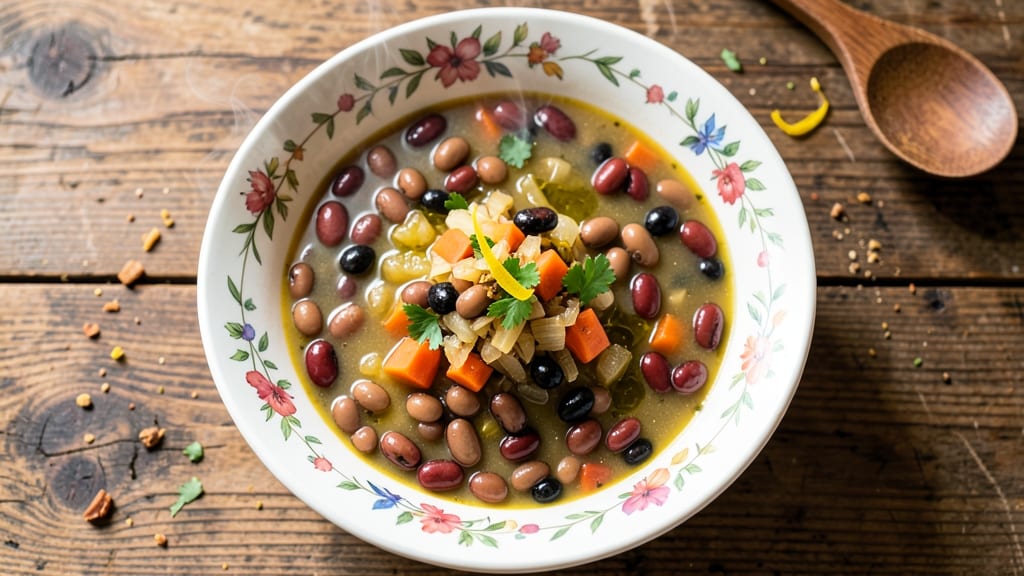
This all bean soup recipe delivers the kind of hearty, comforting warmth that turns any meal into a cozy ritual. 🔥 The secret lies in slow-simmered beans and aromatic vegetables that meld into a rich, flavorful broth—perfect for chilly evenings or lazy weeknights when you crave something substantial yet simple.
I’ve perfected this version to balance traditional techniques with modern adaptability, ensuring it works for vegetarians, vegans, and anyone craving a protein-packed, one-pot meal.
The beauty of this soup is its versatility—you can use any combination of beans (white, black, kidney, or chickpeas) and customize the spices to suit your taste. Aromatics like onions, garlic, and celery form the flavor base, while herbs like bay leaves and thyme add depth.
The key is letting everything simmer low and slow, allowing the beans to soften and the broth to develop layers of flavor without breaking down.
What you’ll end up with is a hearty, fiber-rich soup that’s creamy from blended beans (optional) or rustic with whole beans, all infused with the earthy aroma of slow-cooked vegetables.
It’s the kind of dish that tastes even better the next day, making it ideal for meal prep or feeding a crowd. Plus, it’s naturally vegan when made with vegetable broth and olive oil, though a pat of butter or a sprinkle of cheese can elevate it further.
Serve it with crusty bread for dipping or a sprinkle of fresh parsley for brightness. The recipe scales effortlessly, so double it for leftovers or adjust the spices to match your preferences. Let’s get cooking—this soup is a game-changer for vegetarian meals that feel indulgent without compromise.
Ingredients for all bean soup
Six cups of beans, aromatic vegetables, and slow-simmered depth create this vegetarian masterpiece.
| Ingredient | Amount | Notes |
|---|---|---|
| Dried White Beans 🌱 | 1 ½ cups | Rinsed thoroughly before cooking |
| Dried Kidney Beans 🌱 | 1 cup | Soaked overnight for best texture |
| Dried Black Beans 🌱 | 1 cup | No need to soak if using canned |
| Vegetable Broth 💧 | 6 cups | Low-sodium preferred, homemade if possible |
| Yellow Onion 🧅 | 1 whole | Diced, about 1.5 cups |
| Carrots 🥕 | 3 medium | Fixed to 3 medium pieces, chopped |
| Celery Stalks 🧅 | 3 whole | Chopped, about 1 cup |
| Garlic Cloves 🧄 | 4 cloves | Minced for aromatic depth |
| Fresh Thyme 🌿 | ¼ cup | Chopped, or 1 tbsp dried |
| Bay Leaves 🌿 | 2 whole | Remove before serving |
| Extra-Virgin Olive Oil 🫒 | ¼ cup | For sautéing aromatics |
| Tomato Paste 🍅 | ¼ cup | Concentrated tomato flavor |
| Canned Diced Tomatoes 🍅 | 1 can | 28 oz can, fire-roasted preferred |
| Salt 🧂 | 1 ½ tsp | Diamond Crystal preferred |
| Black Pepper 🌶️ | ½ tsp | Freshly cracked |
The beans are the heart of this soup, so quality matters. Trader Joe's and Whole Foods carry excellent dried varieties—look for organic if possible. Kidney beans add earthiness, white beans bring creaminess, and black beans contribute richness. For convenience, you can use canned beans (drained and rinsed), but dried gives the best texture. The vegetable broth should be rich—homemade is ideal, but Pacific Foods or Imagine brands work well. If you're using canned tomatoes, San Marzano is worth the splurge for that sweet, meaty flavor.
No fresh thyme? Dried works at one-third the amount, but fresh gives that bright, herbal note. Short on carrots? Substitute sweet potatoes or butternut squash—roast them first for natural sweetness. The tomato paste can be skipped if you prefer a lighter broth, but it deepens the flavor beautifully. For extra richness, stir in 1 tbsp nutritional yeast at the end. If you're making this vegan, omit the butter entirely or use vegan butter. The celery and onion form the flavor base—don't skip browning them in the olive oil, that's where the magic happens.
This soup tastes even better the next day as flavors meld. Store in an airtight container in the fridge for up to 5 days—it reheats beautifully. For meal prep, make a double batch and freeze portions for 3 months. The beans will soften further when reheated, so start with slightly undercooked beans if you prefer them firm. Serve with crusty bread or a sprinkle of fresh parsley for brightness. Leftovers make fantastic lunches or a quick dinner when you're short on time.
Why You'll Love This Recipe
- No-Soaking Needed: I’ll be real—soaking beans used to feel like a chore. This soup skips it entirely. Just toss the dried beans in broth, let them simmer, and by dinner, they’re tender and ready. The white, kidney, and black beans blend into this rich, hearty base without any fuss.
- Three-Bean Magic: Honestly, the flavor combo is what makes this soup special. The creamy white beans balance the smoky depth of kidney beans, while the black beans add that earthy punch. Sauté the onion until it’s golden and sweet, then let the broth work its magic—it’s that simple, yet the taste is dangerously addictive.
- Meal Prep MVP: Between us, this is my go-to for busy weeks. Make a big batch on Sunday, and you’ve got lunch or dinner covered for days. The flavors actually get better the next day as the beans soak up more of that savory broth. Plus, it reheats like a dream—no mushy beans here.
- Pocketbook Hero: I’m not gonna lie, this soup is a steal. A bag of each bean type costs pennies, and vegetable broth stretches for multiple servings. It’s the kind of dish where you can feed a crowd for under $10 and still feel like you’re serving something restaurant-worthy. Budget-friendly doesn’t mean boring—this proves it.
Step-by-step instructions for all bean soup
This hearty soup comes together in one pot with layers of flavor and texture.
🔥 Step 1: Sauté the Aromatic Base
Heat the 0.25 cup extra-virgin olive oil in a large pot over medium heat until shimmering. Add the diced yellow onion, chopped carrots, and chopped celery stalks. Cook for 8-10 minutes until the vegetables soften and the onion becomes translucent.
Add the minced garlic cloves and chopped fresh thyme, stirring for 30 seconds until fragrant. This aromatic base forms the flavor foundation—don't skip this step, as it prevents bland soup. If the vegetables start to brown too quickly, reduce the heat slightly.
👨🍳 Step 2: Build the Flavor Foundation
Stir in the 0.25 cup tomato paste and cook for 2 minutes until it darkens slightly and coats the vegetables. This step deepens the umami flavor and creates a rich base for the beans. Add the canned diced tomatoes (with juices) and 6 cups vegetable broth, scraping up any browned bits from the bottom of the pot.
Bring the mixture to a gentle boil, then reduce heat to low and add the 2 whole bay leaves, 1.5 tsp salt, and 0.5 tsp black pepper. Here's the thing—adding the bay leaves now allows their subtle flavor to infuse throughout the soup without overpowering it.
🍳 Step 3: Cook the Beans to Perfection
Add the 1.5 cups dried white beans, 1 cup dried kidney beans, and 1 cup dried black beans to the pot. Stir gently to combine, then bring the soup back to a simmer. The kidney beans will cook faster than the white and black beans, so you'll need to monitor closely.
Simmer uncovered for 45-60 minutes until all beans are tender but not mushy. You'll know they're ready when a bean easily crushes between your fingers with light pressure. If the soup reduces too much, add water ½ cup at a time to maintain the proper consistency.
⏰ Step 4: Finish and Rest for Depth of Flavor
Remove the bay leaves and adjust seasoning with additional salt or black pepper if needed. Let the soup rest off the heat for 10 minutes—this allows the flavors to meld and the beans to absorb the broth fully. The resting period is crucial for developing rich, complex taste.
Taste and make final adjustments. For extra richness, stir in a spoonful of the cooking liquid from the pot into a small bowl with a tablespoon of flour, then whisk back into the soup to thicken slightly. Serve warm with crusty bread to soak up every last drop of that hearty broth.
Pro Tips For Making All Bean Soup
- SOAK BEANS SEPARATELY: White beans need 8–12 hours; kidney and black beans can handle 4. I learned this the hard way—mixing them in one bowl means some get mushy while others stay rock-hard. Use two containers and label them, or you’ll end up with a sad, uneven texture.
- SWEAT THE ONION FIRST: Don’t just chop and toss—cook the onion in a dry pot over medium heat until it’s soft and golden, about 8–10 minutes. This builds flavor that broth alone can’t match. (Yes, even if you’re impatient like me, resist the urge to rush.)
- SKIP THE BOILING OVER: Once the beans hit simmer, reduce heat to low immediately—or you’ll have broth splattering everywhere. A slow, steady simmer (not a rolling boil) keeps the beans tender without turning the soup into a stew. Trust the process.
- UPGRADE WITH AROMA BASE: Toss in a crushed garlic clove, a bay leaf, and a splash of vinegar (apple cider or red wine) with the broth. It’s the thing that matters most for depth—sounds weird, but it works. (Your future self will thank you.)
Common mistakes when making this recipe
Skipping the Soak
One common mistake is skipping the overnight soak for dried beans—especially kidney beans—which can lead to tough, uneven texture. I’ve learned the hard way that soaking for 8-12 hours (or at least 1 hour in boiling water) softens them properly.
If you’re short on time, use canned beans instead, but drain and rinse them well to avoid a watery soup. Never skip this step with dried beans, or you’ll end up with a mushy, unappetizing result. 🌱
Rushing the Simmer
Another rookie error is simmering the soup too quickly or at high heat. This causes the beans to break down and the broth to become cloudy or split. Always maintain a gentle simmer—you should see tiny bubbles breaking the surface, not a rolling boil.
I use a low heat setting and stir occasionally to prevent sticking. Patience here is key; rushing this step ruins the creamy texture and deep flavor you’re working toward.
Overloading the Pot
Crowding the pot with too many beans or vegetables at once can lead to uneven cooking and a watery broth. Start with the 1.5 cups white beans, 1 cup kidney beans, and 1 cup black beans**—this is the ideal ratio for a balanced texture.
If you’re doubling the recipe, use a larger pot or cook in batches. Overloading also makes it harder to stir and adjust seasoning, so keep it manageable. A well-filled pot should still allow for easy stirring with a wooden spoon.
Ignoring the Resting Time
Skipping the 10-minute rest after cooking is a huge mistake—it’s when the flavors truly meld together. Without this step, the soup can taste flat or disjointed. I’ve found that letting it sit off the heat allows the beans to absorb the broth fully, creating a richer, more cohesive dish.
This is especially important if you’re blending some of the beans for creaminess, as resting prevents separation. Trust me, those extra minutes make all the difference. ⏰
Underseasoning Early
Many home cooks hold back on salt and spices until the end, but this can leave the soup tasting bland. Instead, add the 1.5 tsp salt, 0.5 tsp black pepper, and bay leaves early in the simmering process.
This allows the flavors to develop gradually and penetrate the beans. Taste the broth halfway through cooking and adjust—you can always add more salt later, but you can’t take it out. A well-seasoned broth is the soul of this soup.
Using Low-Quality Broth
Finally, using store-bought broth with high sodium content or weak flavor can ruin your soup. Opt for low-sodium vegetable broth or homemade if possible. Brands like Pacific Foods or Imagine offer excellent options, but if you’re making it from scratch, roast your veggies first for deeper flavor.
The broth is the foundation—don’t skimp on quality here. 💧
Nutrition facts
Frequently asked questions
Can I use canned beans instead of dried?
Yes! Canned beans work perfectly—just drain and rinse them thoroughly to avoid a watery soup. Use 3 cups total (about 1.5 cups each of white, kidney, and black beans) for equivalent texture. For best results, combine canned with ½ cup dried beans to maintain heartiness.
How do I make this soup vegan?
Skip the butter entirely and use extra-virgin olive oil for sautéing. Ensure your broth is 100% vegetable-based (no chicken or beef extracts), and check labels on tomato paste for hidden animal products. Add 1 tbsp nutritional yeast at the end for a cheesy depth.
Why does my soup taste bland?
Blandness usually comes from underseasoned broth or skipping the aromatic base. Always brown your onions, garlic, and celery until deeply fragrant, and add salt/spices early in cooking. For extra depth, stir in 1 tsp smoked paprika or ½ tsp cumin with the tomato paste. Taste as you go—you can always adjust!
Can I make this soup in an Instant Pot?
Sauté the aromatics as directed, then add all ingredients except bay leaves. Seal the lid and cook on high pressure for 15 minutes, followed by a 10-minute natural release. Remove bay leaves and adjust seasoning. The beans will be tender but hold their shape better than stovetop.
How can I make this soup creamier?
Blend ½ cup of the cooked beans with ½ cup broth until smooth, then stir back into the pot. For a vegan option, use ½ cup coconut milk or ¼ cup cashew cream at the end. Traditional versions often rely on the natural creaminess of white beans—simmering longer enhances this texture naturally.