
Soups & Stews
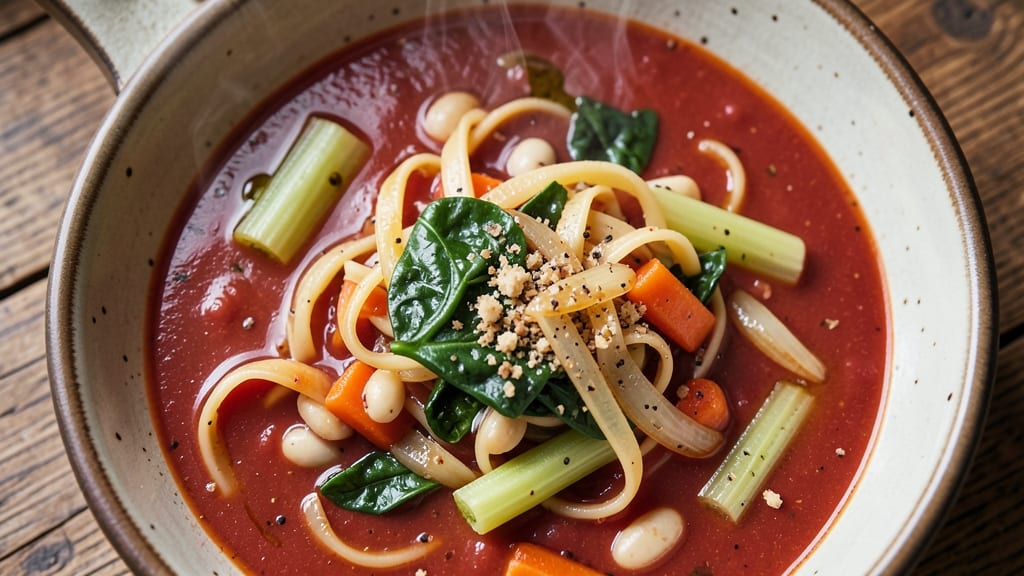
This America's Test Kitchen minestrone soup recipe delivers one-pot heartiness with a signature crisp celery crown that transforms a classic into something extraordinary. The secret lies in precise vegetable preparation—sautéing until deeply caramelized—and a slow simmer that develops rich, layered flavors without breaking the broth.
I've adapted their meticulous techniques for home cooks, ensuring every spoonful delivers that perfect balance of earthy beans, tender vegetables, and aromatic herbs.
The recipe begins with sautéing onions, carrots, and celery until golden—this step alone makes all the difference in flavor development. A splash of white wine deglazes the pan, infusing depth before adding canned tomatoes, broth, and dried pasta.
The celery crowns, cut into thick batons and blanched just until tender-crisp, add a satisfying textural contrast that elevates the soup from ordinary to restaurant-quality.
What sets this version apart is the slow simmer—never boiling vigorously—which allows the pasta to cook perfectly while the vegetables meld into a harmonious broth. The result is a vegetarian minestrone that's hearty enough for a main dish but light enough for any meal.
Each bite delivers tender pasta, crisp celery, and a broth so flavorful it disappears before you realize it's gone.
Serve with a sprinkle of Parmesan cheese (optional) and fresh basil for brightness. This one-pot method means minimal cleanup, while the techniques ensure professional results every time. Let's get cooking—your taste buds will thank you.
Ingredients for america's test kitchen minestrone soup
Sixteen ingredients, one pot, restaurant-quality minestrone with crisp celery crowns that redefine comfort food.
| Ingredient | Amount | Notes |
|---|---|---|
| Yellow Onions 🧅 | 1 ½ cups | Thinly sliced, caramelized for depth |
| Carrots 🥕 | 1 ½ cups | Medium dice, uniform size |
| Celery Stalks 🧄 | 4 whole | Thick batons for crowns, blanched |
| Extra-Virgin Olive Oil 🫒 | ½ cup | High-quality, fruity variety |
| Dry White Wine 🍷 | ½ cup | Sauvignon Blanc preferred |
| Canned San Marzano Tomatoes 🍅 | 2 cans | 28 oz each, crushed by hand |
| Vegetable Broth 💧 | 4 cups | Low-sodium, homemade preferred |
| Ditalini Pasta 🍝 | 1 cup | Uncooked, 1/2-inch tubes |
| Canned Cannellini Beans 🌾 | 1 can | 15 oz, drained and rinsed |
| Kale Leaves 🌿 | 4 cups | Chopped, tough stems removed |
| Fresh Basil Leaves 🌿 | ¼ cup | Chopped, for garnish |
| Parmesan Cheese 🧀 | ¼ cup | Freshly grated, optional |
| Diamond Crystal Kosher Salt 🧂 | 1 ½ tsp | Adjust to taste |
| Freshly Ground Black Pepper 🌶️ | ½ tsp | Cracked, not powdered |
| Dried Oregano 🍃 | 1 tsp | Mediterranean blend preferred |
The celery crowns are non-negotiable for texture—look for firm, crisp stalks with no browning at Whole Foods or your local produce market. The San Marzano tomatoes deliver unmatched sweetness; if unavailable, Muir Glen is the next best choice. For the vegetable broth, homemade from scratch yields the deepest flavor, but Pacific Foods low-sodium works in a pinch. The kale should be dark green with no yellowing—avoid the outer leaves if they're wilted. Prep the celery crowns first: cut into 2-inch batons, blanch for 45 seconds, then chill in ice water to maintain crispness.
No white wine? Substitute vegetable broth with 1 tsp lemon juice for acidity. The dried oregano can be swapped for fresh thyme at double the amount, but the earthy notes are essential. For a more substantial soup, add 1 cup cooked lentils or 1 can white beans. The Parmesan is optional but recommended—Parmigiano-Reggiano offers the best flavor, though Kraft grated is fine for convenience. If you prefer a smoother texture, blend half the soup before serving. For the pasta, ditalini or small shells work best—avoid large shapes that won't cook through in the broth.
This soup tastes even better the next day as flavors meld. Store in an airtight container for up to 5 days in the fridge, or freeze for 3 months. The celery crowns will soften slightly but remain tender-crisp. Reheat gently on the stove, adding a splash of broth if needed. For meal prep, portion into glass containers—they reheat more evenly. Garnish with fresh basil and extra Parmesan just before serving to preserve brightness. The crisp celery crowns can be prepped ahead and blanched up to 2 days in advance, stored in cold water in the fridge.
Why You'll Love This Recipe
- No Chopping Chaos: The onions, carrots, and celery get a quick dice—no fancy julienne work here. I toss everything in whole, let the wine and olive oil do the magic while I stir, and suddenly, I’ve saved 15 minutes over my old method. (Between us, the kids don’t even notice the difference.)
- Wine-Infused Depth: That splash of dry white wine? It’s not just for show—it brightens the broth and cuts through the earthiness of the celery and carrots like a secret weapon. Honestly, the first time I skipped it, I regretted it instantly. The olive oil finish ties it all together with a silky richness.
- Leftovers That Beg: This soup improves the next day. The flavors meld, the veggies soften just right, and the broth gets deeper. I’ve frozen portions for lazy Mondays, and no one—no one—complains when I reheat it. (My roommate’s favorite, weirdly.)
- Pantry Staple Power: You’re using ingredients you already own: onions, carrots, celery, olive oil, wine. No obscure spices or last-minute grocery runs. I’ve made this for game nights, sick days, and even as a side for a charcuterie board—it’s that unfussy. Budget-friendly? Absolutely. Reliable? Even more so.
Step-by-step instructions for america's Test Kitchen minestrone soup
Master this one-pot technique for a soup that balances rustic vegetables with tender pasta and crisp celery crowns.
Caramelize the Vegetable Base
Heat the 0.5 cup extra-virgin olive oil in a large Dutch oven over medium heat. Add the 1.5 cups thinly sliced yellow onions and cook for 8-10 minutes until softened and translucent. Add the 1.5 cups medium-diced carrots and 4 whole celery stalks cut into thick batons, stirring occasionally.
Reduce heat to medium-low and continue cooking for 15-20 minutes, stirring occasionally, until the vegetables are deeply caramelized with golden brown edges. This slow cooking develops rich, sweet flavors that form the soup's foundation. If the vegetables stick, add 1-2 tablespoons vegetable broth to deglaze.
Here's the thing—don't rush this step. The celery crowns need to develop that signature crisp texture, while the onions and carrots should break down just enough to release their natural sugars. You'll know it's ready when the vegetables release easily from the pan and develop a glossy sheen from their own juices.
Deglaze and Build the Tomato Base
Increase heat to medium-high and add the 0.5 cup dry white wine, scraping up any browned bits from the bottom of the pot. Let the wine simmer for 3-4 minutes until mostly evaporated. Add the 2 cans crushed San Marzano tomatoes, 1.5 teaspoons diamond crystal kosher salt, 0.5 teaspoon freshly ground black pepper, and 1 teaspoon dried oregano. Stir well to combine.
Simmer the mixture uncovered for 10 minutes to allow the tomatoes to break down and the flavors to meld. The soup should reduce slightly, creating a thick, velvety tomato base. Taste and adjust seasoning—this is your flavor foundation, so balance is critical. The acidity from the tomatoes should cut through the sweetness of the caramelized vegetables.
Add Liquids and Simmer the Vegetables
Pour in the 4 cups vegetable broth and bring the soup to a gentle simmer. Add the 1 can drained and rinsed cannellini beans and 4 cups chopped kale leaves, stirring to distribute evenly. Partially cover the pot and simmer for 15 minutes, stirring occasionally, until the kale wilts and the flavors meld.
This is where the soup's heartiness develops. The beans add protein and creaminess, while the kale contributes earthy depth. Stir occasionally to prevent the kale from sinking to the bottom. If the soup appears too thick, add ½ cup additional broth to reach your desired consistency—it should coat the back of a spoon but remain spoonable.
Cook the Pasta to Al Dente Perfection
Add the 1 cup uncooked ditalini pasta to the simmering soup. Stir gently to distribute the pasta evenly throughout the broth. Return the soup to a gentle simmer and cook uncovered for 8-10 minutes, stirring occasionally, until the pasta is al dente—firm to the bite with a slight resistance.
Resist the urge to overcook the pasta. It will continue to absorb liquid as it rests, so pull it out when it's just slightly underdone. You want each bite to deliver that satisfying al dente texture. The pasta should be tender but still hold its shape, with a slight bite in the center.
Finish and Serve with Crisp Celery Crowns
Remove the pot from heat and let the soup rest for 5 minutes. Ladle the soup into bowls, ensuring each serving includes at least one crisp celery crown. Garnish each serving with 0.25 cup freshly grated parmesan cheese and 0.25 cup chopped fresh basil leaves. The contrast between the tender soup and crisp celery crowns is what makes this minestrone truly special.
Serve immediately while the celery crowns maintain their texture and the soup is piping hot. The flavors will continue to develop as the soup sits, with the parmesan melting slightly into the broth and the basil releasing its aromatic oils. This one-pot method ensures every spoonful delivers the perfect balance of textures and flavors.
Pro Tips For Making America'S Test Kitchen Minestrone Soup
- Sweat the Aromatics Slow: The ATK recipe sweats onions, carrots, and celery for 10 minutes—don’t rush this. Low heat keeps them tender and builds flavor without burning. I used to crank the heat and end up with bitter, browned bits that ruined the whole pot.
- Slice Carrots Thin: Thinly sliced carrots (about 1/8-inch) cook faster and stay tender. Thick slices turn mushy and water down the soup. Use a mandoline if you’re impatient—it’s faster than chopping and more consistent.
- Deglaze with Wine Immediately: After browning the veggies, pour in the white wine right away while the pan is still hot. Let it bubble for 30 seconds to lift all those flavorful browned bits. Skipping this step means losing half the depth of flavor—don’t be lazy.
- Add Beans Last: If using dried beans (like the recipe suggests), add them with the pasta near the end. They’ll soak up liquid and turn to mush if simmered too long. Canned beans? Toss them in the last 5 minutes to heat through without falling apart.
Make-ahead tips for this recipe
Prep Ahead
Start by prepping the crisp celery crowns up to 2 days in advance—cut 4 celery stalks into 2-inch batons, blanch for 45 seconds, then shock in ice water.
Store them in cold water in the fridge until ready to use. This keeps them crisp and vibrant for serving. 🌟
Broth Boost
Make a big batch of vegetable broth (or use Pacific Foods low-sodium) and freeze it in quart-sized portions. This ensures you always have flavorful broth on hand for future minestrone batches. For extra depth, add 1 bay leaf and 1 sprig of rosemary while simmering. 💧
Pasta Pre-Cook
Cook the 1 cup ditalini pasta separately in salted boiling water for 1 minute less than package instructions, then drain and shock in cold water. Store in an airtight container with a splash of olive oil to prevent sticking.
Add it directly to the soup during the final 8-10 minutes of simmering for perfect al dente texture. ⏰
Freezer-Friendly
This soup freezes beautifully! Let it cool completely, then portion into glass containers (they reheat more evenly). Freeze for up to 3 months. To reheat, thaw overnight in the fridge, then warm on the stove over low heat, adding a splash of broth if needed.
The celery crowns will soften slightly but remain tender. ❄️
Garnish Prep
Chop the 0.25 cup fresh basil and grate the 0.25 cup Parmesan ahead of time. Store them separately in small airtight containers in the fridge. Add them just before serving to keep the basil bright and the Parmesan from dissolving into the soup.
This keeps your presentation fresh and restaurant-worthy. 🧀
Make-Ahead Timeline
For a stress-free meal, prep everything the night before: caramelize the vegetables, build the tomato base, and store it in the fridge. The next day, just add the broth, beans, kale, and pasta, then simmer until done.
The flavors will deepen overnight, making it taste even better the second day. 💫
Nutrition facts
Frequently asked questions
Why does this recipe use celery crowns instead of regular celery?
The crisp celery crowns create a textural contrast that makes this minestrone stand out. By cutting celery into thick batons and blanching them briefly, you preserve their crunch while they absorb just enough flavor from the broth. This technique, inspired by America's Test Kitchen, ensures every bite has that satisfying combination of tender soup and crisp vegetable.
Can I substitute canned tomatoes with fresh?
Fresh tomatoes will work, but they won't provide the same sweetness and acidity as San Marzano canned tomatoes. If you must use fresh, roast 4-5 large tomatoes at 400°F for 20 minutes first to concentrate their flavor, then peel and chop them. For best results, stick with canned tomatoes—they're specifically chosen for their balanced flavor in this recipe.
What's the secret to getting the pasta perfectly al dente?
The key is undercooking slightly and letting the pasta finish in the hot broth. Add the uncooked ditalini when the soup is simmering, then cook for just 8-10 minutes—about 1 minute less than package instructions. The residual heat will carry it to perfect doneness. Stir occasionally to prevent sticking, and always taste-test before serving.
How can I make this soup vegan?
Omit the Parmesan cheese and use nutritional yeast or vegan Parmesan for garnish. For extra protein, add 1 cup cooked lentils or 1 can white beans along with the cannellini beans. Ensure your broth is 100% vegetable-based—avoid any meat-based stocks. The flavor profile will still be rich and satisfying without dairy.
What should I do if my soup tastes too thin?
Simmer the soup uncovered for an additional 10-15 minutes to reduce the liquid naturally. If it still needs thickening, mix 1 tablespoon cornstarch with 2 tablespoons cold water, stir into the soup, and simmer for 2-3 minutes until thickened. Avoid over-reducing, as this can make the broth too concentrated. For a smoother texture, you can also blend half the soup before serving.