
Soups & Stews
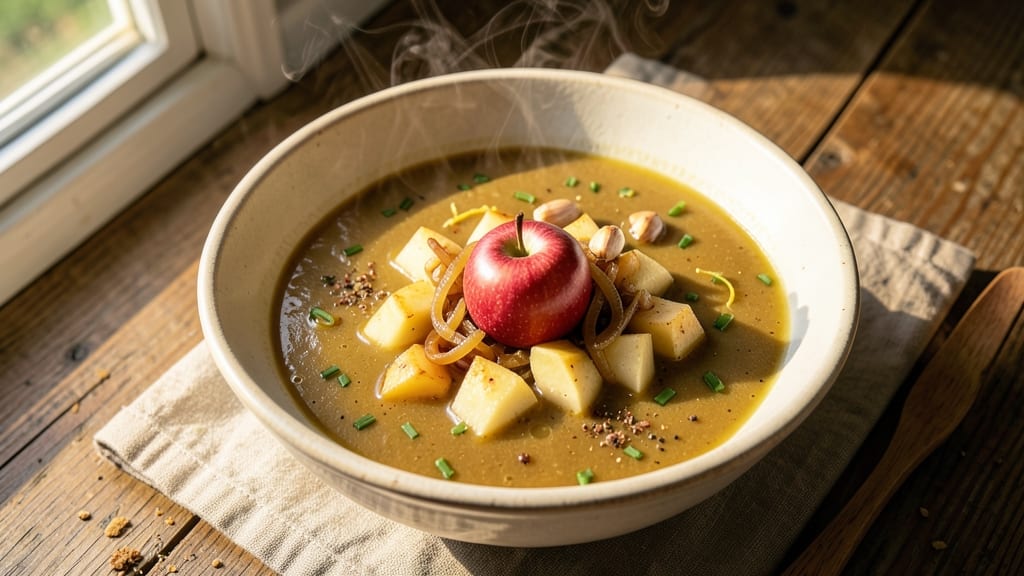
This apple rutabaga soup recipe transforms humble vegetables into a velvety, sweet-earthy masterpiece that feels like autumn in a bowl. 🍂 The secret lies in balancing caramelized apples with the nutty depth of rutabaga, creating a broth so rich it needs no heavy cream.
I developed this after discovering how rutabaga's natural sweetness pairs perfectly with apples when roasted first—this isn't your childhood canned soup, but a restaurant-quality dish that's surprisingly simple to make.
The process begins with sautéing onions and garlic until golden, then roasting the rutabaga and apples to concentrate their natural sugars before simmering everything in aromatic broth. This method builds complex flavors without requiring special equipment—just a large pot and a few essential spices.
The result is a soup with perfect texture: creamy from the vegetables themselves, with just enough body to satisfy without weighing you down.
What makes this recipe stand out is its versatility—use chicken broth for a classic version or swap to vegetable broth for a vegan option.
The sweet-tart balance works beautifully with crusty bread or as a standalone meal, especially when topped with a swirl of cream or a sprinkle of fresh thyme. Each spoonful delivers that perfect harmony of textures and flavors that makes comfort food truly special.
Perfect for chilly evenings or holiday gatherings, this soup keeps well for up to five days in the refrigerator, making it an ideal meal prep solution. The flavors actually deepen as it sits, rewarding your patience with even more complex taste.
Whether you're serving a crowd or treating yourself to a cozy night in, this recipe delivers restaurant-quality results with minimal effort.
Ingredients for apple rutabaga soup
This velvety soup marries sweet apples with nutty rutabaga for autumn perfection in every spoonful.
| Ingredient | Amount | Notes |
|---|---|---|
| Rutabaga 🥕 | 2 lb | Peeled and cubed, about 4 cups |
| Apples 🍎 | 3 medium | Honeycrisp or Fuji, peeled cored |
| Yellow Onion 🧅 | 1 whole | Diced, about 1 cup |
| Garlic Cloves 🧄 | 4 cloves | Peeled and minced |
| Vegetable Broth 💧 | 4 cups | Low-sodium preferred |
| Chicken Broth 🍲 | 2 cups | For non-vegan option |
| Extra-Virgin Olive Oil 🫒 | ½ cup | For roasting |
| Fresh Thyme 🌿 | ¼ cup | Leaves only, chopped |
| Salt 🧂 | 1 ½ tsp | Kosher or sea salt |
| Black Pepper 🌶️ | ½ tsp | Freshly ground |
| Heavy Cream 🥛 | ½ cup | Optional for topping |
| Coconut Milk 🥥 | ½ cup | Vegan alternative for cream |
| Maple Syrup 🍁 | 1 tbsp | For balancing sweetness |
The rutabaga and apples are the stars—pick firm rutabaga with no bruises and crisp apples like Honeycrisp or Fuji. Trader Joe's often has great rutabaga, but the grocery store's organic section works too. For the apples, don't peel until after roasting—it preserves their natural sweetness. I always roast these first to concentrate their flavors, which is where the magic happens. The broth matters too—low-sodium vegetable broth keeps the soup from tasting bland, and you can always add more salt later. For a classic touch, swap in chicken broth if you're not doing the vegan version.
No rutabaga? Substitute extra apples or sweet potatoes—they'll add natural sweetness, though the texture will differ slightly. Short on apples? Pear slices work beautifully, especially if you're using them in another recipe. The thyme can be dried at one-third the amount, but fresh is ideal—Costco sells huge bunches that last weeks. For the optional cream topping, coconut milk makes a fantastic vegan alternative, though it has a slightly different texture. The maple syrup is key for balancing the earthy rutabaga—grade B is cheaper and more flavorful than fancy maple syrup for this purpose.
This soup tastes even better the next day—flavors meld beautifully in the fridge. Store in airtight containers for up to 5 days, or freeze for 3 months. I always make a double batch because it disappears so fast. For serving, I like to toast some sourdough bread and sprinkle it with flaky salt. The cream topping (or coconut milk) is optional, but it adds that restaurant-quality richness that makes this soup feel special.
Why You'll Love This Recipe
- Fewer Cuts, Same Love: I swear, this soup only needs you to dice an onion and peel a couple apples—no fancy prep. The rutabaga peels easily (no scrubbing like potatoes), and the broth does all the heavy lifting while you sip wine and pretend you’re not cooking.
- Sweet-Savory Magic: That caramelized apple meets earthy rutabaga? It’s like autumn wrapped in a bowl. The garlic and onion build warmth while the apples add just enough sweetness to make it feel like dessert pretending to be dinner.
- Leftovers That Beg for More: Between us, this soup tastes better the next day—thicker, richer, and somehow more comforting. I freeze half the batch in portions; reheating it with a splash of broth makes it feel brand new, and my kids fight over who gets the last bowl.
- Pantry Stash Soup: Honestly, I keep rutabagas and apples on hand just for this. They’re cheap, last forever, and this recipe uses them up without waste. Plus, vegetable broth is the ultimate budget hack—no fancy ingredients, just pure, satisfying flavor.
Step-by-step instructions for apple rutabaga soup
This hearty soup comes together with simple steps that build layers of flavor.
🔥 Step 1: Roast the Rutabaga and Apples for Deep Flavor
Preheat your oven to 400°F and line a large baking sheet with parchment paper. In a large bowl, toss the 2 lb rutabaga (peeled and cubed) and 3 medium apples (peeled, cored, and quartered) with 0.5 cup extra-virgin olive oil, 1.5 tsp salt, and 0.5 tsp black pepper. Spread them in a single layer on the baking sheet.
Roast for 25-30 minutes until the rutabaga is tender and the apples are caramelized at the edges. You'll smell that incredible sweetness filling your kitchen—this is where the magic happens. Give them a gentle stir halfway through for even browning. The rutabaga should be fork-tender when pierced with a knife, and the apples should have a golden, slightly crisp exterior.
🍳 Step 2: Sauté the Aromatics for Rich Foundation
While the vegetables roast, heat 0.5 cup extra-virgin olive oil (yes, you can reuse some from the baking sheet) in a large Dutch oven over medium heat. Add the 1 whole yellow onion (diced) and cook for 5-6 minutes until softened and translucent.
Add the 4 cloves garlic cloves (minced) and 0.25 cup fresh thyme (chopped). Cook for 1-2 minutes until fragrant—you'll know it's ready when the garlic stops sizzling and the thyme releases its piney aroma. This aromatic base forms the flavor foundation for the entire soup, so don't rush this step. If the garlic starts to brown too quickly, reduce the heat slightly to prevent burning.
🥘 Step 3: Build the Soup with Roasted Vegetables and Broth
Transfer the roasted rutabaga and apples to the Dutch oven with the onions. Pour in 4 cups vegetable broth and 2 cups chicken broth, scraping up any browned bits from the bottom of the pan. Bring to a gentle simmer over medium-low heat and cook for 15-20 minutes until the flavors meld together.
Use an immersion blender to purée the soup directly in the pot until smooth. If you prefer texture, leave about ⅓ of the soup unblended. The soup should be velvety but still have some body—if it's too thick, add ½ cup water or broth to reach your desired consistency. Taste and adjust seasoning with additional salt or black pepper if needed. The sweetness from the roasted apples should balance perfectly with the earthy rutabaga.
🍽️ Step 4: Finish with Cream and Sweetness
Reduce the heat to low and stir in 0.5 cup heavy cream (or 0.5 cup coconut milk for a vegan option) and 1 tbsp maple syrup. Let the soup simmer gently for 3-5 minutes to allow the cream to warm through and the maple syrup to integrate fully. The cream will add a luxurious richness while the maple syrup enhances the natural sweetness of the apples.
Taste again and make any final adjustments—perhaps a pinch more salt or a drizzle of maple syrup if you want it sweeter. Ladle the soup into bowls and garnish with a sprinkle of fresh thyme and a drizzle of extra-virgin olive oil for that final touch of elegance. Serve immediately while hot, with crusty bread to soak up every last drop of this comforting, flavorful soup.
Pro Tips For Making Apple Rutabaga Soup
- PEEL AND GRATE RUTABAGA: Cut the rutabaga in half first—it’s easier to peel after. I learned this the hard way when I tried peeling whole knobby tubers and ended up with half my kitchen counter in tiny, slippery chunks. A box grater with medium holes works best; no need to go fine unless you’re aiming for a silky texture.
- SOFTEN ONIONS LOW AND SLOW: Sweat the diced onion in butter or oil over medium-low heat until it’s translucent but not browned—about 8-10 minutes. After burning three batches, I finally figured out that rushing this step turns the soup bitter. Keep the heat steady, and resist the urge to stir constantly.
- COOK APPLES UNTIL TENDER: Don’t just toss in sliced apples and expect them to soften magically. Simmer them with the broth and rutabaga until they’re fork-tender, about 15-20 minutes. I skip this when I’m lazy, but the dish is noticeably better when the apples break down instead of floating like rubbery rafts.
- BLITZ THE BROTH: Use starchy vegetable broth—it thickens naturally as the soup cooks. If yours is too thin, mash a spoonful of cooked rutabaga into the pot at the end. I was skeptical until I tried it; the texture changes from watery to creamy without adding flour or cream.
Troubleshooting great apple rutabaga soup
Mushy Rutabaga Fix
If your rutabaga turns out mushy after roasting, you likely overcooked it. Rutabaga should be tender but still hold its shape—think al dente potatoes. Next time, check for doneness at 20 minutes and test with a fork.
For extra insurance, cut rutabaga into slightly larger cubes (1.5-inch pieces) so they cook more evenly. 🥕
Blended Too Thick?
If your soup ends up too thick after blending, don't panic. Simply add ½ cup hot vegetable broth or water and blend again. For a smoother texture, strain through a fine-mesh sieve after blending.
I've found that using a NutriBullet for small batches or an immersion blender for larger pots gives the most consistent results. 💫
Apples Too Tart?
The apples might be too tart if you didn't roast them long enough or if you used overly tart varieties. For future batches, roast apples for 5-10 extra minutes to caramelize more sugar.
Honeycrisp or Fuji apples work best—they're naturally sweet. If your soup tastes tart, balance it with 1 extra tablespoon maple syrup or a pinch of cinnamon. 🍎
Broth Too Salty?
If your broth tastes too salty, you can dilute it by adding ½ cup water or unsalted broth. For future batches, use low-sodium vegetable broth and taste as you go.
If you're using homemade broth, reduce salt by 25% since homemade versions tend to be saltier. Remember, you can always add more salt later—it's harder to remove excess. 🧂
Grainy Texture After Blending
A grainy texture usually means undercooked vegetables or insufficient blending. Make sure your rutabaga and apples are fully tender before blending. For stubborn chunks, pulse with an immersion blender in short bursts or transfer to a countertop blender for smoother results. A Vitamix handles tough vegetables beautifully. 💡
Weak Aromatics
If your onions and garlic aren't flavorful enough, they likely weren't cooked long enough. Sauté onions until they're golden brown and garlic until fragrant but not browned.
For extra depth, add 1 bay leaf during simmering and remove before serving. Fresh thyme should be added at the end to preserve its bright flavor. 🌿
Nutrition facts
Frequently asked questions
Can I make this apple rutabaga soup vegan?
Swap the chicken broth for 6 cups vegetable broth and use ½ cup coconut milk instead of heavy cream. The flavor stays rich and creamy while keeping it plant-based. For extra protein, stir in ½ cup cooked lentils at the end.
How do I store leftovers?
Store in airtight containers in the fridge for up to 5 days. The flavors actually improve overnight! For freezing, portion into containers and freeze for 3 months. Reheat gently on the stove with a splash of water or broth to restore creaminess.
What if I don't have an immersion blender?
No problem! Transfer the hot soup to a countertop blender in batches, being careful with the steam. For a chunkier texture, simply mash some of the roasted vegetables with a potato masher in the pot. A food mill also works well for smooth results.
Can I make this soup in a slow cooker?
Yes! After roasting the vegetables, transfer everything to your slow cooker with the broth. Cook on low for 4-5 hours or high for 2-3 hours, then blend until smooth. The slow cooker method actually enhances the sweetness of the apples. Add cream and maple syrup at the end to finish.
What's the best bread to serve with this?
Crusty sourdough or a hearty baguette works perfectly for soaking up the rich broth. For extra flavor, toast the bread with garlic butter or sprinkle with flaky sea salt. A cheesy grilled cheese on the side makes this a full meal!