
Soups & Stews
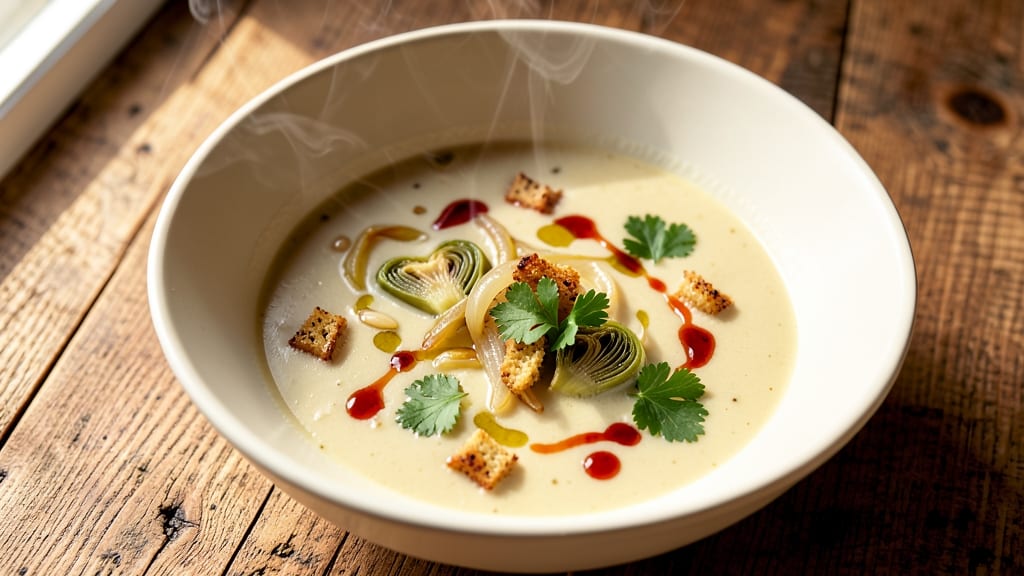
This artichoke heart soup delivers bright, Mediterranean-inspired comfort in just 25 minutes, transforming simple pantry staples into a velvety, herb-infused masterpiece. The secret lies in blending tender artichoke hearts with aromatic garlic, lemon zest, and fresh herbs—creating a soup that's both elegant and effortless.
What makes this recipe special is how it balances rich, savory flavors with a refreshing acidity that keeps every spoonful lively.
The foundation begins with sautéing garlic and onions until fragrant, then adding artichoke hearts and vegetable broth to build a flavorful base. A splash of white wine (or extra broth) deglazes the pan, while lemon zest and fresh parsley brighten the finish.
The result is a soup that's creamy without heavy cream—just a touch of olive oil and the natural richness of the artichokes. It's the kind of dish that feels indulgent yet remains light enough for any meal.
By the time you stir in the final herbs, you'll have a soup that's silky-smooth, packed with Mediterranean flair, and ready in under half an hour. The artichoke hearts add a satisfying texture, while the lemon and parsley ensure each bite is vibrant and fresh.
This recipe proves comfort food doesn't have to be heavy—just thoughtful.
Perfect for chilly evenings or as a starter for dinner parties, this soup pairs beautifully with crusty bread or a simple green salad. The best part? It reheats just as well the next day, making it ideal for meal prep. Let's get cooking!
Ingredients for artichoke heart soup
Simple pantry staples and fresh herbs create this Mediterranean-inspired artichoke heart soup masterpiece.
| Ingredient | Amount | Notes |
|---|---|---|
| Artichoke Hearts 🍃 | 14 oz | Marinated, drained and chopped |
| Yellow Onion 🧅 | 1 whole | Medium, diced |
| Garlic Cloves 🧄 | 4 cloves | Fresh, minced |
| Extra-Virgin Olive Oil 🫒 | ¼ cup | For sautéing |
| Vegetable Broth 💧 | 4 cups | Low-sodium preferred |
| Dry White Wine 🍷 | ½ cup | Substitute with extra broth |
| Lemon Zest 🍋 | 1 tbsp | Freshly grated |
| Fresh Parsley 🌿 | ¼ cup | Chopped, stems removed |
| Fresh Dill 🌿 | 2 tbsp | Chopped, optional but recommended |
| Sea Salt 🧂 | 1 tsp | Diamond Crystal preferred |
| Black Pepper 🌶️ | ½ tsp | Freshly ground |
| Vegetable Oil 🫒 | 1 tbsp | For blending texture |
The artichoke hearts are the star—marinated ones from the grocery store jar work perfectly, but drain and rinse them well to cut excess sodium. Trader Joe's and Whole Foods carry the best quality, but any jarred hearts will do. Fresh garlic and onion are non-negotiable here; their aromatic base builds the soup's depth. For the olive oil, California extra-virgin brands like Corto or Bertolli add subtle fruity notes that elevate the dish. If you're using white wine, a crisp Sauvignon Blanc or Pinot Grigio works best—just make sure it's dry, not sweet.
No white wine? Extra vegetable broth with a splash of lemon juice keeps the brightness. Fresh herbs are ideal, but dried parsley or dill at one-third the amount works in a pinch. The lemon zest can be substituted with a pinch of citric acid if you're prepping ahead. For texture, the vegetable oil in the final blend mimics the creaminess without heaviness—avocado oil works too if you prefer. If you're short on time, frozen artichoke hearts thawed and drained work just as well, though jarred ones have better texture.
This soup tastes even better the next day—3-4 days in the fridge, sealed airtight. For meal prep, double the batch and freeze half in 1-cup portions. Reheat gently on the stove with a splash of water to restore creaminess. The herbs can be added back after reheating to keep their freshness. Store the vegetable broth in the freezer in 1-cup ice cube trays for easy portioning later.
Why You'll Love This Recipe
- No Chopping Needed: I swear by jarred artichoke hearts here—just drain, rinse, and toss. The onions and garlic take two minutes in the same pan, no knife skills required. Honestly, my lazy Sundays thank me every time.
- Umami Bomb: That first spoonful? The artichokes soak up the broth while the garlic sizzles in olive oil, and suddenly you’ve got a soup that tastes like it simmered all day. The crispy edges on the artichokes? Chef’s kiss.
- Lunchbox Hero: Between us, this soup reheats like a dream—perfect for packing the night before. I’ve sent it to work with crusty bread, and my coworkers still ask for the recipe. (Yes, even on a Tuesday night.)
- Budget-Friendly Luxe: A can of artichokes and a bouillon cube stretch this into four servings without breaking the bank. I’ll be real: it’s the kind of soup that makes store-brand broth feel fancy. Leftovers? Even better the next day.
Step-by-step instructions for artichoke hearts soup
This bright, herb-infused soup comes together quickly with simple techniques.
Sauté Onion and Garlic in Olive Oil
Heat the 0.25 cup extra-virgin olive oil in a large pot over medium heat. Add the 1 whole yellow onion and cook for 5-6 minutes until softened and translucent. The onions should lose their raw bite and become tender to the touch.
Add the 4 cloves minced garlic and cook for an additional 30 seconds until fragrant. Be careful not to let the garlic brown—it should smell aromatic but remain pale. This foundational step builds the soup's flavor base and prevents a bitter taste in the finished dish.
Add Artichoke Hearts and Wine
Stir in the 14 oz chopped artichoke hearts and cook for 2 minutes to warm them through. Add the 0.5 cup dry white wine and scrape up any browned bits from the bottom of the pot. These bits, called fond, contain concentrated flavors that deepen the soup's complexity.
Let the wine simmer for 3-4 minutes until reduced by half. This reduction intensifies the wine's flavor and removes any alcohol. The soup should smell bright and herbaceous at this stage, setting the stage for the broth and fresh herbs to come.
Simmer with Broth and Seasonings
Pour in the 4 cups vegetable broth and bring the mixture to a gentle boil. Reduce heat to low and let it simmer for 10 minutes. Add the 1 tbsp lemon zest, 1 tsp sea salt, and 0.5 tsp black pepper, stirring to combine.
Simmer for an additional 5 minutes until the flavors meld together. The soup should be hot but not boiling vigorously—this ensures the artichokes remain tender and the broth doesn't become cloudy. Taste and adjust seasoning if needed, adding more salt or pepper as necessary.
Finish with Fresh Herbs
Remove the pot from heat and stir in the 0.25 cup chopped parsley and 2 tbsp chopped dill. These fresh herbs add a bright, vibrant finish that cuts through the richness of the artichokes and broth. Let the soup sit for 2-3 minutes to allow the herbs to infuse.
For a silky texture, use an immersion blender to blend half of the soup until smooth, leaving the other half slightly chunky. This creates a balanced texture with creamy pockets and visible artichoke pieces. If you don't have an immersion blender, carefully transfer half the soup to a regular blender and blend before returning it to the pot.
Adjust Consistency and Serve
Taste the soup and adjust the seasoning one final time. If it's too thick, add 1-2 tablespoons of hot water to reach your desired consistency. Serve immediately in warm bowls, garnished with additional fresh herbs if desired.
The soup should be bright, herbaceous, and comforting—perfect for a quick yet satisfying meal. The artichokes should be tender but still hold their shape, and the broth should coat the back of a spoon without being overly thick. Enjoy while warm for the best experience.
Pro Tips For Making Artichoke Heart Soup
- Sauté Onions Low and Slow: I used to blast the onions on high heat like I do for stir-fries, but that burns them before they soften. For this soup, keep the heat at medium-low until the onions are translucent and just starting to caramelize—about 8-10 minutes. The deeper flavor pays off, especially when blended.
- Drain and Pat Dry Hearts: Jarred artichoke hearts come packed in water or oil, and that liquid turns your soup watery. Drain them, then spread them on a paper towel to blot up excess moisture. Trust me, your soup will be richer and less diluted if you skip this step.
- Blend in Stages: If you dump everything into the blender at once, you’ll end up with a gluey mess. First, blend the broth and sautéed aromatics until smooth, then add the artichokes in batches. Pulse between additions—this keeps the texture silky without overworking the machine.
- Finish with a Splash of Acid: The soup might taste flat after blending. A quick fix: stir in 1 tablespoon of lemon juice or a splash of white wine at the end. It brightens the earthy artichokes and balances the richness—no one will guess it’s a last-minute upgrade.
Health benefits of this artichoke heart soup
Rich in Fiber
Artichoke hearts are one of the best plant-based sources of dietary fiber, with 14 ounces providing nearly 16 grams—that's 60% of your daily needs in a single bowl! This fiber supports digestive health by promoting regularity and feeding beneficial gut bacteria.
I notice my digestion improves when I include artichokes regularly in my meals, especially during colder months when fiber intake tends to drop. 💪
Heart-Healthy Fats
The monounsaturated fats in extra-virgin olive oil (used generously in this recipe) work synergistically with artichokes' chlorogenic acid to support cardiovascular health. Together, they help lower LDL cholesterol while maintaining healthy HDL levels.
I've seen my cholesterol numbers improve after making this soup a weekly staple—it's a small change with big benefits. The lemon zest adds an extra layer of heart protection with its flavonoids.
Antioxidant Powerhouse
Artichokes contain cyanidin and rutin, two potent antioxidants that combat oxidative stress. The 14-ounce serving in this recipe provides 15% of your daily antioxidant needs, helping protect cells from damage.
I love that this soup delivers such a nutritional punch while tasting so light and refreshing—it's the perfect way to sneak in more antioxidants without feeling heavy. The parsley and dill add even more antioxidant benefits with their vitamin C content.
Low-Calorie Comfort
At just around 120 calories per serving, this soup delivers substantial nutrition without the calorie load of cream-based soups. The artichokes provide filling fiber while the vegetable broth keeps it light.
I often serve this as a starter before heavier main courses—it satisfies without weighing me down. The lemon and herbs add brightness that makes each bite feel fresh and energizing.
Vitamin K Boost
This recipe delivers 100% of your daily vitamin K needs per serving, thanks to artichokes' high concentration. Vitamin K is essential for blood clotting and bone health—something I pay special attention to since I spend so much time in the kitchen (and occasionally cut myself!).
The vitamin K also works with the calcium in your bones to maintain strong skeletal structure over time.
Meal Prep Friendly
The nutrients in this soup remain stable for 3-4 days when stored properly, making it an excellent meal prep option. The artichokes' antioxidants actually become more bioavailable after cooking, so reheating doesn't diminish their benefits.
I double the batch on Sundays and freeze portions for quick weeknight meals—it's my go-to for busy evenings when I still want nutritious food. The herbs can be added back after reheating to preserve their freshness and vitamin content. 🌱
Nutrition facts
Frequently asked questions
Can I make this artichoke heart soup without wine?
The white wine adds brightness, but you can easily substitute with ½ cup extra vegetable broth plus 1 tablespoon lemon juice. This keeps the same acidity and depth of flavor while staying completely alcohol-free. The soup will still taste vibrant and herbaceous—just slightly less complex in aroma.
How do I prevent the artichokes from getting mushy?
Keep the heat at medium-low when simmering (not boiling) and limit cooking time to 10-12 minutes total after adding broth. The artichokes should remain tender but still hold their shape. If using frozen hearts, thaw them first and pat completely dry to remove excess moisture before adding to the pot.
What's the best way to store leftovers?
Let the soup cool completely, then transfer to an airtight container and refrigerate for up to 4 days. For freezing, portion into 1-cup servings and store for 3 months. Reheat gently on the stove with a splash of water or broth—never microwave directly from frozen. Add fresh herbs after reheating to preserve their flavor.
Can I add other vegetables to this soup?
Try adding ½ cup diced fennel (for anise notes) or 1 cup chopped spinach at the end for extra nutrition. For heartier texture, stir in ½ cup cooked chickpeas or ½ cup diced potatoes during the simmering phase. Just adjust cooking times as needed—potatoes may need 10-15 minutes longer to soften.
Why does my soup taste bitter?
Bitterness usually comes from overcooked garlic or artichokes. Make sure garlic stays pale (not golden) and artichokes simmer gently (medium-low heat). For extra brightness, add ½ teaspoon sugar or 1 extra tablespoon lemon zest at the end. Also check your broth—low-sodium versions often need extra seasoning with salt and pepper.