
Soups & Stews
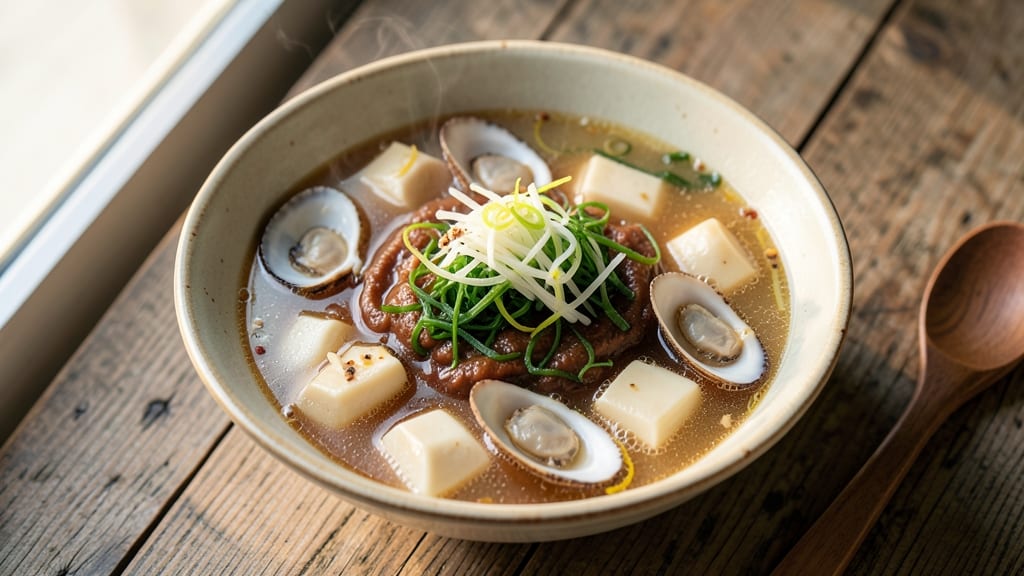
Asari miso soup delivers that perfect balance of silky broth, tender tofu, and umami depth that makes every sip feel like a warm embrace. ✨ The secret lies in the slow dissolution of miso paste—never boiling—and the delicate harmony of ingredients that transform simple pantry staples into a restaurant-worthy bowl. This recipe stays true to tradition while offering flexibility for modern tastes, whether you use fresh asari clams or hearty mushrooms as a substitute.
Traditional Japanese techniques ensure the broth remains clear and flavorful, with dashi simmering just until the kombu infuses its oceanic essence. The tofu, lightly seasoned and poached, absorbs the broth's richness without losing its delicate texture, while wakame adds a satisfying chew and subtle brininess.
What makes this soup truly special is how each component enhances the others—miso's savory depth, dashi's clean umami, and the subtle sweetness of the vegetables working in perfect balance.
By the time you're done, you'll have a bowl that's both comforting and refined—silky broth that coats the spoon, tender tofu that melts in your mouth, and a miso richness that lingers just long enough to satisfy.
The beauty of this recipe is in its simplicity; no fancy techniques required, just patience and attention to detail. Whether you're serving it as a light lunch or a cozy dinner starter, this soup will become a staple in your rotation.
The best part? It reheats beautifully, making it perfect for meal prep. Garnish with a drizzle of chili oil for a modern twist or keep it classic with a sprinkle of green onions. Let's create this bowl of umami harmony together—step by step.
Ingredients for asari miso soup
Umami-packed ingredients that transform simple pantry staples into restaurant-quality asari miso soup.
| Ingredient | Amount | Notes |
|---|---|---|
| White Miso Paste 🧂 | 2 tbsp | High-quality miso for umami depth |
| Dashi Stock 🍵 | 4 cups | Homemade or quality store-bought |
| Silken Tofu 🍲 | 8 oz | Unpressed for delicate texture |
| Dried Asari Clams 🦪 | ½ oz | Or substitute mushrooms for vegetarian |
| Wakame Seaweed 🍃 | ¼ cup | Dried, rehydrated in broth |
| Green Onions 🧅 | 2 whole | Thinly sliced for garnish |
| Kombu Seaweed 🍃 | 1 piece | 4x6-inch sheet for dashi |
| Bonito Flakes 🐟 | 1 tbsp | Optional for extra umami |
| Vegetable Oil 🫒 | 1 tsp | For tofu preparation |
| Salt 🧂 | ½ tsp | Adjust to taste |
| Sesame Oil 🫒 | ½ tsp | For finishing drizzle |
| Chili Oil 🌶️ | 1 tbsp | Optional for modern twist |
| Shiitake Mushrooms 🍄 | 4 whole | Substitute for asari clams |
The miso paste is your flavor foundation—Honten or Marukome brands are my go-to for that authentic depth. If you're using dried asari clams, Japanese specialty stores often carry them, but shiitake mushrooms make a fantastic vegetarian swap. For kombu, look for thick, dark sheets at Asian markets—they infuse the broth with oceanic richness. The wakame should be dried and rehydrated in warm water before adding to the soup. And don't skip the bonito flakes if you can find them—they add that unmistakable umami punch.
No kombu? Dried shiitake stems work in a pinch, though the flavor will be milder. Short on miso? White miso plus a pinch of sugar mimics that delicate balance. The tofu should be silken and unpressed—it dissolves beautifully into the broth. For the mushrooms, shiitake or enoki work best, sliced thin. The green onions can be subbed with regular onions if that's what you've got, but the mild flavor keeps them classic. And if you're feeling adventurous, a splash of rice vinegar brightens the whole bowl.
This soup tastes even better the next day—reheat gently over low heat to preserve that silky texture. Store the broth and tofu separately in the fridge for up to 5 days, then reassemble when ready. The miso paste keeps for 6 months** in the pantry, so buy extra. For meal prep, portion the broth into jars and freeze—just thaw overnight in the fridge before adding the tofu and wakame. Garnish with chili oil right before serving to keep that kick fresh.
Why You'll Love This Recipe
- Five-Ingredient Magic: I swear by this—just miso, dashi, tofu, asari, and wakame. No chopping, no stress, and honestly? That’s all you need for a bowl that tastes like a proper Japanese home-cooked meal.
- Umami Bomb: The dried asari clams? They soak up the dashi and burst with that briny, sweet flavor—like the ocean in a spoonful. And the miso? Rich, deep, and just salty enough to make you crave another sip.
- Lunchbox Hero: Between us, this soup is my go-to for packed lunches. The silken tofu stays intact, the wakame holds its texture, and it reheats like a dream—no sad, watery leftovers here.
- Budget Luxury: A bag of dried asari lasts forever, miso’s cheap in bulk, and dashi stock is one of those ingredients that stretches across meals. I make a big pot on Sundays and sip it all week—no guilt, all flavor.
Step-by-step instructions for asari miso soup
This velvety soup delivers deep umami and delicate textures—let's bring it together perfectly.
🍳 Step 1: Prepare the Dashi Base with Kombu and Bonito
Place the 1 piece kombu seaweed in a clean pot and cover with 4 cups dashi stock. Bring to a gentle simmer over medium-low heat for 5 minutes—you'll see delicate bubbles forming along the kombu edges. This step infuses the broth with oceanic sweetness.
Remove the kombu immediately after simmering. Add 1 tbsp bonito flakes and simmer for another 1 minute, stirring gently. The flakes should dissolve completely, creating a golden, aromatic broth. If using the optional 0.5 oz dried asari clams, add them now and simmer for 3-4 minutes until fully rehydrated. Strain through a fine-mesh sieve to remove any solids—this ensures your soup remains silky smooth.
👨🍳 Step 2: Rehydrate Wakame and Prepare Tofu
While the broth simmers, rinse the 0.25 cup wakame seaweed under cold water to remove any debris. Place it in a small bowl and cover with ½ cup hot dashi stock from your pot. Let it soak for 5 minutes—it should soften and expand to about 1 cup in volume. Drain before adding to the soup to prevent a slimy texture.
Cut the 8 oz silken tofu into ½-inch cubes (no need to drain). Heat 1 tsp vegetable oil in a small nonstick pan over medium heat until shimmering. Add the tofu cubes and cook gently for 2-3 minutes until lightly golden on all sides. This step adds subtle texture contrast to the otherwise silky soup.
🥘 Step 3: Build the Umami Foundation
Return the strained broth to the pot and bring to a gentle simmer over low heat. Add the 2 tbsp white miso paste and stir continuously for 1-2 minutes until fully dissolved. The soup should develop a rich, glossy sheen—this indicates proper miso integration. Taste and adjust seasoning with 0.5 tsp salt if needed, remembering that miso is already quite salty.
Add the rehydrated wakame and 4 whole shiitake mushrooms (trimmed and halved). Simmer for 3-4 minutes until the mushrooms soften slightly. The wakame should be tender but still hold its shape. Keep the heat low to prevent the broth from boiling vigorously, which could break the silken tofu later.
🔥 Step 4: Finish with Tofu and Garnishes
Gently add the cooked tofu cubes to the pot and simmer for just 1 minute—longer cooking will make them rubbery. The tofu should float near the surface, maintaining its delicate texture. Remove from heat immediately to preserve its silky quality.
Divide the soup among 4 bowls. Drizzle each serving with 0.5 tsp sesame oil and 1 tbsp chili oil (if using). Garnish with thinly sliced 2 whole green onions for freshness. Serve immediately while the tofu is still warm and the broth maintains its velvety consistency.
Pro Tips For Making Asari Miso Soup
- SOAK ASARI FIRST: Dried asari clams need 20 minutes in warm water before using—don’t skip this or they’ll stay tough. I learned this the hard way when my first batch tasted like chewing cardboard.
- STIR MISO LAST: Heat your dashi first, then whisk in miso paste off the heat—scorching it turns the soup bitter. Add it to the pot, stir once, and let it melt into the broth.
- CUT TOFU SMALL: Dice silken tofu into ½-inch cubes so it cooks evenly and absorbs flavor. Whole blocks stay bland and sink to the bottom like a sad, neglected guest.
- USE CHEAP WAKAME: Skip the fancy dried wakame—it’s overpriced and often pre-soaked. Regular dried sheets rehydrate perfectly in 5 minutes and taste cleaner. (Your wallet will thank you too.)
Flavor customization for this asari miso soup
Miso Depth Variations
Swap white miso for red miso to deepen the umami and add a subtle sweetness—perfect for winter bowls. Use a 1:1 ratio but reduce salt by 0.25 tsp since red miso is saltier.
For a lighter touch, blend 1 tbsp white miso with 1 tsp honey or maple syrup to balance the savory notes with natural sweetness. 💛
Protein Swaps
Replace silken tofu with firm tofu for a heartier texture—press and cube it, then pan-fry until golden. For seafood lovers, add sliced scallops or shrimp in the last 2 minutes of cooking. Vegetarians can use chickpeas or edamame for extra protein, simmering them for 3-4 minutes until heated through.
Vegetable Boosts
Add shredded daikon radish for crispness and a mild peppery bite—it softens slightly but retains texture. Thinly sliced carrots or zucchini add sweetness, while spinach wilts beautifully in the last 1 minute of cooking.
For a creamy twist, stir in ½ cup coconut milk after removing from heat—it blends seamlessly with the broth.
Modern Spice Kicks
Drizzle with sriracha-infused sesame oil (mix 1 tbsp sriracha with 1 tsp sesame oil) for a smoky heat. A pinch of ground ginger or fresh grated ginger adds warmth, while toasted sesame seeds sprinkled on top provide nutty crunch.
For a citrusy finish, squeeze ½ lime over each bowl before serving.
Seasonal Adaptations
In summer, add cucumber ribbons and mint leaves for a refreshing contrast. For fall, incorporate roasted butternut squash cubes and sage leaves for earthy depth.
Winter calls for roasted garlic and crispy fried shallots—toss them into the broth in the final 2 minutes of simmering for maximum flavor impact.
Dietary Flexibility
Make it gluten-free by ensuring your miso and dashi are certified gluten-free (some traditional miso contains barley). For low-sodium, use unsalted dashi stock and reduce added salt to ¼ tsp.
Vegans can skip bonito flakes and use shiitake stems for dashi instead—simmer 1 cup dried shiitake stems in 4 cups water for 30 minutes to create a rich base.
Nutrition facts
Frequently asked questions
Can I make asari miso soup without kombu?
Use 1 cup dried shiitake stems instead—simmer them in 4 cups water for 30 minutes to create a rich umami base. For extra depth, add 1 tbsp soy sauce to the broth. The flavor will be slightly different but still delicious and vegetarian-friendly.
Why does my miso soup taste bitter?
Bitter flavors usually come from overcooking the miso paste or using too much. Always dissolve miso in the broth over low heat and never let it boil—this preserves its sweetness. If it's too bitter, balance it with ½ tsp sugar or 1 tsp mirin stirred in at the end.
How long can I store leftover asari miso soup?
Store the broth and tofu separately in airtight containers for up to 5 days in the fridge. Reheat gently over low heat, adding a splash of water if the broth thickens. For longer storage, freeze the broth alone for up to 3 months—thaw overnight before adding fresh tofu and wakame.
What's the best substitute for dried asari clams?
Fresh or dried shiitake mushrooms work perfectly—they add earthy umami without overpowering. For a seafood taste, use fresh scallops or shrimp (add in the last 2 minutes of cooking). If you're vegetarian, dried shiitake stems in the dashi also help replicate that briny depth.
Can I make this soup in a slow cooker?
Yes! Combine all ingredients except tofu and wakame in the slow cooker on low heat for 2 hours. Add the tofu and wakame in the last 30 minutes to prevent them from turning mushy. The slow cooker's gentle heat helps dissolve the miso evenly without boiling it.