
Soups & Stews
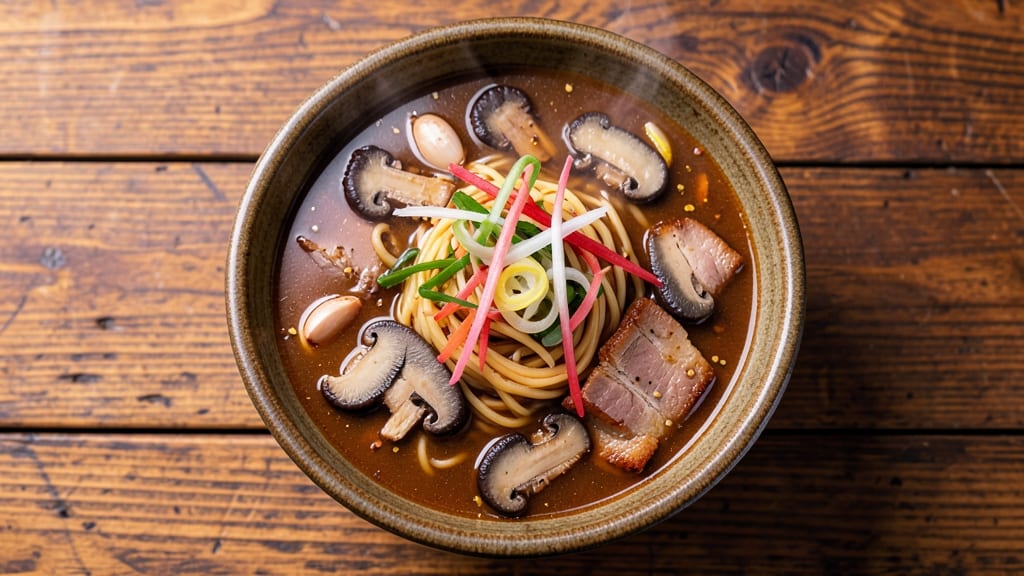
This Asian ramen noodle soup recipe delivers restaurant-quality umami depth with a silky broth that clings to every strand of noodle. The foundation begins with a rich tonkotsu or miso base, simmered low and slow to extract maximum flavor from pork bones, mushrooms, and aromatics.
What sets this apart is the balance—bold enough for ramen purists but adaptable for modern twists like spicy miso or vegan versions with shiitake broth.
The secret lies in technique: high-heat searing of pork bones to develop deep caramelization, followed by a 12-hour simmer that transforms tough cuts into velvety richness.
Fresh ramen noodles cook in just 2-3 minutes to maintain their signature chew, while toppings like chashu pork, soft-boiled eggs, and crisp nori add layers of texture and flavor. This isn't just soup—it's a full culinary experience in a bowl.
What you'll achieve is a bold, aromatic broth with a perfect balance of saltiness, sweetness, and umami, paired with noodles that are tender yet resilient. The broth's depth comes from careful layering—first building the base with pork, then enhancing it with miso or soy for complexity.
Each spoonful delivers that satisfying ramen moment, where every ingredient plays its part.
Whether you're recreating a classic Japanese shoyu ramen or experimenting with a Korean-inspired spicy version, this recipe serves as your foundation. The beauty lies in its flexibility—swap ingredients for dietary needs, adjust spice levels, or customize toppings to suit your taste.
Here's how to craft the perfect bowl of Asian ramen at home.
Ingredients for asian ramen noodle soup
Pork bones, mushrooms, and aromatics form the umami-rich foundation of this restaurant-quality ramen.
| Ingredient | Amount | Notes |
|---|---|---|
| Pork Bones 🍖 | 2 lb | Knuckle or trotter bones preferred |
| Shiitake Mushrooms 🍄 | 8 oz | Fresh or dried, stems removed |
| Garlic Cloves 🧄 | 10 cloves | Peeled and smashed |
| Fresh Ginger Root 🌿 | 2 tbsp | Finely grated, organic preferred |
| Green Onions 🧅 | 2 whole | White and green parts separated |
| Ramen Noodles 🍜 | 2 packages | Fresh or dried, 8 oz each |
| Miso Paste 🍶 | ½ cup | Red or white, room temperature |
| Soy Sauce 🥫 | ¼ cup | Kosher salt preferred |
| Sesame Oil 🫒 | 1 tbsp | Toasted, for aroma |
| Chicken Stock 💧 | 4 cups | Homemade or quality store-bought |
| Chashu Pork 🥓 | ½ lb | Pre-sliced, optional topping |
| Nori Sheets 🍣 | 4 pieces | For garnish, toasted |
| Soft-Boiled Eggs 🥚 | 2 whole | 6-minute cook, optional |
| Sesame Seeds 🌾 | 1 tbsp | Toasted, for garnish |
| White Pepper 🌶️ | ½ tsp | Freshly ground, optional |
The pork bones are non-negotiable for authentic depth. Look for knuckle or trotter bones at specialty butchers—they yield the most marrow and gelatin. Costco or Whole Foods often carry them pre-packaged for ramen making. Fresh shiitake mushrooms amplify umami, but dried shiitake rehydrated in the broth works beautifully too. The garlic and ginger should be organic when possible—their freshness directly impacts the broth's complexity. For the miso, Miso Master or Hodo brands deliver consistent quality, and always use room-temperature paste to avoid clumping.
No pork bones? Substitute chicken bones or a high-quality vegetable broth, but expect less richness. Fresh ginger too pungent? Use 1 tbsp powdered ginger at half the amount. The ramen noodles can be fresh or dried—Nongshim or Sapporo Ichiban are top-tier choices. For a spicy twist, add 1 tbsp gochujang or sriracha to the broth. The sesame oil should be toasted—Kadoya or La Choy are reliable brands. If you're making a vegan version, replace pork bones with shiitake stems or kombu for umami depth.
Broth freezes beautifully—portion into 1-cup servings for quick reheating. Store noodles separately in an airtight container for up to 1 week. Toppings like chashu pork and nori keep for 5 days in the fridge, while soft-boiled eggs should be cooked fresh. The sesame seeds toast in 2 minutes in a dry pan—keep them nearby for garnishing. This recipe scales effortlessly for 6-8 servings—just double the broth base and adjust noodles proportionally.
Why You'll Love This Recipe
- Pork Bone Magic: I swear by those simmered pork bones—no fancy prep, just toss them in cold water and let them work their magic. By the time the mushrooms and ginger hit the pot, you’ve got a broth so rich it’ll make your kitchen smell like a Tokyo ramen shop.
- Umami Bomb: That combo of shiitake mushrooms and pork bones? It’s like flavor overload in the best way. The mushrooms add this deep, earthy punch, while the garlic and ginger hit just right—no weird aftertaste, just pure, addictive goodness.
- Leftovers = Gold: This soup actually tastes better the next day. I make a big batch on Sundays, and by Wednesday, it’s even more flavorful—perfect for lazy nights or when you need a quick, hearty lunch. (Yes, even on a Tuesday night.)
- Budget-Friendly Feast: Pork bones and mushrooms stretch this recipe into a full meal without breaking the bank. Honestly, it’s one of those dishes where you’ll end up with seconds, and the leftovers feed you for days—no sad, wilted takeout leftovers here.
Step-by-step instructions for Asian ramen noodle soup
Transform simple ingredients into a rich, umami-packed ramen with layers of depth and texture.
Render Pork Bones for Deep Flavor
Preheat your oven to 450°F. Place the 2 lb pork bones on a baking sheet and roast for 20 minutes until they develop a deep golden brown crust. This caramelization forms the foundation for complex flavors in your broth.
Transfer the bones to a large stockpot and cover with 4 cups chicken stock. Bring to a boil over high heat, then reduce to a simmer. Skim off any foam that rises to the surface during the first 10 minutes—this ensures a clear, clean broth. Let the bones simmer uncovered for 30 minutes to extract maximum collagen and gelatin.
Build the Umami Base with Mushrooms and Aromatics
While the bones simmer, heat 1 tablespoon sesame oil in a separate large pot over medium heat. Add the 8 oz shiitake mushrooms (sliced if fresh, rehydrated if dried) and cook for 5-6 minutes until they release their moisture and develop a rich, caramelized color.
Add the 10 cloves garlic cloves and 2 tablespoons fresh ginger root (finely grated), cooking for another 1-2 minutes until fragrant but not browned. This aromatic trio forms the flavor backbone of your soup—don't skip this step. Remove the mushrooms and aromatics with a slotted spoon and set aside for later use.
Develop the Broth with Miso and Soy
Return the pork bones to the simmering stockpot. Add the 0.5 cup miso paste and 0.25 cup soy sauce, stirring gently to dissolve. The miso will temporarily cloud the broth, but this is normal—it's working its umami magic. Simmer uncovered for 45-60 minutes, skimming any additional foam that rises.
After 45 minutes, add the reserved mushrooms and aromatics back to the pot. The prolonged simmer will infuse their flavors deep into the broth. Taste and adjust seasoning with the 0.5 teaspoon white pepper—this subtle spice enhances the umami without overpowering. Strain the broth through a fine-mesh sieve into a clean pot, pressing gently on the solids to extract every last drop of flavor.
Assemble and Finish the Soup
Bring the strained broth back to a gentle simmer. Add the 2 packages ramen noodles and cook according to package instructions (typically 3-4 minutes for fresh noodles, 4-5 minutes for dried) until al dente. The noodles should be tender but still hold some bite.
Divide the cooked noodles among four deep bowls. Ladle the hot broth over the noodles, reserving some to cover the 0.5 lb chashu pork and 2 soft-boiled eggs separately. The chashu should be sliced into bite-sized pieces and the eggs should have runny yolks—this is traditional for ramen.
Garnish and Serve Immediately
Arrange the chashu pork and soft-boiled eggs on top of each bowl of noodles. Drizzle with any reserved broth from the chashu and eggs. Garnish with 4 pieces nori sheets (lightly toasted), 2 whole green onions (white and green parts separated), and 1 tablespoon sesame seeds for texture and visual appeal.
Serve immediately with chopsticks and a small bowl of extra broth on the side. The contrast of silky noodles, rich broth, tender pork, and creamy egg yolk creates an irresistible balance of textures and flavors. Each spoonful should deliver layers of umami, savory depth, and subtle spice—this is the essence of authentic ramen.
Pro Tips For Making Asian Ramen Noodle Soup
- BLISTER THE BONES FIRST: I learned this the hard way—skipping the charring step means your broth stays pale and watery. Sear pork bones in a dry pot over medium-high heat until they blacken in spots (about 5-7 minutes per side). This unlocks deeper flavor and caramelized richness that no amount of simmering can replace.
- SLICE GINGER THINLY: Thick ginger chunks just sit at the bottom like decorative rocks. Use a mandoline or sharp knife to slice it paper-thin (1-2mm), then toast the slices in the pot for 30 seconds before adding liquid. This releases aroma and prevents that "raw ginger" aftertaste that ruins the broth.
- STRAIN TWICE, SIMMER LONGER: After your first strain, don’t toss the solids—return them to the pot with fresh water and simmer another 20 minutes. The second render pulls out more collagen and flavor, turning your broth from "good" to "restaurant-quality." (Yes, it’s extra work, but your noodles will taste like you spent all day.)
- SAVE THE MUSHROOM SOAK: Don’t drain those shiitake mushrooms after soaking—use the liquid! It’s packed with umami, and adding it to your broth (after straining) gives that subtle depth without extra salt. Pro move: Toss the rehydrated mushrooms in a little sesame oil and garlic before serving as a garnish.
Troubleshooting this dish
Broth Too Thin?
If your broth lacks body, simmer the pork bones longer—aim for 3-4 hours uncovered. The collagen breaks down into gelatin, thickening the liquid naturally. For an instant fix, whisk 1 tbsp cornstarch with 2 tbsp cold water and stir into the broth at the end.
Simmer for 1-2 minutes until slightly thickened. 💡
Noodles Overcooked?
Fresh ramen noodles should cook in 2-3 minutes—set a timer and test one strand early. If they're mushy, reduce cooking time by 30 seconds next time. For dried noodles, start with 1 minute less than package instructions, then add more broth to finish.
Always reserve 1 cup broth before adding noodles to prevent overcooking.
Broth Too Salty?
Add 1 cup water or ice cubes to dilute the flavor gradually. For a more natural fix, stir in 2 tbsp neutral rice wine or 1 tbsp mirin—these add sweetness that balances saltiness.
Avoid adding fresh broth; it'll just intensify the salt. Taste as you go—small adjustments work best. ⚖️
Miso Not Dissolving?
Warm the miso paste first by mixing it with 2 tbsp warm broth in a small bowl until smooth. Then whisk it into the simmering broth. Never add cold miso directly—it can create clumps.
If clumps form during simmering, strain the broth immediately through a fine-mesh sieve. For stubborn clumps, press them through with a wooden spoon.
Eggs Too Hard?
For perfect 6-minute eggs, use room-temperature eggs and a timer. Start with 5 minutes in simmering water, then transfer to an ice bath for 1 minute to stop cooking. The yolk should be runny but not liquid.
If eggs are overcooked, try 4 minutes simmering + 30 seconds ice bath next time. Always peel eggs just before serving to maintain texture. 🥚
Broth Too Cloudy?
Cloudiness usually means protein particles or miso residue. Strain the broth through a fine-mesh sieve or cheesecloth for a crystal-clear result. For extra clarity, chill the broth overnight—fat will solidify on top and can be skimmed off.
If using dried shiitake, soak them in cold water first to remove sediment before adding to the broth. 🌊
Nutrition facts
Frequently asked questions
What's the difference between Asian ramen and Japanese ramen?
While Japanese ramen focuses on specific regional styles (shoyu, miso, tonkotsu, or shio), Asian ramen encompasses broader variations across East Asia. Japanese ramen is more standardized, but Asian ramen can include Korean spicy ramen, Chinese-style wheat noodle soups, or even Thai-inspired coconut broth ramen. This recipe blends Japanese techniques with adaptable Asian ingredients for maximum flexibility.
Can I make this ramen vegetarian or vegan?
For vegan ramen, replace pork bones with shiitake stems or kombu for umami depth. Use vegetable broth instead of chicken stock, and swap chashu pork for marinated tofu or mushrooms. The miso and soy sauce provide plenty of flavor—just ensure your miso is vegan (some contain fish). Fresh ramen noodles are typically vegan, but always check the package.
How do I store leftover ramen?
Store broth separately from noodles to prevent sogginess. Keep broth in an airtight container in the fridge for up to 5 days or freeze for 3 months. Reheat broth gently before assembling with fresh noodles. For leftovers, store noodles in the fridge for 2 days max—they're best eaten fresh. Toppings like chashu and eggs should be cooked fresh when reheating.
What's the secret to making my broth taste richer?
Three keys: longer simmering (aim for 3-4 hours for maximum collagen extraction), high-heat searing of pork bones before simmering, and layered seasoning with miso, soy, and aromatics. The secret weapon is patience—don't rush the process. For extra depth, add a splash of fish sauce or oyster sauce at the end (just 1 tsp).
Can I use dried ramen noodles instead of fresh?
Yes, but adjust cooking time! Dried noodles need 4-5 minutes in simmering broth (vs. 2-3 minutes for fresh). The texture will be slightly firmer, but still delicious. For best results, use high-quality dried noodles like Nongshim or Maruchan Premium. Add them to the broth just before serving to prevent overcooking. Fresh noodles have a superior texture, but dried works in a pinch!