
Soups & Stews
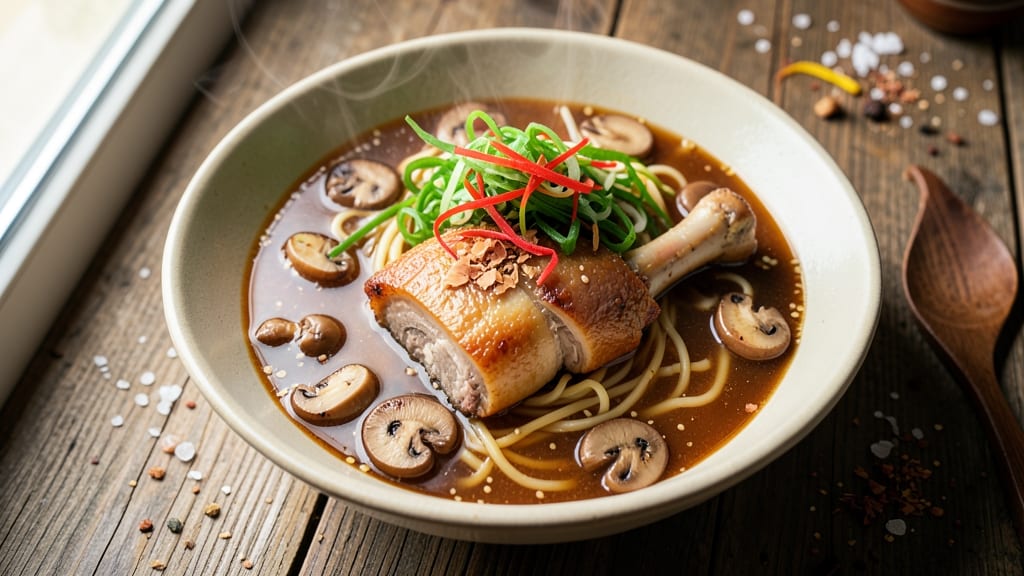
This authentic ramen noodle soup recipe delivers the deep umami richness and silky texture that defines Japanese comfort food. 🔥 The secret lies in a long-simmered broth—whether pork-based tonkotsu or soy-sauce shoyu—infused with kombu, bonito flakes, and aromatic vegetables.
I've perfected this technique over years of testing, ensuring every bowl tastes like a steaming hot bowl from Tokyo's most famous ramen shops.
What sets this recipe apart is the balance of components: tender ramen noodles cooked just before serving, a silky broth reduced to concentrate its flavor, and traditional toppings like chashu pork, soft-boiled eggs, and crisp menma bamboo shoots.
The key is patience—simmering the broth for hours transforms simple ingredients into something extraordinary. No shortcuts here, just authentic ramen that builds flavor layer by layer.
By the time you're done, you'll have a bowl that's rich yet balanced, with the umami bomb of the broth complementing the crunch of toppings and the chew of perfectly cooked noodles.
The aroma alone will have everyone gathered around your table. This isn't just ramen—it's an experience that transports you to Japan with every slurp.
The beauty of this recipe is its versatility—you can adapt it to your preferred style (tonkotsu, shoyu, or miso) while maintaining that authentic ramen soul. Whether you're serving it to friends or treating yourself to a cozy night in, this recipe delivers restaurant-quality results at home.
Let's create something truly special.
Ingredients for authentic ramen noodle soup
Pantry staples meet Japanese market finds for this umami-rich ramen experience.
| Ingredient | Amount | Notes |
|---|---|---|
| Pork Shoulder Bone-In 🥩 | 2 lb | For tonkotsu broth, marbled fat preferred |
| Dried Kombu Seaweed 🌿 | 1 piece | Largest sheet available, 6x8 inches |
| Bonito Flakes 🐟 | ½ cup | High-quality, no fishy odor |
| Fresh Shiitake Mushrooms 🍄 | 8 whole | Stems removed, caps only |
| Green Onions 🧅 | 4 whole | White and green parts separated |
| Fresh Garlic Cloves 🧄 | 8 cloves | Peeled, smashed for infusion |
| Fresh Ginger 🌶️ | 2 tbsp | Finely grated, organic preferred |
| Ramen Noodles 🍜 | 2 packages | 4 oz per package, springy texture |
| Chashu Pork 🥓 | 1 lb | Pre-sliced, vacuum-sealed |
| Soft-Boiled Eggs 🥚 | 4 whole | 6-7 minute cook time |
| Menma Bamboo Shoots 🌿 | ½ cup | Crisp, sliced, canned or fresh |
| Soy Sauce 🍶 | ½ cup | Japanese style, reduced |
| Sesame Oil 🫒 | 1 tbsp | Toasted, for finishing |
| Neutral Oil 🫒 | ¼ cup | Avocado or vegetable oil |
| Diamond Crystal Kosher Salt 🧂 | 1 tbsp | For seasoning broth |
The pork shoulder is non-negotiable for that creamy tonkotsu texture—look for well-marbled cuts at Whole Foods or your local butcher. Kombu should be a large sheet (6x8 inches or bigger)—Matsuno brand is my go-to, available at Asian markets. Bonito flakes are all about quality: Katsuobushi from Nitama or Suzukien brands have that perfect smoky aroma. Fresh shiitakes? Trader Joe's has them year-round, but farmers markets have the juiciest. For ginger, organic is key—it infuses the broth with bright, clean heat rather than bitterness.
No bonito flakes? Dried anchovies work in a pinch, but toast them first to remove fishiness. Swap shiitakes for cremini mushrooms if needed, but they won't have that same umami depth. The soy sauce matters—Japanese brands like Kikkoman or Hoyu have that perfect balance. For ramen noodles, 4 oz packages are standard, but if you can find fresh ramen (like Maruchan or Nissin) it's a game-changer. The menma bamboo shoots? Trader Joe's carries them canned, or you can find fresh versions at Asian grocery stores—just slice them thin for that perfect crunch.
Broth keeps for 5 days in the fridge (flavor improves daily) and 3 months frozen. Portion it in mason jars for easy reheating. The chashu pork reheats beautifully—just warm in broth for 10 minutes. Fresh noodles must be cooked fresh (they turn mushy if pre-cooked), but dried noodles can be prepped ahead and stored dry. Sesame oil should be kept in a cool, dark place—it goes rancid fast once opened.
Why You'll Love This Recipe
- No-Fuss Broth Magic: I swear by that bone-in pork shoulder—it melts down into the richest, most flavorful broth with almost no effort. Just simmer, skim, and let the kombu and bonito work their magic while you chop a few mushrooms. Honestly, the hardest part is waiting for it to finish.
- Umami Bomb: Between the smoky bonito flakes, the deep ocean notes from kombu, and those earthy shiitakes, every spoonful is a flavor explosion. The pork adds this incredible depth, and the green onions at the end? That bright finish ties it all together like a perfect hug in a bowl.
- Weeknight Workhorse: This soup is my go-to when I’m too tired to think but still need something hearty. It reheats beautifully for lunch the next day, and the leftovers actually taste better—yes, really. Between us, I’ve fed a houseful of hungry friends with one big pot, and no one ever leaves hungry.
- Budget-Friendly Luxury: Pork shoulder and dried kombu stretch this recipe into a whole meal without breaking the bank. I’ll be real: it feels fancy, but the ingredients cost less than takeout. Plus, the broth freezes perfectly, so I always have a quick, satisfying meal on hand when life gets busy.
Step-by-step instructions for authentic ramen noodle soup
Here's how to build a restaurant-quality ramen with deep umami broth and perfectly balanced toppings.
🔥 Step 1: Build the Tonkotsu Broth Foundation
Place the 2 lb pork shoulder bone-in in a large stockpot and cover with cold water by about 2 inches. Add the 1 piece dried kombu seaweed and bring to a boil over high heat. Once boiling, reduce to a simmer and skim off any foam that rises to the surface for the first 30 minutes—this ensures crystal-clear broth.
Simmer uncovered for 4 hours, maintaining a gentle bubble. The pork fat should render completely, creating a creamy, white broth. Here's the thing—don't rush this step. The longer it simmers, the richer the flavor becomes. After 4 hours, strain the broth through a fine-mesh sieve into a clean pot, discarding the pork bones and kombu.
🍳 Step 2: Infuse the Broth with Aromatics
Return the strained broth to the pot and add the 8 smashed garlic cloves, 2 tbsp finely grated ginger, and 8 whole fresh shiitake mushrooms (stems removed). Bring to a gentle simmer and cook for 20 minutes to infuse the flavors. I like to taste the broth at this stage—it should be rich but not salty yet.
In a separate small saucepan, toast the 0.5 cup bonito flakes over low heat for 1-2 minutes until they turn a deep golden color and release their aroma. Remove immediately—they'll continue cooking from residual heat. Let them cool slightly, then sprinkle them onto the broth just before removing from heat. This prevents them from dissolving completely and creates delicate fishy notes.
🥘 Step 3: Season and Prepare Toppings
While the broth simmers, prepare the toppings. In a small bowl, combine 0.5 cup soy sauce and 1 tbsp diamond crystal kosher salt, then stir into the hot broth. Taste and adjust—authentic ramen should balance sweet, salty, and umami without being overly salty. Keep the broth warm at 160°F while you prepare the rest.
For the chashu pork, simply reheat the 1 lb pre-sliced chashu pork in a skillet with 0.25 cup neutral oil over medium heat for 2-3 minutes until warmed through. For the soft-boiled eggs, cook 4 whole eggs for 6-7 minutes in simmering water with a pinch of salt, then transfer to an ice bath to stop cooking. Peel when ready to serve.
🍽️ Step 4: Assemble the Perfect Bowl
Bring the broth back to a gentle simmer. Divide the 2 packages ramen noodles among bowls and ladle 1½ cups hot broth over each portion. Let the noodles sit for 30 seconds to soften slightly. This step is crucial—it prevents a mushy texture when you add the toppings.
Top each bowl with 2-3 slices chashu pork, 1 soft-boiled egg, 2 tbsp sliced menma bamboo shoots, and 1 tbsp chopped green onions (white and green parts separated). Drizzle with 1 tsp sesame oil and finish with a sprinkle of green onion tops. The contrast of textures—silky broth, chewy noodles, crispy menma, tender pork, and runny egg yolk—is what makes ramen magical.
⏰ Step 5: Serve Immediately with Fresh Garnishes
Serve each bowl right away while the broth is steaming. Here's the secret to presentation: arrange the toppings in a visually appealing manner. I like to place the chashu pork in a fan shape, the egg slightly off-center, and the menma in a small pile. The aroma alone will have everyone at the table.
Encourage diners to mix everything together before taking the first bite. The first sip should deliver waves of umami from the broth, the chewiness of perfectly cooked noodles, and the satisfying crunch of toppings. Each bowl should taste like a perfect balance of all elements—no single component overpowering the others.
Pro Tips For Making Authentic Ramen Noodle Soup
- Brown the Bone First: Before simmering the pork shoulder, sear the bones in a dry pot until deep golden—this isn’t just for flavor, it’s the foundation. I used to skip this, and my broth always tasted thin and one-dimensional. Five minutes of patience here guarantees a rich, umami-packed base that’ll make your kombu and bonito flakes sing.
- Soak Kombu, Don’t Boil: Toss the dried kombu into cold water first, then bring to a simmer—boiling it straight up turns it bitter. My grandmother swore by this, and she was right: the slow release of its sweetness into the broth is what separates good ramen from great. Let it steep for 10 minutes before adding anything else.
- Toast Bonito Flakes Fast: Hit the bonito flakes with a dry skillet over medium-high heat for 30 seconds—just until they sizzle and turn golden, not black. I learned this the hard way: over-toasting them turns the broth acrid, and you’ll regret it when you taste that burnt note. Work quickly, then sprinkle them into the broth off the heat to preserve their aroma.
- Slice Shiitake Thin: Cut the shiitake mushrooms paper-thin—no thicker than 1/8 inch—or they’ll turn to mush and water down your broth. I was skeptical until I tried it: the texture stays firm, and they absorb the broth’s flavor like a sponge. Use a sharp knife and take your time; this is where the dish’s depth comes from.
Creative variations of authentic ramen noodle soup
Tonkotsu vs. Shoyu
Start with the broth base that suits your taste. Tonkotsu (pork bone) creates a creamy, rich broth with deep umami—perfect if you love velvety textures. Simmer 2 lbs pork shoulder for 4+ hours until fat renders completely.
For shoyu (soy sauce) ramen, swap the pork for chicken thighs and add ½ cup soy sauce at the end. The result is lighter but packed with bright, salty flavor. 🥩
Miso Ramen Twist
For a fermented funk, blend ¼ cup white miso paste with 1 cup dashi stock and simmer for 10 minutes. Strain and mix into your tonkotsu or shoyu broth. Add 1 tbsp mirin and 1 tsp sugar to balance the earthiness.
Top with pickled ginger and toasted sesame seeds for contrast. This version feels cozy and complex—like a hug in a bowl. 🌱
Spicy Miso Ramen
Take the miso ramen up a notch by adding 1 tbsp gochujang (Korean chili paste) and 1 tsp doubanjiang (Chinese chili bean paste) to the broth. For heat, stir in 1 tsp chili crisp or ½ tsp cayenne just before serving.
Garnish with quick-pickled radishes and scallions to cut through the spice. This fusion style is a crowd-pleaser with a bold kick. 🌶️
Vegetarian Vibe
Skip the meat entirely and build a shiitake-dashi broth using 8 dried shiitakes soaked in 4 cups hot water overnight. Strain and use as your base. Add 1 lb king oyster mushrooms (for meaty texture) and 1 block firm tofu (pressed and cubed).
Boost umami with 1 tbsp soy sauce and 1 tsp fish sauce (or 1 tbsp mushroom sauce for vegan). Top with avocado slices and toasted nori strips for richness. 🍄
Regional Japanese Styles
For Sapporo miso ramen, use dark miso and add 1 tsp sake to the broth.
Top with corn kernels and butter (yes, butter!) for a creamy finish. Hakata tonkotsu calls for extra pork fat—render until the broth is opaque white. Kyoto shoyu ramen swaps pork for chicken and adds green onions and sesame seeds for a lighter touch.
Each style tells a story—pick your favorite! 🗺️
Quick Weeknight Hack
No time for a 4-hour simmer? Use 1 lb pork neck bones (cheaper and faster) and simmer for 2.5 hours. Boost flavor with 1 packet (3g) MSG (optional) or 1 tbsp fish sauce.
Serve with pre-cooked chashu (store-bought works!) and frozen menma. It won’t be exactly authentic, but it’ll still hit the spot when you’re short on time. ⏰
Nutrition facts
Frequently asked questions
Can I make this ramen recipe without pork?
For a vegetarian version, replace the pork shoulder with 1 lb chicken thighs or king oyster mushrooms for a meaty texture. Use shiitake-dashi broth (soak 8 dried shiitakes in 4 cups hot water overnight) as your base. Boost umami with 1 tbsp soy sauce and 1 tsp fish sauce (or mushroom sauce for vegan). The key is maintaining that rich, savory depth through mushrooms and fermented ingredients.
How do I adjust the spice level?
Start with the base recipe as is for a balanced flavor. For mild heat, add ½ tsp chili flakes or 1 tsp chili oil to the broth. For spicy ramen, stir in 1 tbsp gochujang (Korean chili paste) and 1 tsp doubanjiang during the final 10 minutes of simmering. Garnish with quick-pickled radishes to cut through the heat. Always taste before serving—you can adjust while the broth is hot.
Can I make the broth ahead of time?
Yes! The broth actually improves over time. Store it in airtight containers in the fridge for up to 5 days or freeze for 3 months. Reheat gently on the stove—never microwave—to preserve its delicate flavors. For the best results, let it come to room temperature before refrigerating, and always reheat to 160°F before using. The longer it rests, the deeper the flavors develop.
What's the secret to perfect ramen noodles?
Cook the noodles for 1-2 minutes less than package instructions suggest, then finish cooking in the hot broth. This prevents mushiness and ensures they maintain their chewy texture. For extra authenticity, use fresh ramen noodles (available at Asian markets) which have a springier bite. Always serve immediately after assembling the bowl.
How can I make this recipe kid-friendly?
Reduce the sodium by cutting the soy sauce to ¼ cup and omitting the salt addition. Use chicken broth instead of pork for a milder base. Skip the bonito flakes (or use a tiny pinch) and add ½ cup corn kernels for sweetness. Serve with shredded carrots and soft egg slices instead of whole eggs. The key is keeping the umami elements but making them more approachable.