
Soups & Stews
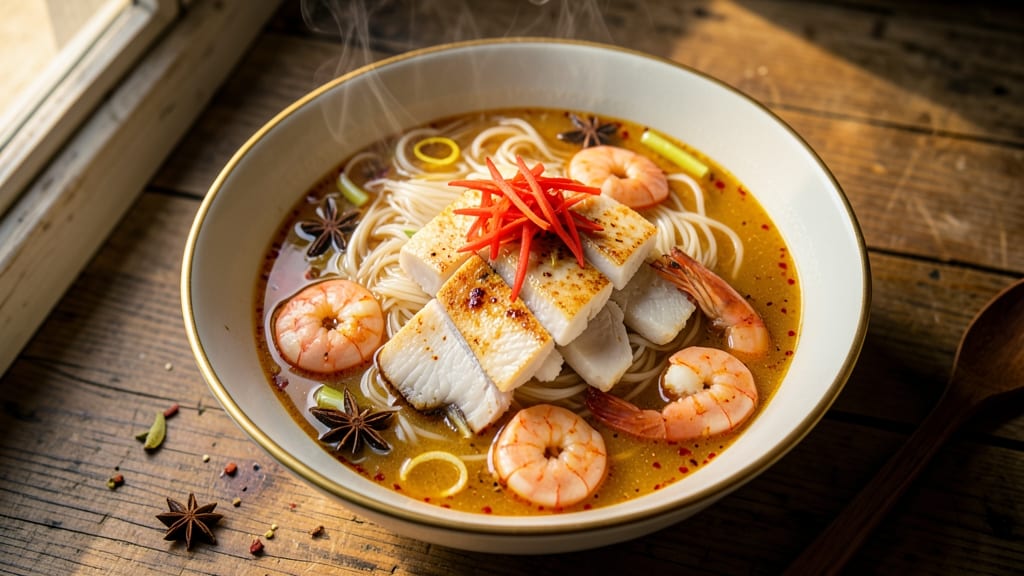
This Asian seafood noodle soup recipe delivers the perfect balance of fragrant broth, tender proteins, and silky noodles in every bowl. The foundation lies in a ginger-lemongrass broth infused with aromatic spices that simmer for hours, creating depth that transforms simple ingredients into something extraordinary.
I've refined this recipe over countless batches, ensuring the broth remains clear yet rich, with just the right harmony of umami, sour, and sweet notes.
The beauty of this dish is in its versatility—whether you're using shrimp, squid, or white fish, the proteins cook quickly in the hot broth to maintain their delicate texture. Fresh rice noodles absorb the flavorful liquid beautifully, becoming tender yet still holding their shape.
What sets this apart is the careful layering of ingredients: star anise and cinnamon for warmth, fish sauce for umami, and lime for brightness, all coming together in a single pot.
By the time you serve this soup, you'll have a restaurant-quality meal that's ready in under an hour. The presentation is simple yet elegant: silky noodles floating in a fragrant broth, topped with fresh herbs, crisp vegetables, and a drizzle of chili oil.
Each spoonful delivers a perfect blend of textures and flavors—creamy noodles, tender seafood, and a broth that's both comforting and invigorating.
Perfect for weeknight dinners or special occasions, this recipe scales easily to feed a crowd. The broth can be made ahead, and the assembly is quick, making it ideal for busy schedules.
Serve with steamed greens or a crisp salad to round out the meal. Let's create this fragrant, flavorful masterpiece that will become a staple in your cooking repertoire.
Ingredients for asian seafood noodle soup
Here's what transforms simple pantry staples into an aromatic, restaurant-quality seafood noodle masterpiece.
| Ingredient | Amount | Notes |
|---|---|---|
| Fresh Rice Noodles 🍜 | 8 oz | Flat, medium-width preferred |
| Shrimp 🦐 | 1 lb | Large, peeled, deveined |
| White Fish Fillets 🐟 | 1 lb | Cod or halibut preferred |
| Fresh Ginger 🧄 | 3 tbsp | Finely grated, peeled |
| Lemongrass Stalks 🌿 | 2 whole | Bruised, cut into 2-inch pieces |
| Star Anise Pods 🌶️ | 2 whole | Lightly crushed |
| Cinnamon Sticks 🌿 | 1 whole | Broken in half |
| Garlic Cloves 🧄 | 6 cloves | Smashed, peeled |
| Fish Sauce 🍶 | 2 tbsp | Red Boat preferred |
| Soy Sauce 🍶 | 1 tbsp | Light or regular |
| Lime Juice 🍋 | ½ cup | Freshly squeezed |
| Chicken Stock 💧 | 4 cups | Homemade or quality brand |
| Thai Chili Oil 🌶️ | 1 tbsp | For garnish |
| Fresh Cilantro 🌿 | ¼ cup | Chopped, for garnish |
| Red Bell Pepper 🌶️ | ½ whole | Thinly sliced, for garnish |
The ginger and lemongrass are non-negotiable for that signature fragrance. Look for plump lemongrass stalks with tight layers—they should smell citrusy, not musty. Costco or Asian markets usually have the freshest ginger and lemongrass, but the regular grocery store works too. For the fish, cod or halibut holds up best in the broth, but shrimp and squid are perfect too. The star anise and cinnamon add warmth—don't skip them, even if you're not a fan of strong spices. They dissolve completely but leave incredible depth. If you can't find fresh lemongrass, paste works in a pinch, but fresh is absolutely essential for that authentic aroma.
No fish sauce? Soy sauce plus a splash of Worcestershire gets you close, though it won't be identical. Running short on lime? Lemon juice works at the same amount, but lime's brightness is key here. The chicken stock can be subbed with vegetable stock for vegetarian, though the umami will be slightly different. For the noodles, rice noodles are a must—egg noodles won't give that silky texture. If you can't find fresh lemongrass, double the ginger and add a pinch of citric acid to mimic the tang. The shrimp should be large and peeled—small ones disappear in the broth.
This broth tastes even better the next day, so make a double batch if you can. Store it in the fridge for 3-4 days or freeze for up to 3 months. The noodles soften fast, so cook them fresh when serving. For the seafood, add it just 3-4 minutes before serving so it stays tender. Garnish with cilantro and chili oil right before eating—that's when the magic happens. Leftovers? Reheat gently and add a splash of water to restore the silky texture.
Why You'll Love This Recipe
- No-Chop Needed: I swear by this trick—just smash the lemongrass and ginger with the flat side of my knife, no peeling required. The broth builds itself while you wait for the shrimp to turn pink, and honestly? That’s my kind of magic.
- Umami Bomb: That first sip—where the fish fillets melt into the broth and the shrimp adds a briny snap—is ridiculously good. The ginger and lemongrass don’t just flavor; they transform the noodles into something chewy and addictive.
- Lunch or Dinner Fix: Make it light for lunch with extra herbs, or go heavy on the fish and noodles for dinner. My kids ask for it after school, and my partner saves leftovers for "emergency" nights when we’re too tired to cook.
- Budget-Friendly Feast: A single fish fillet and a handful of shrimp stretch into two big bowls, and the broth freezes perfectly for next week. Between us, this is how I feed my family for half the cost of takeout—without sacrificing taste.
Step-by-step instructions for Asian seafood noodle soup
Here's how to craft this aromatic, comforting bowl from scratch—rich broth meets tender seafood and silky noodles.
Build the Fragrant Broth
In a large pot, combine the 4 cups chicken stock, 2 whole lemongrass stalks, 2 whole star anise pods, 1 whole cinnamon stick, and 6 cloves smashed garlic. Bring to a gentle boil over medium-high heat, then immediately reduce to a simmer for 15 minutes. This allows the aromatic spices to infuse deeply into the broth.
While simmering, add the 3 tablespoons finely grated fresh ginger. Stir gently—you'll notice the broth develop a vibrant golden hue and an intoxicating citrusy aroma. Here's the thing—don't rush this step. The longer these aromatics steep, the more complex and layered your broth becomes. After 15 minutes, remove the lemongrass, star anise, cinnamon, and garlic using a slotted spoon.
Season and Prepare the Seafood
In a separate bowl, combine the 1 lb shrimp and 1 lb white fish fillets with 2 tablespoons fish sauce and 1 tablespoon soy sauce. Toss gently to coat the seafood evenly. I like to let it marinate for 5-10 minutes—just enough time for the flavors to begin melding without overpowering the delicate seafood.
Meanwhile, in the same pot with the simmering broth, add the 0.5 cup freshly squeezed lime juice and stir. The broth should brighten noticeably. Bring the broth back to a gentle simmer and carefully add the marinated seafood. Cook for 3-4 minutes—just until the shrimp turns pink and the fish fillets become opaque throughout. Real talk: don't overcook the seafood or it'll turn rubbery. You want it tender with just a hint of firmness.
Cook the Noodles to Perfection
While the seafood cooks, prepare the 8 oz fresh rice noodles by soaking them in a bowl of hot water for 8-10 minutes. I use a thermometer to ensure the water stays at 180°F—this gentle heat cooks the noodles evenly without making them mushy. You'll know they're done when they're tender but still slightly firm to the bite. Drain and rinse briefly under cold water to stop the cooking process.
Here's where it gets fun—toss the cooked noodles directly into the pot with the seafood and broth. Stir gently to combine. The noodles will absorb some of the broth, so you might want to add ½ cup hot water if the mixture looks too thick. Let it all simmer together for 2-3 minutes—just enough time for the flavors to meld without overcooking the noodles.
Assemble and Garnish
Divide the noodle and seafood mixture evenly among 4 bowls. Ladle the fragrant broth over each serving, ensuring each bowl gets an equal share of shrimp, fish, and noodles. The broth should be golden and aromatic, with just enough body to coat the noodles without being watery.
Top each bowl with thinly sliced red bell pepper and chopped fresh cilantro. Drizzle with 1 tablespoon Thai chili oil—this adds a final layer of heat and depth. Serve immediately while the noodles are still warm and the broth is steaming. The contrast of the silky noodles, tender seafood, and fragrant broth makes every bite unforgettable.
Pro Tips For Making Asian Seafood Noodle Soup
- Shake the Ginger Hard: I learned this the hard way—ginger for this soup isn’t just for decoration. Use a mortar and pestle or the flat side of a chef’s knife to smash the peeled ginger into a thick, juicy paste before adding it to the broth. That releases the oils and aroma that’ll make your whole kitchen smell like a street vendor’s stall. (Yes, even if you’re impatient like me.)
- Cook Shrimp in Batches: Throwing all the shrimp in at once? You’ll end up with a sad, rubbery mess. Split them into two batches and cook them 30 seconds apart—just until they turn opaque. The first batch will finish cooking while you’re adding the second, and they’ll stay tender. Trust me, your soup’s texture depends on this.
- Soak Noodles Separately: Noodles in the broth too early? They’ll turn to mush before you even add the fish. Soak them in warm (not boiling) water for 2–3 minutes max, then drain and rinse with cold water to stop cooking. Toss them in just before serving—hot broth, fresh noodles, and that perfect al dente bite.
- Char the Lemongrass First: Skip the pre-cooked lemongrass bundles—lightly charing the stalks over a flame (or under a broiler for 2 minutes) before adding them to the broth unlocks a smoky depth that store-bought pastes can’t match. Just scrape off the blackened bits after infusing. (Your future self will thank you.)
Pro cooking tips for perfect results
Broth Perfection
Start your broth with cold stock in the pot—this prevents scorching when adding aromatics. I swear by chicken stock for depth, but vegetable stock works if you're vegetarian.
Add the lemongrass, star anise, cinnamon, and garlic first, then bring to a gentle simmer—never a rolling boil, or the spices will burn. The 15-minute aromatics infusion is non-negotiable for that signature fragrance.
After removing the solids, taste and adjust seasoning with fish sauce (for umami) and lime juice (for brightness). 🌿
Seafood Timing
Add seafood only 3-4 minutes before serving—overcooking turns shrimp rubbery and fish dry. I marinate the seafood in fish sauce and soy sauce for 5-10 minutes before cooking to enhance flavor without overpowering. For shrimp, look for the pink color and slight curl at the edges.
For fish, it should reach 145°F internal temperature—use a meat thermometer for accuracy. The broth should barely simmer when adding seafood to keep it tender. 🦐
Noodle Mastery
Fresh rice noodles need hot water at 180°F—boiling water makes them gummy. Soak for 8-10 minutes until they're tender but still slightly firm. Rinse briefly in cold water to stop cooking.
When combining with broth, add ½ cup hot water if needed to prevent a thick, gluey texture. The noodles should float silky in the broth, not clump together. 🍜
Garnish Like a Pro
Fresh herbs and chili oil elevate this dish from good to restaurant-quality. I use Thai chili oil for heat and cilantro for brightness—both should go on right before serving. Thinly sliced red bell pepper adds crunch and color.
For extra depth, a sprinkle of toasted sesame seeds or crushed peanuts works beautifully. The contrast of textures and temperatures makes every bite exciting. ✨
Equipment Essentials
Invest in a slotted spoon for easy spice removal and a thermometer for precise noodle and seafood temps. A large pot with a lid (I love my All-Clad) helps retain heat and aromas.
For garnishes, a sharp knife and microplane make quick work of herbs and zests. Don't skip the fine-mesh strainer if you want ultra-clear broth—it removes any lingering spice particles. 🔥
Broth Boosters
Want deeper flavor? Add 1-inch piece of galangal (if available) or extra ginger for warmth. A splash of coconut milk (just ¼ cup) adds creaminess without overpowering. For umami, a dash of oyster sauce or mushroom powder works wonders.
The key is balance—taste as you go and adjust gradually. Each batch becomes more complex with experimentation. 💡
Nutrition facts
Frequently asked questions
Can I use dried noodles instead of fresh rice noodles?
Fresh rice noodles are ideal for their silky texture, but you can use dried rice noodles in a pinch. Soak them in hot water for 10-12 minutes (check package instructions) until fully tender. They'll absorb more broth, so add ½ cup extra hot water when combining with the soup to maintain the right consistency. The flavor will still be delicious, though the texture will be slightly firmer.
What seafood can I substitute if shrimp or fish aren't available?
This recipe works beautifully with other seafood like scallops, mussels, or even calamari. For scallops, sear them first in a pan with 1 tablespoon oil for 1-2 minutes per side before adding to the broth. Mussels should be steamed open first, then added for 3-4 minutes to cook through. Avoid overcrowding the pot to prevent steaming instead of simmering.
How do I make the broth vegetarian?
Replace the chicken stock with vegetable stock and swap fish sauce for soy sauce plus a dash of mushroom powder (about ½ teaspoon) to mimic umami. Add ½ cup coconut milk for creaminess and a pinch of nori flakes for depth. The broth will still be fragrant but with a more plant-based profile. Use tofu or mushrooms instead of seafood for the protein component.
Can I prepare the broth ahead of time?
The broth tastes even better the next day. Store it in the fridge for 3-4 days or freeze for up to 3 months. When reheating, warm it gently on the stove over low heat—never microwave directly, as it can make the aromatics taste flat. Strain out any spices before reheating if you prefer a cleaner presentation. The noodles should always be cooked fresh to maintain their texture.
Why is my broth too bland or too salty?
If the broth tastes bland, add ½ teaspoon fish sauce or 1 tablespoon soy sauce and a squeeze of lime juice to brighten it. For saltiness, dilute with ½ cup hot water or add a splash of coconut milk to balance. Taste as you go—broths are easier to adjust than fix later. The key is balancing umami (fish sauce), acid (lime), and sweetness (a pinch of sugar if needed).