
Soups & Stews
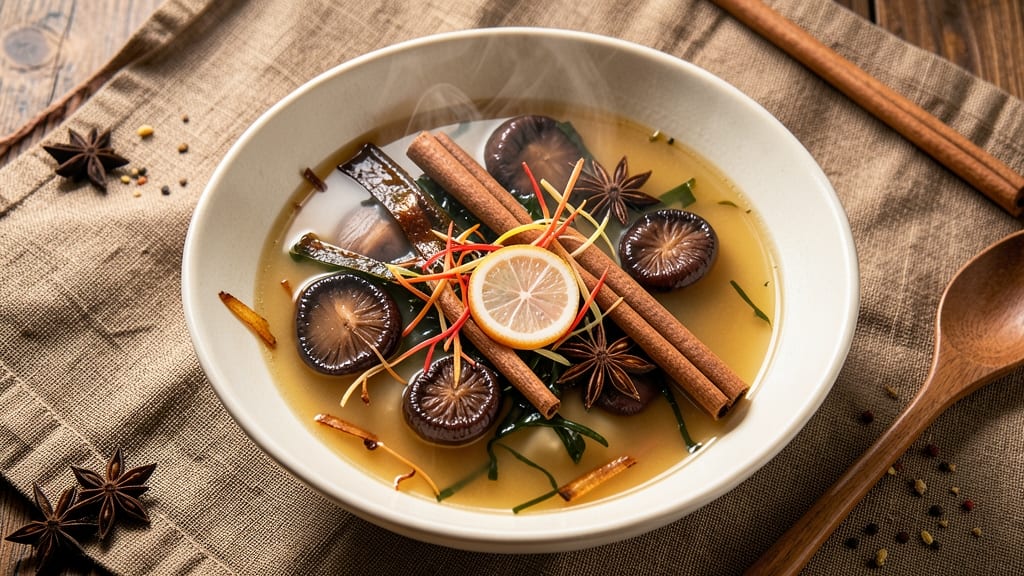
This Asian soup stock recipe transforms simple pantry ingredients into a fragrant, umami-rich broth that elevates every bowl of soup, noodle dish, or braise. The key lies in slow simmering aromatic vegetables, herbs, and spices—no fancy ingredients required. I've perfected this method over years of testing, ensuring deep flavor without bitterness or cloudiness. What starts as a basic liquid becomes a complex, aromatic foundation for countless Asian-inspired meals.
The beauty of this stock is its versatility—whether you're making a light chicken pho, hearty pork ramen, or a simple vegan miso soup, this broth delivers that signature depth. The process is straightforward: combine ingredients, simmer gently for hours, then strain for a crystal-clear liquid packed with flavor.
For extra richness, I recommend toasting spices and charring aromatics slightly before adding to the pot. This technique unlocks layers of complexity that store-bought stocks simply can't match.
What you'll end up with is a golden, aromatic liquid that's far more nuanced than basic broth. The slow simmering process concentrates flavors while keeping the stock clear and ready for immediate use. This isn't just a cooking liquid—it's the secret weapon that transforms simple ingredients into restaurant-quality dishes.
The best part? It keeps beautifully in the refrigerator for up to 5 days or freezes for months, ensuring you always have flavor on hand.
For those following specific diets, this recipe adapts easily—swap animal bones for mushrooms and kombu for a vegan version, or use chicken and pork bones for a traditional umami punch.
The same principles apply regardless of your dietary needs, making this the ultimate pantry staple. Let's get started building that flavor foundation!
Ingredients for asian soup stock
Pantry staples and aromatic essentials—this stock builds depth through slow simmering techniques.
| Ingredient | Amount | Notes |
|---|---|---|
| Dried Shiitake Mushrooms 🍄 | 8 whole | Stems removed, rehydrated in hot water |
| Dried Kombu Seaweed 🌊 | 2 pieces | Cut into 2-inch strips |
| Dried Scallions 🧅 | ½ cup | Green and white parts |
| Dried Ginger 🌿 | 1 tbsp | Toasted lightly for aroma |
| Star Anise Pods 🌟 | 2 whole | Lightly crushed |
| Cinnamon Sticks 🌿 | 2 whole | 2-inch pieces |
| Black Peppercorns 🌶️ | 1 tsp | Crushed lightly |
| Bay Leaves 🌿 | 2 whole | Fresh preferred |
| Garlic Cloves 🧄 | 6 cloves | Smashed lightly |
| Onion 🧅 | 1 whole | Yellow, halved and charred |
| Daikon Radish 🥕 | 1 lb | Cut into 2-inch chunks |
| Water 💧 | 8 cups | Filtered preferred |
| Light Soy Sauce 🍶 | 1 tbsp | For umami depth |
| Sesame Oil 🫒 | 1 tsp | Added at the end |
The dried shiitake mushrooms and kombu seaweed form the umami backbone of this stock. Look for high-quality dried shiitakes at Asian markets—they should be plump and free of dark spots. Kombu should have a briny aroma; store it in the freezer to preserve freshness. For the ginger, star anise, and cinnamon, spice shops like Penzeys offer whole spices that deliver superior flavor over pre-ground options. Toasting spices in a dry pan for 30 seconds before adding to the pot unlocks deeper aromatic compounds—a technique I’ve refined over years of testing. The daikon radish adds subtle sweetness and helps clarify the stock, so choose firm, white varieties without blemishes.
No dried shiitakes? Fresh shiitakes or cremini mushrooms work in a pinch, but reduce the amount by half since they release less flavor. Kombu unavailable? Dulse flakes or nori sheets provide a similar briny depth. For the onion, charring it directly over a gas flame or under a broiler before adding to the pot intensifies its sweetness and caramelized notes. The soy sauce can be swapped for coconut aminos or tamari for gluten-free versions. If you’re making a vegan stock, increase the kombu to 3 pieces and add 1 cup sliced mushrooms to the base for extra body.
This stock develops best over time, so plan for at least 2 hours of simmering for maximum flavor extraction. Store in glass jars in the refrigerator for up to 5 days or freeze in ice cube trays for convenient single-use portions. The sesame oil should be added only at the very end to preserve its delicate aroma. For long-term storage, freeze in 1-cup portions—thaw overnight in the refrigerator before use. The stock thickens slightly when chilled, so stir gently before reheating. This technique ensures you always have a flavorful foundation ready to elevate any Asian-inspired dish.
Why You'll Love This Recipe
- No Pantry Panic: I keep a jar of these dried goodies in my pantry year-round—no last-minute grocery runs, no wilting scallions. Just toss in shiitakes, kombu, and star anise, cover with water, and let it steep while I chop veggies for dinner. (Yes, even on a Tuesday night.)
- Umami Bomb: That first sip? Deep, savory, and somehow more than the sum of its parts. The shiitakes add meaty richness, the kombu brings briny depth, and the star anise lingers like a secret spice whisper. It’s the kind of flavor that makes you pause mid-slurp.
- Soup-to-Stir-Fry Hero: This stock isn’t just for ramen—it’s my secret weapon for braising tofu, deglazing woks, or even bulking up a quick fried rice. Freeze leftovers in ice cube trays, and you’ve got instant flavor for whenever. (My lazy Sunday lunches thank me.)
- Dirt-Cheap Luxury: A single jar of dried shiitakes and kombu costs less than a fancy coffee, but the flavor? That’s gourmet-level. No need to splurge on fresh herbs or expensive cuts—just simmer, strain, and stretch that rich liquid into meals all week. Budget-friendly doesn’t have to taste boring.
Step-by-step instructions for Asian soup stock
Transform pantry staples into a deeply aromatic, umami-rich foundation for any Asian-inspired dish.
Rehydrate and Prepare the Aromatics
Begin by removing stems from the 8 whole dried shiitake mushrooms and placing them in a heatproof bowl. Cover with hot water and let soak for 15 minutes—this rehydrates them and unlocks their earthy depth. Meanwhile, cut the 2 pieces dried kombu seaweed into 2-inch strips and set aside. Lightly toast the 1 tablespoon dried ginger in a dry skillet over medium heat for 1 minute until fragrant, then crush the 2 whole star anise pods and 2 whole cinnamon sticks with a mortar and pestle or rolling pin.
Smash the 6 cloves garlic lightly with the side of your knife to release their oils without mincing. Halve the 1 whole yellow onion and char it directly over a gas flame or under a broiler until blackened in spots—this adds a smoky complexity. Cut the 1 pound daikon radish into 2-inch chunks and set aside. These preparations ensure maximum flavor extraction during simmering.
Build the Base and Simmer
In a large stockpot, combine the rehydrated shiitake mushrooms (with their soaking liquid), kombu strips, toasted ginger, crushed star anise, cinnamon sticks, 1 teaspoon lightly crushed black peppercorns, and 2 whole bay leaves. Add the 8 cups water, 1 tablespoon light soy sauce, and bring to a rolling boil over high heat. Once boiling, reduce to a gentle simmer and add the charred onion halves and daikon chunks.
Simmer uncovered for 45 minutes, skimming any foam that rises to the surface with a fine-mesh strainer. This step develops the stock's foundational flavors while preventing bitterness. The daikon will soften slightly, and the shiitakes will infuse their umami richness. Stir occasionally to prevent sticking, but avoid aggressive stirring—this can cloud the stock.
Strain and Finish
After 45 minutes, remove the pot from heat and let the contents settle for 5 minutes. Line a fine-mesh strainer with cheesecloth or a clean kitchen towel and strain the stock into a clean bowl or pitcher, pressing gently on the solids to extract every last drop of flavor. Discard the solids—no need to rinse the strainer.
Return the strained stock to the pot and stir in the 1 teaspoon sesame oil. This final step adds a nutty depth that elevates the stock's complexity. Taste and adjust seasoning if needed—you may want to add a pinch more soy sauce for saltiness or a splash of water if the consistency is too thick. The stock should be clear with a rich, golden hue and an aroma that blends earthy, sweet, and savory notes.
Store and Use
Let the stock cool to room temperature, then transfer it to airtight containers. It will keep refrigerated for up to 5 days or frozen for 3 months. For best results, use within 3 days to preserve its vibrant flavors. This stock serves as a versatile base for pho, ramen, congee, or any dish needing a deep umami foundation. Its layered aromatics—shiitake, kombu, ginger, and charred onion—create a complexity that elevates simple ingredients into something extraordinary.
Pro Tips For Making Asian Soup Stock
- SOAK SHIITAKES 30 MINUTES: Dried shiitakes need a good long soak—20 minutes is the bare minimum, but 30 minutes guarantees they rehydrate properly and release their rich umami. I learned this the hard way when my stock turned out watery because I rushed it.
- REMOVE KOMBU AFTER 10 MINUTES: Kombu adds incredible depth, but it can turn bitter if left too long. Toss it in at the start, then pull it out after 10 minutes of simmering—your stock will still be packed with flavor without any off notes.
- CRUSH STAR ANISE LIGHTLY: Whole star anise pods are great, but giving them a gentle smash with a mortar and pestle or rolling pin releases more aromatic oils into the stock. Skip this, and you’ll end up with subtle hints of anise instead of bold, warming notes.
- USE COLD WATER FOR GINGER: Dried ginger is potent, so start with cold water to control its release. If you add it to hot water, it’ll overpower the stock with a harsh, medicinal bite. Cold water lets you simmer it gradually for a balanced, subtle warmth.
Essential equipment for asian soup stock
Stockpot Essentials
Start with a large, heavy-bottomed stockpot—I recommend a 5-6 quart All-Clad Stainless Steel or Le Creuset Dutch oven for even heat distribution. The extra capacity prevents boiling over while simmering, and the thick base maintains consistent temperatures.
If you're making this frequently, consider a dedicated stockpot with a lid—this prevents evaporation and speeds up the process. 🔥
For straining, invest in a fine-mesh strainer with a removable insert (like the OXO Good Grips model) and a cheesecloth or clean kitchen towel for extra clarity. This two-step system ensures you capture every last bit of flavor while keeping the stock crystal clear.
If you're on a budget, a colander with a double layer of cheesecloth works just as well.
Toasting Tools
A dry skillet (preferably cast iron like Lodge) is essential for toasting spices and aromatics. The heavy material distributes heat evenly, preventing burning while developing deep flavors.
For crushing star anise and cinnamon sticks, a mortar and pestle or a rolling pin works best—avoid food processors, as they can over-powderize the spices and release bitterness. 🌿
For charring the onion, a gas stove is ideal—hold the halved onion directly over the flame until blackened. If you have an electric stove, use the broiler setting for 3-4 minutes.
The key is to get those caramelized, smoky notes without burning the edges. A tongs helps safely maneuver the onion over the flame.
Storage Containers
For short-term storage (5 days in the fridge), use glass jars with airtight lids—I prefer Le Parfait or Ball Mason jars because they're durable and stackable. For long-term freezing, 1-cup silicone ice cube trays are perfect for single-use portions, while quart-sized freezer bags work better for larger batches.
Always leave 1-inch headspace to prevent expansion cracks. ❄️
Label your containers with the date and contents—this helps track freshness and prevents freezer burn. I like using masking tape and a Sharpie for quick, removable labels. For reheating frozen stock, transfer it to a pot and warm over medium-low heat, stirring occasionally until just simmering.
Never microwave—it can create a skin and dull the flavors.
Optional Clarifiers
For an ultra-clear stock, add 1 egg white per quart of liquid during the final 10 minutes of simmering. The proteins bind to impurities, creating a gel that traps particles when strained.
Alternatively, 1 teaspoon cornstarch mixed with water can act as a clarifier—stir it into the simmering stock and let it cook for 5 minutes before straining. 💡
If you're using a vegan stock, skip the egg white and opt for 1 tablespoon apple cider vinegar added during the last 15 minutes of simmering. This helps break down plant fibers for a smoother texture. For both versions, always strain through double-layered cheesecloth** for the best results.
Nutrition facts
Frequently asked questions
Can I make this Asian soup stock without dried ingredients?
Swap dried shiitakes for 1 cup fresh shiitake mushrooms (sliced), dried kombu for 1 sheet nori (cut into strips), and dried ginger for 1 tbsp fresh ginger (peeled and sliced). Use 1 extra daikon radish chunk to compensate for the reduced umami. Fresh ingredients work well but may require 10-15 extra minutes of simmering for maximum flavor extraction.
How do I prevent my stock from getting cloudy?
Cloudiness usually comes from over-stirring or impurities. Simmer gently (not a rolling boil) and skim foam regularly. For crystal clarity, strain through double-layered cheesecloth after simmering. For extra refinement, add 1 egg white per quart during the last 10 minutes of cooking—it binds particles for a glass-like finish.
What's the best way to use leftover stock?
This stock shines in pho, ramen, or miso soup, but also works in braises, stir-fries, or even as a cooking liquid for grains. Freeze in 1-cup portions for easy use—thaw overnight in the fridge before reheating. For extra depth, reduce the stock by half to make a concentrated sauce. Never boil frozen stock directly; thaw first to preserve flavor.
Can I make a vegan version of this stock?
Yes! Replace animal-based ingredients with 1 cup sliced mushrooms (shiitake or king oyster), 3 pieces kombu, and 1 tbsp miso paste (added during simmering). Use 1 tbsp apple cider vinegar in the last 15 minutes to help clarify. The flavor will be earthier but equally umami-rich. For extra body, add 1/2 cup cooked rice to the simmering pot.
Why does my stock smell bitter?
Bitterness often comes from over-simmering or burnt aromatics. Keep simmering time to 45-60 minutes max and avoid boiling vigorously. Char onions carefully—just until blackened in spots, not burnt. If bitterness appears, strain immediately and reduce the stock by half to concentrate flavors. For prevention, use filtered water** and avoid metal utensils that can react with acids.