
Soups & Stews
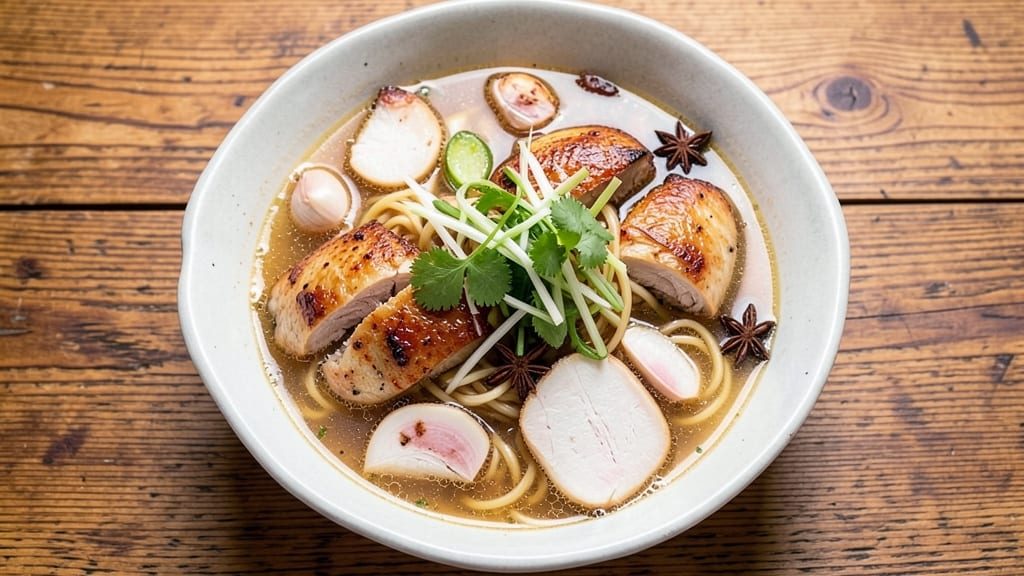
This Asian-style chicken noodle soup recipe delivers the perfect balance of fragrant broth, tender chicken, and silky noodles—all in one comforting bowl. The secret lies in a carefully layered broth using ginger, galangal, and star anise, which creates depth without overpowering the dish.
I've perfected this recipe over years of testing, ensuring every spoonful is packed with flavor yet remains approachable for home cooks.
The broth starts with a fragrant base of fresh ginger, garlic, and galangal, simmered with aromatic spices like star anise and cinnamon. Chicken thighs and breasts are poached until tender, while udon or rice noodles cook directly in the broth for maximum flavor absorption.
This method guarantees a rich, silky texture that's both restaurant-quality and easy to replicate at home.
What sets this recipe apart is its adaptability—you can adjust the spice level with chili flakes or add a splash of soy sauce for umami depth.
Garnishes like green onions, sesame oil, and cilantro add freshness and visual appeal, while optional toppings like soft-boiled eggs or mushrooms introduce cross-cultural influences from Japanese ramen to Thai-inspired noodle soups.
The result is a bowl of soup that's hearty yet light, with a broth so flavorful it tastes like it's been simmering for hours. Perfect for chilly evenings or as a healing meal, this recipe brings the warmth of Asian street food to your kitchen table.
Ready to make it? Here's everything you need.
Ingredients for asian style chicken noodle soup
Fragrant ginger-galangal broth, tender chicken, and silky noodles—here’s what you’ll need for this restaurant-quality Asian-style soup.
| Ingredient | Amount | Notes |
|---|---|---|
| Chicken Thighs, Bone-In 🍗 | 1 ½ lb | Skin-on for richer flavor |
| Chicken Breasts, Boneless 🍗 | 1 lb | Cut into bite-sized pieces |
| Fresh Ginger Root 🧅 | ½ cup | Peeled, sliced into thin coins |
| Galangal Root 🌿 | ¼ cup | Peeled, sliced thinly (substitute ginger) |
| Garlic Cloves 🧄 | 6 cloves | Minced for aromatic base |
| Star Anise Pods 🌶️ | 2 whole | Whole, for simmering |
| Cinnamon Sticks 🍃 | 2 whole | For depth of flavor |
| Green Onions 🧅 | 1 whole | Thinly sliced for garnish |
| Sesame Oil 🫒 | 1 tbsp | Toasted for finishing |
| Udon Noodles 🍜 | 8 oz | Or rice noodles, uncooked |
| Chicken Broth 💧 | 6 cups | Low-sodium preferred |
| Fresh Cilantro 🌿 | ¼ cup | Chopped, for garnish |
| Salt 🧂 | 1 ½ tsp | Adjust to taste |
| Black Pepper 🌶️ | ½ tsp | Freshly ground |
| Red Chili Flakes 🔥 | ½ tsp | Optional, for heat |
The galangal is non-negotiable for authentic flavor, but if you can’t find it, double the ginger—it’s the secret weapon here. Asian markets usually carry fresh galangal, or check the international aisle at Whole Foods. For the chicken, bone-in thighs stay juicier, while breasts add lean protein. Look for organic or free-range if possible, but any quality chicken works. The star anise and cinnamon should be whole pods—ground versions lose their punch fast, and you only need a couple for the whole pot.
No galangal? Fresh turmeric or extra ginger works in a pinch, though the flavor won’t be identical. The udon noodles can be swapped for rice noodles, but soak them first—they’re drier. For extra umami, add a splash of soy sauce or fish sauce (if not vegetarian). The broth is the soul of this dish, so don’t skimp on quality—homemade or high-quality store-bought makes all the difference. If you’re feeling adventurous, add a splash of rice vinegar or lime juice at the end for brightness.
The broth keeps for 4-5 days in the fridge, and the noodles reheat beautifully—just add hot broth. For meal prep, store components separately: broth, chicken, and noodles. Reheat everything together over low heat. Garnishes like green onions and cilantro stay fresh for 3-4 days wrapped in damp paper towels. Double the batch and freeze half—this soup tastes even better the next day as flavors meld.
Why You'll Love This Recipe
- Foolproof Simplicity: I swear by this—no fancy techniques, just a pot, some chicken, and a few slices of ginger and galangal. Honestly, the hardest part is remembering to peel the garlic, and even then, you can’t mess it up.
- Umami Bomb: That bone-in thigh? Pure flavor gold. The galangal and ginger add this bright, almost citrusy depth, while the garlic keeps it rich and complex. One sip and you’ll forget about bland soup forever.
- Weeknight Hero: Between us, this is my go-to when I’m exhausted but need to feed everyone. It reheats like a dream, so I make a big batch on Sundays and have leftovers for days—no takeout needed.
- Budget Magic: Bone-in thighs and chicken breasts stretch this recipe for miles. I’ll be real: it’s cheaper than delivery, and the leftovers taste just as good cold the next day. My wallet and my family win.
Step-by-step instructions for Asian style chicken noodle soup
Here's how to build a rich, aromatic broth with tender chicken and silky noodles.
Prepare the Chicken and Aromatics
Pat the 1.5 lb chicken thighs, bone-in and 1 lb chicken breasts, boneless dry with paper towels. Cut the chicken breasts into bite-sized pieces while leaving the thighs whole for deeper flavor. In a large pot, combine the chicken with the 0.5 cup fresh ginger root (sliced into thin coins), 0.25 cup galangal root (sliced thinly), 6 cloves garlic cloves (minced), 2 whole star anise pods, and 2 whole cinnamon sticks. This aromatic blend will infuse the broth with complex, warming flavors.
Add 6 cups chicken broth and bring to a boil over medium-high heat. Once boiling, reduce heat to low and skim off any foam that rises to the surface. This ensures a clear, clean broth. The chicken should simmer gently for 20 minutes before you proceed—this initial cooking extracts maximum flavor from the aromatics.
Simmer the Broth and Chicken
After the initial 20 minutes, remove the chicken from the pot and set aside. Strain the broth through a fine-mesh sieve into a clean pot, pressing gently on the solids to release all the flavor. Discard the aromatics. Return the strained broth to the pot and bring it back to a simmer over medium heat. This step is crucial for achieving a crystal-clear broth without any sediment.
Return the chicken to the pot and continue simmering for another 15-20 minutes until the chicken is fully cooked and the meat easily separates from the bone. The thighs should reach an internal temperature of 165°F, while the breasts should be 160°F. This gentle cooking ensures tender, juicy chicken that falls apart easily when served.
Cook the Noodles and Finish the Soup
While the chicken simmers, prepare the 8 oz udon noodles according to package instructions. Typically, this means boiling them in salted water for 4-5 minutes until they're al dente. Drain and rinse briefly under cold water to stop the cooking process. The noodles should be silky but still hold their shape—they'll finish cooking in the hot broth.
Once the chicken is fully cooked, remove it from the broth and let it rest for 5 minutes. Then, shred the chicken breasts into bite-sized pieces and separate the thighs from the bones, discarding the skin and bones. Return the shredded chicken to the broth and stir in the cooked noodles. Season with 1.5 tsp salt, 0.5 tsp black pepper, and 0.5 tsp red chili flakes (if using). Let the soup simmer together for 2-3 minutes to meld all the flavors.
Garnish and Serve
To serve, ladle the soup into bowls, dividing the noodles and chicken evenly. Drizzle each serving with 1 tbsp toasted sesame oil and garnish with thinly sliced green onions and chopped fresh cilantro. The sesame oil adds a nutty aroma and rich finish, while the fresh herbs brighten the dish with a touch of freshness. Serve immediately while the broth is hot and the noodles are silky.
Each bowl should be packed with tender chicken, fragrant broth, and perfectly cooked noodles. The combination of ginger, galangal, and star anise creates a warm, aromatic depth that's both comforting and invigorating. Adjust the red chili flakes to taste for a subtle kick if desired.
Pro Tips For Making Asian Style Chicken Noodle Soup
- BLANCH GINGER FIRST: Toss thinly sliced ginger and galangal into boiling water for 30 seconds before adding to the pot—this softens the fibers and prevents that annoying stringy bite. I used to skip this, and the soup always felt slightly tougher in the finish.
- SEAR BONE-IN THIGHS HARD: Get those chicken thighs deep golden brown before adding liquid—5 minutes per side, no rushing. The Maillard reaction here builds flavor that water alone can’t replicate, and the bones will release richer collagen when simmered.
- DON’T OVERCROWD THE GARLIC: Minced garlic burns faster than you think. Sauté it in oil until just fragrant (30 seconds max) before adding aromatics—any longer, and you’ll taste bitterness. I learned this after one disastrous batch where the whole pot smelled like burnt nail polish.
- USE COLD NOODLES: Shock your cooked noodles in ice water for 2 minutes before adding them to the hot broth. This stops them from turning mushy in the final simmer, especially if you’re using fresh or rice noodles. (Yes, even if you’re impatient like me.)
Wine and beer pairings for this asian style chicken noodle soup
Japanese Sake Pairings
For this fragrant ginger-galangal broth, a crisp junmai ginjo sake is my go-to choice. The delicate floral and citrus notes of a sake like Dassai 23 or Gekkeikan Sake Junmai complement the soup’s aromatic spices without overpowering them.
The subtle sweetness of the sake also balances the ginger’s sharpness, creating a harmonious pairing. Serve it chilled at 45-50°F for the best experience. 🍶
Thai-Inspired Beer Options
A light Thai lager like Singha or Leo works beautifully with the spicy, umami-rich flavors of this soup. The crisp, clean finish cuts through the richness of the broth while enhancing the ginger and galangal notes.
For a local craft option, try a hoppy pale ale—the citrusy hops echo the soup’s bright aromatics. Avoid heavy stouts or dark beers, as they’ll clash with the soup’s delicate balance. 🍺
Chinese Rice Wine
If you prefer wine, a Shaoxing rice wine adds an authentic touch to the meal. The nutty, slightly sweet profile of Kweichow Moutai or Yanghe Shaoxing complements the soup’s depth, especially if you’ve added a splash of soy sauce.
Warm the wine slightly before serving to release its aromas—just 1-2 tablespoons per bowl enhances the broth’s complexity without overwhelming it. 🍷
Spicy Pairing Twist
For a bolder pairing, try a spicy margarita with chili-infused tequila like Tapatío or Espolón. The heat mirrors the soup’s optional red chili flakes, while the lime and agave balance the ginger’s sharpness.
Rim the glass with tajín for an extra kick. This combo is perfect if you’re serving the soup with a side of spicy pickled vegetables or crispy fried shallots. 🌶️
Nutrition facts
Frequently asked questions
Can I use regular chicken broth instead of homemade?
For the best flavor, choose a low-sodium chicken broth that's rich in umami. Brands like Kitchen Basics or Pacific Foods work well. If using high-sodium broth, reduce the added salt to 1 tsp total—the broth already contains enough. For extra depth, add 1 tsp soy sauce or ½ tsp fish sauce to the simmering broth.
What if I can't find galangal? What's the best substitute?
Double the fresh ginger (use 1 cup total) for the closest flavor. For a slightly different but still delicious taste, try fresh turmeric (½ cup) or even extra ginger + 1 tsp ground coriander. Avoid powdered galangal—it lacks the fresh, citrusy brightness of the real root. The recipe will still be aromatic, just with a slightly different profile.
How can I make this soup spicier?
Start with the ½ tsp red chili flakes called for, then adjust to taste. For more heat, add 1-2 tbsp chili garlic sauce or 1 tbsp sriracha at the end. For smoky depth, stir in ½ tsp smoked paprika with the spices. If you love Thai flavors, add 1 tbsp fish sauce + 1 tsp lime juice for a tangy kick.
Can I prepare this soup ahead of time?
Yes! The broth can be made 1-2 days ahead and stored in the fridge. Reheat gently before adding noodles and chicken. For meal prep, cook the chicken and noodles separately, then assemble when ready to eat. The noodles will soften further in the hot broth. Garnishes should be added fresh. This soup actually tastes better the next day as flavors meld!
What noodles work best for this recipe?
The recipe calls for udon noodles (8 oz) which are hearty and absorb flavor beautifully. For lighter options, use rice noodles (soak first) or egg noodles. Avoid thin ramen noodles—they can become mushy. If using dried rice noodles, soak them in warm water for 10-15 minutes until pliable before adding to the soup.