
Soups & Stews
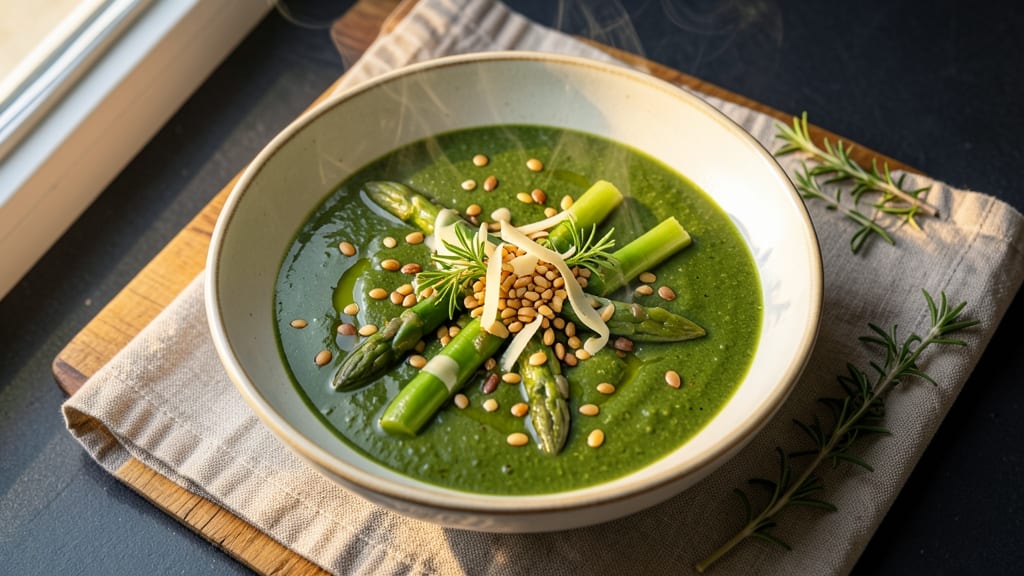
Asparagus stalk soup transforms humble spring vegetables into a velvety, earthy masterpiece that balances delicate flavors with satisfying texture. This vegetarian recipe leverages the soup's natural sweetness while adding depth through toasted seeds and aromatic herbs—no heavy cream needed. The secret lies in proper blanching and slow reduction, which concentrates flavor without bitterness.
The process begins with blanching asparagus stalks to soften them just enough for blending, then simmering with vegetable broth until silky smooth. What sets this apart is the toasted seed garnish—crispy pumpkin or sunflower seeds add crunch that contrasts beautifully with the soup's velvety body.
For extra richness, a swirl of olive oil or vegan butter finishes each bowl.
What makes this recipe exceptional is its adaptability—use chicken broth for a lighter version, coconut milk for a tropical twist, or roasted garlic for added depth. The result is a soup that's elegant enough for dinner parties yet simple enough for weeknight meals.
Each spoonful delivers that perfect balance of earthy asparagus and nutty crunch.
Perfect for spring menus or as a comforting vegetarian main, this soup proves that plant-based dishes can be both sophisticated and satisfying. The technique is straightforward, but the results feel restaurant-quality. Let's get cooking—your taste buds will thank you.
Ingredients for asparagus stalk soup
Earthy asparagus meets velvety texture in this vegetarian masterpiece—where blanching and slow reduction create restaurant-quality depth without heavy cream.
| Ingredient | Amount | Notes |
|---|---|---|
| Fresh Asparagus Stalks 🌱 | 1 ½ lb | Trimmed, tough ends removed |
| Vegetable Broth 💧 | 4 cups | Low-sodium preferred |
| Extra-Virgin Olive Oil 🫒 | ¼ cup | For blanching and finishing |
| Pumpkin Seeds 🥜 | ½ cup | Raw, unsalted for toasting |
| Sunflower Seeds 🌻 | ¼ cup | Raw, unsalted for toasting |
| Fresh Thyme Leaves 🌿 | ½ tsp | Dried thyme at one-third amount |
| Garlic Cloves 🧄 | 3 cloves | Peeled, lightly crushed |
| Lemon Juice 🍋 | 1 tbsp | Freshly squeezed |
| Salt 🧂 | 1 ½ tsp | Diamond Crystal kosher salt |
| Black Peppercorns 🌶️ | ½ tsp | Freshly cracked |
| Vegan Butter 🧈 | 2 tbsp | For finishing, optional |
| Fresh Parsley 🌿 | ¼ cup | Chopped, for garnish |
| Shallots 🧅 | 2 whole | Minced, for depth |
| White Wine 🍷 | ¼ cup | Dry, optional for richness |
The asparagus stalks are the heart of this soup, so choose firm, bright green ones with tight tips—avoid woody or dry stalks. Trim the tough ends (about 1-2 inches) before blanching, as they won’t soften properly. For broth, low-sodium vegetable stock ensures you control the seasoning, though homemade is ideal. If using store-bought, Basic brand or Pacific Foods are reliable choices. The seeds—pumpkin and sunflower—should be raw and unsalted; toast them in a dry pan until golden for maximum crunch. Whole Foods or Trader Joe’s carry excellent bulk options for both.
No vegetable broth? Chicken broth works for a lighter version, though it will have a different flavor profile. Substitute white wine with an extra splash of lemon juice and a pinch of salt for acidity. Fresh thyme is ideal, but dried at one-third the amount suffices if that’s what you have. For the seeds, pepitas or hemp seeds offer similar texture. If you’re avoiding wine, coconut milk (½ cup) adds richness—just reduce the broth by the same amount to maintain balance. The shallots can be swapped for 1 small yellow onion, finely diced, though shallots provide a more delicate sweetness.
Blanched asparagus keeps in the fridge for 2 days before blending, though fresh is best. Toasted seeds stay crisp for 3 days if stored in an airtight container. The finished soup reheats beautifully—simmer gently to avoid breaking the emulsion. For meal prep, portion into jars and store with a layer of olive oil on top to preserve freshness. Garnishes like vegan butter or extra seeds can be added fresh when serving to maintain texture. This soup freezes well for up to 3 months, though the seeds may lose some crunch upon thawing.
Why You'll Love This Recipe
- No Chopping Needed: I swear by this trick—just trim the asparagus ends, snap the stalks, and toss them whole into simmering broth. The broth does all the work, breaking down the fibers into that silky, earthy goodness without a single knife scrape.
- Crunchy-Creamy Magic: That contrast? Chef’s kiss. The soup itself is velvety from the slow-cooked asparagus, but the toasted pumpkin and sunflower seeds add this addictive crunch—like a hug for your mouth. Honestly, I’ll take a bowl of this over any overpriced restaurant soup.
- Meal Prep MVP: Make a big batch on Sunday, and you’ve got lunches for the week. The flavors actually deepens overnight—yes, even on day three. I freeze portions too; just reheat with a splash of water, and it’s like you made it fresh.
- Budget Bright Spot: Fresh asparagus in season is cheaper than you think, and this recipe stretches it further than any side dish. The seeds? A dollar bag goes a long way, and vegetable broth is my pantry’s unsung hero—this soup proves you don’t need fancy ingredients for something that tastes like a splurge.
Step-by-step instructions for asparagus stalk soup
This velouté delivers a refined balance of earthy asparagus and nutty seed crunch—precision matters at every stage.
Blanch and Prep the Asparagus
Bring a large pot of salted water to a rolling boil. Trim the tough ends from the 1.5 lb fresh asparagus stalks, then cut each stalk into 2-inch pieces. You'll have about 6 cups chopped asparagus. Add the pieces to the boiling water and blanch for exactly 2 minutes—they should remain vibrant green and crisp-tender, not mushy.
Immediately drain and transfer the asparagus to an ice bath to stop cooking. This shock treatment preserves color and texture. Once cooled, drain again and pat dry with paper towels. The asparagus will yield about 3 cups packed pieces—this precise volume ensures proper soup consistency later.
Build the Soup Base
In a large pot, heat 0.25 cup extra-virgin olive oil over medium heat. Add the 2 minced shallots and cook for 3 minutes until translucent. Add the 3 lightly crushed garlic cloves and 0.5 tsp fresh thyme leaves, cooking for another 30 seconds until fragrant—never let the garlic brown, or it will turn bitter.
Stir in the blanched asparagus and cook for 4 minutes, stirring occasionally, until the asparagus softens slightly. Pour in the 4 cups vegetable broth and 0.25 cup white wine (if using), scraping up any browned bits from the bottom. Bring to a simmer, then reduce heat to low and let cook uncovered for 15 minutes to develop depth of flavor.
Blend to Silky Perfection
Using an immersion blender, purée the soup directly in the pot until completely smooth. For a cleaner finish, you can also transfer the soup to a countertop blender in batches—just be careful with hot liquids. The soup should have a velvety texture, like thick custard, with no visible asparagus fibers.
Return the soup to the pot and stir in the 1 tbsp lemon juice and 1.5 tsp salt. Taste and adjust seasoning—you may need an additional 0.25 tsp salt depending on your broth. The acidity from the lemon brightens the earthy asparagus flavor, balancing the richness. Keep the soup at a gentle simmer for 5 minutes to let flavors meld.
Toast the Seeds and Finish
While the soup simmers, heat a dry skillet over medium heat. Add the 0.5 cup pumpkin seeds and 0.25 cup sunflower seeds in a single layer. Toast for 4-5 minutes, stirring constantly, until the seeds turn golden brown and fragrant. Remove from heat immediately—they'll continue cooking from residual heat.
Stir the 2 tbsp vegan butter into the soup until melted and fully incorporated. The butter adds a luxurious finish without overpowering the asparagus. Ladle the soup into bowls, then sprinkle with the toasted seeds and 0.25 cup chopped fresh parsley. The seeds provide a delightful textural contrast to the smooth velouté.
Serve with Precision
Let the soup rest for 2 minutes before serving—this allows the seeds to settle slightly and the flavors to fully integrate. The final presentation should feature a deep green velouté with golden seed clusters floating on top, crowned with bright parsley. Serve immediately while the seeds maintain their crisp texture.
For an elevated touch, garnish each bowl with a freshly cracked black peppercorn on top. The pepper's sharpness cuts through the soup's richness, while the seeds add a satisfying crunch with every spoonful. This technique ensures each bite delivers the perfect marriage of texture and flavor.
Pro Tips For Making Asparagus Stalk Soup
- TRIM THE TOUGH ENDS FIRST: I learned this the hard way—peeling asparagus stalks after cutting them into soup-sized pieces is a nightmare. Snap off the woody bottoms first (they’ll break cleanly at the natural bend), then peel the thicker ends before chopping. This keeps your soup silky instead of turning into a chewy mess.
- SWEAT THE STALKS LOW AND SLOW: After burning three batches, I finally figured out: asparagus needs gentle heat to soften without bitterness. Cook the chopped stalks in olive oil over medium-low for 8–10 minutes, stirring occasionally, until they’re fork-tender but not browned. High heat = burnt edges; too little = mushy soup.
- SALT THE BROTH IN LAYERS: Vegetable broth varies wildly in saltiness, and asparagus soup needs balance. Taste the broth before adding it to the pot—if it’s bland, boost it with a pinch of salt now. Then, after blending, season again with a splash of broth and more salt. This two-step method guarantees flavor, not guesswork.
- TOAST SEEDS SEPARATELY: Sounds weird, but it works: dry-toast pumpkin and sunflower seeds in a separate pan over medium heat for 3–4 minutes, shaking the pan constantly. They’ll smell nutty and develop crunch, while the soup stays smooth. Sprinkle them on top at the end—this adds texture without overpowering the broth’s clean taste.
Serving suggestions for this recipe
Bread Pairings
This velvety asparagus soup pairs beautifully with crusty sourdough or baguette slices for dipping. The crunchy texture contrasts perfectly with the soup's smoothness.
I recommend toasting the bread lightly with garlic-infused olive oil—just brush 1 tbsp olive oil mixed with ½ tsp minced garlic on each slice and toast in a 400°F oven for 5 minutes. 🥖
Cheese Boards
For a springtime spread, serve the soup alongside a vegan cheese board featuring aged cheddar, brie, and goat cheese. The creamy textures complement the soup's earthiness, while cured meats like salami add savory depth.
Include fig jam or honey for a touch of sweetness that balances the asparagus's natural bitterness.
Herb Garnishes
Fresh herbs elevate the soup's presentation and flavor. I love finishing each bowl with chopped chives or microgreens for a pop of color. For extra aroma, add a sprig of fresh thyme or a few basil leaves—both pair wonderfully with asparagus.
A drizzle of truffle oil (½ tsp per bowl) adds a luxurious touch without overpowering the dish. 🌿
Wine Pairings
A crisp Sauvignon Blanc from New Zealand or a dry Riesling from Germany cuts through the soup's richness with bright acidity. For red wine lovers, a light Pinot Noir offers earthy notes that harmonize with the asparagus.
Avoid heavy, oaky whites or bold reds—they’ll clash with the soup's delicate flavors. 🍷
Seasonal Additions
In spring, add peas or edible flowers as garnishes for a pop of color and freshness. For summer, swap the seeds for toasted coconut flakes and serve with lime wedges for a tropical twist.
In fall, roast the asparagus stalks before blending for deeper flavor, and garnish with crispy sage leaves. Each season brings new possibilities! 🌸
Dessert Pairings
End the meal with something light to balance the soup's earthiness. A lemon posset or coconut panna cotta provides a refreshing contrast. For a savory finish, serve olive oil cake with a sprinkle of sea salt—its citrus notes complement the asparagus beautifully. 🍋
Nutrition facts
Frequently asked questions
Can I use asparagus tips instead of stalks for this soup?
While you can certainly use asparagus tips, the stalks provide a more robust texture and deeper flavor for velouté soups. The tips will make a lighter, more delicate soup—blanch them for just 1 minute instead of 2 minutes to maintain their tenderness. For best results, combine half stalks and half tips to balance texture and flavor.
How do I prevent the soup from turning bitter?
Bitter flavor comes from overcooking the asparagus. Always blanch stalks for exactly 2 minutes and use an ice bath immediately to stop cooking. When simmering the soup, keep heat at low and avoid boiling—gentle cooking preserves sweetness. A splash of lemon juice (1 tbsp) at the end also brightens flavors and cuts bitterness.
What's the best way to store leftovers?
Store in airtight containers in the fridge for up to 3 days. The soup reheats beautifully—simmer gently on low heat until warmed through. For longer storage, freeze for up to 3 months, but note the toasted seeds may lose crunch after thawing. Always add fresh seeds when reheating to restore texture.
Can I make this soup without wine?
Skip the wine and add an extra ½ cup vegetable broth plus 1 tbsp lemon juice for acidity. For richness, stir in ¼ cup coconut milk at the end. The flavor won't be identical, but the soup will still be delicious and balanced—just slightly lighter in body.
Why do my seeds burn when toasting?
Toast seeds over medium heat and stir constantly—they cook quickly! If they burn, reduce heat to low-medium and spread them in an even layer. Watch closely for 4-5 minutes until golden brown. For extra insurance, toast in batches if your pan is crowded. Overcrowding causes uneven cooking and burning.