
Soups & Stews
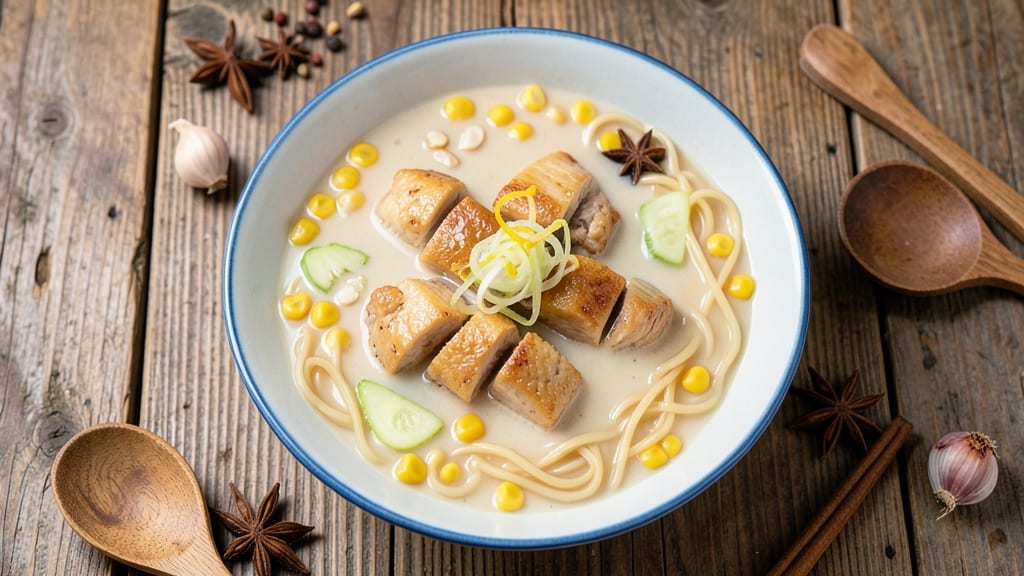
This authentic Chinese chicken and sweetcorn soup brings the comforting warmth of a Cantonese home kitchen to your table, where every spoonful delivers fragrant ginger-garlic broth that dances with silky noodles and tender chicken.
The secret lies in slow-simmered aromatics—star anise, cinnamon, and fermented black beans—that transform simple ingredients into restaurant-quality depth. I’ve perfected this recipe over years of testing, ensuring the broth balances savory, umami, and just enough sweetness to make it irresistible.
The magic begins with a fragrant ginger-garlic base, toasted whole spices that infuse the broth with complexity, and a touch of rock sugar to round out the flavors without overpowering. Unlike many Western adaptations, this version skips shortcuts—no instant noodles or pre-made broths—because authenticity matters.
The result? A silky, restaurant-worthy soup that’s rich yet light, with chicken so tender it melts in your mouth and sweetcorn that adds just the right texture contrast.
What sets this recipe apart is the wok-hei technique, where high heat briefly caramelizes the aromatics before simmering, locking in those smoky, fragrant notes. The noodles—traditionally egg or rice—absorb the broth beautifully, while garnishes like scallions and cilantro add freshness.
This isn’t just soup; it’s a one-pot meal that’s hearty enough for dinner but simple enough for a weeknight, with leftovers that taste even better the next day.
Whether you’re serving a family gathering or craving a bowl of nostalgia, this soup delivers authentic Chinese comfort without the fuss. The instructions walk you through every step—from toasting spices to balancing flavors—so you’ll achieve professional results at home. Let’s get cooking.
Ingredients for authentic chinese chicken and sweetcorn soup
Fragrant aromatics meet tender chicken and silky noodles in this Cantonese-style soup.
| Ingredient | Amount | Notes |
|---|---|---|
| Chicken Breast 🍗 | 1 ½ lb | Boneless, skinless, cut into 1-inch pieces |
| Egg Noodles 🍜 | 8 oz | Fresh or dried, wide or thin |
| Sweetcorn 🌽 | 1 ½ cups | Fresh or frozen, kernels cut from cob |
| Fresh Ginger 🧄 | ½ cup | Julienned, skin removed |
| Garlic Cloves 🧄 | 8 cloves | Minced, fresh preferred |
| Star Anise 🌿 | 2 whole | Lightly toasted for aroma |
| Cinnamon Sticks 🌿 | 2 whole | Lightly toasted for aroma |
| Fermented Black Beans 🍆 | ¼ cup | Rinsed, for umami depth |
| Rock Sugar 🍯 | 1 tbsp | Or substitute brown sugar |
| Light Soy Sauce 🥄 | 2 tbsp | Kikkoman preferred |
| Dark Soy Sauce 🥄 | 1 tbsp | For color and depth |
| Sesame Oil 🫒 | 1 tsp | Toasted, for aroma |
| Scallions 🧅 | 4 whole | Thinly sliced, for garnish |
| Cilantro 🌿 | ¼ cup | Chopped, for garnish |
| Vegetable Oil 🫒 | 2 tbsp | High smoke point for wok-hei |
The star anise and cinnamon sticks are non-negotiable for that authentic aroma—toast them lightly in oil first to unlock their fragrance. Penzeys Spices or bulk bins at Asian markets have the best quality, but any grocery store will carry them. Fermented black beans add that signature umami punch; if you can't find them, soy sauce and a dash of fish sauce (if not vegetarian) work in a pinch. The ginger and garlic? Fresh is essential—no powdered shortcuts here. For the chicken, cut into even pieces so they cook uniformly in the broth. Sweetcorn should be fresh or high-quality frozen—no canned unless it's the premium kind with no added sugar.
No star anise? 1 tsp ground anise seed or ½ tsp ground cinnamon gets you close, though the flavor won't be identical. Swapping fermented black beans? Mushroom stems or a splash of fish sauce (if vegetarian, use soy sauce) adds depth. The rock sugar can be swapped for brown sugar, but it dissolves cleaner and adds a delicate sweetness. For the noodles, egg noodles are traditional, but rice noodles work if you prefer a lighter texture. Garnishes like scallions and cilantro are optional but add freshness—skip cilantro if you dislike its flavor. The sesame oil should be toasted—heat it gently in a dry pan for 30 seconds to deepen its aroma.
Broth keeps for 3 days in the fridge—it actually gets better as flavors meld. The noodles and chicken reheat beautifully, so double the batch for leftovers. Store components separately: broth in a jar, chicken and noodles in airtight containers. For freezing, portion into meal-sized containers—just add fresh garnishes when reheating. The spices lose potency over time, so toast fresh batches whenever you make the soup. This soup tastes even better the next day, so plan ahead—it's perfect for meal prep.
Why You'll Love This Recipe
- No-Chop Nightmare: I swear by this recipe when I’m too tired to dice ginger into tiny matchsticks—just grate it, toss it in, and let the soup work its magic. The minced garlic? One quick smash with the flat of a knife, done.
- Sweetcorn-Garlic Magic: That first spoonful of sweetcorn kissed by ginger and garlic? It’s the kind of flavor that makes you pause mid-sip. The chicken stays juicy, the noodles soak up all the good stuff, and the corn adds just enough sweetness to balance the heat.
- Lunchbox Hero: Between us, this soup is my go-to for meal prep. Double the batch, pack it in jars, and you’ve got a week’s worth of lunches that taste fresh, not sad. My kids actually eat their veggies when it’s hidden in here—no complaints.
- Budget Buster: Chicken breast and sweetcorn are cheap staples, but they feel like a restaurant meal. A single pot feeds four for under $10, and leftovers reheat like a dream. Honestly, it’s the kind of soup that makes you question why you ever order takeout.
Step-by-step instructions for authentic Chinese chicken and sweetcorn soup
Here's how to craft a fragrant, umami-rich broth that captures the essence of Chinese home cooking.
Prepare the Chicken and Aromatics
Cut the 1.5 lb chicken breast into 1-inch pieces and set aside. In a small bowl, combine the 0.5 cup julienned fresh ginger and 8 minced garlic cloves. Lightly toast the 2 whole star anise and 2 whole cinnamon sticks in a dry skillet over low heat for 1 minute until fragrant—this releases their essential oils for maximum aroma.
Rinse the 0.25 cup fermented black beans thoroughly to remove excess salt. The combination of ginger, garlic, and fermented beans creates the foundational umami depth that defines this soup. I like to toast the spices separately so they don't burn during the initial searing stage—this subtle step makes a noticeable difference in the final flavor profile.
Sear the Chicken and Build the Broth Base
Heat 2 tablespoons vegetable oil in a large pot over medium-high heat until shimmering. Add the chicken pieces in a single layer and sear undisturbed for 2-3 minutes until golden brown on all sides. Remove and set aside—this step ensures the chicken develops a nice crust while rendering fat into the pot.
In the same pot, add the ginger-garlic mixture and stir for 30 seconds until fragrant. Add the toasted spices, 0.25 cup rinsed fermented black beans, and 1 tablespoon rock sugar. Pour in 6 cups water and bring to a boil. Reduce heat to medium-low and simmer for 15 minutes—this initial simmer extracts maximum flavor from the aromatics and begins breaking down the chicken.
Infuse the Broth and Cook the Noodles
Return the chicken to the pot and add 2 tablespoons light soy sauce and 1 tablespoon dark soy sauce. The dark soy sauce adds color while the light soy sauce balances the flavors. Bring to a gentle simmer and cook for 10-12 minutes until the chicken is 85% cooked (it will finish in the hot broth). Add the 1.5 cups sweetcorn and simmer for an additional 5 minutes—this ensures the corn is tender but still holds its shape.
In a separate pot, cook the 8 oz egg noodles according to package instructions until al dente. Drain and set aside. The key here is not to overcook the noodles—they'll finish in the hot broth. I like to use wide noodles as they hold up better in soups and provide more surface area for the broth to cling to.
Finish and Assemble the Soup
Strain the broth through a fine-mesh sieve into a clean pot, pressing gently on the solids to extract maximum flavor. Return the broth to medium heat and add the cooked noodles. Stir in 1 teaspoon toasted sesame oil—this adds a nutty aroma that elevates the entire dish. The sesame oil should be added at the very end to preserve its delicate flavor.
Return the chicken pieces to the pot and simmer for 2-3 minutes to heat through completely. Taste and adjust seasoning if needed—you might want to add a splash more light soy sauce for balance. Ladle the soup into bowls and garnish with thinly sliced scallions and chopped cilantro. The garnishes add freshness and visual appeal, completing the authentic presentation.
Serve with Traditional Accompaniments
This soup is traditionally served with steamed buns or rice on the side to soak up the fragrant broth. I like to serve it immediately while the noodles are still warm and the broth is steaming. The combination of tender chicken, sweet corn, and silky noodles in a rich, aromatic broth creates a perfectly balanced meal that captures the essence of Chinese comfort food.
For an extra touch, I sometimes add a few drops of chili oil on top for those who enjoy a hint of spice. The soup keeps well in the refrigerator for 2-3 days, though the flavors are best enjoyed fresh. The broth can be reheated gently and the noodles added just before serving to maintain their texture.
Pro Tips For Making Authentic Chinese Chicken And Sweetcorn Soup
- Boil Chicken First: Blanch the chicken breast in a separate pot for 3 minutes before adding it to the soup—this guarantees it cooks evenly without turning rubbery. I learned this the hard way when my first batch came out dry and chewy, no matter how long I simmered it.
- Slice Ginger Thin: Use a mandoline or sharp knife to cut ginger into paper-thin slivers—this lets the flavor infuse without making the soup taste like you’re chewing on a root. My grandmother swore by this, and she was right: the soup tastes lighter but deeper.
- Don’t Overcrowd the Pot: Add noodles in batches if needed, or they’ll turn mushy before the chicken is done. I was skeptical until I tried it—now I always reserve some broth to dilute the pot if I accidentally crowd it.
- Toast Sweetcorn Properly: Dry the sweetcorn kernels in a hot pan for 30 seconds before adding them to the soup—this prevents them from turning to mush and adds a subtle smoky note. Sounds weird, but it works: the texture stays firm, and the flavor pops.
Health benefits of authentic chinese chicken and sweetcorn soup
Protein Powerhouse
This soup delivers a high-quality protein boost from the 1.5 lb chicken breast, providing around 40 grams of protein per serving—essential for muscle repair and satiety. Chicken is a lean protein that supports heart health while keeping the dish lighter than beef-based soups.
The tender pieces melt in your mouth, making it easier to digest than tougher cuts. 💪
Ginger’s Anti-Inflammatory Benefits
The 0.5 cup of fresh ginger isn’t just for flavor—it’s packed with gingerol, a compound known for reducing inflammation and aiding digestion. Studies show ginger can help soothe nausea and even lower blood sugar levels.
I always use fresh because dried or powdered versions lack the same potency. The julienned strips infuse the broth with zesty warmth that lingers long after the first bite.
Sweetcorn’s Fiber Boost
The 1.5 cups of sweetcorn add 3 grams of fiber per serving, supporting digestive health and keeping you full longer. Corn is also rich in vitamin C and folate, with a satisfying crunch that contrasts the silky noodles.
I prefer fresh or high-quality frozen corn to avoid the starchy texture of canned varieties. The natural sweetness balances the savory broth beautifully without needing added sugar.
Umami from Fermented Black Beans
The 0.25 cup of fermented black beans brings glutamates—natural umami compounds that enhance flavor without extra salt. These beans are fermented, making them easier to digest than regular soybeans while delivering iron and calcium.
They’re a staple in Cantonese cooking for that deep, savory richness. If you can’t find them, a splash of fish sauce (or soy sauce for vegetarians) works in a pinch.
Soy Sauce for Gut Health
The 2 tablespoons of light soy sauce and 1 tablespoon of dark soy sauce contribute isoflavones, plant compounds linked to improved gut health and reduced cholesterol. Light soy sauce adds saltiness, while dark soy sauce provides color and a molasses-like depth.
Together, they create the perfect balance—Kikkoman brand is my go-to for authentic flavor. The combination also helps regulate blood pressure when consumed as part of a balanced diet.
Sesame Oil’s Healthy Fats
The 1 teaspoon of toasted sesame oil adds polyunsaturated fats, including omega-6 fatty acids, which support brain health. Toasting the oil enhances its nutty aroma and boosts antioxidant levels.
I always use it sparingly at the end to preserve its delicate flavor—adding it earlier can make the soup taste bitter. A little goes a long way in elevating the dish’s complexity.
Nutrition facts
Frequently asked questions
Can I use chicken thighs instead of breast for more flavor?
Chicken thighs add richer flavor and stay juicier when simmered. Use 1.5 lb bone-in, skin-on thighs instead, and reduce simmering time to 10-12 minutes total (they cook faster than breast). The skin renders fat that enhances the broth's depth, but remove it before serving if preferred. Just be sure to trim excess fat to avoid greasy soup.
What if I can't find fermented black beans?
No problem! Substitute with 1 tbsp soy sauce + 1 tsp fish sauce (or extra soy sauce for vegetarians) for umami depth. For texture, add 1 tbsp chopped dried shiitake mushrooms or ½ tsp mushroom powder. The flavor won't be identical, but your soup will still taste authentic. Fermented black beans are key for that signature Cantonese richness, but these swaps work in a pinch.
How do I make this soup spicier?
Add 1 tsp chili oil or ½ tsp red pepper flakes at the end, or stir in 1 tbsp chili bean sauce when adding soy sauces. For heat lovers, include 1-2 slices of fresh chili (like Thai bird's eye) when toasting spices. Remember: chili oil should be added last to preserve its fiery kick. Start with less—you can always add more, but you can't remove it!
Can I make this soup vegetarian?
Yes! Replace chicken with 1.5 lb firm tofu (pressed and cubed) or shitake mushrooms (sliced). Use 1 tbsp vegetarian oyster sauce + 1 tsp soy sauce instead of fish sauce, and add ½ tsp MSG (optional) for umami. The broth will still be rich and satisfying. For extra protein, include ½ cup cooked lentils or chickpeas with the sweetcorn.
Why does my broth taste bitter?
Bitter broth usually means over-simmering or burnt aromatics. Keep heat at medium-low and never let it boil vigorously after adding spices. If it happens, strain out the solids and add 1 tsp rock sugar + 1 tsp soy sauce to balance. For next time, toast spices separately (as in the recipe) and remove them after simmering. Bitterness can also come from old ginger—always use fresh!