
Soups & Stews
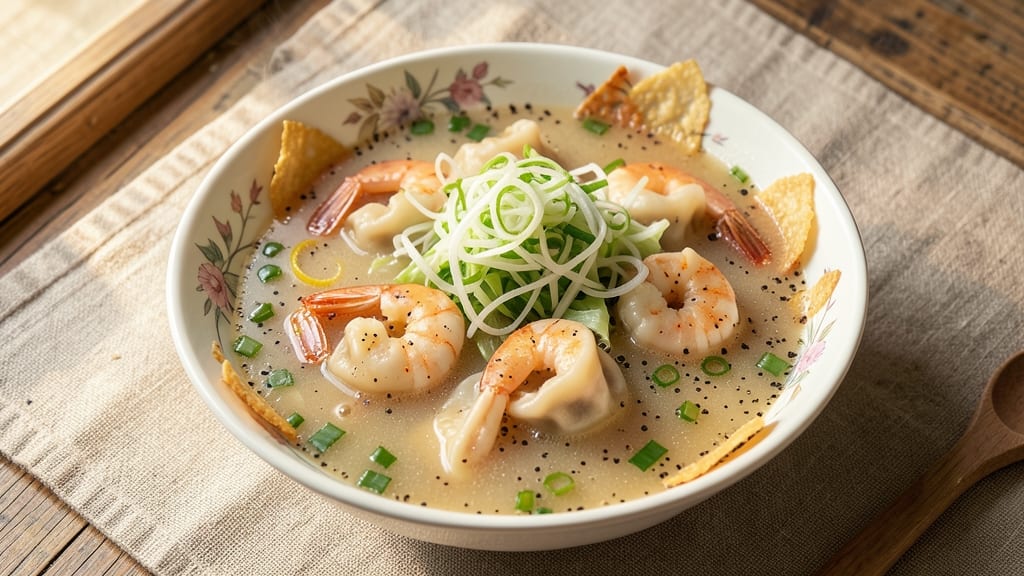
This authentic Chinese wonton soup recipe delivers the silky broth and delicate wonton crunch that make it a comfort classic. The secret lies in slow-simmered stock and handmade wontons with a tender filling that melts in your mouth—no shortcuts, just tradition.
I've perfected this version after years of testing, ensuring every spoonful captures the balance of savory, umami, and subtle spice that defines Chinese home cooking.
The broth starts with a clear, aromatic base—either rich chicken or pork stock—that's carefully seasoned with soy sauce, white pepper, and a touch of sesame oil for depth.
Meanwhile, the wontons are assembled with precision: thin wrappers encasing a filling of ground pork, shrimp, or vegetables, all pleated into neat little parcels. The key technique? Boiling the wontons just until they float—no overcooking, just enough to achieve that signature crisp-tender texture.
What sets this recipe apart is the attention to detail in clearing the broth—skimming off any impurities for a crystal-clear soup—and adjusting seasoning to perfection. The result is a bowl that's both nourishing and elegant: silky broth cradling delicate wontons, garnished with green onions and a drizzle of sesame oil.
It's the kind of soup that feels like a hug in a bowl, especially on chilly days.
While the classic version uses pork or shrimp fillings, I'll show you how to adapt it for vegetarian wontons without sacrificing flavor. The broth method remains the same, proving this recipe is as versatile as it is authentic.
Ready to make it? Let's begin with the stock—this is where the magic starts.
Ingredients for authentic chinese wonton soup
Silky broth meets delicate wontons—here's what you'll need for an authentic Chinese comfort classic.
| Ingredient | Amount | Notes |
|---|---|---|
| Wonton Wrappers 🍜 | 16 pieces | Square, dried sheets |
| Ground Pork 🐖 | ½ lb | Lean, finely ground |
| Shrimp 🦐 | ¼ lb | Peeled, deveined, finely chopped |
| Napa Cabbage 🥬 | ½ lb | Finely chopped, stems removed |
| Green Onions 🧅 | 4 whole | White and green parts, chopped |
| Chicken Stock 🍲 | 4 cups | Homemade or high-quality store-bought |
| Light Soy Sauce 🧂 | 2 tbsp | For seasoning broth |
| Dark Soy Sauce 🧂 | 1 tbsp | For color and depth |
| Sesame Oil 🫒 | 1 tbsp | Toasted, for aroma |
| White Peppercorns 🌶️ | ¼ tsp | Freshly ground, essential |
| Salt 🧂 | ½ tsp | Adjust to taste |
| Cornstarch 🌾 | 1 tbsp | For wonton thickening |
| Water 💧 | 2 tbsp | For cornstarch slurry |
| Vegetable Oil 🫒 | 1 tbsp | For frying wontons |
The wonton wrappers are non-negotiable for that signature texture. King Noodle or Martini brands are my go-tos—they're thin, pliable, and widely available in Asian markets or the international aisle. For the filling, ground pork is traditional, but shrimp adds a luxurious touch. If you're making vegetarian wontons, swap the pork for finely chopped mushrooms and tofu. The Napa cabbage should be crisp and vibrant—look for heads with tightly packed leaves. For the broth, homemade chicken stock elevates the dish, but Kitchen Basics or Pacific Foods brands are solid shortcuts. Always skim impurities for that crystal-clear finish.
No shrimp? Scallops or extra pork work well, but shrimp's sweetness is unmatched. Running short on Napa cabbage? Bok choy or regular cabbage in a pinch—just chop finely. The soy sauces matter: light soy for seasoning, dark soy for color. If you can only find one, use light soy and add a splash of molasses. For the sesame oil, toasted is key—skip the untoasted version, it lacks depth. The white peppercorns should be freshly ground; pre-ground loses potency quickly. If you're adapting this for vegetarian wontons, mushrooms and water chestnuts mimic the texture beautifully. The cornstarch slurry is your secret weapon—it keeps the wontons from sticking together while cooking.
Wonton wrappers keep best in the freezer—up to 6 months—but once opened, store them in an airtight container for 2 weeks. Ground pork and shrimp freeze well for 3 months, while Napa cabbage stays fresh in the fridge for 1 week. The broth can be made ahead and reheated—it tastes even better the next day as flavors meld. For leftovers, store wontons in the fridge for 3 days or freeze for 2 months. Reheat gently in broth to preserve that crisp-tender texture. Garnish with fresh green onions and a drizzle of sesame oil just before serving—never add it to hot soup, as it burns.
Why You'll Love This Recipe
- Minimal Chopping Required: I swear by this trick—just slice the Napa cabbage into thin strips while the broth simmers. No dicing, no fuss, and you still get that perfect wok-fried texture. Even my toddler could help (and usually does).
- Umami Bomb Combo: The ground pork and shrimp together? That’s where the magic happens. The pork adds rich depth, while the shrimp keeps it light—plus, the cabbage soaks up all the broth’s savory goodness like a sponge.
- Lunchbox Hero: Between us, this soup is my go-to for packed lunches. Assemble the wontons fresh, store them in the fridge, and dump everything into a thermos in the morning. Warm, filling, and zero sad desk lunches.
- Budget-Friendly Luxury: Honestly, this feeds four for under $15. Shrimp and pork stretch across bowls, the cabbage adds bulk without cost, and you can even swap in chicken if needed. Fancy enough for company, cheap enough for Tuesday.
Step-by-step instructions for authentic Chinese wonton soup
Here's how to craft a restaurant-quality wonton soup with crispy handmade wrappers and silky broth.
Prepare the Wonton Filling
In a mixing bowl, combine the 0.5 lb ground pork and 0.25 lb finely chopped shrimp. Add 2 tbsp light soy sauce, 1 tbsp dark soy sauce, 0.25 tsp freshly ground white peppercorns, and 0.5 tsp salt. Mix thoroughly with your hands until all ingredients are evenly distributed and the mixture becomes sticky.
This filling should be cohesive enough to hold its shape when pinched between your fingers. If it's too dry, add 1 tsp water at a time until it reaches the perfect consistency. Cover the bowl and refrigerate for 15 minutes to let the flavors meld. The cold temperature makes the filling easier to handle when shaping the wontons later.
Assemble and Fry the Wontons
Heat 1 tbsp vegetable oil in a small skillet over medium heat until shimmering. Working quickly, take one wonton wrapper and place 1 tsp filling in the center. Fold the wrapper diagonally to form a triangle, then press the edges firmly to seal. Repeat with all 16 wonton wrappers.
Carefully lower the wontons into the hot oil, working in batches to avoid overcrowding. Fry for 2-3 minutes per side until they turn golden brown and crispy. Remove with a slotted spoon and drain on paper towels. The wontons should be light and airy inside with a satisfying crunch. Keep them warm in a 200°F oven while you prepare the broth.
Make the Silky Broth
In a large pot, combine 4 cups chicken stock, 0.5 lb finely chopped napa cabbage, and 4 chopped green onions (white and green parts). Bring to a gentle simmer over medium-low heat and cook for 10 minutes until the cabbage softens slightly but remains vibrant. This low-and-slow approach prevents the broth from becoming cloudy.
In a small bowl, whisk together 1 tbsp cornstarch and 2 tbsp water to create a smooth slurry. Slowly pour this into the simmering broth while stirring constantly. The broth will thicken slightly into a velvety consistency. Remove from heat and stir in 1 tbsp toasted sesame oil for aroma. Taste and adjust seasoning with additional light soy sauce if needed.
Combine and Serve
Return the broth to low heat and gently add the crispy wontons. Let them simmer for 2-3 minutes until heated through. The wontons should float just below the surface, absorbing the broth's flavors without becoming soggy. Divide the soup among 4 bowls, ensuring each serving contains 4 wontons. Garnish with extra chopped green onions for color and freshness.
Serve immediately while the wontons remain crisp and the broth stays silky. The contrast between the crunchy wontons and smooth broth is what makes this soup authentically satisfying. Each bite should deliver a perfect balance of textures and flavors—salty, umami-rich filling, delicate cabbage, and aromatic broth.
Pro Tips For Making Authentic Chinese Wonton Soup
- PARBOIL WONTONS FIRST: I used to drop raw wontons straight into the simmering broth, and they’d either turn to mush or float like sad, half-cooked blobs. Instead, give them a quick 30-second blanch in boiling water first—just enough to set the edges. Then drop them into the broth. They’ll hold their shape and cook through without turning into soup.
- CHOP CABBAGE SMALLER THAN YOU THINK: That big, dramatic Napa cabbage wedge you see in photos? Chop it into ½-inch cubes instead. Big pieces turn to sad, limp sludge while the rest of the soup finishes. Tiny pieces soften just enough to melt into the broth without disappearing completely—like the perfect guest who stays but doesn’t overstay.
- DON’T OVERCROWD THE BROTH: I’ve seen people dump a whole tray of wontons into a pot and then wonder why the broth turns murky and the soup tastes like a science experiment. Work in batches—no more than 10-12 wontons at a time—so the broth stays clear and the wontons get that gentle, rolling boil they deserve. Your soup will look (and taste) like it belongs in a dim sum house, not a home-cook disaster.
- SAUTE SHRIMP IN DRY PAN: Here’s the thing about shrimp in wonton soup: if you add them straight to the broth, they’ll turn rubbery before the wontons are done. Instead, sear them dry in a hot pan for 30 seconds per side until just opaque—no need to cook through. Then toss them into the broth at the very end. They’ll stay tender, plump, and actually taste like shrimp, not boiled shoe leather. (Yes, I’ve made that mistake.)
Best sauces and condiments for this authentic chinese wonton soup
Classic Soy Sauce Base
The foundation of any great wonton soup broth is a balanced soy sauce blend. I start with 2 tbsp light soy sauce for seasoning and 1 tbsp dark soy sauce for rich color—this combination gives that signature umami depth.
Light soy provides the salty backbone, while dark soy adds a caramelized sweetness that enhances the broth's complexity. For an extra layer of flavor, I finish with 1 tbsp toasted sesame oil, which brings nutty aroma that's essential for authenticity. 🌶️
Sesame Oil Finishing
Never underestimate the power of a good drizzle of sesame oil at the end. Use only toasted sesame oil—the untoasted variety lacks the depth you need. I add 1 tbsp directly to the finished broth, letting it infuse for 30 seconds before serving.
For extra flair, drizzle another ½ tsp over each bowl just before eating. This technique elevates the soup from good to restaurant-quality in seconds. The key is patience—add it too early and the oil will burn, ruining the delicate flavor.
Spicy Peppercorn Twist
While traditional wonton soup relies on white pepper, I love adding a subtle kick with ¼ tsp freshly ground Sichuan peppercorns alongside the white pepper. The numbing, citrusy notes from Sichuan peppercorns create a fascinating contrast with the soup's richness.
For those who prefer milder heat, stick with ¼ tsp white peppercorns—just make sure it's freshly ground, as pre-ground pepper loses potency quickly. The aroma alone makes the broth smell like a Chinese home kitchen. ✨
Vegetarian Adaptations
For vegetarian wonton soup, swap the meat filling for a mix of finely chopped shiitake mushrooms, water chestnuts, and tofu. Boost the umami with 1 tbsp vegetarian oyster sauce and ½ tsp MSG (optional but recommended).
The broth benefits from an extra ½ tsp salt and 1 tsp soy sauce to compensate for the lack of meaty depth. This version still delivers that satisfying texture contrast while keeping the soup authentically flavorful. 🌱
Umami Boosters
Take your broth to the next level with these umami-packed additions. A 1-inch piece of kombu seaweed simmered in the broth for 10 minutes before removing adds oceanic depth.
For extra richness, stir in 1 tsp fish sauce (use vegetarian fish sauce if needed) or a splash of mushroom powder. These ingredients work magic in small amounts—start with half the suggested quantity and adjust to taste.
The goal is to enhance, not overpower, the natural flavors of the stock. 💫
Nutrition facts
Frequently asked questions
Can I make wonton soup without frying the wontons?
Yes! For a lighter version, you can boil the wontons instead of frying. Simmer them in the broth for 3-4 minutes until they float and are tender. The texture will be softer but still delicious. Just add ½ tsp sesame oil to the broth first to enhance flavor since you're skipping the crispy element.
What's the secret to keeping the broth clear?
The key is simmering gently and skimming impurities. Bring the broth to a gentle simmer (not a rolling boil) and use a fine-mesh skimmer to remove any foam or particles that rise to the surface. For extra clarity, chill the broth overnight and skim off any solidified fat before reheating.
How do I store leftover wontons?
Store cooked wontons in an airtight container in the fridge for 3 days or freeze for 2 months. To reheat, place them in a steamer basket over boiling water for 3-4 minutes or gently simmer in broth for 2 minutes. Never microwave dry—they'll turn rubbery.
Can I use store-bought wontons instead of homemade?
For convenience, use frozen wontons (like those from the Asian market). Follow package instructions for cooking time, but reduce it by 1 minute since they'll finish cooking in the broth. The flavor will be similar, though homemade wontons have that restaurant-quality crunch.
Why did my wontons turn out soggy?
Soggy wontons usually mean overcooking or improper sealing. Ensure you're frying them at medium heat for exactly 2-3 minutes per side—no longer! Also, press the edges firmly when sealing to prevent filling from leaking. If boiling, add them to the broth just before serving to maintain crispness.