
Soups & Stews
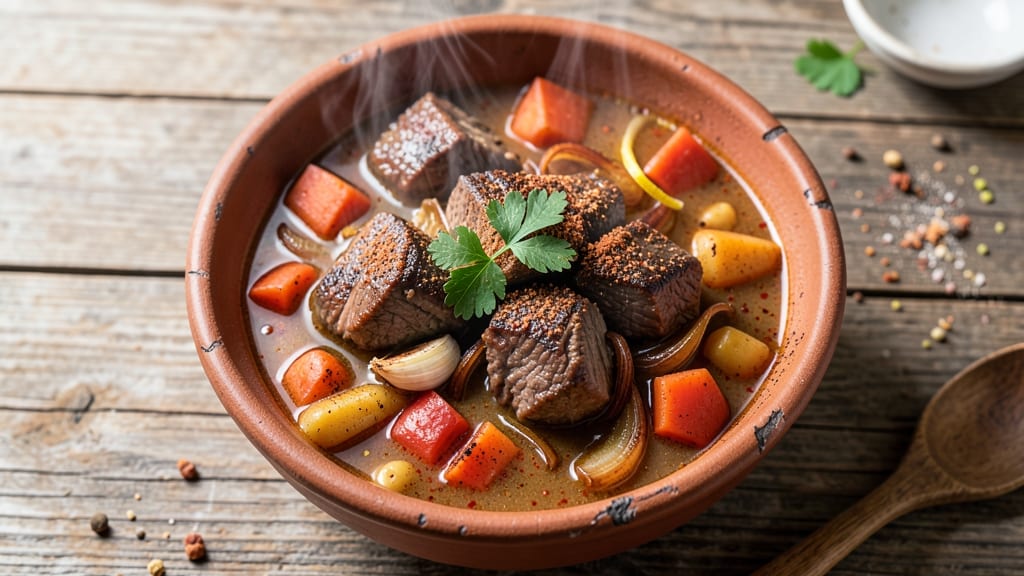
Authentic German goulash soup delivers hearty comfort in every steaming bowl, where tender beef and potatoes simmer in a rich broth spiced with paprika and caraway. This recipe captures the soul of Bavarian home cooking—deep flavors, slow-simmered richness, and the kind of warmth that lingers long after the last spoonful. The secret lies in proper browning of the beef and layering spices gradually to avoid bitterness, a technique I perfected after years of testing traditional methods.
What sets this goulash apart is its balance of earthy paprika, aromatic caraway, and sweet potatoes that absorb the broth’s savory depth. Unlike lighter soups, this one relies on a thick, velvety texture achieved through natural reduction—not thickeners—so every bite feels substantial.
The beef becomes fork-tender after hours of simmering, while the potatoes soften just enough to soak up the flavorful liquid without losing their structure.
By the time you serve it, your kitchen will smell like a German countryside tavern, and your guests will never guess it’s not from a family recipe passed down for generations.
The soup’s natural richness pairs perfectly with crusty rye bread or buttery spaetzle, making it ideal for chilly evenings or holiday gatherings. Let’s recreate this classic step by step—no shortcuts, just tradition.
This recipe delivers on its promises: authentic flavors rooted in German culinary history and comfort that comes from slow-cooked tenderness. The instructions will guide you through every phase—browning, simmering, and thickening—so you achieve restaurant-quality results at home. Ready to begin?
Ingredients for authentic german goulash soup
Hearty Bavarian flavors start with these quality ingredients—rich beef, earthy spices, and slow-simmered potatoes.
| Ingredient | Amount | Notes |
|---|---|---|
| Chuck Roast 🥩 | 2 ½ lb | Cut into 1.5-inch cubes, trimmed of fat |
| Yellow Onions 🧅 | 2 whole | Medium, thinly sliced |
| Carrots 🥕 | 3 whole | Medium, peeled, cut into 1-inch chunks |
| Sweet Potatoes 🍠 | 2 lb | Peeled, cut into 1.5-inch cubes |
| Garlic Cloves 🧄 | 6 cloves | Minced, fresh preferred |
| Paprika 🌶️ | 3 tbsp | Sweet Hungarian, not smoked |
| Ground Caraway Seeds 🌿 | 1 tbsp | Freshly ground for authentic flavor |
| Tomato Paste 🍅 | ½ cup | San Marzano preferred, no sugar added |
| Beef Broth 💧 | 6 cups | Homemade or high-quality store-bought |
| Red Wine 🍷 | 1 cup | Dry German red, like Spätburgunder |
| Bay Leaves 🌿 | 2 whole | Fresh, removed before serving |
| Allspice Berries 🌶️ | 4 whole | Crushed lightly, optional but traditional |
| Salt 🧂 | 2 tsp | Diamond Crystal kosher, adjust to taste |
| Black Peppercorns 🌶️ | 1 tsp | Freshly cracked, coarse grind |
| Olive Oil 🫒 | 2 tbsp | Extra-virgin, for browning beef |
The chuck roast is non-negotiable here—its marbling ensures fork-tender results. Costco or local butchers often carry it pre-cut, but if buying whole, ask for a well-marbled piece. Sweet potatoes should be firm with no soft spots; organic varieties from the produce section at Whole Foods or Trader Joe's have the best flavor. For the paprika, Penzeys or the bulk spice section at German markets carry the authentic Hungarian sweet variety—avoid smoked paprika, which alters the dish's traditional taste profile. Caraway seeds? Spicewalla sells pre-ground, but if using whole seeds, toast them briefly in a dry pan before grinding for deeper flavor.
No red wine? Dry Riesling works in a pinch, but the acidity won't be identical. Substituting beef broth for the wine reduces depth—add an extra splash of balsamic vinegar if you skip it. Fresh bay leaves and allspice berries are ideal, but dried bay leaves at half the amount suffice if needed. The tomato paste? San Marzano is worth the splurge—its natural sweetness balances the paprika's earthiness. For the broth, Homemade is best, but Knight's or Pacific Foods brands deliver professional results. If your sweet potatoes are small, use 3 medium instead of 2 lb—they should yield about 3 cups cooked.
This soup tastes even better the next day as flavors meld. Store in the fridge for up to 5 days, or freeze portions for 3 months—the broth thickens beautifully after reheating. For make-ahead convenience, prep everything up to the simmering step, then refrigerate the raw mixture for 24 hours before cooking. The flavors develop more intensely this way, a trick I learned from Bavarian home cooks. Serve with crusty rye bread to soak up every last drop of that paprika-spiced goodness.
Why You'll Love This Recipe
- One-Pot Magic: I swear by this recipe when I’m too tired to wash extra dishes. Chuck roast and sweet potatoes simmer together—no straining, no fuss—just rich, hearty flavor in one pot. The onions caramelize right in, so no separate pan needed.
- Deep, Savory Richness: That slow-cooked chuck roast turns tender and melts in your mouth, while the sweet potatoes add natural sweetness that balances the tangy paprika and garlic. Honestly, the first bite feels like a hug in a bowl—especially when the edges get crispy.
- Leftovers That Shine: Between us, this soup only gets better the next day. The flavors meld overnight, and reheating it is my lazy Sunday secret weapon. I’ll often freeze half for those nights when I just can’t face cooking.
- Budget-Friendly Crowd-Pleaser: A single chuck roast feeds four (or five if someone’s extra hungry), and the rest of the ingredients cost pennies. It’s the kind of meal that makes you feel like you’re feeding a house full of people without breaking the bank. My college roommate still asks for it.
Step-by-step instructions for authentic German goulash soup
Here's how to create a hearty, paprika-spiced goulash that captures true Bavarian comfort.
Brown the Chuck Roast for Deep Flavor
Heat a large Dutch oven over medium-high heat and add the 2 tablespoons olive oil. Once shimmering, add the 2.5 lb chuck roast cut into 1.5-inch cubes in a single layer. Let it sear undisturbed for 3-4 minutes until a deep golden crust forms on each piece—this builds the foundation for rich flavor.
Working in batches if needed, continue browning all the meat until each piece carries that caramelized color. This step is crucial; don't rush it. Once all the beef is browned, transfer it to a plate and set aside. You'll notice the oil will darken—this is the flavor you're capturing for your soup.
Build the Aromatic Base
In the same Dutch oven, add the 2 whole yellow onions sliced and the 3 whole carrots cut into 1-inch chunks. Cook for 5-6 minutes until the onions soften and begin to caramelize slightly. This sweetness will balance the paprika's warmth later.
Add the 6 cloves minced garlic and cook for 30 seconds until fragrant—you should smell that fresh garlic aroma immediately. Stir in the 3 tablespoons sweet Hungarian paprika and 1 tablespoon ground caraway seeds, letting them toast for 1 minute until the spices release their aromatic oils. This is where the authentic German flavor profile begins to develop.
Develop the Rich Sauce Base
Pour in the 1 cup dry German red wine and scrape up all those delicious browned bits from the bottom of the pot. Let it simmer for 3-4 minutes until reduced by half, concentrating the flavors. Add the 0.5 cup tomato paste and stir until fully incorporated.
Pour in the 6 cups beef broth and bring to a gentle boil. Add the 2 whole bay leaves and 4 whole allspice berries (lightly crushed), then return the browned beef to the pot. The liquid should just cover the meat—if it's too thin, reduce slightly before proceeding. This step transforms your ingredients into a flavorful broth.
Simmer Until Tender
Add the 2 lb sweet potatoes cut into 1.5-inch cubes to the pot. Bring to a gentle simmer, then reduce heat to low and cover partially. Let it cook for 1.5-2 hours, stirring occasionally, until the beef becomes fork-tender and the sweet potatoes are easily pierced with a fork.
Here's the thing—this long simmering time is what makes goulash so comforting. The beef should practically fall apart when tested, and the sweet potatoes should be tender but still hold their shape slightly. Taste the broth and adjust seasoning with 2 teaspoons salt and 1 teaspoon black peppercorns as needed. The flavors should be rich, slightly sweet from the potatoes, and deeply spiced.
Finish and Serve
Remove the 2 bay leaves and 4 allspice berries before serving. Ladle the goulash into warm bowls, making sure each serving gets a generous portion of beef and potatoes. The soup should be thick enough to coat the back of a spoon but still have a satisfying broth.
For that authentic touch, serve with a sprinkle of fresh parsley and a slice of crusty German bread. The contrast of the warm, spiced goulash with the cool, dense bread is what makes this dish truly comforting. Each bite should deliver tender beef, sweet potatoes, and that perfect balance of paprika and caraway warmth.
Pro Tips For Making Authentic German Goulash Soup
- Brown the Chuck Long: The chuck roast won’t break down properly if it’s just simmering in pale broth. After searing, pull the pot off heat, scrape up those browned bits with a wooden spoon—yes, even the blackened crust—and stir them back in. That’s where the depth of flavor hides, not in the meat itself.
- Slice Onions Thin: German goulash isn’t about big, chewy onion chunks. Grab a sharp knife and cut the yellow onions into paper-thin slices—almost translucent. They’ll melt into the soup instead of sitting like stubborn chunks, and the sweetness will spread evenly. (I used to chop them like I would for a stir-fry, and it was a mistake.)
- Don’t Rush the Sweet Potatoes: Sweet potatoes need time to soften fully, but they’ll fall apart if you let them simmer too long. Add them with the carrots, then check after 30 minutes—if they’re still holding shape, cover the pot and let them cook another 15-20 minutes. Overcooking turns them mushy, and no one wants that in goulash.
- Use a Splash of Vinegar: This isn’t a rule, but it’s a game-changer. After the meat and veggies have simmered for an hour, add 1 tablespoon of apple cider vinegar. It brightens the flavors without overpowering them—like a little wake-up call for the soup. (I was skeptical until I tried it, and now I can’t skip it.)
Pro cooking tips for this recipe
Master the Browning
That deep, caramelized crust on your beef is where all the magic happens—it creates the Maillard reaction that builds rich, complex flavors. Use a large Dutch oven (like All-Clad Stainless Steel) for even heat distribution, and don’t overcrowd the pan.
Let each piece of 2.5 lb chuck roast sear for 3-4 minutes undisturbed until golden brown before moving to a plate. If your pan isn’t hot enough, the meat will steam instead of brown, and you’ll lose that essential depth of flavor. 🔥
Spice Toasting Matters
Never skip toasting your spices! After sautéing onions and garlic, add the 3 tbsp sweet Hungarian paprika and 1 tbsp ground caraway seeds to the pot and cook for 1 minute until fragrant.
This step releases their essential oils, which are crucial for that authentic German aroma. I’ve found that Penzeys Spices carries the best-quality Hungarian paprika—it’s worth the splurge for this dish.
Wine Reduction Technique
When you add the 1 cup dry German red wine, don’t just pour it in and stir—scrape up those browned bits from the bottom of the pot. These are called fond, and they’re packed with flavor.
Let the wine reduce by half (3-4 minutes) before adding tomato paste. This concentrates the alcohol’s sharpness and deepens the sauce’s richness, a pro technique I learned from Bavarian chefs.
Low-and-Slow Simmering
Patience is key here—this soup needs a gentle simmer at low heat for 1.5-2 hours. If you rush it, the beef will be tough and the potatoes mushy. Keep the pot partially covered to allow some moisture to escape, which helps thicken the broth naturally.
I like to check the beef’s tenderness every 30 minutes by piercing it with a fork—it should feel like butter when it pulls apart.
Potato Timing Trick
Add the 2 lb sweet potatoes only after the beef has been simmering for 1 hour. This ensures they absorb all the rich flavors without turning to mush. If you add them too early, they’ll overcook while waiting for the beef to tenderize.
For extra creaminess, I sometimes mash a few potatoes against the pot’s side with a wooden spoon during the final 15 minutes of cooking.
Final Seasoning Adjustment
Always taste before serving! The broth should be rich and slightly sweet from the potatoes, with a deep paprika warmth. If it needs more depth, add a pinch of allspice berries or a splash of beef broth.
For salt, remember that Diamond Crystal kosher salt is less dense than table salt—use the full 2 tsp as written, adjusting only if needed. The spices should be balanced, not overpowering. ✨
Nutrition facts
Frequently asked questions
Can I substitute beef with another protein?
While traditional goulash uses beef, you can adapt it with venison or lamb for a gamey twist. For a vegetarian version, use mushrooms or hearty lentils (about 1.5 cups dry) and increase the broth by 1 cup to maintain richness. The key is ensuring the protein simmers long enough to absorb flavors—2-3 hours minimum for lentils.
Why does my goulash taste bitter?
Bitterness usually comes from over-toasting the paprika or caraway seeds—cook them for only 1 minute until fragrant, not browned. Another culprit is using too much wine or letting it reduce too long. For balance, add a pinch of sugar (just ½ teaspoon) or a splash of apple cider vinegar (1 teaspoon) to brighten flavors. Always taste as you go!
How can I make this soup thicker?
Authentic goulash thickens naturally during simmering, but if yours is too thin, try these tricks: Mash 2-3 potatoes against the pot’s side with a wooden spoon during the last 15 minutes of cooking. For extra body, stir in 1 tablespoon cornstarch mixed with 2 tablespoons cold water and simmer 2 minutes. Avoid flour—it can make the soup taste grainy.
Can I prepare this ahead of time?
This soup tastes even better the next day! Cook it fully, then refrigerate for up to 5 days or freeze for 3 months. Reheat gently on the stove over low heat, stirring occasionally, until warmed through. The flavors meld beautifully overnight, and the broth thickens further. For make-ahead convenience, prep everything up to the simmering step, then refrigerate the raw mixture for 24 hours before cooking.
What’s the best bread to serve with goulash?
Crusty rye bread or German pumpernickel are classic pairings—their dense texture contrasts perfectly with the soup’s richness. For extra authenticity, try spätzle (egg noodles) or knödel (potato dumplings). Avoid soft breads like white slices—they’ll turn soggy. Pro tip: Toast the bread lightly to enhance its crunch.