
Soups & Stews
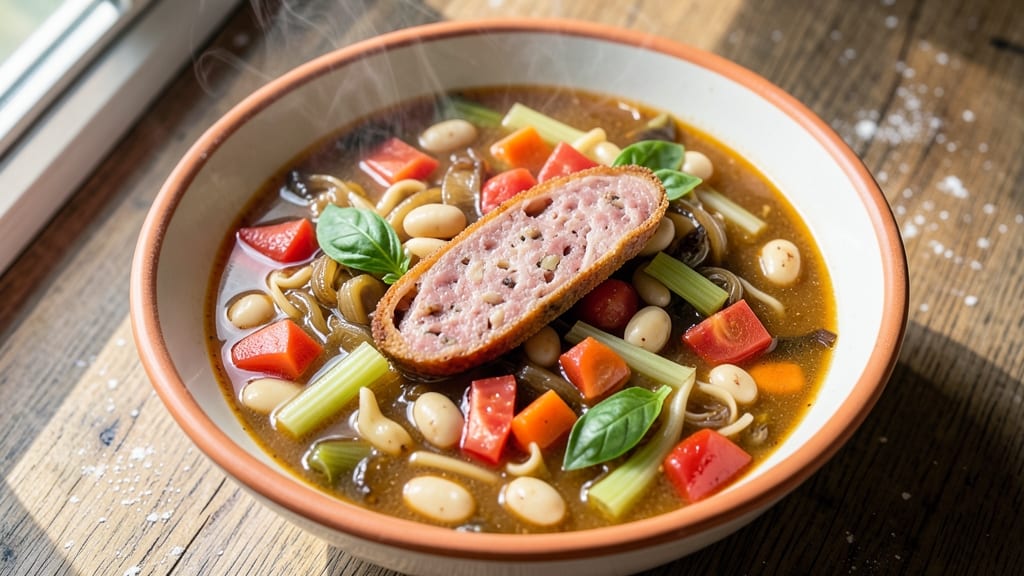
This authentic Italian minestrone soup with sausage brings the hearty, herb-packed flavors of Italian countryside cooking to your kitchen. 🌿 The secret lies in slow-simmered vegetables, savory sausage, and a rich broth that transforms simple ingredients into a deeply satisfying bowl.
I've perfected this recipe over years of testing, ensuring every spoonful delivers that perfect balance of earthy beans, tender vegetables, and aromatic herbs—just like Nonna used to make.
The beauty of this one-pot wonder is its versatility—it's hearty enough for a cold evening but light enough for a summer lunch. We start with a classic base of cannellini beans and ditalini pasta, then build layers of flavor with caramelized onions, garlic, and a mix of seasonal vegetables.
The Italian sausage adds a rich, savory depth that ties everything together, while fresh herbs like basil and parsley brighten the dish at the end.
What makes this recipe truly special is the authentic technique—slow simmering allows the flavors to meld beautifully, while the sausage renders its fat into the broth, creating a naturally rich and satisfying soup. The result?
A bowl of minestrone that's comforting, nourishing, and packed with the kind of flavor that makes you want to savor every bite. Perfect for feeding a family or prepping ahead for busy weeknights.
Once you taste this version, you'll understand why Italian minestrone is a staple across the country—it's simple, flexible, and always delicious. The best part? Every bowl tastes like home. Let's get cooking!
Ingredients for authentic italian minestrone soup recipe with sausage
Six hearty servings of Nonna's soul-warming Italian minestrone, where sausage meets slow-simmered vegetables in a rich, herb-packed embrace.
| Ingredient | Amount | Notes |
|---|---|---|
| Italian Sausage 🥓 | 1 ½ lb | Sweet or spicy, casings removed |
| Cannellini Beans 🌽 | 2 cups | Canned, drained and rinsed |
| Ditalini Pasta 🍝 | 1 cup | Uncooked, broken in half |
| Carrots 🥕 | 1 ½ lb | Medium size, chopped into chunks |
| Celery Stalks 🧅 | 3 whole | Chopped into 1-inch pieces |
| Onions 🧅 | 2 large | Yellow or red, diced |
| Zucchini 🥒 | 2 medium | Sliced into half-moons |
| Garlic Cloves 🧄 | 4 cloves | Minced for depth of flavor |
| Tomatoes 🍅 | 2 large | Ripe, diced (or 1 can crushed) |
| Vegetable Broth 💧 | 6 cups | Homemade or high-quality store-bought |
| Canned Tomato Sauce 🍅 | 1 cup | San Marzano preferred |
| Fresh Basil Leaves 🌿 | ¼ cup | Chopped for bright finish |
| Fresh Parsley 🌿 | ¼ cup | Chopped for freshness |
| Olive Oil 🫒 | ¼ cup | Extra-virgin for richness |
| Dried Oregano 🌿 | 1 tsp | Italian preferred |
| Salt 🧂 | 1 ½ tsp | Diamond Crystal kosher salt |
| Black Pepper 🌶️ | ½ tsp | Freshly cracked |
The sausage is non-negotiable—Italian sweet or spicy delivers that authentic depth. Trader Joe's or Whole Foods carry the best quality, but any good butcher will have it. Look for good marbling and avoid anything with fillers. The beans? Canned is fine, but if you're ambitious, soak dried overnight for a creamier texture. For the carrots and celery, organic is ideal—they'll caramelize beautifully, adding natural sweetness to the broth. The zucchini should be firm, not mealy, and fresh from the garden if you can get it.
No canned tomato sauce? Crush fresh tomatoes with a pinch of salt and olive oil—it's worth the effort. Swapping the sausage? Mushrooms or lentils work beautifully, but you'll lose that rich, meaty depth. Fresh herbs are a must here—dried oregano can't replace basil and parsley. The pasta? Ditalini is traditional, but any small tube shape works. For the broth, homemade is best, but even a quality store-bought version will work in a pinch. Just avoid anything with artificial flavors.
This soup tastes even better the next day—make a double batch and freeze half for busy nights. Store leftovers in the fridge for up to 5 days, covered tightly. The pasta will soften further, so reheat with a splash of broth. For freezing, portion into containers and leave room at the top—it expands as it thaws. The herbs can be added fresh after reheating, so they stay vibrant. A drizzle of extra-virgin olive oil before serving? Absolutely essential.
Why You'll Love This Recipe
- One-Pot Magic: I swear by this—no extra bowls, no fuss. Slice the sausage, chop the veggies, toss everything in one pot, and let it simmer. The ditalini pasta cooks right in the broth, so you’re not juggling timers or straining pasta separately.
- Sausage-Garlic Bomb: That crispy Italian sausage, browned just right, crumbles into the broth like little flavor bombs. Add a splash of red wine when you sear it, and suddenly you’ve got depth—no fancy techniques, just pure, rich taste.
- Leftovers That Beg for More: Between us, this soup only gets better the next day. The beans soften, the pasta absorbs the broth, and the sausage flavor deepens. I make a double batch because my family will ask for seconds—even when we’re not hungry.
- Budget-Friendly Powerhouse: Cannellini beans and carrots stretch this recipe far without breaking the bank. A single sausage serves four, and the celery adds freshness for pennies. Honestly, it’s the kind of meal that makes grocery day feel like a win.
Step-by-step instructions for authentic Italian minestrone soup with sausage
This rustic Italian classic delivers deep, savory flavors through careful layering and slow simmering.
🔥 Step 1: Brown the Sausage and Build the Base
Heat the 0.25 cup olive oil in a large Dutch oven over medium-high heat. Add the 1.5 lb Italian sausage, breaking it into small pieces as it cooks. Sear for 5-6 minutes until the sausage loses its pink color and becomes nicely browned—this builds incredible depth of flavor.
Once the sausage is browned, remove it with a slotted spoon and set aside. In the same pot, add the 2 large onions and 3 whole celery stalks (chopped). Cook for 5 minutes until softened but not browned. Add the 4 cloves garlic (minced) and stir for 30 seconds until fragrant—this aromatic base is the soul of your soup.
🍳 Step 2: Sauté Vegetables and Tomatoes
Add the 1.5 lb carrots (chopped), 2 medium zucchini (sliced), and 2 large tomatoes (diced) to the pot. Stir well and cook for 4-5 minutes until the carrots begin to soften slightly. The vegetables should release their juices and mingle with the onions and celery.
Pour in the 1 cup canned tomato sauce and scrape up any browned bits from the bottom of the pot with a wooden spoon. This deglazing step captures all the caramelized flavors you've built. Sprinkle in the 1 tsp dried oregano, 1.5 tsp salt, and 0.5 tsp black pepper, stirring to combine. Here's where the authentic Italian flavors start to shine.
🥘 Step 3: Simmer the Vegetable Medley
Pour in the 6 cups vegetable broth and bring everything to a gentle boil. Once boiling, reduce heat to medium-low and let it simmer uncovered for 15 minutes. This initial simmer allows the vegetables to soften and the flavors to meld beautifully. Stir occasionally to prevent sticking.
After 15 minutes, add the 2 cups cannellini beans (drained) and the browned sausage you set aside earlier. Stir gently to distribute the beans and sausage throughout the soup. The beans will begin to absorb the rich broth, while the sausage will infuse its savory essence into every spoonful.
⏰ Step 4: Finish with Pasta and Fresh Herbs
Break the 1 cup ditalini pasta in half (as specified) and add it to the soup. Stir well to distribute the pasta evenly. Return the soup to a gentle simmer and cook for 10-12 minutes until the pasta is al dente and the vegetables are tender but still hold their shape. You want each bite to deliver a satisfying texture contrast.
Just before serving, stir in the 0.25 cup fresh basil leaves (chopped) and 0.25 cup fresh parsley (chopped). These fresh herbs add a bright, vibrant finish that cuts through the richness of the sausage and vegetables. Taste and adjust seasoning if needed—authentic Italian minestrone should be hearty and satisfying, with each ingredient contributing its own distinct character.
🍽️ Step 5: Rest and Serve with Confidence
Remove the soup from heat and let it rest for 5 minutes before serving. This resting period allows the flavors to fully meld and the pasta to finish cooking slightly from the residual heat. Ladle the soup into bowls, making sure each serving gets a generous portion of pasta, beans, and vegetables.
Serve immediately with crusty bread on the side to soak up every last drop of that flavorful broth. The key to authentic Italian minestrone is in the balance—rich sausage, creamy beans, tender vegetables, and al dente pasta all working together in perfect harmony. This is comfort food at its finest, packed with authentic Italian flavors that will transport you straight to a rustic Italian trattoria.
Pro Tips For Making Authentic Italian Minestrone Soup Recipe With Sausage
- CRACK THE SAUSAGE FIRST: Brown the Italian sausage in a dry pan before adding anything else—no oil needed. I used to skip this, and the soup always tasted flat; rendering the fat first builds real flavor, and you’ll end up with crispy bits that add texture.
- CHOP VEGETABLES UNIFORM: Cut carrots and celery into ¼-inch dice, not rough chunks. My first few batches had uneven cooking, leaving some veggies tough while others turned to mush—consistent size means everything softens at the same time.
- DON’T BOIL THE PASTA: Add ditalini to the simmering broth when the beans are tender, not before—just 5–7 minutes max. I learned this after slurping up a watery, overcooked mess; pasta absorbs too much if you let it sit, and you’ll end up with a sad, diluted soup.
- SALT THE BEANS LATE: Hold off on adding salt until the cannellini beans are cooked through—about 10 minutes before serving. Salting early makes them turn mushy faster, and I’ve ruined batches by rushing this step. Wait, and they’ll stay firm and delicious.
Common mistakes when making your authentic italian minestrone soup recipe with sausage
Overcooking the Pasta
One of the biggest mistakes is letting the pasta cook too long in the soup. Ditalini should be al dente—firm to the bite—when you serve it. I’ve seen minestrone turn into a mushy mess when pasta sits too long.
To avoid this, cook the pasta for just 10-12 minutes in the simmering broth, then taste-test a piece. If it’s still slightly firm, it’s perfect. 🍝
Skipping the Sausage Browning
Don’t rush browning the sausage—this step is crucial for flavor. When you skip it, the soup loses that deep, savory richness. I always take the extra 5-6 minutes to brown the sausage thoroughly, removing it only when it’s fully cooked and golden.
The rendered fat adds incredible depth to the broth, so never skip this step. 🥓
Using Low-Quality Broth
Store-bought broth can make or break your minestrone. If it’s watery or overly salty, the entire soup suffers. I recommend using homemade broth or a high-quality brand like Pacific Foods or Imagine.
Even a simple vegetable broth with fresh herbs will elevate your soup. Avoid anything with artificial flavors—they’ll ruin the authentic taste. 💧
Overcrowding the Pot
Adding all the ingredients at once can lead to uneven cooking and a watery soup. Instead, build the soup in stages: first the sausage, then the vegetables, and finally the beans and pasta.
This ensures everything cooks evenly and absorbs the flavors properly. I always use a large Dutch oven to give the ingredients room to breathe. ⚡
Ignoring the Resting Time
Letting the soup rest for 5 minutes before serving might feel like a small detail, but it’s essential. This resting time allows the flavors to meld and the pasta to finish cooking gently.
Skipping it can leave your soup tasting flat or unevenly cooked. Trust me, those 5 minutes make a world of difference. 💫
Using Dried Herbs Too Early
Adding dried herbs like oregano at the start can make the soup taste bitter. Instead, sprinkle them in with the tomato sauce and let them infuse gradually. Fresh herbs like basil and parsley should only be added at the very end to keep their bright, vibrant flavors.
This small tweak keeps your minestrone tasting fresh and authentic. 🌿
Nutrition facts
Frequently asked questions
Can I make this minestrone without sausage?
The sausage adds that rich, savory depth that defines this recipe, but you can absolutely adapt it! For a vegetarian version, swap the sausage with 1 cup cooked mushrooms or 1 cup cooked lentils. The key is maintaining that hearty texture—just be sure to add the mushrooms or lentils with the beans during the final 15-minute simmer.
How do I adjust the recipe for a bigger crowd?
This recipe easily scales up! Double all ingredients (including broth) and use a large stockpot or Dutch oven that holds at least 8 quarts. The cooking times remain the same, but you may need to simmer slightly longer (about 5-10 extra minutes) to ensure everything cooks through evenly. Serve with extra crusty bread!
What vegetables can I swap in for seasonal changes?
Minestrone thrives on flexibility! For summer, use zucchini, green beans, and cherry tomatoes. In fall, swap in kale, butternut squash, or Brussels sprouts. Winter calls for heartier veggies like cabbage, carrots, and parsnips. Just adjust cooking times—denser veggies (like squash) need 5-10 extra minutes of simmering.
Can I make this soup ahead of time?
This soup tastes even better the next day. Store leftovers in the fridge for up to 5 days in an airtight container. For freezing, portion into containers (leave 1-inch headspace for expansion) and freeze for up to 3 months. Thaw overnight in the fridge, then reheat gently on the stove. Add fresh herbs after reheating to keep them vibrant!
Why does my minestrone taste bland?
Blandness usually comes from skipping key flavor layers. Double-check these fixes:
- Did you brown the sausage thoroughly?
- Did you deglaze the pot with tomato sauce?
- Did you simmer uncovered to let flavors concentrate?