
Soups & Stews
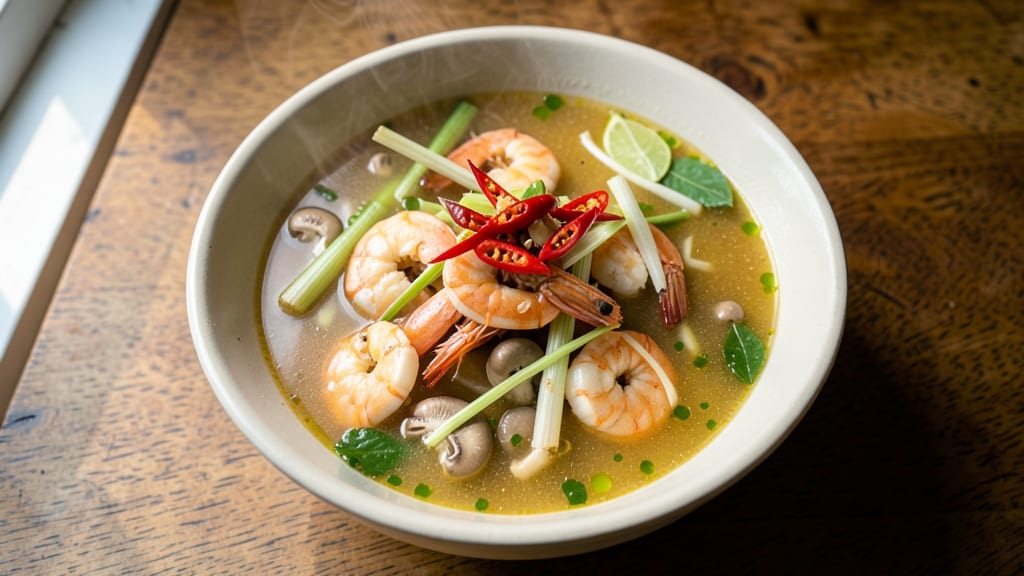
This authentic tom yum goong soup recipe delivers the perfect balance of sour, spicy, and savory flavors that define Thailand's most beloved shrimp soup. The secret lies in fresh herbs like lemongrass and galangal, which infuse the broth with aromatic depth while chili and lime create that signature tangy kick.
I've perfected this recipe over years of testing, ensuring every bowl delivers restaurant-quality results at home.
The beauty of this dish is in its simplicity—just a few key ingredients transform into a complex, fragrant soup. You'll start with a fragrant broth built on lemongrass and galangal, then layer in shrimp, mushrooms, and a splash of lime juice to brighten the flavors.
The result is a clear, fragrant broth that's both light and deeply flavorful, with shrimp that stays tender and succulent.
What makes this recipe truly authentic is the careful balance of flavors—too much spice can overpower, while too little lime will lack brightness. I'll guide you through adjusting the heat and sourness to suit your taste, ensuring each bowl is perfectly harmonized.
The aroma alone will transport you to a bustling Bangkok street market.
Serve this vibrant soup with steamed jasmine rice and fresh herbs on the side for garnishing. The contrast of cool rice against the warm, spicy broth makes every bite even more satisfying. Let's create this iconic Thai dish together—your taste buds will thank you.
Ingredients for authentic tom yum goong soup
Fresh herbs and shrimp create this iconic Thai soup with perfect spicy-sour balance.
| Ingredient | Amount | Notes |
|---|---|---|
| Large Shrimp (Peeled, Deveined) 🦐 | 1 lb | Fresh or frozen, tail-on preferred |
| Lemongrass Stalks 🌿 | 3 whole | Bruised, bottom 3 inches only |
| Galangal Slices 🧅 | 3 pieces | Fresh, about 1-inch thick slices |
| Straw Mushrooms 🍄 | 8 oz | Whole, sliced into quarters |
| Bird's Eye Chilies 🌶️ | 6 whole | Adjust for heat preference |
| Lime Juice 🍋 | ¼ cup | Freshly squeezed, about 2 limes |
| Fish Sauce 🍶 | 2 tbsp | Red Boat preferred |
| Coconut Milk 🥥 | ½ cup | Full-fat for creaminess |
| Garlic Cloves 🧄 | 4 cloves | Minced, fresh preferred |
| Shallots 🧅 | 2 whole | Minced, about 0.25 cup |
| Cane Sugar 🍚 | 1 tbsp | Or brown sugar |
| Salt 🧂 | 1 tsp | Adjust to taste |
| Fresh Cilantro 🌿 | ¼ cup | Chopped, for garnish |
| Thai Basil 🌱 | 0.1 cup | Optional, for garnish |
| Vegetable or Chicken Stock 💧 | 4 cups | Homemade preferred |
The galangal and lemongrass are non-negotiable for that signature aroma. Asian markets usually carry both fresh—look for firm, pale galangal with no dark spots. If you can't find galangal, ginger at half the amount works in a pinch, but it won't be authentic. The shrimp should be fresh, not frozen unless it's previously cooked—tail-on keeps it intact. For the broth, Red Boat fish sauce is the gold standard, but any good-quality brand will do. The mushrooms add body without overpowering—straw mushrooms are traditional, but oyster mushrooms work too.
No Thai basil? Regular basil or cilantro will work, though Thai basil has that distinct anise flavor. The chilies are where you control the heat—remove seeds for less spice. If you're sensitive to heat, start with 4 chilies and add more later. The coconut milk is just for rounding out the broth—don't skip it entirely, but if you're avoiding dairy, coconut cream works too. For the sugar, palm sugar or brown sugar are ideal, but regular cane sugar dissolves just fine. The lime juice is crucial—squeeze it fresh, don't use bottled.
This soup tastes even better the next day as the flavors meld. Store leftovers in the fridge for 3-4 days, covered. For freezing, portion into containers with some headspace—it expands when frozen. Reheat gently on the stove, adding a splash of water if it's too thick. The broth reduces as it sits, so add a little stock when reheating if you prefer it lighter. Garnish with fresh herbs right before serving—they wilt fast once added to hot soup.
Why You'll Love This Recipe
- No-Chop Nightmare: The shrimp are already peeled and deveined—half the battle won. I just toss in the galangal and lemongrass whole (yes, even the knobby ends), let the broth work its magic, and strain it later. That’s 10 minutes of prep I’ll never get back.
- Tangy Heat Payoff: Between us, the first sip is always the best. The shrimp plump up in that bright, acidic broth while the bird’s eye chilies and galangal sing—sharp, herbal, and just spicy enough to make you reach for the soup again. Straw mushrooms soak up the flavor like sponges, adding chewy texture without extra work.
- Weeknight Crowd-Pleaser: I make this when my friend group texts me at 7:30pm asking what’s for dinner. It’s got enough depth for the galangal lovers but mild enough for the "I’ll just have one bite" skeptics. Serve it with jasmine rice, and suddenly you’re hosting a Thai feast without the fuss.
- Broth Goldmine: Here’s what sold me—this soup improves the next day. The flavors meld overnight, and the broth reduces just enough to get richer. I freeze leftovers in ice cube trays; a few cubes later, I’ve got instant soup base for lazy mornings or a quick lunch. (Yes, even on a Tuesday night.)
Step-by-step instructions for authentic tom yum goong soup
Here's how to build this iconic Thai soup with bold flavors and perfect balance.
Prepare the Aromatic Base
In a large pot over medium-high heat, add the 4 cups vegetable or chicken stock and bring to a gentle boil. While waiting, bruise the bottom 3 inches of each 3 lemongrass stalks by rolling them on a cutting board with the heel of your hand. This releases their essential oils.
Add the bruised lemongrass, 3 pieces galangal slices, 6 whole bird's eye chilies (adjust for heat), 4 cloves minced garlic, and 2 whole minced shallots to the boiling stock. Let it simmer uncovered for 5 minutes until the aromatics infuse and the broth smells intensely fragrant. Here's the thing—don't rush this step. The depth of flavor comes from letting these ingredients steep properly.
Build the Signature Broth
Reduce heat to medium-low and stir in the 2 tablespoons fish sauce and 1 tablespoon cane sugar. The broth should taste perfectly balanced—savory from the fish sauce, slightly sweet from the sugar, and tangy from the aromatics. Taste and adjust seasoning with more fish sauce if needed (this is where the authentic umami comes from).
Add the 8 ounces sliced straw mushrooms and simmer for 3-4 minutes until they soften slightly. The mushrooms should absorb some of the broth but still maintain their shape. This is the moment that matters: if the broth starts to look too thin, reduce heat slightly to let it concentrate naturally—we're building layers of flavor, not just making soup.
Add the Shrimp and Coconut Milk
Gently add the 1 pound peeled, deveined shrimp to the simmering broth. Cook for exactly 2-3 minutes until they turn opaque and curl slightly—this ensures they're cooked through but still tender. The shrimp should float to the surface when done.
Stir in the ½ cup coconut milk and let the soup simmer gently for 1 minute. The coconut milk adds a subtle creaminess that balances the acidity and heat. Don't let it boil vigorously after adding this—just a gentle simmer maintains the texture. Here's where it gets fun: the coconut milk should blend seamlessly, creating a silky finish without overpowering the other flavors.
Finish with Acid and Herbs
Remove the pot from heat and stir in the ¼ cup lime juice. The acidity brightens all the flavors and cuts through the richness. Give it a taste—you should experience a perfect balance of spicy, sour, salty, and umami. If it needs more heat, add a pinch of salt or a dash of fish sauce.
Divide the soup among bowls and garnish with ¼ cup chopped fresh cilantro and ⅛ cup Thai basil. The herbs add freshness and visual appeal. Serve immediately with steamed jasmine rice on the side—this is traditional and helps balance the soup's intensity. Real talk: the first bite should make your taste buds dance with all those contrasting flavors working together.
Pro Tips For Making Authentic Tom Yum Goong Soup
- Pound the galangal: I learned this the hard way—galangal’s tough fibers resist flavor release if left whole. Use the flat side of a knife to smash the slices against a cutting board until they bruise and release their citrusy aroma. This isn’t about mincing, just breaking down the cell walls so the broth sings.
- Sear shrimp in batches: Crowding the pan turns shrimp rubbery, and nobody wants that. Work in 2-3 batches over medium-high heat for 30 seconds per side—just until opaque. The residual heat will finish them in the broth, and you’ll avoid the sad, gray shrimp look that kills authenticity.
- Bloom spices with chili paste: Skip the direct heat—toss your sliced chilies and galangal into the pot first, then add 1 tablespoon of chili paste. Let it sizzle for 30 seconds before adding broth. This step locks in the spice depth instead of burning it, which is the difference between "good" and "restaurant-quality."
- Strain the broth—then un-strain: Yes, even if it looks messy. Strain the broth after simmering to remove solids, then press the lemongrass and galangal through a fine-mesh sieve with a spoon. You’ll catch all that aromatic oil hiding in the fibers—no, it’s not cheating, it’s the thing that makes your soup taste like your Thai neighbor’s.
Flavor customization for this authentic tom yum goong soup
Spice Level Control
Adjust heat by controlling the bird's eye chilies—start with 4 whole chilies for mild heat, or use 6-8 for authentic spice. Remove seeds before adding to reduce intensity.
For extra kick, add 1 tsp chili flakes at the end. I find 3-4 chilies gives a balanced heat that doesn't overpower the broth's complexity. 🌶️
Sourness Balance
The lime juice is key for brightness—start with ¼ cup and add more to taste. If your lime juice isn't fresh, squeeze 2-3 limes for maximum tang. For a sweeter profile, increase the cane sugar to 1.5 tbsp or add 1 tsp honey at the end.
The broth should finish with a zesty finish, not overwhelming sourness.
Creaminess Adjustments
For a richer texture, add ½ cup coconut milk as directed, but if you prefer a lighter broth, reduce to ¼ cup. Want extra creaminess? Stir in 1 tbsp coconut cream at the end.
The coconut milk should blend seamlessly—never boil it vigorously after adding, or it'll separate. This step rounds out the broth beautifully.
Herb Variations
Swap Thai basil for regular basil or cilantro if unavailable, but Thai basil's anise notes are signature. For a vegetarian twist, replace shrimp with tofu cubes or mushrooms—simmer them 5 minutes longer to absorb flavors.
Garnish with bean sprouts or crushed peanuts for added crunch. Fresh herbs elevate the dish visually and aromatically.
Sweet-Savory Tweaks
Enhance umami with 1 extra tbsp fish sauce if your broth tastes flat. For depth, add 1 tsp soy sauce (use tamari for gluten-free). If the broth lacks sweetness, stir in ½ tsp palm sugar or 1 tsp honey at the end.
The goal is a harmonious balance—taste as you go! The sugar should complement, not overpower, the other flavors.
Regional Adaptations
In Central Thailand, the broth is lighter with less coconut milk—just ¼ cup. For a Southern Thai version, add 1 tbsp tamarind paste for deeper tang.
In Northern Thailand, include 1-inch ginger slices for warmth. Each region tweaks the balance, but the core flavors remain: spicy, sour, and savory. 🗺️
Nutrition facts
Frequently asked questions
Can I substitute shrimp with another protein?
For a vegetarian version, use tofu cubes or mushrooms—simmer them 5 minutes longer than shrimp to absorb the flavors. If using chicken, cut into 1-inch pieces and cook for 8-10 minutes until fully done. The key is ensuring the protein stays tender while the broth develops its signature complexity.
Why does my broth look cloudy instead of clear?
Cloudiness usually means the broth hasn't simmered long enough to clarify. Strain the broth through a fine-mesh sieve after removing the aromatics to remove any sediment. For extra clarity, skim off any foam that forms during simmering. The broth should be vibrant but still transparent—this indicates proper infusion of the lemongrass and galangal.
How do I make this soup less spicy?
Reduce the number of bird's eye chilies—start with 3-4 whole chilies instead of 6, and remove seeds before adding. For an already-made spicy batch, stir in 1 tbsp coconut milk or ½ cup extra lime juice to balance the heat. Avoid adding water, as it dilutes the flavors rather than mellowing the spice.
What's the best way to store leftovers?
Store in an airtight container in the fridge for 3-4 days. The flavors actually improve overnight! For freezing, portion into containers with 1-inch headspace (liquids expand when frozen). Reheat gently on the stove—add a splash of water if the broth thickens too much. Never microwave, as it can make the shrimp rubbery.
Can I make this soup in a slow cooker?
Yes, but with adjustments! Add all ingredients except shrimp and coconut milk to the slow cooker on low heat for 2 hours. Then stir in shrimp and cook for 10-15 minutes until just done. Add coconut milk and lime juice at the very end—don't let it cook, or it'll curdle. The slow cooker method works best for milder heat since it's harder to control spice levels.