
Soups & Stews
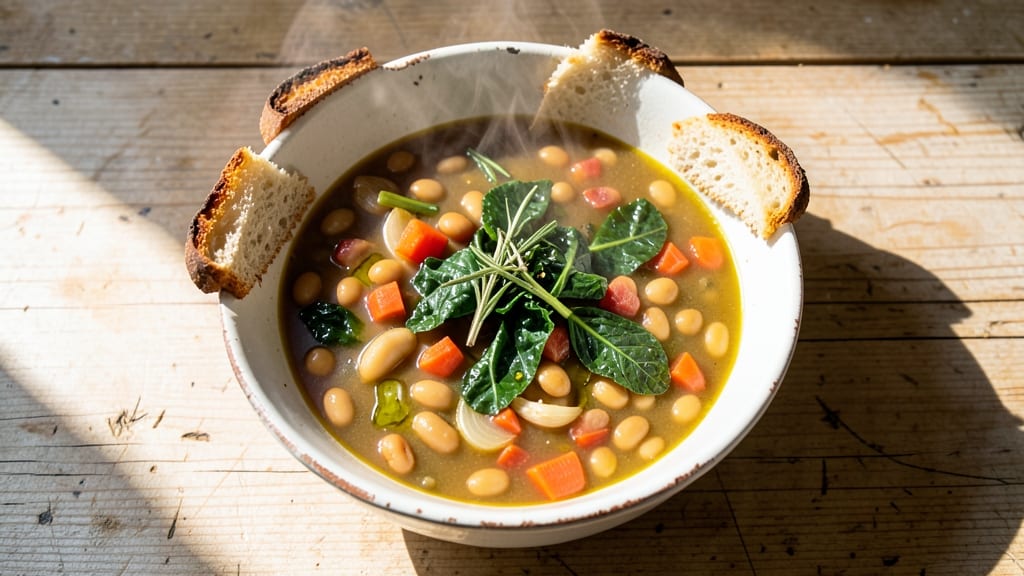
This authentic Tuscan soup recipe brings the rustic charm of Italy's heartland to your kitchen, where every spoonful tells a story of slow-simmered flavors and simple, wholesome ingredients. 💛 The secret lies in combining cannellini beans, hearty kale, and stale bread for a texture that's both comforting and deeply satisfying—a dish that captures the essence of Tuscan country cooking.
What sets this recipe apart is its reliance on traditional techniques: simmering ingredients low and slow to develop rich, layered flavors, and finishing with a crispy bread crust and shavings of pecorino cheese for that signature Tuscan crunch.
No shortcuts here, just the kind of honest, home-style cooking that makes this soup feel like a warm embrace on a chilly day.
The result is a hearty, rustic soup that's as nourishing as it is delicious—creamy from the beans, tender from the kale, and elevated by the toasted bread topping and salty pecorino.
It's the kind of dish that tastes even better the next day, making it perfect for meal prep or feeding a crowd.
Serve it with a side of crusty bread or a sprinkle of fresh parsley, and you'll have a taste of Tuscany right in your own kitchen. Let's dive into the recipe!
Ingredients for authentic tuscan soup
Simple, wholesome ingredients that transform into a hearty, rustic Tuscan masterpiece.
| Ingredient | Amount | Notes |
|---|---|---|
| Dried Cannellini Beans 🌾 | 1 ½ cups | Soaked overnight or quick-soaked |
| Fresh Kale 🥬 | 1 lb | Stems removed, chopped coarsely |
| Stale Bread 🍞 | 1 cup | Crusts removed, torn into pieces |
| Carrots 🥕 | 2 medium | Peeled, chopped into chunks |
| Yellow Onion 🧅 | 1 medium | Peeled, chopped into wedges |
| Garlic Cloves 🧄 | 4 cloves | Minced for aromatic depth |
| Extra-Virgin Olive Oil 🫒 | ½ cup | For richness and authenticity |
| Vegetable Broth 💧 | 6 cups | Homemade or high-quality store-bought |
| Pecorino Cheese 🧀 | ½ cup | Freshly grated, for finishing |
| Fresh Rosemary 🌿 | ¼ cup | Chopped, for herbal aroma |
| Salt 🧂 | 1 ½ tsp | Kosher or sea salt preferred |
| Black Pepper 🌶️ | ½ tsp | Freshly ground for warmth |
| Fresh Parsley 🌿 | ¼ cup | Chopped, for garnish |
The cannellini beans are the soul of this soup—dried beans develop richer flavor than canned, but quick-soak them if you're short on time. Trader Joe's and Whole Foods carry high-quality dried beans, or grab the bulk bins at Penzeys for the best selection. Kale should be vibrant green with no yellowing—farmers markets often have fresher, heartier leaves. The bread? Stale is key—toast it lightly before adding to the pot for extra crunch. For the pecorino, look for blocks at specialty Italian markets rather than pre-shredded; it melts beautifully and adds that signature salty crunch.
No fresh rosemary? Dried works at one-third the amount, but fresh gives that bright, piney aroma. Short on vegetable broth? Water plus a bouillon cube gets you close, but homemade broth makes all the difference. The carrots and onion can be swapped for celery and fennel for a different Tuscan twist. Prefer a creamier texture? Blend half the soup at the end. For the bread topping, toast it in olive oil until golden—don’t skip this step, it’s what makes this soup feel authentic. If you can’t find pecorino, Parmigiano-Reggiano works in a pinch, though it lacks that distinct sheep’s milk tang.
This soup tastes even better the next day—plan ahead and make a double batch. Store in the fridge for up to 5 days or freeze for 3 months. The bread topping stays crispy for 24 hours if kept in an airtight container. For meal prep, portion into soup bowls with the bread topping on top—reheat gently to keep everything intact. The pecorino and parsley can be added fresh just before serving to keep them vibrant. Leftovers reheat beautifully—just add a splash of broth if it thickens too much.
Why You'll Love This Recipe
- No-Waste Magic: I swear by this trick—toss in that stale bread from yesterday, and suddenly it’s the star. The toasted croutons add this irresistible crunch that turns a simple soup into something ridiculously satisfying. (Yes, even on a Tuesday night.)
- Umami Bomb: That slow-simmered onion and carrot base? Pure flavor gold. The cannellini beans soak up all the richness, while the kale wilts into tender, earthy bites—like a hug in a bowl. Honestly, I’ve tried fancier soups, but this one keeps me coming back.
- Leftovers That Shine: This soup actually improves the next day. The flavors meld even deeper, and I’ll often reheat it with a splash of water or a drizzle of olive oil for that fresh-from-the-pot feel. My freezer’s always stocked with portions—because why make one when you can make four?
- Budget-Friendly Pantry Hero: Dried beans, carrots, onions—these are the ingredients that don’t break the bank. I can feed my whole family (plus leftovers) for under $10. Between us, this is the kind of recipe that makes grocery shopping feel like a win, not a chore.
Step-by-step instructions for authentic Tuscan soup
Here's how to create a rustic Tuscan soup with bold flavors and textural contrast.
🍳 Step 1: Sauté Aromatics Until Deeply Fragrant
Heat the 0.5 cup extra-virgin olive oil in a large pot over medium heat. Add the chopped yellow onion and cook for 5 minutes until soft and translucent, stirring occasionally. This foundational step develops sweetness that carries through the entire soup.
Add the chopped carrots and cook for another 5 minutes until they begin to soften. Here's the thing—don't rush this stage. You want the vegetables to caramelize slightly, which builds complex flavor. Toss in the minced garlic cloves and chopped fresh rosemary and cook for 1 minute until the garlic becomes fragrant but doesn't brown. This aromatic base is the soul of your soup.
🍳 Step 2: Build the Bean and Vegetable Foundation
Add the 1.5 cups soaked dried cannellini beans (with their soaking liquid) to the pot. Pour in the 6 cups vegetable broth and bring everything to a gentle boil. Once boiling, reduce heat to low and let it simmer uncovered for 30 minutes until the beans are tender but not mushy.
After the beans have softened, stir in the coarsely chopped kale and 1.5 teaspoons salt. Simmer for another 10 minutes until the kale wilts completely. The soup should now have a thick, hearty consistency with visible chunks of vegetables. Taste and adjust seasoning with additional salt if needed—this is where you ensure the base flavor is balanced before adding the finishing touches.
🥘 Step 3: Create the Rustic Bread Crust
While the soup simmers, tear the 1 cup stale bread into rough pieces (no need to be precise—rustic is key). Spread these pieces on a baking sheet and toast in a 375°F oven for 8-10 minutes until golden brown and crisp. Here's the trick: toast until they're crisp but not burnt—you want them to hold their shape when added to the soup.
Remove the toasted bread from the oven and let it cool for 2 minutes. Then, using a food processor or strong blender, pulse the bread into coarse crumbs. You're aiming for a texture that will dissolve slightly in the soup but still provide texture. Return these bread crumbs to the baking sheet and set aside—they'll add that signature Tuscan crunch.
🍽️ Step 4: Finish with Pecorino and Fresh Herbs
Return the soup to a gentle simmer and stir in the 0.5 teaspoon black pepper. Taste and adjust seasoning one final time—this is your last chance to perfect the balance. Ladle the hot soup into bowls, then sprinkle each serving with 1-2 tablespoons of the toasted bread crumbs and 1 tablespoon of freshly grated pecorino cheese.
Finish with a sprinkle of chopped fresh parsley for brightness. The contrast of the warm, crispy bread crumbs against the creamy cheese and hearty broth creates the perfect textural experience. Serve immediately while the bread stays crisp and the cheese melts slightly from the soup's heat.
Pro Tips For Making Authentic Tuscan Soup
- SOAK BEANS OVERNIGHT: I learned this the hard way—rushing beans with a quick soak leaves them gummy. Toss dried cannellini beans in cold water for at least 8 hours (or overnight) with a pinch of baking soda. This cuts cooking time by half and keeps them tender, not mealy. No soaking? Budget 2+ hours simmering—don’t skimp.
- TOAST BREAD CRUSTS FIRST: Skip the soggy bread trick. Tear stale bread into chunks, spread them on a baking sheet, and toast at 350°F (175°C) for 10–12 minutes until golden and dry. This adds texture and prevents the soup from turning into a gluey mess. (Yes, even if you’re impatient like me.)
- LOW AND SLOW FOR KALE: Tossing kale into boiling soup wilts it into oblivion. Instead, add it in the last 5 minutes of cooking, then simmer gently—just until the stems soften (about 3–4 minutes). High heat kills the crisp-tender bite that makes Tuscan soup shine. Think "gentle coaxing," not "throw it in and pray."
- SWEAT ONIONS UNTIL SOFT: My grandmother swore by this, and she was right: Cook onions in olive oil over medium-low heat for 10–12 minutes until they’re translucent and actually soft—not just slightly caramelized. This builds flavor without burning, and it’s the foundation for that rich, savory base. (No, "soft" doesn’t mean "browned.")
Perfect pairings for these flavors
Tuscan Bread Pairings
Serve this soup with crusty Tuscan bread—think ciabatta or focaccia—to soak up every last drop of that creamy bean broth. I love using Schiarino's rustic loaves from my local Italian market; their dense, airy texture holds up perfectly to the hearty soup.
For extra authenticity, toast the bread in the oven with a drizzle of extra-virgin olive oil and a sprinkle of sea salt before serving. 🍞
Wine Pairings
A glass of Chianti Classico is the classic choice—its bright acidity and cherry notes cut through the richness of the beans and cheese. I reach for Castello di Volpaia or Ruffino for their balance of fruit and earthy tannins.
For white wine lovers, a crisp Vermentino from Sardinia offers a refreshing contrast to the soup's heartiness. Avoid heavy reds like Barolo—they’ll overpower the delicate herbs.
Cheese Board Accompaniment
Turn your meal into a Tuscan feast by pairing the soup with a simple cheese board featuring pecorino, Parmigiano-Reggiano, and fresh mozzarella. Add cured meats like prosciutto di Parma or soppressata for a salty-sweet contrast.
I like to include fig jam or honey to balance the savory flavors. The cheese board elevates the soup into a full Tuscan spread—perfect for sharing.
Herbal Garnishes
Fresh herbs brighten the soup’s flavors and add a pop of color. I always finish with chopped parsley and a sprinkle of thyme leaves for a fresh, aromatic touch.
For extra flair, add a few basil leaves or a pinch of fresh oregano—both complement the rosemary in the soup beautifully. If you’re feeling adventurous, a drizzle of high-quality balsamic glaze adds a tangy sweetness that ties everything together. 🌿
Antipasto Starters
Start the meal with light Tuscan antipasti like marinated artichokes, roasted red peppers, or olive tapenade to whet the appetite. I love serving prosciutto-wrapped melon or grilled asparagus with lemon zest.
These starters balance the richness of the soup and introduce flavors that harmonize beautifully with the dish. The contrast of textures and tastes makes the meal feel complete.
Dessert Pairings
End with a classic Tuscan dessert like cantucci with vin santo or ricciarelli cookies—their almond flavor and sweetness provide a perfect finish. For something lighter, panna cotta with berry compote offers a creamy contrast to the soup’s heartiness.
I often serve affogato (espresso-drowned gelato) for a refreshing, coffee-infused note that cleanses the palate. 🍰
Nutrition facts
Frequently asked questions
Can I substitute cannellini beans with white beans?
Yes, you can use white beans like Great Northern or navy beans as a substitute. They'll provide a similar creamy texture, though cannellini beans have a slightly nuttier flavor that's more traditional. For best results, use the same amount and adjust cooking time by 5-10 minutes since different beans have varying softness levels.
Why does my Tuscan bread topping get soggy?
The bread topping stays crisp when toasted properly and added just before serving. Toast the bread crumbs in the oven until golden brown (375°F for 8-10 minutes) and keep them in an airtight container until ready to use. For extra insurance, sprinkle them on the soup right after ladling it into bowls to maintain that satisfying crunch.
What makes this soup authentically Tuscan?
Three key elements define authentic Tuscan flavor: the combination of beans, stale bread, and pecorino cheese. The slow-simmered vegetables develop deep, earthy notes, while the crispy bread topping and salty pecorino create that signature contrast. Traditional Tuscan cooking emphasizes simple, wholesome ingredients cooked with patience and love.
Can I make this soup vegetarian?
This recipe is already vegetarian-friendly, but you can enhance it further by using vegetable broth instead of meat-based. For extra richness, stir in 1 tablespoon tomato paste with the aromatics or add 1/2 cup diced tomatoes to the simmering soup. The beans and kale provide plenty of protein and heartiness.
How long can I store leftovers?
Store leftovers in an airtight container in the refrigerator for up to 5 days. The flavors actually improve overnight as the ingredients meld together. When reheating, add a splash of broth or water if the soup thickens too much. The bread topping stays crisp for about 24 hours if kept separate and added fresh when serving.