
Soups & Stews
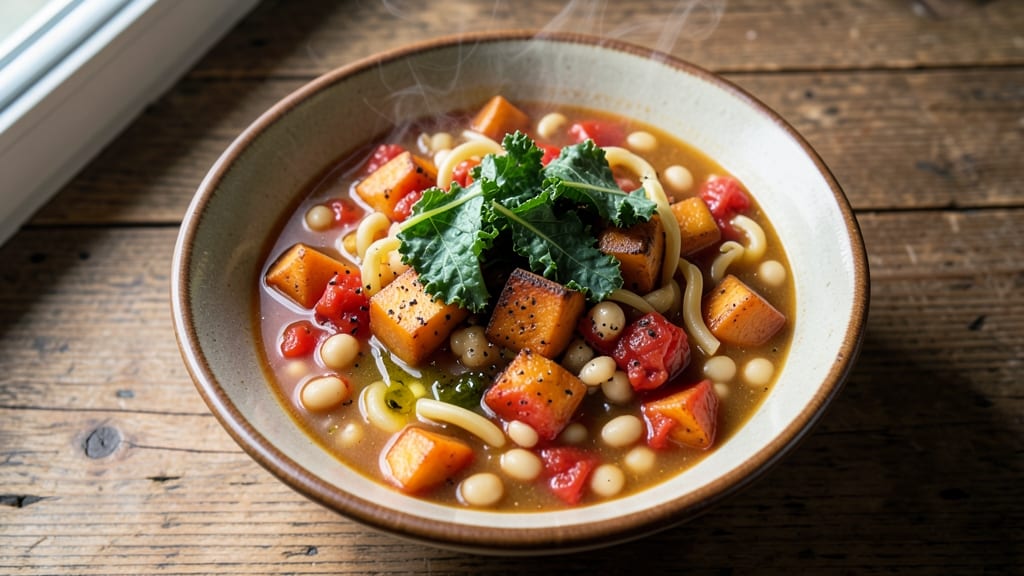
Autumn minestrone soup transforms crisp fall vegetables into a hearty, comforting one-pot meal that tastes like harvest on a chilled evening. This recipe balances traditional cannellini beans and tomatoes with seasonal squash and kale, creating a soup that's both rustic and refined.
The slow simmer develops deep, savory flavors while keeping the vegetables tender and vibrant.
What sets this minestrone apart is its perfect harmony of textures—creamy beans, al dente pasta, and crisp-tender greens—all bound together by a rich vegetable broth. I've designed it to be foolproof, with a method that ensures every ingredient contributes without overpowering.
The addition of butternut squash adds natural sweetness that complements the earthy kale and robust herbs.
By the time you're ladling this soup into bowls, you'll notice how the flavors meld together—warm spices from the broth, the slight bitterness of kale softened by the beans, and the subtle sweetness of the squash.
The result is a dish that's satisfying enough to stand alone but elegant enough for company. Serve with crusty bread to soak up every last drop of that flavorful broth.
The beauty of this recipe lies in its versatility—use whatever seasonal vegetables you have on hand, from carrots to sweet potatoes. The method remains the same, ensuring you'll always end up with a soup that tastes like autumn. Let's get cooking!
Ingredients for autumn minestrone soup
Just 15 ingredients transform fall's harvest into a soul-warming bowl of autumn minestrone.
| Ingredient | Amount | Notes |
|---|---|---|
| Vegetable Broth 💧 | 6 cups | Low-sodium preferred, homemade or store-bought |
| Cannellini Beans 🌾 | 1 ½ cups | Drained and rinsed, canned or cooked |
| Butternut Squash 🎃 | 2 cups | Cubed, about 1 medium squash |
| Kale 🥬 | 4 cups | Chopped, stems removed |
| Ditalini Pasta 🍝 | 1 cup | Uncooked, orzo works too |
| Crushed Tomatoes 🍅 | 1 can (14.5 oz) | San Marzano preferred |
| Carrots 🥕 | 3 medium | Peeled, chopped into 1/2-inch pieces |
| Celery Stalks 🧅 | 3 whole | Chopped, about 1 cup |
| Yellow Onion 🧅 | 1 whole | Diced, about 1 cup |
| Garlic Cloves 🧄 | 4 cloves | Minced, about 1 tbsp |
| Dried Oregano 🌿 | 1 tsp | Or 1 tbsp fresh |
| Bay Leaves 🍃 | 2 whole | Remove before serving |
| Olive Oil 🫒 | ¼ cup | Extra-virgin for richness |
| Salt 🧂 | 1 ½ tsp | Adjust to taste |
| Black Pepper 🌶️ | ½ tsp | Freshly ground |
The butternut squash is your secret weapon here—it adds natural sweetness that balances the earthy kale and rich broth. Costco sells pre-cubed squash in the fall, which saves time, but if you're cutting your own, peel it first and dice into even pieces. Kale's the star of the greens, but don't skip the carrots and celery—they build that classic minestrone flavor base. For the beans, cannellini is traditional, but white beans work too. I always grab the no-salt-added canned beans—they let you control the seasoning better. The vegetable broth should be the base of your pantry—low-sodium so you can adjust the salt later.
No butternut squash? Sweet potatoes or acorn squash work in a pinch, but the flavor won't be quite the same. Short on kale? Spinach or Swiss chard at double the amount gets you close. The crushed tomatoes can be jarred (I like Muir Glen), but if you're making a big batch, Trader Joe's sells them in huge cans for better value. The pasta? Ditalini or orzo both work—just cook it al dente. And if you're feeling fancy, toast the dried oregano in the olive oil for 30 seconds before adding it to the pot—game changer for depth. The garlic? Fresh is best, but if you're using jarred, drain it well first.
This soup tastes even better the next day—3-4 days in the fridge, no problem. For leftovers, I like to portion it into containers with a side of crusty bread. Freezes beautifully for up to 3 months, but the texture gets a little softer after thawing. Pro tip: Add a splash of broth when reheating to keep it from getting too thick. And if you're meal prepping, cook the pasta separately and add it fresh to the soup when serving—keeps it from getting mushy.
Why You'll Love This Recipe
- No Chopping Chaos: This soup actually begs for shortcuts—I roast the butternut squash cubes whole (skin on, no peeling!) and just scoop out the flesh later. The cannellini beans? Straight from the can. Even the kale? Toss it in raw if you’re in a hurry, and it wilts right into submission.
- Sweet-Savory Magic: That roasted butternut squash brings caramelized depth, while the cannellini beans add creamy richness—like a hug in a bowl. The ditalini soaks up every last drop of that herby broth, so you’re left with a soup that’s ridiculously satisfying without being heavy.
- Lunch for Days: Make a double batch and freeze half—it reheats like a dream and turns into tomorrow’s lunch or a quick dinner when you’re too tired to think. (Between us, this is how I survived grad school.)
- Pocketbook Hero: Kale, squash, and dried pasta? This soup costs me about $2 a serving and still feels like a restaurant meal. Plus, the beans stretch it into a full bowl every time—no sad, tiny portions here.
Step-by-step instructions for autumn minestrone soup
Here's how to build this hearty harvest soup with layers of autumnal flavor.
Sauté the Vegetable Base
Heat the 0.25 cup olive oil in a large Dutch oven over medium heat. Add the diced yellow onion, chopped celery stalks, and peeled, chopped carrots. Cook for 5-6 minutes until the vegetables soften and the onion becomes translucent, stirring occasionally.
Add the minced garlic cloves and cook for 30 seconds until fragrant. This step builds the flavor foundation—don't rush it. If the vegetables start to brown too quickly, reduce the heat slightly. You'll know it's ready when the garlic releases its aroma and the vegetables are tender but not mushy.
Add Tomatoes and Seasonings
Pour in the 1 can (14.5 oz) crushed tomatoes and stir well, scraping up any browned bits from the bottom of the pot. Add the 1 tsp dried oregano, 1.5 tsp salt, and 0.5 tsp black pepper, along with the 2 whole bay leaves. Bring the mixture to a gentle simmer and cook for 5 minutes to let the flavors meld.
Here's where the magic happens—the tomatoes and spices create a rich, savory base. If your tomatoes are particularly acidic, you might want to add a pinch more salt at this stage. The bay leaves will infuse subtle earthy notes, so don't skip them. This step ensures your soup has depth before adding the remaining ingredients.
Incorporate Squash and Beans
Add the cubed butternut squash and 1.5 cups cannellini beans (drained and rinsed) to the pot. Pour in the 6 cups vegetable broth and bring everything to a boil. Once boiling, reduce the heat to medium-low and let it simmer uncovered for 15 minutes, stirring occasionally.
The squash should soften noticeably during this time, and the beans will begin to absorb the flavors. You'll see the soup thicken slightly as the starches from the squash release. If the soup looks too thin at this point, you can reduce the heat further and let it simmer longer—it will thicken as it cooks. This is the moment to check seasoning again, adjusting salt if needed.
Add Pasta and Kale
Stir in the 1 cup ditalini pasta and the chopped 4 cups kale. Increase the heat to bring the soup back to a gentle boil. Once boiling, reduce the heat to medium-low and let it simmer for 10-12 minutes, or until the pasta is al dente and the kale is tender but still vibrant.
Watch the pasta carefully—it should finish cooking in the broth, absorbing all those wonderful flavors. If you prefer your pasta slightly firmer, you can remove it a minute early and let it finish cooking in the hot soup. The kale should wilt down but still retain some texture. This is where the soup comes together—each ingredient contributes its own texture and flavor to create a perfect balance.
Finish and Serve
Remove the 2 whole bay leaves from the soup. Taste and adjust the seasoning with additional salt or pepper if needed. Let the soup sit off the heat for 5 minutes to allow the flavors to meld completely.
Serve the minestrone hot, garnished with additional black pepper and a drizzle of olive oil if desired. The soup should be hearty and satisfying, with each bite offering a mix of creamy beans, tender squash, al dente pasta, and earthy kale. The flavors should be well-balanced—savory from the tomatoes, sweet from the squash and carrots, and fresh from the kale. Enjoy immediately while it's steaming hot!
Pro Tips For Making Autumn Minestrone Soup
- Boil the Ditalini Last: The pasta finishes cooking in 2 minutes—toss it in the last 8 minutes of simmering. I learned this the hard way when I added it too early and ended up with mushy, flavorless noodles. Keep the broth hot, but not rolling, or you’ll turn the ditalini into soup glue.
- Roast the Squash First: Cut the butternut squash into 1-inch cubes, toss with olive oil, salt, and pepper, then roast at 400°F (200°C) for 20 minutes before adding to the soup. This caramelizes the edges and cuts down on cooking time later—no more waiting for stubborn chunks to soften.
- Salt the Beans Early: Add the cannellini beans (canned or cooked) to the broth at the start, not at the end. They’ll absorb flavor better, and you won’t end up with a bland, watery base. If using canned beans, rinse them first—unless you like that metallic aftertaste.
- Wilt Kale in Batches: Kale wilts faster than you think—drop it in the soup in 2 additions, 3 minutes apart. Overcrowding the pot steams it instead of tenderizing it. A splash of pasta water at the end helps melt it into the broth without turning it to mush.
Storing and reheating your autumn minestrone soup
Refrigerator Storage
Let your minestrone cool to room temperature—no more than 2 hours—before transferring to airtight glass containers. I use 4-cup Pyrex storage jars with snap-on lids because they stack neatly in my fridge.
Store at 40°F or below for up to 4 days, though I find the flavors actually deepen overnight as the spices meld. The pasta stays al dente if you refrigerate it separately and add it fresh when reheating. 🥫
Freezer Prep Tips
For long-term storage, portion the soup into quart-sized freezer bags or airtight containers, leaving 1-inch headspace for expansion. Seal tightly to prevent freezer burn. This minestrone freezes beautifully for 3 months, though the texture may soften slightly after thawing.
I always add an extra ½ cup broth before freezing to maintain consistency. Label with the date—trust me, you'll forget! ❄️
Stovetop Reheating
My preferred method is stovetop reheating because it preserves texture perfectly. Transfer the chilled soup to a pot and heat over medium-low heat for 10-15 minutes, stirring occasionally. If it thickens too much, add ¼ cup broth or water.
For best results, cook the pasta separately and add it fresh when serving. The kale will wilt slightly but still hold its vibrant color. Taste and adjust seasoning—it often needs a pinch more salt after reheating. 🔥
Microwave Method
For quick reheating, transfer a single serving to a microwave-safe bowl and cover loosely with a damp paper towel. Heat on 70% power for 2-3 minutes, stirring halfway. If the soup looks dry, add 1-2 tablespoons broth before continuing.
The microwave method works best for individual portions—just be sure to stir well to distribute heat evenly. This prevents hot spots and keeps the kale from overcooking. 💫
Make-Ahead Serving
This soup tastes even better the next day, making it perfect for meal prep. I like to assemble it in the morning and let it sit at room temperature for 1 hour before refrigerating.
When ready to serve, reheat gently and garnish with fresh black pepper and a drizzle of extra-virgin olive oil. The flavors develop beautifully overnight, creating a more complex, harmonious dish. Perfect for busy weeknights when you need a comforting meal with minimal effort. 💡
Nutrition facts
Frequently asked questions
Can I make this minestrone without butternut squash?
Swap the squash for 2 cups diced sweet potatoes or 1 cup acorn squash—both add natural sweetness. For a different texture, try 1 cup diced zucchini or ½ cup diced pumpkin. Just reduce the cooking time by 3-5 minutes since these veggies soften faster. The soup will still be hearty and flavorful!
How can I make this soup vegetarian?
This recipe is already vegetarian-friendly! Just ensure your vegetable broth isn't chicken-based. For extra protein, add 1 cup cooked lentils or ½ cup crumbled tofu along with the beans. If you want a vegan version, skip the Parmesan and use nutritional yeast for garnish instead. The flavors stay rich and satisfying!
Why does my minestrone turn out too thick or too thin?
Thickness comes from simmering time and starches. For thicker soup, simmer uncovered for 5-10 extra minutes to reduce liquid. If too thin, mash ½ cup beans with a fork or stir in 1 tbsp cornstarch mixed with 2 tbsp water. For thin soup, add ½ cup broth and simmer longer. The key is patience—let flavors develop at a gentle simmer!
Can I prep this soup ahead of time for a party?
Yes! Make it 1-2 days ahead and store in the fridge. Reheat gently on the stove, then add fresh pasta and kale just before serving to keep them vibrant. For a crowd, double the recipe and use a large stockpot. Keep it warm in a slow cooker on low heat while serving. The flavors actually improve overnight!
What's the best way to reheat leftovers?
Stovetop is ideal: heat over medium-low heat for 10-15 minutes, stirring occasionally. Add ¼ cup broth if too thick. For microwave reheating, use 70% power for 2-3 minutes and stir halfway. Never reheat pasta in the soup directly—cook it fresh to maintain texture. Always taste and adjust seasoning after reheating!