
Soups & Stews
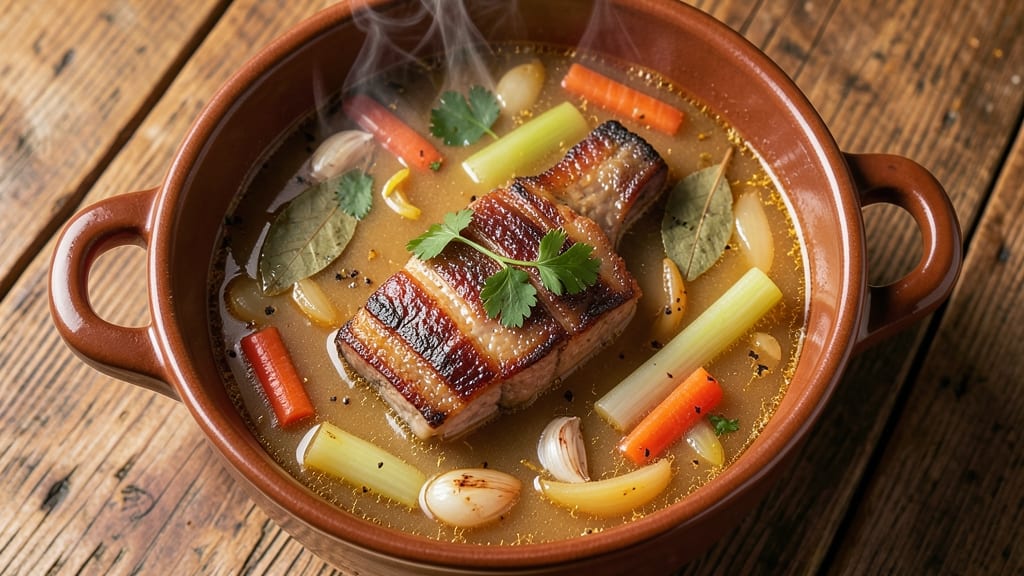
This bacon hock soup recipe delivers deep, smoky richness that transforms simple ingredients into a hearty, restaurant-worthy meal. The secret lies in slow-cooking the hock—its collagen-rich marrow and fat render into a velvety broth while infusing every spoonful with unmistakable porky depth.
I developed this version after years of testing, balancing the bold flavors of bacon with aromatic vegetables and herbs for perfect harmony.
What sets this recipe apart is its foolproof technique—no fancy equipment needed, just time and patience. The hock simmers for hours, breaking down into tender meat that practically melts in your mouth while the broth develops layers of complexity.
A touch of vinegar brightens the richness, and a sprinkle of fresh herbs at the end adds freshness without overpowering the smoky base.
By the time you're done, you'll have a soup so rich and satisfying it feels like a hug in a bowl—perfectly balanced between smoky, savory, and slightly tangy.
The broth coats your spoon, the meat dissolves at the slightest touch, and every ingredient plays its part without fighting for attention. This is comfort food at its finest, elevated by the unique depth only bacon hock can provide.
The best part? Leftovers taste even better the next day as flavors meld further. Serve with crusty bread to soak up every last drop of that golden, aromatic broth. Let's get cooking—your taste buds will thank you.
Ingredients for bacon hock soup
The heart of this soup lies in its smoky depth and velvety broth, built from just 13 thoughtful ingredients.
| Ingredient | Amount | Notes |
|---|---|---|
| Bacon Hock 🥓 | 2 lb | Fresh, not smoked, for depth |
| Yellow Onion 🧅 | 1 whole | Chopped, medium size |
| Carrots 🥕 | 4 medium | Peeled, cut into chunks |
| Celery Stalks 🌿 | 4 whole | Trimmed, cut into pieces |
| Garlic Cloves 🧄 | 6 cloves | Peeled, smashed slightly |
| Bay Leaves 🍃 | 2 whole | Fresh if possible |
| White Wine 🍷 | 1 cup | Dry variety for brightness |
| Apple Cider Vinegar 🍏 | 1 tbsp | For tangy balance |
| Salt 🧂 | 1 ½ tsp | Kosher or sea salt |
| Black Peppercorns 🌶️ | 1 tsp | Freshly cracked |
| Fresh Parsley 🌿 | ¼ cup | Chopped, for garnish |
| Crusty Bread 🍞 | 1 loaf | For serving (optional) |
| Water 💧 | 8 cups | Enough to cover hock |
The bacon hock is non-negotiable here—look for fresh, uncooked hocks at specialty butchers or high-end grocery stores like Whole Foods. The fat and marrow render into the broth, creating that unmistakable richness. If you can't find hocks, pork knuckles or trotter work in a pinch, though they'll have slightly different textures. The carrots and celery form the aromatic base—buy organic if you can to avoid dirt and pesticides. Garlic should be fresh, never pre-minced, and the bay leaves add that subtle herbal depth that makes this soup sing.
No white wine? Chicken or vegetable broth with a splash of lemon juice works just as well. Fresh parsley is ideal for garnish, but dried parsley at half the amount gets you close. The vinegar is key for balancing the richness—apple cider vinegar adds subtle sweetness, while white vinegar gives a sharper tang. If you're using smoked bacon hock, you can cut back on the salt slightly, but kosher salt is essential—it dissolves better than table salt. The water should be cold to start, but it'll heat up as the soup simmers.
This soup tastes even better the next day as the flavors meld. Store leftovers in the fridge for up to 5 days—the broth thickens slightly as it cools. For longer storage, freeze portions for up to 3 months. I always make a double batch because it disappears fast. The crusty bread is optional, but a good sourdough or baguette soaks up that golden broth perfectly. If you're serving a crowd, plan for about 1/2 loaf per 2 servings.
Why You'll Love This Recipe
- Minimal Chopping Required: I swear by this—just dice the onion, slice the carrots and celery into rough chunks, and smash those garlic cloves. No julienne cuts, no stress. The bacon hock does all the heavy lifting while you sip your coffee.
- Rich, Deep Umami Bomb: That bacon hock? It’s the star—slow-cooked until the meat falls off the bone, leaving behind a broth so flavorful it tastes like you simmered for hours (even if you didn’t). The garlic and carrot sweetness just makes it dangerously good.
- Leftovers That Don’t Suck: Honestly, this soup tastes better the next day. The flavors meld into something heartier, and reheating it is zero effort. I make a double batch on Sundays just to avoid takeout later—my wallet thanks me.
- Budget-Friendly Crowd-Pleaser: Between us, bacon hock is a steal compared to other meats, and the veggies stretch the broth so far. Feed four for the price of two fancy dinners, and everyone’s happy—even picky eaters (yes, my daughter picks out the celery but still asks for seconds).
Step-by-step instructions for bacon hock soup
Here's how to transform simple ingredients into a deeply flavorful, bone-braised soup that tastes even better the next day.
Brown the Bacon Hock for Maximum Flavor
Pat the 2 lb bacon hock dry with paper towels to remove any surface moisture. Place it in a large Dutch oven or heavy pot over medium-high heat. Let it sear undisturbed for 10-12 minutes until the fat renders and the meat develops a deep golden-brown crust. This step is crucial—it builds the rich, smoky foundation of your soup.
Once browned on all sides, carefully remove the bacon hock and set it aside. The rendered fat in the pot will become the flavor base for your soup, so don't wipe it out. If the fat gets too dark, reduce the heat to medium to prevent burning. You'll notice the aroma intensify as the meat browns—this is where all the magic begins.
Sauté the Vegetables and Aromatics
In the same pot, add 1 whole chopped yellow onion, 4 medium carrots cut into chunks, and 4 whole celery stalks trimmed and cut into pieces. Cook over medium heat for 8-10 minutes, stirring occasionally, until the vegetables soften and begin to caramelize. You're looking for a deep golden color—this adds sweetness and depth to your soup.
Add the 6 peeled and smashed garlic cloves and cook for another 30 seconds until fragrant. Stir in the 2 whole bay leaves, 1.5 tsp salt, and 1 tsp freshly cracked black peppercorns. The bay leaves will infuse the soup with their earthy aroma, while the pepper adds a subtle warmth. Let everything cook together for 1 minute to toast the spices and meld the flavors.
Deglaze and Simmer the Soup
Pour in the 1 cup dry white wine and scrape up any browned bits from the bottom of the pot with a wooden spoon. This deglazing step captures all the concentrated flavors you've built so far. Let the wine simmer for 2-3 minutes until it reduces by half and the alcohol cooks off, leaving behind a rich, fruity base.
Add the 1 tbsp apple cider vinegar and 8 cups water, then return the browned bacon hock to the pot. Bring everything to a gentle boil, then reduce the heat to low and cover partially. Let the soup simmer for 2.5 to 3 hours—this slow cooking is what transforms the tough hock into tender, melt-in-your-mouth meat. You'll know it's done when the meat pulls away from the bone easily and the broth has a rich, velvety consistency.
Finish and Serve with Fresh Herbs
Once the meat is tender, remove the bacon hock from the pot and let it cool slightly. Using a slotted spoon or tongs, transfer the meat to a cutting board and shred it with two forks, discarding any remaining bone fragments. Return the shredded meat to the pot and stir to combine.
Taste the broth and adjust the seasoning if needed—you might need a touch more salt or a splash of vinegar to balance the flavors. Ladle the soup into bowls and garnish each serving with 0.25 cup chopped fresh parsley. The parsley adds a bright, fresh contrast to the rich, smoky broth. Serve with slices of crusty bread on the side to soak up every last drop of that delicious broth.
Pro Tips For Making Bacon Hock Soup
- CRISP THE SKIN FIRST: Bacon hock skin is the flavor factory—don’t skip browning it first. Render the skin in a cold pot over medium heat until it cracks and turns golden (about 15 minutes), then stir in the fat to cook the meat. I used to rush this and ended up with a pale, greasy broth instead of rich, caramelized depth.
- CHOP VEGETABLES UNIFORM: Carrots and celery should be cut into ½-inch chunks—big enough to stay intact but small enough to soften evenly. Onions go in whole at first (peeled, quartered), then get chopped later when you’re ready to build the base. Uneven pieces mean some veggies turn to mush while others stay crunchy.
- SKIP THE BOIL: After adding broth and meat, resist the urge to bring it to a full boil. Simmer gently instead—too much heat makes the bacon hock tough and the broth cloudy. A steady low bubble (tiny bubbles at the edges) keeps everything tender and the flavors melding properly.
- USE THE FAT: That rendered bacon hock fat is liquid gold—don’t drain it. After browning, leave it in the pot to cook the onions and garlic. The fat adds richness and helps build a glossy, flavorful base. (Yes, even if it looks greasy at first.) If you’re worried about excess fat later, skim it off when the soup is nearly done.
Storing and reheating this bacon hock soup
Refrigerator Storage
Let your bacon hock soup cool completely before transferring it to airtight glass containers—I use Pyrex with snap-on lids for best results. Store in the fridge for up to 5 days, though I find the flavors actually deepen overnight as the broth thickens slightly.
The fat will solidify on top, but give it a good stir before reheating. 🥣
For single servings, portion into mason jars—they're perfect for grab-and-go lunches. Just leave about ½ inch headspace to prevent spills when the broth expands slightly upon reheating. The crusty bread on the side keeps best separately, wrapped in a beeswax wrap for up to 3 days.
Freezer Storage
This soup freezes beautifully for up to 3 months—perfect for meal prep. I recommend quart-sized freezer bags with ziplock seals to prevent freezer burn. Squeeze out all the air before sealing, and label with the date.
The broth may separate slightly when thawed, but a quick stir on the stove restores its velvety texture. 🧊
For best results, thaw overnight in the fridge rather than using the microwave. If you're short on time, place the sealed bag in a bowl of cold water for 2-3 hours—this gentle method preserves the broth's integrity. Never refreeze thawed soup, as this can degrade the texture and safety.
Stovetop Reheating
My preferred method is stovetop reheating—it gives you complete control over the texture. Transfer the soup to a heavy-bottomed pot and heat over medium-low heat for 10-15 minutes, stirring occasionally.
Add ¼ cup water or broth if the soup looks too thick. The gentle heat helps prevent the fat from separating while warming through evenly. 🔥
For extra richness, remove the solidified fat from the top before reheating—this keeps your soup light and flavorful. If you prefer a creamier texture, stir in 1 tablespoon of heavy cream or a splash of milk during the final 2 minutes of reheating.
Always check the internal temperature reaches 165°F for food safety.
Microwave Reheating
For quick reheating, use microwave-safe glassware and cover with a microwave-safe lid or damp paper towel. Heat on medium power (50%) for 3-4 minutes, stirring halfway through.
This prevents hot spots while maintaining the soup's texture. If the broth seems watery, reduce the power to 30% for the final 1-2 minutes.
I avoid high-power settings because they can turn the broth rubbery. For best results, transfer the reheated soup to a pot and simmer gently for 2-3 minutes to restore its silky consistency.
Always let it sit for 1 minute after reheating—the fat will rise to the top, allowing you to skim it off if desired. 💡
Nutrition facts
Frequently asked questions
What makes bacon hock different from regular bacon?
Bacon hock is the entire lower leg joint of a pig, including meat, fat, and bone, while regular bacon comes from the pork belly. The hock provides rich collagen and marrow that create an unmatched depth of flavor when slow-cooked—think of it as a porky, smoky backbone for your soup. Regular bacon would never deliver the same velvety broth or tender meat.
Can I substitute bacon hock with something else?
Yes! If you can't find bacon hock, try pork knuckles or pork trotter for similar texture and flavor. For a quicker option, use pork shoulder (cut into chunks) or even smoked bacon (soaked in water first to remove excess salt). Just note the broth will be less rich without the collagen from bones.
How do I know when the bacon hock is fully cooked?
The hock is done when the meat pulls away from the bone easily and can be shredded with minimal effort. Test by inserting a knife—if it slides in smoothly, the meat is tender. The broth should also be deep amber with visible fat floating on top. Total simmering time is usually 2.5 to 3 hours, but it varies based on your pot size.
Why does my soup taste too salty?
Bacon hock naturally contains salt, and the rendered fat can concentrate flavors. If it's too salty, add 1 cup cold water and simmer for 10 minutes to dilute. For a brighter taste, stir in 1 tbsp apple cider vinegar or a splash of lemon juice. If using smoked bacon hock, reduce the added salt to 1 tsp instead of 1.5.
Can I make this soup in a slow cooker?
Brown the hock and vegetables in a skillet first, then transfer everything to a 6-quart slow cooker. Add the wine, vinegar, water, and seasonings, then cook on low for 8 hours or high for 5 hours. The slow cooker's gentle heat works perfectly for tenderizing the meat while keeping the broth flavorful. Just shred the meat carefully after cooking.