
Soups & Stews
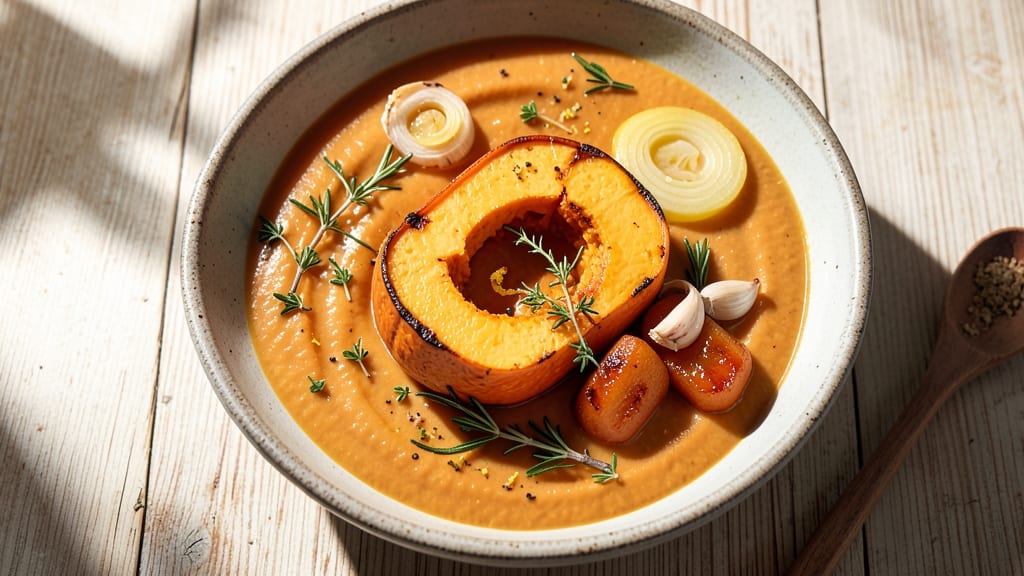
This baked whole pumpkin soup recipe transforms humble ingredients into a velvety masterpiece with deep caramelized notes and silky smoothness—no store-bought cans required. The secret lies in roasting the pumpkin whole, which concentrates its natural sweetness and transforms it into a tender, flavorful base.
I developed this method after years of experimenting with soups that lacked that restaurant-quality depth, and it never fails to impress. What sets this recipe apart is the balance of traditional techniques and modern shortcuts.
You'll start with a whole pumpkin, roasted until tender enough to scoop out effortlessly, then simmered with aromatic vegetables and herbs to build layers of flavor. The result is a soup that's rich yet light, perfectly seasoned, and versatile enough for any season.
By the time you're done, you'll have a creamy, aromatic soup with a velvety texture that coats every spoonful. The roasted pumpkin adds a caramelized sweetness that pairs beautifully with warm spices, while the stovetop simmering ensures every ingredient melds together harmoniously.
This is the kind of soup that feels like a hug in a bowl—comforting, satisfying, and packed with flavor. Whether you're serving it as a cozy appetizer or a hearty main course, this recipe delivers restaurant-quality results with minimal effort. The best part?
It's vegetarian-friendly and easily customizable with optional dairy or egg additions. Let's get started on creating this soul-warming masterpiece.
Ingredients for baked whole pumpkin soup
Roasted pumpkin, aromatic herbs, and velvety coconut milk create this restaurant-quality soup masterpiece.
| Ingredient | Amount | Notes |
|---|---|---|
| Sugar Pumpkin (Sugar Belle or similar) 🎃 | 1 whole | Medium-sized, approximately 3-4 lbs |
| Yellow Onion 🧅 | 1 whole | Medium, peeled and quartered |
| Carrots 🥕 | 2 medium | Peeled and sliced into chunks |
| Garlic Cloves 🧄 | 4 cloves | Peeled and minced |
| Fresh Thyme 🌿 | ¼ cup | Stems removed, leaves chopped |
| Fresh Rosemary 🌿 | ½ tsp | Needles finely chopped |
| Vegetable Stock 💧 | 4 cups | Low-sodium preferred |
| Coconut Milk 🥥 | 1 can | Full-fat, 13.5 oz |
| Extra-Virgin Olive Oil 🫒 | ¼ cup | For roasting and finishing |
| Salt 🧂 | 1 ½ tsp | Diamond Crystal preferred |
| Black Pepper 🌶️ | ½ tsp | Freshly ground |
| Ground Cinnamon 🌶️ | ½ tsp | For depth |
| Ground Nutmeg 🌶️ | ¼ tsp | Freshly grated preferred |
| Fresh Ginger 🌿 | 1 inch | Peeled and sliced thinly |
The pumpkin is the heart of this dish—Sugar Belle or similar sugar pumpkins work best, as they're sweeter and less fibrous than carving pumpkins. Whole Foods or local farms often carry them in fall months, but check the produce section of larger grocery stores too. Look for a pumpkin that feels heavy for its size and has a vibrant orange hue—no soft spots or bruises. If you can't find a whole pumpkin, substitute 4 cups canned pumpkin puree, but roasting fresh gives that unmatched caramelized depth. The coconut milk should be full-fat for creaminess, and Thai Kitchen or Native Forest brands are reliable choices that won't break the bank.
No fresh thyme or rosemary? Dried works at one-third the amount, but fresh imparts that bright, aromatic quality this soup needs. The ginger can be swapped for 1/2 teaspoon ground ginger if fresh isn't available, though it won't have the same zing. For a dairy-free version, omit the coconut milk entirely and use 1 cup cashew cream instead—blend soaked cashews with water for a neutral, creamy base. The vegetable stock is non-negotiable here—low-sodium versions prevent salt overload, and brands like Pacific Foods or Imagine offer excellent options. If you're short on time, homemade stock works best, but a quality store-bought version in a pinch won't ruin the dish.
This soup tastes even better the next day as flavors meld—store leftovers in airtight containers for up to 5 days. For freezing, portion into single-serving containers and thaw overnight in the fridge. The roasted pumpkin flesh keeps 3-4 days refrigerated if you're prepping ahead, and the fresh herbs can be wrapped in damp paper towels for up to 5 days. Double the batch and freeze portions for those busy weeknights—just reheat gently on the stove with a splash of water or stock to restore creaminess.
Why You'll Love This Recipe
- No Chopping Chaos: I just halve the pumpkin, score the skin, and bake it whole—no peeling, no seeds, no mess. The oven does all the work while I sip my coffee and pretend I’m a fancy chef.
- Sweet-Savory Magic: That caramelized sugar pumpkin? It’s like dessert sneaking into soup. The thyme and garlic turn it from basic to "why didn’t I make this sooner" in one bite.
- Weeknight to Holiday: Same recipe feeds my tired self on Tuesday or impresses guests on Thanksgiving. Just adjust the broth depth—light for lunch, rich for company—and boom, you’re covered.
- Leftovers That Work: This soup actually improves the next day. The flavors meld, the texture gets creamy, and I’m always reaching for the fridge instead of takeout. Budget win, too—one pumpkin stretches for days.
Step-by-step instructions for roasted pumpkin soup
Transform simple ingredients into velvety pumpkin soup with deep caramelized flavors.
Roast the Pumpkin and Vegetables for Rich Flavor
Preheat your oven to 400°F. Cut the whole sugar pumpkin in half lengthwise and scoop out the seeds, leaving a ½-inch thick shell intact. Place the pumpkin halves cut-side down on a baking sheet lined with parchment paper. Rub the cut sides with ½ tablespoon of the extra-virgin olive oil to prevent sticking.
In a small bowl, toss the quartered yellow onion, sliced carrots, minced garlic cloves, and sliced fresh ginger with the remaining ¼ cup extra-virgin olive oil. Spread this mixture evenly around the pumpkin halves on the baking sheet. Roast for 45-50 minutes until the pumpkin flesh is tender when pierced with a fork and the vegetables are deeply caramelized.
Extract the Roasted Pumpkin Flesh
Remove the baking sheet from the oven and let it cool for 10 minutes. Using a large spoon, carefully scoop out the roasted pumpkin flesh from the shells and transfer it to a large pot. Discard the pumpkin shells. Add the roasted vegetables from the baking sheet to the pot with the pumpkin.
Here's the thing—don't skip scraping every last bit of caramelized goodness from the baking sheet. Those browned bits contain concentrated flavors that will deepen your soup's complexity. Add the 0.25 cup chopped fresh thyme and 0.5 tsp chopped fresh rosemary to the pot as well.
Build the Soup Base with Stock and Spices
Pour in the 4 cups vegetable stock and bring the mixture to a boil over medium-high heat. Once boiling, reduce the heat to medium-low and let it simmer uncovered for 15-20 minutes until the pumpkin breaks down completely and the soup thickens slightly.
Add the 0.5 tsp ground cinnamon, 0.25 tsp ground nutmeg, 1.5 tsp salt, and 0.5 tsp black pepper. Stir well to combine. The spices should dissolve completely into the soup. Taste and adjust the seasoning if needed—this is where you can really refine the balance of sweetness from the pumpkin and warmth from the spices.
Blend to Silky Perfection
Allow the soup to cool for 5 minutes before blending. This cooling period prevents the hot soup from splattering when you blend. Transfer the soup to a blender in batches, blending each batch until completely smooth. I use an immersion blender for convenience, but a countertop blender works just as well.
After blending, return the soup to the pot and stir in the 1 can coconut milk. The coconut milk adds a luxurious creaminess that balances the earthy pumpkin flavors. Gently reheat the soup over medium-low heat for 5-7 minutes, stirring occasionally, until it's heated through. The soup should be warm but not boiling—just hot enough to maintain its silky texture.
Serve with Garnish for Presentation
Ladle the soup into bowls and garnish each serving with an additional sprinkle of chopped fresh thyme and a drizzle of extra-virgin olive oil. The olive oil adds a final layer of richness and enhances the soup's visual appeal with its golden hue.
For an extra touch, I like to serve this soup with a side of crusty bread to soak up every last drop of that velvety goodness. The contrast between the warm, spiced soup and the crisp bread creates a satisfying dining experience that highlights all the flavors you've carefully developed through roasting and blending.
Pro Tips For Making Baked Whole Pumpkin Soup
- CUT THE PUMPKIN OPEN SIDEWAYS: I learned this the hard way—slicing the top off a whole Sugar Belle and scooping out seeds is a mess. Instead, cut the pumpkin in half horizontally (like a pie) just below the stem. The flesh stays intact, and you avoid a wobbly, seed-spilling disaster. Use a serrated knife and go slow—this isn’t a race.
- ROAST THE ONIONS FIRST: Skip the raw onion flavor by caramelizing it before adding anything else. Slice the yellow onion into thick wedges, toss with olive oil, salt, and a pinch of sugar, then roast at 400°F (200°C) for 20-25 minutes until deep golden. The sweetness and texture will change your soup—no sad, watery onion bits here.
- DON’T SKIP THE THYME STEM: Yes, even if it looks weird. Tuck the thyme stems into the pumpkin halves before baking—it releases more aroma and flavor than just the leaves. If you’re worried about bits, wrap them in a tiny cheesecloth pouch and drop it in later. Your soup will taste like it came from a French bistro, not a rushed weeknight.
- PRESS THE PUMPKIN FLESH: After roasting, the cooked flesh will be soft but still stubborn. Press it through a food mill or the large holes of a box grater directly into your pot—no scraping bowls or messy transfers. If you’re lazy (like me), a potato masher works, but you’ll get strings. A food mill guarantees silky texture with zero effort.
Pro cooking tips for this dish
Roasting Perfection
Roasting the whole pumpkin whole unlocks its natural sweetness and creates a caramelized depth that canned pumpkin can't match. I always preheat my oven to 400°F and leave a ½-inch shell intact—this prevents the pumpkin from drying out while roasting.
Rub the cut sides with ½ tablespoon olive oil to create a barrier that keeps the flesh moist. 🌡️
Vegetable Caramelization
The key to rich flavor lies in roasting the onions, carrots, garlic, and ginger alongside the pumpkin. Toss them with ¼ cup olive oil and spread them around the pumpkin halves—their caramelized bits stick to the baking sheet and become flavor bombs when scraped into the pot.
This technique adds complexity without extra effort.
Simmering Control
After adding the stock, simmer the soup uncovered for 15-20 minutes on medium-low heat. This slow cook reduces the liquid gradually, allowing the pumpkin to break down completely and develop a velvety texture.
I always taste at this stage to adjust seasoning—this is where you can really refine the balance between sweet pumpkin and warm spices.
Blending Secrets
Let the soup cool for 5 minutes before blending to prevent splattering. For the smoothest texture, I use an immersion blender directly in the pot—no transferring needed! If using a countertop blender, work in batches and avoid overfilling (never exceed the ⅔ capacity line).
The coconut milk should be stirred in gently after blending to maintain its creaminess.
Spice Layering
Add the spices—½ tsp cinnamon, ¼ tsp nutmeg, and ½ tsp black pepper—after simmering to let their flavors meld without overpowering. Freshly ground spices always taste better than pre-ground, so I keep a small mortar and pestle handy.
The nutmeg adds warmth, while the cinnamon provides that cozy autumnal note that makes this soup irresistible. 🌶️
Garnish Like a Pro
A final drizzle of extra-virgin olive oil and sprinkle of fresh thyme elevates the presentation and adds another layer of flavor. I like to toast the thyme leaves in a dry pan for 30 seconds before garnishing to intensify their aroma.
Serve immediately with crusty bread to soak up every last drop of that velvety goodness.
Nutrition facts
Frequently asked questions
Can I use a regular carving pumpkin instead of a sugar pumpkin?
While you can technically use a carving pumpkin, it won't have the same sweet, tender qualities. Carving pumpkins are more fibrous and watery, which can make your soup watery rather than velvety. For the best results, stick with a sugar pumpkin like Sugar Belle or Kabocha—these varieties are designed for cooking and have a naturally sweeter, creamier texture that transforms beautifully into soup.
How do I know when the pumpkin is fully roasted?
The pumpkin is done when it yields easily to a fork or paring knife with just light pressure. A 45-50 minute roast at 400°F should do it, but check at 40 minutes if you're unsure. The flesh should be soft enough to scoop out with a spoon while still holding its shape slightly—over-roasting can make it too mushy and watery for the perfect soup base.
Can I make this soup ahead of time?
This soup actually tastes even better the next day as the flavors meld together. Store leftovers in an airtight container in the fridge for up to 5 days. For freezing, portion into single-serving containers and freeze for up to 3 months. Thaw overnight in the fridge—never at room temperature—to preserve that silky texture. Just reheat gently on the stove with a splash of water or stock to restore creaminess.
What if I don't have coconut milk?
No problem! For a dairy-free option, blend 1 cup soaked cashews with ½ cup water until smooth as a substitute. If you're using dairy, try ½ cup heavy cream or ½ cup Greek yogurt for richness. The key is to add the alternative after blending to maintain texture—just stir it in gently at the end to avoid curdling. The coconut milk's subtle sweetness balances the pumpkin's earthiness, but these alternatives work beautifully too.
Why is my soup too thin after blending?
This usually happens if the pumpkin wasn't roasted long enough or if you added too much stock. To fix it, simmer the blended soup uncovered for 5-10 minutes longer to reduce the liquid. For a quicker fix, stir in 1-2 tablespoons cornstarch mixed with 1 tablespoon water and simmer until thickened. If you prefer a creamier texture without thickening, try adding ¼ cup more coconut milk or a splash of cashew cream.