
Soups & Stews
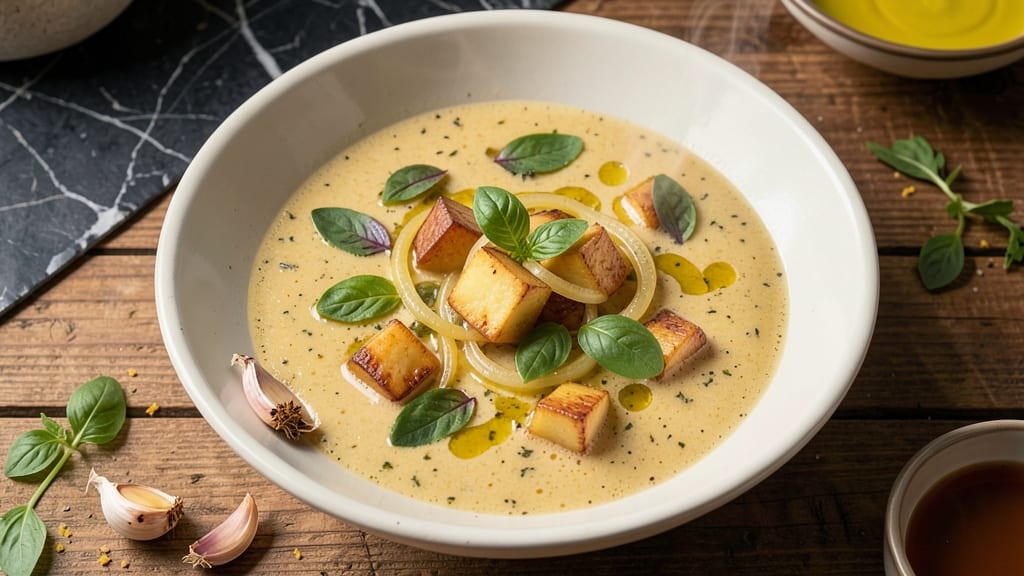
This vegetarian basil soup recipe transforms simple ingredients into a velvety, herb-packed masterpiece that tastes like summer in a bowl. 💚 The secret lies in balancing fresh basil with creamy texture—whether you prefer a silky blend or rustic chunks—while keeping it light enough for any meal.
Perfect for warm evenings or as a comforting starter, this soup delivers restaurant-quality depth without the fuss.
What sets this recipe apart is the dual approach to basil: some is blended for aromatic richness, while fresh leaves are reserved for a bright, garden-fresh finish. Aromatic garlic and shallots form the flavor base, simmered until fragrant before adding vegetable broth and potatoes for natural thickening.
The result is a soup that’s creamy without heavy cream, thanks to a touch of coconut milk or cashew puree for velvety body.
By the time you’re done, you’ll have a golden-hued soup with layers of flavor—earthy, slightly sweet, and herbaceous—finished with a swirl of cream and a sprinkle of fresh basil. The contrast between smooth soup and crisp basil leaves makes every spoonful exciting.
This recipe scales beautifully for gatherings or meal prep, always delivering that perfect balance of comfort and freshness.
For extra depth, consider adding roasted garlic or a splash of white wine to the base, or swap the potatoes for sweet potatoes for natural sweetness. Serve with crusty bread to soak up every last drop of that herb-infused goodness. Let’s make this soup!
Ingredients for basil soup recipe vegetarian
Fresh basil, creamy coconut milk, and aromatic shallots create this velvety vegetarian soup masterpiece.
| Ingredient | Amount | Notes |
|---|---|---|
| Extra-Virgin Olive Oil 🫒 | ¼ cup | High quality, fruity flavor |
| Yellow Onion 🧅 | 1 whole | Medium size, finely diced |
| Garlic Cloves 🧄 | 4 cloves | Peeled, minced for depth |
| Russet Potatoes 🥔 | 2 medium | Peeled, cubed evenly |
| Fresh Basil Leaves 🌿 | 1 ½ cups | Packed, stems removed |
| Vegetable Broth 💧 | 4 cups | Low-sodium preferred |
| Coconut Milk 🥥 | ½ cup | Full-fat for creaminess |
| Cashew Puree 🥜 | ½ cup | Soaked cashews blended |
| Shallots 🧅 | 2 whole | Minced for delicate flavor |
| Lemon Juice 🍋 | 1 tbsp | Freshly squeezed |
| Salt 🧂 | 1 tsp | Kosher or sea salt |
| Black Pepper 🌶️ | ½ tsp | Freshly ground |
| Heavy Cream 🥛 | ¼ cup | For final richness |
The basil is non-negotiable—farmers market basil has the brightest flavor, but grocery store containers work too if the leaves are vibrant and not wilted. Costco or Trader Joe's often carry high-quality basil in bulk. For the potatoes, Russet variety holds its shape best when cubed, but Yukon Golds add natural sweetness. The shallots? Freshly minced makes all the difference—pre-minced from jars lacks depth. If you can't find shallots, extra shallot-flavored onion powder is a decent substitute, though not identical.
No coconut milk? Cashew puree or silken tofu blended with water works beautifully for creaminess. Short on fresh basil? Dried basil at one-third the amount can stretch you, but the flavor won't be as bright. The vegetable broth should be low-sodium—most store-bought versions are packed with salt. For extra depth, roast the garlic before mincing (400°F for 15 minutes) to add a sweet, caramelized note. The heavy cream at the end is optional but adds luxurious texture—half-and-half or coconut cream are great vegan alternatives if needed.
This soup tastes better the next day as flavors meld. Store in an airtight container in the fridge for up to 5 days. For freezing, portion into 2-cup servings and thaw overnight in the fridge—microwaving can make the basil soggy. The cashew puree can be prepped ahead and stored in the fridge for 3 days or frozen for 3 months. Double the batch and freeze half for lazy weeknight dinners.
Why You'll Love This Recipe
- I swear by this trick: slice the potatoes into big chunks—like, really big—and let the soup’s simmer do the work. No food processor, no fuss, just melt-in-your-mouth texture by the end. (Yes, even if you’re the kind of cook who burns onions at the sight of a knife.)
- No-Chop Required: I swear by this trick: slice the potatoes into big chunks—like, really big—and let the soup’s simmer do the work. No food processor, no fuss, just melt-in-your-mouth texture by the end. (Yes, even if you’re the kind of cook who burns onions at the sight of a knife.)
- Garlic-Basil Magic: That first whiff of garlic sizzling in olive oil? Irresistible. But wait—once the basil gets tossed in at the end, the whole kitchen smells like a Tuscan summer. Honestly, I’ve made this soup for people who “don’t like basil,” and they’ve all come back for seconds.
- Lunch or Dinner: Between us, this is my lazy-day hero. Serve it steaming with crusty bread for a quick lunch, or let it cool slightly and pack it for work—it’s still delicious cold. (My roommate’s favorite, weirdly, is the next-day version when the flavors deepen.)
Step-by-step instructions for herb-infused basil soup
This method delivers velvety texture and vibrant basil flavor without overpowering the dish.
🍳 Step 1: Sauté Aromatics Until Fragrant
Heat the 0.25 cup extra-virgin olive oil in a large pot over medium heat until shimmering. Add the 1 whole yellow onion and 2 whole shallots, both finely diced, and cook for 5-6 minutes until softened and translucent.
Add the 4 cloves garlic cloves, minced, and cook for another 30 seconds until fragrant—you should smell that fresh garlic aroma. Be careful not to let it brown, as it can turn bitter quickly. This aromatic base forms the flavor foundation for your entire soup.
🥘 Step 2: Build the Potato Base
Add the 2 medium russet potatoes, peeled and cubed evenly into ½-inch pieces. Pour in the 4 cups vegetable broth and bring to a gentle boil. Once boiling, reduce heat to medium-low and let it simmer for 12-15 minutes until the potatoes are fork-tender.
You'll know they're ready when a knife slides in easily with just slight resistance. If the soup starts to reduce too much, add a splash of water to maintain the proper consistency. This step ensures your soup has a satisfying, hearty texture without being gluey.
👨🍳 Step 3: Blend for Silky Smoothness
Remove the pot from heat and carefully blend the soup using an immersion blender until completely smooth. For a perfectly creamy texture, add the 0.5 cup cashew puree and 0.5 cup coconut milk while blending. This combination creates a luscious, dairy-free creaminess without overpowering the basil flavor.
If you don't have an immersion blender, carefully transfer the soup to a countertop blender in batches, blending until completely smooth. Return the blended soup to the pot and keep it warm over low heat.
🥘 Step 4: Finish with Herb Brightness
Stir in the 1.5 cups fresh basil leaves, packed and stems removed, and let the soup simmer gently for 2-3 minutes. This allows the basil to infuse its vibrant flavor without turning bitter. Add the 1 tbsp lemon juice, 1 tsp salt, and 0.5 tsp black pepper, adjusting seasoning to taste.
For the final touch, stir in the 0.25 cup heavy cream just before serving. This adds a luxurious richness that balances the bright basil notes. The soup should be velvety with a delicate sheen from the cream and coconut milk.
⏰ Step 5: Serve with Fresh Garnish
Ladle the soup into bowls and garnish with additional fresh basil leaves and a drizzle of extra-virgin olive oil. Serve immediately to enjoy the vibrant flavors at their peak. The contrast of warm soup with cool cream and fresh herbs creates a perfect balance of temperatures and textures.
This soup keeps well in the refrigerator for up to 3 days, though the basil flavor will be most vibrant when freshly made. For a lighter version, omit the heavy cream and use an extra splash of coconut milk instead.
Pro Tips For Making Basil Soup Recipe Vegetarian
- SWIM POTATOES FIRST: Peel and cut your russets into 1-inch chunks, then drop them straight into cold, salted water—no waiting for the pot to boil. This keeps them from turning gluey later, and you’ll save 5 minutes of staring at a pot that won’t heat up. (Yes, I’ve done it.)
- SWEAT ONIONS LOW: After adding olive oil, reduce the heat to medium-low and let the onions cook for 8–10 minutes until they’re soft and translucent. Rushing this step means your soup will taste raw and bitter—trust me, I’ve burned through three batches learning this.
- STORE BASIL SMARTLY: Strip basil leaves from their stems, then wrap them loosely in a damp paper towel and stash in a sealed container. This keeps them fresh for up to 5 days—no more wilted, sad leaves when you’re ready to add them at the end.
- SAVOR THE GARLIC: Smash your garlic cloves with the flat side of your knife before adding them to the pot. This releases more flavor without burning, and you’ll taste the difference when you stir it into the finished soup. (I used to just chop it, and it never felt right.)
Troubleshooting perfect results
Mushy Potatoes?
If your potatoes turn out mushy, you likely overcooked them. Keep a close eye on the simmering time—12-15 minutes is ideal for ½-inch cubes. For extra insurance, test one piece early: it should be soft but still hold its shape.
If using older potatoes, soak them in cold water for 10 minutes before cubing to remove excess starch. 🥔
Bland Basil Flavor
Fresh basil needs gentle handling—don’t boil it! Add the leaves after blending and simmer for just 2-3 minutes to preserve their bright flavor. For extra punch, use Thai or Genovese basil (more aromatic than grocery-store varieties).
A pinch of red pepper flakes or 1 tsp fish sauce (vegan-friendly option) can also elevate the depth.
Too Thin or Watery
If your soup lacks body, the potatoes may not have broken down enough. Simmer the base (without blending) for 5-10 minutes longer until the potatoes are fully tender. For instant thickening, stir in 1 tbsp cornstarch mixed with 2 tbsp water and simmer for 2 minutes until clear.
A splash of coconut milk also adds creaminess without altering flavor.
Bitterness from Basil
Overcooking basil releases bitter compounds. Remove the leaves immediately after simmering—don’t let them sit in hot broth. For a smoother flavor, blend the soup before adding fresh basil, then stir in the leaves at the very end.
If bitterness persists, reduce the amount to 1 cup and garnish with extra leaves instead.
Grainy Texture After Blending
Uneven blending often means chunks of potato or basil escaped. For a silky finish, pulse the soup in short bursts with an immersion blender, skimming any foam that rises.
If using a countertop blender, add ¼ cup hot broth to each batch to help emulsify. For stubborn lumps, strain the soup through a fine-mesh sieve before serving.
Lacking Creaminess
If your soup tastes flat, the cashew puree or coconut milk may not have emulsified properly. Blend them directly into the hot soup (not cold) to activate their fats. For extra richness, stir in 2 tbsp nutritional yeast (adds a cheesy note) or a dollop of vegan cream cheese.
A final drizzle of olive oil also enhances mouthfeel without altering flavor. 🥥
Nutrition facts
Frequently asked questions
Can I make this basil soup without coconut milk?
Swap the coconut milk for ½ cup cashew puree or ¼ cup silken tofu blended with ¼ cup water to maintain creaminess. For a lighter option, use ½ cup unsweetened almond milk and thicken with 1 tbsp cornstarch mixed with water. The key is ensuring your base has enough fat to carry the basil flavor.
How do I prevent the basil from turning bitter?
Add fresh basil leaves only at the very end—simmer them for just 2-3 minutes maximum. Overcooking releases bitterness. For extra protection, blend the soup first, then stir in the basil leaves just before serving. Using Thai basil (more aromatic) or Genovese basil also reduces bitterness compared to grocery-store varieties.
What's the best way to store leftovers?
Store in an airtight container in the fridge for up to 3 days. The flavors actually meld beautifully overnight! For freezing, portion into 2-cup servings and thaw in the fridge (never microwave). The texture stays creamy, though the basil flavor will be brightest when freshly made.
Can I make this soup spicier?
Stir in ½ tsp red pepper flakes when simmering the potatoes, or add 1-2 sliced jalapeños (remove seeds for less heat). For depth, a splash of vegan fish sauce (like coconut aminos) or 1 tsp smoked paprika enhances the umami notes. Adjust to taste—start with less and add more gradually.
Is this soup kid-friendly?
Most kids love the creamy texture, but omit the heavy cream for a lighter version. Blend in ½ cup extra coconut milk instead for richness without dairy. Serve with buttered noodles or garlic bread to make it feel like a meal. The mild basil flavor is usually a hit, but you can reduce it to 1 cup if your little ones are sensitive to strong herbs.