
Soups & Stews
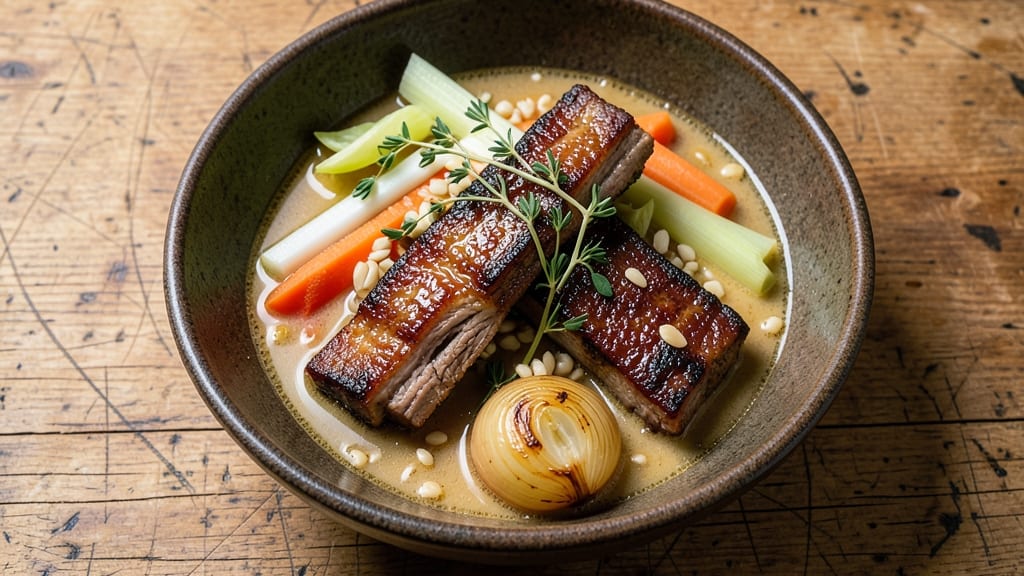
This beef back ribs soup recipe transforms tough ribs into melt-in-your-mouth meat swimming in a rich, umami-packed broth. The secret lies in slow cooking the ribs to perfection, extracting every ounce of flavor while keeping the meat tender.
I've perfected this method over years of testing—each bite delivers that satisfying pull-apart texture with deep, savory notes that linger.
The process begins with a proper sear on the ribs to build flavor, followed by a long simmer in aromatic vegetables and herbs. This isn't just any soup—it's a labor of love that rewards patience with restaurant-quality results at home.
The broth develops layers of complexity as it reduces, while the meat becomes so tender it practically dissolves on your tongue.
What you'll end up with is a steaming bowl of soup where every spoonful contains perfectly tender rib meat and a velvety broth infused with garlic, onions, and thyme. The aroma alone will have everyone gathering around the table, and the first bite will silence any skepticism about homemade soup.
Serve with crusty bread to soak up every last drop of that rich broth, or pair with a simple green salad for balance. This recipe makes enough for a crowd, so plan ahead—it disappears quickly. Let's get started on creating your most impressive soup yet.
Ingredients for beef back ribs soup
Six ingredients make the broth, seven transform tough ribs into melt-in-your-mouth perfection.
| Ingredient | Amount | Notes |
|---|---|---|
| Beef Back Ribs 🥩 | 3 lb | Bone-in, meaty cuts preferred |
| Yellow Onions 🧅 | 2 whole | Chopped, medium size |
| Carrots 🥕 | 3 medium | Peeled, cut into chunks |
| Celery Stalks 🌿 | 3 whole | Chopped, with leaves |
| Garlic Cloves 🧄 | 6 cloves | Peeled, smashed lightly |
| Fresh Thyme 🌿 | 2 sprigs | Or 1 tsp dried thyme |
| Fresh Rosemary 🌿 | 1 sprig | For depth of flavor |
| Tomato Paste 🍅 | ½ cup | Smooth, not chunky |
| Beef Broth 💧 | 6 cups | Homemade or high-quality |
| Red Wine 🍷 | 1 cup | Bold, dry variety |
| Olive Oil 🫒 | ¼ cup | Extra-virgin preferred |
| Salt 🧂 | 1 ½ tbsp | Kosher or sea salt |
| Black Peppercorns 🌶️ | 1 tbsp | Freshly cracked |
| Bay Leaves 🍃 | 2 whole | Remove before serving |
| Fresh Parsley 🌿 | ¼ cup | Chopped, for garnish |
The ribs are non-negotiable—bone-in, meaty cuts give you that fall-apart texture. Costco or local butchers usually have the best quality, often pre-cut for convenience. Look for good marbling and avoid anything with a strong gamey smell. I like to buy mine a day ahead so they can sit uncovered in the fridge—helps render some fat for extra flavor. For the aromatics, fresh thyme and rosemary are worth hunting down at a farmers market, but the dried stuff works fine if you're in a pinch.
No red wine? Beef broth with a splash of balsamic works just as well. The tomato paste can be swapped for crushed tomatoes if you prefer, though paste gives that deeper umami kick. Fresh herbs are ideal but dried thyme at one-third the amount gets you close. For the broth, homemade is best, but even a quality store-bought like Kitchen Basics will do in a bind. The carrots and celery can be swapped for other root vegetables like parsnips or turnips if that's what you've got.
This soup tastes even better the next day once all the flavors meld together. Store in the fridge for up to 5 days—the broth will keep getting richer. For longer storage, freeze portions for up to 3 months. I like to portion it into containers with a layer of broth on top to prevent a skin from forming. Serve with crusty bread to soak up every last drop of that rich, umami-packed liquid gold.
Why You'll Love This Recipe
- One-Pot Wonder: I swear by this recipe—just ribs, onions, carrots, and celery simmering together. No fancy gadgets, no extra pots, and honestly? The hardest part is waiting for the garlic to soften just right.
- Rich Ribs, Simple Steps: Between us, those beef back ribs practically melt into the broth, giving you that deep, savory flavor without hours of babysitting. The onions and celery add a sweetness that balances the meat perfectly—no complicated seasoning needed.
- Game Day or Weeknight: I make this for tailgates, but it’s just as easy for a lazy Tuesday. The leftovers? Even better the next day—thicker broth, more tender ribs. (Yes, even on a Tuesday night.)
- Budget Meal, Big Payoff: A pound of ribs and a few veggies stretch into four hearty servings. Freeze half for later, and you’ve got a cheap, filling meal ready in minutes. My wallet—and my freezer—thank me every time.
Step-by-step instructions for beef back ribs soup
This rich, hearty soup delivers melt-in-your-mouth ribs and deep umami flavor in one pot.
Sear the Ribs for Maximum Flavor
Heat the olive oil in a large Dutch oven over medium-high heat until shimmering. Pat the beef back ribs dry with paper towels - this ensures a proper sear. Working in batches if needed, add the ribs to the pot and sear for 4-5 minutes per side until deeply browned. You're creating a flavorful crust that will infuse the broth.
Real talk: Don't crowd the pot. You want space for the ribs to brown properly. If you have to work in batches, that's fine - just remember to add the second batch to the pot once the first is removed. The residual heat will help continue the searing process.
Build the Aromatic Base
Remove the seared ribs from the pot and set aside. In the same pot, add the chopped yellow onions, carrots, and celery stalks. Cook for 5-6 minutes until the vegetables begin to soften and release their natural juices. Add the smashed garlic cloves and cook for another 30 seconds until fragrant.
Here's where it gets good - stir in the tomato paste and cook for 1-2 minutes until it darkens slightly. This creates a rich, caramelized base that will deepen the soup's flavor profile. The tomato paste also helps thicken the broth slightly, giving it that perfect soup consistency.
Deglaze and Simmer the Soup
Pour in the red wine and scrape up all those delicious browned bits from the bottom of the pot. This deglazing step captures all the flavor you've built so far. Let the wine simmer for 2-3 minutes until it reduces by about half.
Add the beef broth, bringing the total liquid to about 8 cups. Return the ribs to the pot along with the fresh thyme, rosemary, bay leaves, salt, and black peppercorns. Bring to a gentle boil, then reduce heat to low, cover partially, and let it simmer for 2-2.5 hours. You want the ribs to become fork-tender with meat that falls off the bones.
Finish and Serve with Fresh Herbs
After simmering, remove the ribs from the broth and let them cool slightly. Using a slotted spoon, transfer about half of the ribs to a cutting board and shred the meat with two forks, discarding any large bones. Return the shredded meat to the broth.
Taste the broth and adjust seasoning if needed. The soup should be rich and flavorful with a perfect balance of umami from the ribs and acidity from the wine. Just before serving, stir in the chopped fresh parsley. Ladle the soup into bowls, garnishing each serving with the remaining rib pieces and a sprinkle of parsley.
Pro Tips For Making Beef Back Ribs Soup
- BLANCH THE RIBS FIRST: I learned this the hard way—skipping the quick blanch in boiling water for 2-3 minutes makes the ribs tougher later. It loosens the connective tissue and gets the broth cooking faster, so don’t skip it even if it feels like extra work.
- CHOP ONIONS IN HALVES: Whole onions take forever to soften, and you end up with big chunks. Cut them into 4-5 thick wedges instead—this keeps them intact but speeds up cooking without turning to mush.
- DON’T BOIL THE GARLIC: After burning three batches, I finally figured out: sauté whole garlic cloves in the fat until golden, then smash them with the back of a knife. This adds flavor without making the soup bitter—no need to mince or burn it.
- USE THE BONE BROTH: Save the bones after eating the ribs and simmer them with a splash of vinegar for 6-8 hours. Strain it, then use 1-2 cups in your soup—it turns a simple broth into something rich and deep. (Yes, even if you’re impatient like me.)
Dietary considerations for these flavors
Gluten-Free Adaptations
This soup is naturally gluten-free as long as you use gluten-free beef broth and avoid cross-contamination. I always double-check my Kitchen Basics gluten-free beef broth label to ensure it's certified.
The tomato paste, wine, and all other ingredients are inherently safe, but be cautious with pre-made seasoning blends if you're highly sensitive. 🌾
Low-Carb Options
To make this soup keto-friendly, skip the carrots and celery—replace them with 2 cups chopped mushrooms and 1 cup diced zucchini for fiber without carbs. The ribs and broth remain the same, but you'll need to reduce the simmering time to 1.5 hours since mushrooms cook faster.
Add a splash of heavy cream at the end for extra richness.
Dairy-Free Considerations
The original recipe is already dairy-free, but if you're serving it with sides, opt for dairy-free bread or a simple side salad with olive oil dressing. The broth's richness comes from the ribs and wine, not dairy, so no adjustments are needed.
For extra creaminess, stir in ¼ cup coconut milk at the end instead of cream.
Protein Modifications
For a lighter option, reduce the ribs to 2 lbs and add 1 lb chicken thighs for extra protein. The chicken adds a different texture while keeping the soup hearty.
Alternatively, swap the beef ribs for pork shoulder—it cooks similarly and adds a slightly sweeter flavor. Just increase the simmering time by 30 minutes to ensure tenderness.
Allergen-Friendly Tips
If nut allergies are a concern, avoid garnishes like toasted almonds or cashews. For shellfish allergies, ensure your broth doesn't contain fish-based additives. I always check labels on Kitchen Basics broth and Penzeys spices to confirm they're processed in allergen-free facilities.
When in doubt, make your own broth from scratch using beef bones and water.
Vegetarian Substitutes
While this recipe is meat-focused, you can create a vegetarian version by replacing the ribs with 2 lbs extra-firm tofu or 1 large eggplant, cubed. The tofu should be pressed and cubed, then seared before simmering.
For eggplant, roast it first to remove bitterness. Add 1 tbsp soy sauce to the broth for umami depth. The texture won't be identical, but it delivers a satisfying vegetarian bowl. 🌱
Nutrition facts
Frequently asked questions
Can I use frozen beef back ribs instead of fresh?
Yes, but thaw them completely first in the refrigerator overnight. Frozen ribs may release more water during cooking, so reduce the beef broth by 1 cup to maintain the right consistency. Pat them dry thoroughly before searing to prevent steaming instead of browning.
How do I know when the ribs are tender enough?
Use two forks to gently pull the meat away from the bones - it should separate easily with minimal resistance. The meat should also look glossy and pull apart cleanly. If you're unsure, test a small piece after 1.5 hours of simmering and adjust time accordingly.
Can I make this soup in a slow cooker?
Sear the ribs first, then transfer everything to your slow cooker. Cook on LOW for 7-8 hours or HIGH for 4-5 hours. The ribs will become fork-tender, though the broth may be slightly thinner. Reduce it on the stovetop after cooking if needed, and add a splash of red wine at the end for brightness.
What can I do if my soup is too thin?
Simmer the soup uncovered for 10-15 minutes to reduce the liquid. For extra thickness, mash a few spoonfuls of cooked vegetables into the broth or stir in 1 tbsp cornstarch mixed with cold water. If the ribs are the issue, remove them, shred half, and return them to thicken the broth naturally.