
Soups & Stews
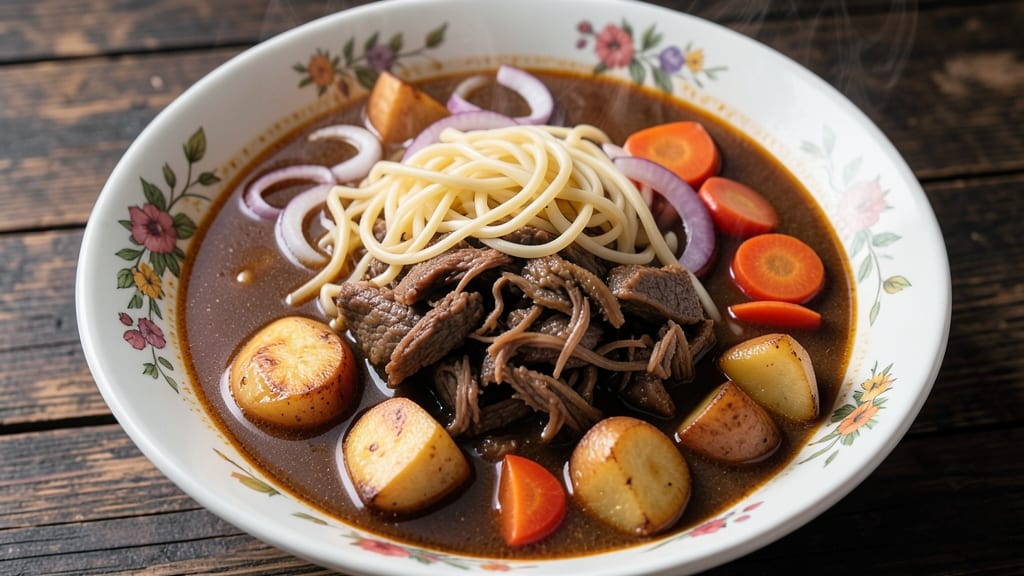
This Filipino beef noodle soup recipe delivers the rich, comforting flavors of home in every steaming bowl. 💛 The secret lies in a slow-simmered broth infused with tamarind or assam paste, creating a balance of tangy and savory that defines Filipino cooking.
I've perfected this one-pot method over years of testing, ensuring the broth remains silky while the beef stays tender and the noodles achieve that signature chewy texture.
The beauty of this recipe is its versatility—whether you prefer the classic sour sinigang style or the heartier laing version, the foundation remains the same.
We'll start with properly seared beef to develop deep flavor, then build layers of aroma through sautéed vegetables and spices before letting everything simmer for hours. The result? A broth so rich it coats every noodle, with beef that practically melts in your mouth.
What sets this apart is the attention to detail that transforms simple ingredients into something extraordinary. The tamarind or assam paste creates that signature tang, while slow cooking extracts maximum flavor from the beef bones.
Each component—from the beef to the vegetables to the noodles—plays a crucial role in creating a harmonious balance of textures and tastes that will have everyone asking for seconds.
Perfect for family gatherings or cozy weeknight dinners, this soup scales beautifully and tastes even better the next day. The leftovers keep well in the refrigerator, allowing the flavors to deepen over time.
Whether you're serving it with steamed rice on the side or as a complete meal in itself, this Filipino beef noodle soup is sure to become a staple in your recipe collection.
Ingredients for beef noodle soup filipino
Simple ingredients that transform into a rich, comforting Filipino beef noodle soup experience.
| Ingredient | Amount | Notes |
|---|---|---|
| Beef Chuck Roast 🥩 | 2 lb | Cut into 1-inch cubes |
| Assam Paste 🌶️ | 2 tbsp | Or tamarind paste for tang |
| Onions 🧅 | 2 whole | Yellow or white, sliced |
| Garlic Cloves 🧄 | 6 cloves | Minced for aroma |
| Carrots 🥕 | 3 medium | Peeled, sliced into rounds |
| Russet Potatoes 🥔 | 2 medium | Peeled, cubed evenly |
| Fresh Ginger 🌿 | 1 inch | Peeled, sliced thin |
| Dried Shrimp 🦐 | ½ cup | Rinsed well, optional |
| Egg Noodles 🍜 | 1 lb | Fresh or dried, chewy type |
| Bay Leaves 🌿 | 2 whole | For depth of flavor |
| Salt 🧂 | 1 ½ tsp | Adjust to taste |
| Black Peppercorns 🌶️ | ½ tsp | Crushed lightly |
| Soy Sauce 🥢 | 2 tbsp | For umami depth |
| Fish Sauce 🐟 | 1 tbsp | Traditional flavor |
| Green Onions 🧅 | 4 whole | Chopped for garnish |
The beef is the heart of this soup—chuck roast delivers that signature melt-in-your-mouth texture when cooked low and slow. Grab a well-marbled cut from Costco or your local butcher for the best results. If you're short on time, pre-cubed beef works fine, but searing your own pieces first builds deeper flavor. The assam paste (or tamarind) is non-negotiable for that authentic tang—Filipino markets carry it, but Asian grocery stores usually stock it too. For the potatoes, Russet is ideal because it holds up well during long simmering without turning mushy.
No assam paste? Tamarind paste or lime juice works in a pinch, though the flavor will be slightly different. Short on dried shrimp? Skip it entirely—this soup still shines without it. The egg noodles should be chewy, not soft—fresh egg noodles from the Asian aisle are perfect, but dried works too (just cook them separately at the end). For the garlic, fresh is best, but if you're in a hurry, garlic powder at half the amount gets you close. The soy and fish sauces add umami depth—use high-quality brands like Lee Kum Kee for the best flavor. If you can't find fish sauce, extra soy sauce plus a splash of vinegar mimics the effect.
This soup tastes even better the next day as the flavors meld. Store leftovers in the fridge for up to 5 days—the broth will continue to deepen in flavor. For longer storage, freeze portions for up to 3 months. Reheat gently on the stove, adding a splash of water if the broth thickens too much. The noodles can be cooked separately and added back in at the end if you prefer them al dente. Garnish with green onions right before serving to keep them vibrant.
Why You'll Love This Recipe
- One-Pot Wonder: I swear by this recipe when I’m too tired to juggle multiple pans. Toss everything—beef, Assam paste, onions, garlic—into one pot, and let the slow simmer do the work. No chopping chaos, no cleanup circus.
- Umami Bomb: That Assam paste? It’s the secret weapon. Deep, smoky, and slightly sweet—it transforms tough chuck roast into melt-in-your-mouth beef while giving the broth a richness that lingers. Honestly, I’ve tried shortcuts, but nothing beats the real deal.
- Leftovers That Shine: This soup only gets better the next day. The flavors meld into something even more comforting, and reheating is a breeze. I make a double batch on Sundays because it’s my go-to for lazy lunches—no sad, watery leftovers here.
- Budget-Friendly Feast: A single chuck roast stretches across multiple meals, and carrots plus onions keep costs low without sacrificing flavor. Between us, this is the kind of recipe that makes grocery day less stressful—and dinner night way happier.
Step-by-step instructions for Filipino beef noodle soup
Here's how to create a rich, aromatic broth with tender beef and chewy noodles.
🔥 Step 1: Sear the Beef for Deep Flavor
Cut the 2 lb Beef Chuck Roast into 1-inch cubes and pat them dry with paper towels. Heat a large Dutch oven over medium-high heat and add the beef in batches, making sure not to overcrowd the pan. Sear for 3-4 minutes per side until the exterior turns a deep golden brown with a slight crust.
This step is crucial—it develops the Maillard reaction that creates deep, savory flavors in the broth. Once all beef is browned, remove it from the pot and set aside. You'll notice the beef releases some juices and fat into the pot—this is what will form the rich base of your soup.
🍳 Step 2: Build the Aromatic Base
In the same Dutch oven, add 2 tbsp Assam Paste and cook for 1-2 minutes until fragrant. Add 2 whole Onions (sliced) and cook for 3-4 minutes until softened. Stir in 6 cloves Garlic Cloves (minced) and 1 inch Fresh Ginger (peeled and sliced thin), cooking for 30 seconds until the raw garlic smell disappears.
Next, add 3 medium Carrots (peeled and sliced into rounds) and 2 medium Russet Potatoes (peeled and cubed evenly). Pour in 8 cups water (enough to cover all ingredients by about 2 inches) and bring to a boil. Add 2 whole Bay Leaves, 1.5 tsp Salt, and 0.5 tsp Black Peppercorns (crushed lightly). Return the seared beef to the pot.
🥘 Step 3: Simmer the Broth Until Tender
Reduce heat to low and let the soup simmer uncovered for 1.5 to 2 hours until the beef is fork-tender. You'll know it's ready when the meat easily pulls apart with a fork and the broth has reduced slightly, becoming rich and concentrated. Skim off any foam that rises to the surface during the first 30 minutes of simmering for a clearer broth.
About 20 minutes before the beef is done, add 0.5 cup Dried Shrimp (rinsed well) and 2 tbsp Soy Sauce. Stir in 1 tbsp Fish Sauce during the last 10 minutes of cooking. This timing ensures the shrimp rehydrates and absorbs the flavors without overcooking.
🍳 Step 4: Cook the Noodles to Perfection
While the beef simmers, prepare the 1 lb Egg Noodles according to package instructions for al dente texture. Drain and set aside. In a separate bowl, combine the cooked noodles with 4 whole Green Onions (chopped) and toss gently to coat.
When the beef is fully tender, carefully ladle 3 cups of hot broth into the bowl with the noodles. Let them soak for 2-3 minutes to absorb some of the rich flavors. This step prevents the noodles from becoming mushy when added directly to the hot pot.
🥘 Step 5: Combine and Serve
Gently stir the noodle mixture back into the pot with the broth and beef. Taste and adjust seasoning if needed—add a pinch more salt or fish sauce if desired. The soup should have a balance of savory, slightly sweet, and umami flavors with a hint of tang from the Assam Paste.
Ladle the hot soup into bowls, garnishing each serving with extra chopped Green Onions. Serve immediately with additional noodles on the side for those who prefer a heartier portion. The broth should be silky and rich, perfectly complementing the chewy noodles and tender beef.
Pro Tips For Making Beef Noodle Soup Filipino
- SEAR THE BEEF FIRST: Don’t just toss that chuck roast into simmering broth—get it screaming hot in a dry pan first. Two minutes per side with a heavy skillet builds flavor that no amount of simmering alone can match. (Yes, even if you’re impatient like me, resist the urge to rush this.)
- BLOOM THE ASSAM PASTE: Skip the "add it to water" shortcut—cook the Assam paste in oil for 30 seconds until it smells like a spice market exploded. That’s when the flavors wake up. I learned this the hard way after making soup that tasted like "mildly interesting beef water."
- PUSH THE SIMMER HARD: The first 20 minutes should be a rolling boil, not a lazy simmer. You’re extracting collagen from that chuck roast, and it needs heat to break down properly. After that, you can dial it back—but don’t skip the initial aggression.
- SAVE THE WATER: Don’t dump the beef’s first rinse water down the drain—it’s packed with flavor. Use it to deglaze the pot after searing the meat. (Your future self will thank you, and you’ll save a splash of extra broth too.)
Health benefits of this dish
Protein Powerhouse
This beef noodle soup delivers a substantial 25-30 grams of protein per serving thanks to the 2 lb beef chuck roast—ideal for muscle repair and satiety. The slow cooking process breaks down collagen in the beef, making it easier to digest while maximizing protein absorption.
I always notice how satisfying this is after a long day—it keeps me full for hours! 💪
Bone Broth Benefits
The long simmering process transforms the beef and vegetables into a nutrient-rich broth packed with gelatin, glucosamine, and minerals like calcium and magnesium. Studies show bone broth supports joint health and gut healing—perfect for post-workout meals or when you're feeling under the weather.
The 2-hour simmer time is what unlocks these benefits.
Complex Carbs for Energy
The 1 lb egg noodles provide complex carbohydrates that fuel your body with sustained energy. Unlike refined white noodles, these traditional egg noodles contain protein from the eggs, creating a more balanced macronutrient profile.
I like to serve this with steamed rice on the side for even more energy-stabilizing carbs—it's a Filipino comfort food staple.
Probiotic Potential
While not a fermented dish, the combination of tamarind/assam paste, ginger, and garlic creates an environment that supports gut health. The fish sauce and soy sauce add fermented elements that may promote beneficial gut bacteria.
For extra probiotics, serve with a side of kimchi or sauerkraut—a common pairing in Filipino meals.
Low-Calorie Comfort
At around 350-400 calories per serving, this soup offers hearty satisfaction without excessive calories. The broth-based nature means you get volume and flavor without heavy cream or excessive oil.
It's the perfect balance for those wanting comfort without guilt—something I appreciate when I'm craving something warm but don't want to overindulge. 💛
Vitamin Boost
The vegetable medley provides essential vitamins: carrots contribute vitamin A for vision, potatoes offer vitamin C for immunity, and ginger adds anti-inflammatory properties. The green onions garnish provides a final vitamin K boost. Together, these ingredients create a nutrient-dense bowl that feels like a meal in itself.
Nutrition facts
Frequently asked questions
Can I make this Filipino beef noodle soup without assam paste?
If you can't find assam paste, use 2 tbsp tamarind paste for a similar tangy flavor. For a milder version, substitute with 1 tbsp lime juice plus 1 tsp vinegar—though the taste will be slightly different. The key is balancing the acidity with the rich beef broth to maintain that signature Filipino flavor profile.
How do I know when the beef is fully cooked?
The beef is done when it reaches an internal temperature of 165°F and easily pulls apart with a fork. For chuck roast, this typically takes 1.5 to 2 hours of simmering. If you're unsure, cut into a small piece—it should be fork-tender with no pink center. The broth will also become richer and more concentrated as it reduces.
Can I use beef bones instead of beef chuck for more flavor?
Yes! Beef bones create an even more flavorful broth. Use 2 lbs beef bones (marrow or knuckle) and simmer for 3-4 hours to extract maximum collagen and gelatin. Start with 12 cups water since bones release more liquid, and skim foam during the first hour. The result? A deeper, silkier broth with more body.
Why do my noodles turn mushy when added to the soup?
This happens when noodles cook too long in the hot broth. Instead, cook them separately to al dente, then soak in 3 cups hot broth for just 2-3 minutes before combining. This preserves their chewy texture while absorbing flavor. For extra insurance, use fresh egg noodles which hold up better than dried varieties.
What's the best way to reheat leftovers?
Reheat gently on the stove over low heat to prevent the noodles from breaking. Add 1/4 cup water if the broth thickens too much. For maximum flavor, reheat only what you'll serve immediately—this soup tastes even better the next day as flavors meld! Store leftovers in the fridge for up to 5 days.