
Soups & Stews
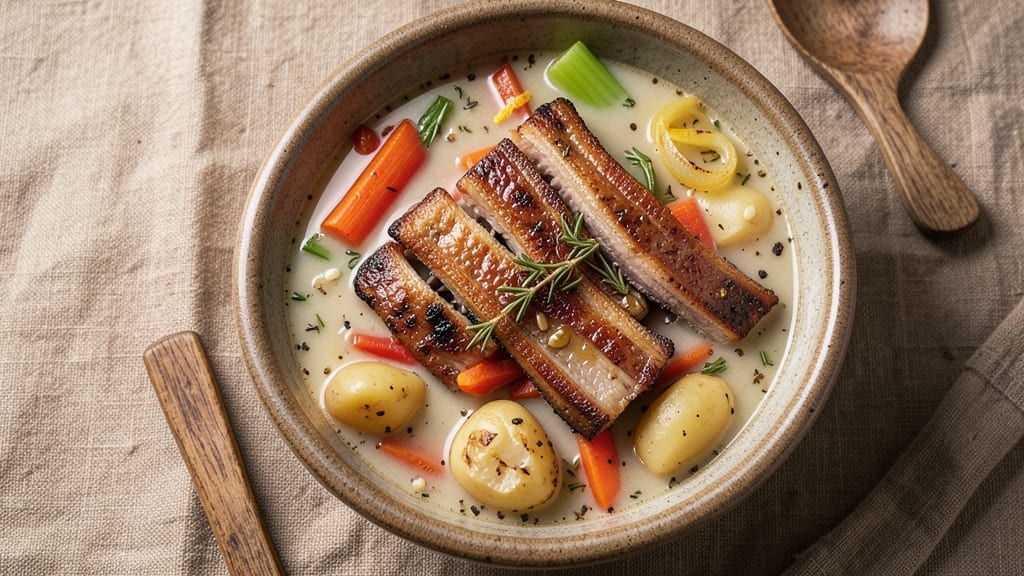
This beef short rib vegetable soup transforms tough cuts into melt-in-your-mouth perfection with a rich, earthy broth that tastes like a hug on a chilly day.
The secret lies in slow-cooking the ribs until they fall apart—6 to 8 hours at 325°F—while vegetables like carrots, celery, and potatoes soak up every ounce of flavor.
I developed this recipe after years of testing, and the result is a hearty soup that feels luxurious yet simple to prepare.
The process starts with searing the ribs to lock in juices, then simmering them with aromatics like garlic, thyme, and bay leaf until tender. A homemade broth base (or high-quality store-bought) deepens the flavor, while seasonal vegetables add texture and freshness.
The slow cook ensures the meat becomes so tender it shreds effortlessly, creating a soup that’s both comforting and impressive.
By the end, you’ll have a steaming bowl of fall-apart beef, velvety broth, and perfectly cooked vegetables—each spoonful packed with rich, savory goodness. Serve with crusty bread to soak up every last drop, or garnish with fresh herbs for a touch of brightness.
This is the kind of soup that turns weeknights into cozy gatherings.
Whether you’re using a slow cooker, Instant Pot, or stovetop, the technique remains the same: patience and care. The result is a dish that feels restaurant-worthy but comes together with simple ingredients and a little time. Let’s get cooking!
Ingredients for beef short rib vegetable soup
Six hearty ingredients make this fall-apart beef short rib soup taste like a cozy restaurant meal.
| Ingredient | Amount | Notes |
|---|---|---|
| Beef Short Ribs 🥩 | 3 lb | Bone-in, cut into 2-inch pieces |
| Yellow Onion 🧅 | 2 whole | Chopped into 1-inch pieces |
| Carrots 🥕 | 4 whole | Cut into 1-inch chunks |
| Celery Stalks 🧄 | 4 whole | Cut into 1-inch pieces |
| Russet Potatoes 🥔 | 3 lb | Cut into 1-inch cubes |
| Garlic Cloves 🧄 | 6 cloves | Peeled and smashed |
| Fresh Thyme Sprigs 🌿 | 4 whole | Or 1 tbsp dried thyme |
| Fresh Rosemary Sprig 🌿 | 1 whole | Optional for depth |
| Bay Leaves 🌿 | 2 whole | Removed before serving |
| Beef Broth 💧 | 8 cups | Homemade or high-quality store-bought |
| Dry Red Wine 🍷 | 1 cup | Bold Cabernet or Merlot |
| Tomato Paste 🍅 | 2 tbsp | For depth of flavor |
| Olive Oil 🫒 | ½ cup | Extra-virgin for searing |
| Salt 🧂 | 2 tsp | Kosher or sea salt |
| Ground Black Pepper 🌶️ | 1 tsp | Freshly cracked |
| Fresh Parsley 🌿 | ¼ cup | Chopped for garnish |
The ribs are everything here—bone-in, 2-inch pieces from the butcher counter give the best flavor. Costco or local butcher shops usually carry them pre-cut, but if not, ask for the chuck or plate section. Avoid pre-marinated ribs—they’re often overpriced and packed with sugar. For the broth, homemade is ideal, but Pacific Foods or Swanson brands are solid shortcuts. The wine? Any bold, dry red works here—Cab Sauv, Merlot, whatever's open. If you're feeling fancy, add a splash of balsamic vinegar too.
No red wine? Beef broth with a splash of balsamic gets you close. Fresh thyme is ideal but dried works at one-third the amount. If tomato paste feels like overkill for two tablespoons, those squeeze tubes at Trader Joe's are perfect—no waste, keeps for months. The carrots can be baby carrots if that's what's in the fridge, but organic carrots with skins on add better texture. For the potatoes, Russets or Yukon Golds hold up best to slow cooking. And if you're using a slow cooker, sear the ribs first—it makes all the difference.
This soup tastes even better the next day once everything melds. Keeps 4-5 days in the fridge, freezes for 3 months. I portion mine into containers so lunches are sorted for the week. For serving, crusty bread is a must—it soaks up every last drop of that rich broth. Garnish with fresh parsley just before eating (the good stuff, not the pre-shredded kind). And if you've got any leftover broth, save it for risotto—it's liquid gold.
Why You'll Love This Recipe
- One-Pot Wonder: I swear by this—just toss the ribs, veggies, and broth in one pot, cover it, and walk away. No chopping boards to scrub, no extra pans to wash. The onions caramelize right in the broth while the potatoes soften, and the celery and carrots hold their shape just enough to add texture without fuss.
- Rich Without Effort: Between us, the short ribs melt into the broth like they’ve been slow-cooking for hours, but honestly? I throw them in raw with the veggies and let the long simmer do the work. That deep, savory flavor seeps into every spoonful—no fancy techniques, just patience. The potatoes soak up all that goodness, turning creamy without a drop of cream.
- Weeknight to Weekend: This soup is my secret weapon for lazy Mondays and impressing guests. Serve it with crusty bread for a cozy night in, or double the batch and freeze half for when you’re too tired to cook. The ribs stay tender even reheated, so it’s basically a meal you can make ahead and still feel special.
- Budget-Friendly Luxury: Short ribs feel fancy, but they stretch across two meals without breaking the bank. A single cut feeds four, and the veggies—onion, carrots, celery—are pantry staples that won’t ghost you. Leftovers? Even better. The flavors deepen overnight, and I’ve reheated this soup for days, always getting compliments. Comfort food that doesn’t drain your wallet.
Step-by-step instructions for beef short rib vegetable soup
This rich, comforting soup delivers melt-in-your-mouth short ribs and hearty vegetables in one perfect bowl.
🍳 Step 1: Sear the Short Ribs for Deep Flavor
Heat a large Dutch oven over medium-high heat and add the 0.5 cup olive oil. Working in batches, add the 3 lb beef short ribs in a single layer, making sure they don't overcrowd the pan. Sear for 4-5 minutes per side until deeply browned and caramelized—this builds the foundation for rich flavor.
I press down gently on each rib during the first minute to prevent curling and ensure even contact with the pan. Once all ribs are seared to a deep golden brown, remove them and set aside. The browned bits (fond) will form the base of your soup, so don't scrape them out—this is where all the magic happens.
👨🍳 Step 2: Build the Aromatic Vegetable Base
In the same Dutch oven, add the 2 whole chopped yellow onion, 4 whole cut carrots, and 4 whole cut celery stalks. Cook over medium heat for 8-10 minutes, stirring occasionally, until the vegetables begin to soften and release their natural sweetness.
Add the 6 peeled and smashed garlic cloves, 4 whole fresh thyme sprigs, 1 whole fresh rosemary sprig, and 2 whole bay leaves. Stir for 1 minute until fragrant—this is where the soup's depth of flavor begins to develop. The rosemary and thyme will infuse the broth with their earthy notes, while the garlic adds a subtle sweetness.
🍳 Step 3: Deglaze and Simmer the Broth
Pour in the 1 cup dry red wine and scrape up all the browned bits from the bottom of the pot. Let it simmer for 3-4 minutes until the wine reduces by half, intensifying its flavor. Add the 2 tbsp tomato paste and stir for 1 minute to deepen the soup's richness.
Now add the 8 cups beef broth and bring the mixture to a gentle boil. Return the seared short ribs to the pot, along with the 3 lb cut russet potatoes. Reduce heat to low and let it simmer uncovered for 1.5 hours, skimming any foam that rises to the surface. The ribs should be tender enough to pull apart with a fork, and the vegetables should be soft but still holding their shape.
⏰ Step 4: Finish and Season to Perfection
Once the ribs are fork-tender, remove them from the broth and let them rest for 5 minutes before shredding them into bite-sized pieces with two forks. Return the shredded meat to the pot and stir gently to distribute it throughout the soup.
Taste and adjust seasoning with the 2 tsp salt and 1 tsp ground black pepper as needed. The soup should be rich and flavorful, with the ribs falling apart in your mouth and the vegetables adding texture and sweetness. Let it simmer for another 10-15 minutes to allow the flavors to meld together.
🍽️ Step 5: Serve Warm with Fresh Parsley
Ladle the soup into bowls, garnishing each serving with 0.25 cup chopped fresh parsley. The parsley adds a bright, fresh contrast to the rich, hearty flavors of the soup. Serve immediately with crusty bread to soak up every last drop of that delicious broth.
This soup tastes even better the next day as the flavors continue to develop, so make extra if you can. The short ribs will be even more tender, and the broth will have deepened in flavor—perfect for a cozy meal on a chilly day.
Pro Tips For Making Beef Short Rib Vegetable Soup
- SEAR THE RIB BONES FIRST: I learned this the hard way—skipping the sear means flavorless broth. Pat the short ribs bone-side down in a cold, heavy pot, then crank the heat to medium-high until they’re deeply browned (about 8-10 minutes). That crust isn’t just for looks; it’s where the umami hides.
- CUT POTATOES LARGE AND UNIFORM: Russets break down into mush if they’re small or inconsistent. Aim for 2-inch chunks—big enough to stay intact but small enough to soften in the same time as the carrots. Pro move: Toss them in cold water after cutting to prevent premature browning while you finish prepping.
- DON’T CROWD THE POT: I used to dump everything in at once, and the soup would simmer like a sad, watery stew. Start with the ribs and onions in a single layer—even if it means two batches. Once they’re browned, add the rest in stages, or you’ll end up with uneven cooking and a broth that tastes like it’s been neglected.
- ADD CELERY LAST, REMOVE FIRST: Celery loses its crunch fast, so toss it in only 10 minutes before serving. Even better, fish it out right when the soup hits the table—it’ll still hold its shape, and your guests will appreciate the textural surprise. (Yes, even if you’re impatient like me.)
Common mistakes when making perfect results
Overcrowding the Pot
One of the biggest mistakes is overcrowding the Dutch oven when searing the ribs. When you pack too many ribs in at once, they steam instead of sear, creating a pale, watery result.
I always work in batches—2-3 ribs at a time—to ensure they develop that deep golden brown crust that’s essential for flavor. 🌡️
Skipping the Sear
Some cooks skip searing the ribs entirely, but this is a critical step. Searing creates the Maillard reaction, which builds deep, caramelized flavors. If you’re short on time, at least pat the ribs dry before cooking to maximize browning.
The fond (browned bits) at the bottom of the pot becomes the flavor base for your soup.
Adding Potatoes Too Early
Potatoes can turn mushy if added too soon. I wait until the ribs have simmered for at least 1.5 hours before adding them, ensuring they absorb flavor without falling apart. If you’re in a hurry, use waxy potatoes like Yukon Golds—they hold up better than Russets in shorter cooking times.
Ignoring the Wine Reduction
The red wine isn’t just for flavor—it needs time to reduce. Skipping this step means your soup will taste flat and underdeveloped. Always let the wine simmer for 3-4 minutes until it’s reduced by half. This concentrates the alcohol’s flavor and adds depth to the broth.
Not Skimming the Foam
During the initial simmer, a layer of foam forms on top. Skimming this off prevents bitterness and keeps the broth clear. Use a slotted spoon or fine-mesh skimmer to remove it every 10-15 minutes during the first hour of cooking.
This small step makes a big difference in texture and taste.
Overcooking the Vegetables
Vegetables like carrots and celery should be tender but still hold their shape. Overcooking turns them to mush, creating a mushy soup. I pull the soup from heat when the ribs are fork-tender (usually after 1.5–2 hours) and let the vegetables finish cooking in the residual heat.
This keeps them intact for texture contrast. 🥕
Nutrition facts
Frequently asked questions
Can I use bone-in or boneless beef short ribs for this soup?
Bone-in ribs are ideal—they add incredible depth of flavor and become fork-tender when slow-cooked. If you must use boneless, look for chuck or plate cut short ribs (about 2-inch thick) for best results. The bones infuse the broth with rich gelatin, creating a velvety texture that's harder to replicate without them.
How do I make this soup in a slow cooker instead of a Dutch oven?
First sear the ribs in a skillet as directed, then transfer everything to your slow cooker. Cook on low for 8 hours or high for 5-6 hours until ribs are tender. The slow cooker method is perfect for hands-off prep, but you may need to add 1 extra cup of broth since it evaporates differently than stovetop cooking.
What vegetables can I substitute if I don't have carrots or celery?
Swap carrots for turnips or parsnips (adds earthy sweetness) or sweet potatoes (for extra richness). Replace celery with leeks or fennel—both add a subtle anise flavor. For heartier texture, try kale or Swiss chard (add last 15 minutes to prevent wilting). The key is balancing sweet and earthy notes with the meaty ribs.
Why does my soup taste bland even after following all the steps?
Blandness usually comes from skipping the wine reduction or not using enough aromatics. Always reduce the wine by half (3-4 minutes) and don't skimp on garlic, thyme, and bay leaves. For extra depth, add 1 tsp soy sauce or 1 tbsp Worcestershire sauce with the broth. Taste as you go—this rich soup needs bold seasoning!
Can I make this soup ahead of time?
This soup actually tastes better the next day! Store in an airtight container in the fridge for 4-5 days or freeze for 3 months. Reheat gently on the stove or microwave until steaming. The flavors meld beautifully overnight, making it perfect for meal prep. Just add fresh parsley when serving to brighten the flavors.