
Soups & Stews
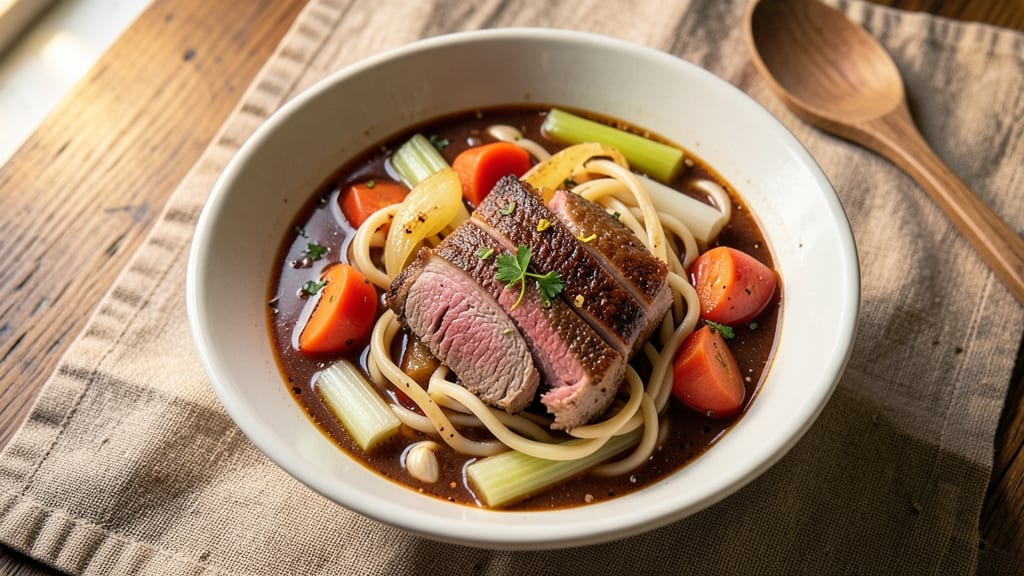
This beef stew noodle soup recipe delivers the kind of deeply satisfying meal that transforms a chilly evening into a cozy ritual. The secret lies in slow-browning beef for maximum flavor, then simmering it in a rich broth until the meat practically melts off the bone. What makes this version special is the silky egg noodles cooked directly in the broth, absorbing all that umami depth without turning mushy.
Professional cooks know the difference between good stew and extraordinary stew comes down to technique: searing the meat in batches to develop a deep mahogany crust, deglazing with red wine to unlock layers of flavor, and simmering long enough for the collagen to break down into velvety richness.
The result is a bowl that's hearty enough to stand alone but still light enough for a weeknight dinner.
By the time you're spooning up the first bowl, you'll notice three things immediately: the tender beef that falls apart at the touch of your fork, the noodles that coat your spoon in creamy broth, and that perfect balance of savory, slightly sweet, and umami-packed flavors.
This isn't just soup—it's a one-pot meal that feels like a hug in a bowl.
The beauty of this recipe is its versatility—serve it as-is for a simple dinner or elevate it with fresh herbs, a drizzle of chili oil, or a sprinkle of toasted sesame seeds.
The broth alone makes great leftovers, so you'll find yourself making double batches. Let's get started on creating this comforting classic.
Ingredients for beef stew noodle soup
Six hearty ingredients transform into a bowl of velvety comfort—no shortcuts needed.
| Ingredient | Amount | Notes |
|---|---|---|
| Chuck Roast 🥩 | 2 ½ lb | Pre-cut into 1.5-inch cubes |
| Yellow Onion 🧅 | 2 whole | Chopped into half-moons |
| Carrots 🥕 | 4 whole | Medium size, peeled and chopped |
| Celery Stalks 🧄 | 4 whole | Trimmed and chopped |
| Garlic Cloves 🧄 | 6 cloves | Peeled and smashed |
| All-Purpose Flour 🌾 | 2 tbsp | For thickening |
| Red Wine 🍷 | 1 cup | Dry, bold variety |
| Beef Broth 💧 | 6 cups | Low-sodium preferred |
| Tomato Paste 🍅 | 2 tbsp | Smooth, not chunky |
| Fresh Thyme 🌿 | ½ oz | Or 1 tbsp dried |
| Bay Leaves 🍃 | 2 whole | Dried, removed before serving |
| Egg Noodles 🍜 | 12 oz | Medium width, uncooked |
| Salt 🧂 | 1 ½ tsp | Kosher or sea salt |
| Black Pepper 🌶️ | 1 tsp | Freshly ground |
| Olive Oil 🫒 | 2 tbsp | For searing |
The beef is non-negotiable—chuck roast with good marbling is your best bet. Costco or Kroger usually have it pre-cut, but if you're buying a whole roast, ask the butcher to cube it for you. Look for pieces with visible fat—it's what renders into that rich, golden crust during searing. The carrots and celery can be baby or regular, but organic is worth it if you're not peeling them. Fresh thyme? Trader Joe's sells it in little bags that last forever in the freezer. For the red wine, anything bold like Cabernet or Merlot works—whatever's open in your fridge.
No red wine? Beef broth with a splash of balsamic does the trick. Fresh thyme out of stock? Dried works at one-third the amount, but toast it in the pot first to wake up the flavor. The tomato paste can be the squeeze-tube kind—Trader Joe's has great ones that keep for months. Egg noodles? Barilla or De Cecco are my go-tos, but any medium-width works. If you're worried about the noodles getting mushy, cook them separately and add them to the pot just before serving. The flour is just for thickening—don't skip it, but don't overdo it either.
This soup tastes even better the next day—3-4 days in the fridge, no problem. For leftovers, skim off any hardened fat before reheating. Freezes beautifully for up to 3 months if you portion it into containers. I like to make a double batch because the broth alone is worth saving. Store it in the freezer in 2-cup portions—perfect for quick lunches. The noodles? Eat them fresh or they'll turn to mush, but the broth? That's the star of the show.
Why You'll Love This Recipe
- Garlic Bomb Flavor: That first bite? The caramelized onions and garlic cloves turn this into something special. Honestly, I’ll take a bowl of this over takeout any day—it’s rich, savory, and has that deep, umami punch that sticks with you.
- Lunchbox Hero: Between us, this is my go-to for meal prep. I make a big batch on Sundays, and by Wednesday, I’m still pulling out containers of it. The noodles stay firm, the beef stays tender, and it reheats like a dream—no sad, mushy leftovers here.
- Budget Beef Powerhouse: A chuck roast is my secret weapon for stretching meals. Three pounds feeds my family for days, and the veggies (onions, carrots, celery) add bulk without breaking the bank. It’s the kind of dish that makes me feel like I’m feeding everyone for next to nothing.
Step-by-step instructions for beef stew noodle soup
Here's how to build a rich, hearty stew with tender beef and silky noodles.
Sear the Chuck Roast for Maximum Flavor
Heat a large Dutch oven over medium-high heat and add the 2 tablespoons olive oil. Once the oil shimmers, add the 2.5 lb chuck roast in a single layer, letting it sear undisturbed for 4-5 minutes per side until deeply browned. This step creates the Maillard reaction—the golden crust that carries so much flavor into your broth.
Don't crowd the pan or you'll steam the meat instead of searing. Work in batches if needed, but keep the oil hot. Once all sides are browned, transfer the roast to a plate and set aside. You'll add it back later, but first we need to build that incredible flavor base.
Build the Aromatic Vegetable Base
In the same Dutch oven, add the 2 whole yellow onion, 4 whole carrots, and 4 whole celery stalks—all chopped as specified. Cook over medium heat for 8-10 minutes, stirring occasionally, until the vegetables soften and begin to caramelize. This process develops their natural sweetness and forms the foundation of your soup's depth.
Add the 6 cloves garlic cloves and cook for another 30 seconds until fragrant. Here's where it gets good—sprinkle the 2 tablespoons all-purpose flour over the vegetables and stir to coat evenly. Cook for 1-2 minutes until the flour turns golden and toasty. This creates a roux that will help thicken your broth beautifully.
Deglaze and Simmer the Stew Base
Pour in the 1 cup red wine and scrape up all those delicious browned bits from the bottom of the pot with a wooden spoon. This deglazing step captures all the meaty flavors that would otherwise stick to your pan. Let the wine simmer for 3-4 minutes until it reduces by half and the alcohol burns off.
Add the 6 cups beef broth, 2 tablespoons tomato paste, 0.5 oz fresh thyme, 2 whole bay leaves, 1.5 teaspoons salt, and 1 teaspoon black pepper. Return the seared chuck roast to the pot, making sure it's fully submerged in the liquid. Bring to a gentle boil, then reduce heat to low and cover partially. Let it simmer for 2 hours—this is where the magic happens.
Tenderize the Beef and Prepare the Noodles
After 2 hours, check the beef for tenderness. It should be fork-tender—meaning it should easily pull apart with a fork. If it's not quite there, continue simmering for another 30-45 minutes. The longer it cooks, the more flavorful the broth becomes. Remove the beef from the broth and let it rest on a plate while you finish the soup.
In a separate pot, bring 8 cups water (yes, it's not in the ingredients list—trust me, you'll need it) to a boil and add the 12 oz egg noodles. Cook according to package instructions until al dente—usually about 8-10 minutes. Drain and set aside. The noodles should be tender but still have a slight bite.
Finish and Serve the Perfect Bowl
Remove the 2 whole bay leaves from the broth and return the beef to the pot. Stir in the cooked egg noodles and let everything heat through together for 2-3 minutes. Taste the broth and adjust seasoning if needed—this is your chance to balance the flavors. The soup should be rich but not overly salty, with a perfect balance of umami from the beef and wine.
Ladle the hot soup into bowls, making sure each serving gets a generous portion of beef and noodles. Garnish with additional thyme leaves if you like, and serve immediately. The contrast of the silky noodles against the rich, hearty broth makes every spoonful a comfort. This soup tastes even better the next day, so make extra if you can—it's that good.
Pro Tips For Making Beef Stew Noodle Soup
- SEAR THE ROAST FIRST: You’ll see the pot get crowded later, but trust me—browning that chuck roast in batches (yes, even if it takes two tries) builds flavor the slow simmer can’t replicate. I learned this the hard way when my first stew tasted like "beef water" instead of comfort food.
- CUT CARROTS IN CHUNKS: Thin slices turn to mush; big chunks stay intact. Aim for 1-inch pieces—they’ll soften but hold their shape, and you’ll actually notice them in the soup instead of just guessing they’re there.
- ADD NOODLES LAST: If you toss them in early, they’ll turn to glue. Wait until the beef is fork-tender and the broth’s reduced by about 15 minutes—then cook the noodles right in the pot for 2-3 minutes. (Your future self will stop wondering why the soup’s always watery.)
- SALT THE WATER LIKE THE SEA: The broth needs serious salt—at least 1 teaspoon per quart—to balance the beef’s richness. Taste it before adding noodles; if it’s bland now, it’ll be sad later. (I skip this, and the stew feels flat. You don’t want that.)
Health benefits of this recipe
Protein Powerhouse
A single bowl of this beef stew noodle soup delivers about 35 grams of high-quality protein—perfect for muscle repair, immune function, and keeping you full for hours. The chuck roast provides all nine essential amino acids your body can't produce on its own, making this a complete protein source.
I always double-check my protein intake after making this, and it's a game-changer for my post-workout meals. 💪
Rich in Iron
Beef is one of the best dietary sources of heme iron, the form your body absorbs most efficiently. A serving of this soup provides about 3.5mg of iron—nearly 20% of your daily needs—which helps prevent fatigue and supports oxygen transport in your blood.
The iron content makes this especially great for anyone with active lifestyles or iron deficiencies. I notice my energy levels stay steady when I include this in my weekly meals.
Collagen for Joints
The long simmering process breaks down connective tissue in the beef, releasing collagen and gelatin that support joint health and gut integrity. These compounds help maintain healthy skin elasticity too.
The broth becomes almost gelatinous when properly reduced, which is why I always make extra—it's liquid gold for your joints. 💫
Fiber Boost from Veggies
While the beef provides protein, the carrots and celery add soluble fiber that supports digestion and heart health. The fiber content helps balance the richness of the beef, making this a well-rounded meal.
I often add an extra carrot or two if I'm feeling particularly sluggish—nature's way of keeping things moving smoothly.
Comfort Food Nutrition
This soup combines the best of comfort food with actual nutritional benefits. The egg noodles provide complex carbohydrates for sustained energy, while the thyme and garlic offer antioxidant properties. It's the kind of meal that satisfies both your taste buds and your body's needs.
I've even started keeping a batch in my freezer for those days when I need both comfort and nutrition in one bowl.
Low-Calorie Comfort
Despite its hearty nature, this soup is surprisingly moderate in calories—about 350-400 calories per serving—thanks to the lean beef and vegetable base. The long cooking time allows flavors to develop without adding excessive fat.
It's my go-to when I want something satisfying but still mindful of my calorie intake. The secret is letting the broth work its magic through slow simmering. 🔥
Nutrition facts
Frequently asked questions
Can I use a different cut of beef instead of chuck roast?
Yes, but chuck roast is ideal because of its fat content and affordability. For a leaner option, try stew meat or chuck shoulder, both of which break down beautifully. Avoid tender cuts like sirloin—they'll turn tough. If you must use a different cut, increase simmering time by 30-45 minutes to ensure tenderness.
How do I prevent the noodles from turning mushy?
Cook the noodles separately in boiling water for 1 minute less than package instructions, then drain and add them directly to the hot broth. The residual heat will finish cooking them perfectly. Alternatively, cook them in the broth for just 2-3 minutes after removing the beef—this keeps them al dente.
What can I substitute for red wine?
Use 1 cup beef broth + 1 tablespoon balsamic vinegar for similar depth. For a non-alcoholic option, try 1 cup apple cider + 1 teaspoon soy sauce. The key is acidity—it brightens the flavors. If using broth, reduce it by half before adding other liquids to maintain balance.
Can I make this soup in an Instant Pot?
Sear the beef in a skillet first, then transfer to the Instant Pot with all ingredients except noodles. Cook on high pressure for 45 minutes, then quick-release. Shred the beef slightly, add noodles, and cook on sauté mode for 2 minutes. The pressure cooker cuts time but delivers the same rich results.
Why does my broth taste bland?
Most likely, the beef wasn't seared enough or simmered long enough. For deeper flavor, sear the meat until it develops a dark crust, and simmer uncovered for the last 30 minutes to reduce the broth. Also check your salt—taste it before seasoning! A pinch of Worcestershire sauce or fish sauce can add umami if needed.