
Soups & Stews
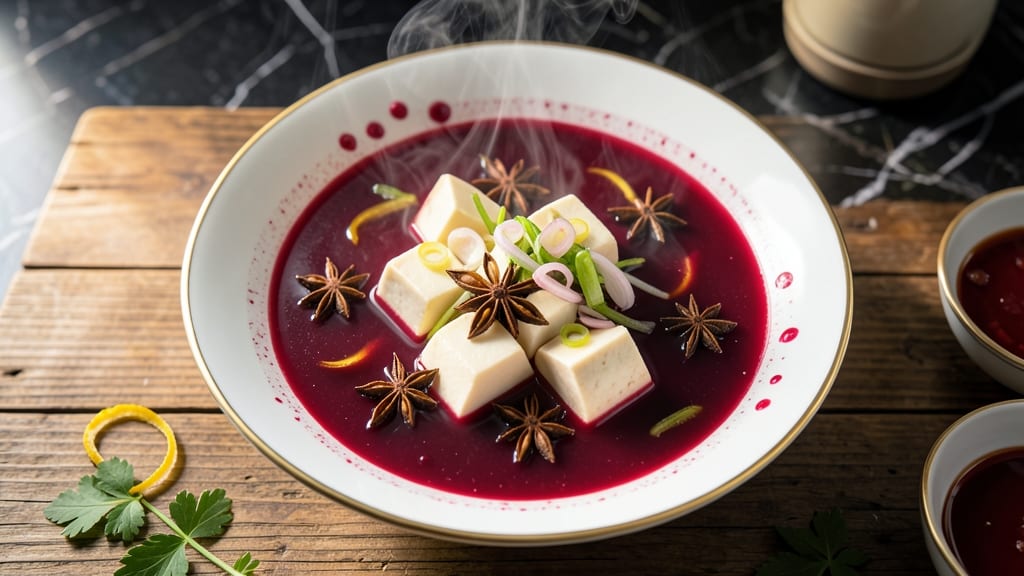
This Chinese-style beetroot soup delivers velvety depth with star anise and ginger—transforming humble beets into a restaurant-worthy dish. 💛 The secret lies in slow-cooked aromatics that infuse the broth with complex warmth, while silken tofu and tender vegetables create a harmonious balance.
I developed this recipe after realizing how often Western beet soups missed the layered flavors found in traditional Chinese cooking.
The foundation begins with stir-frying ginger, garlic, and star anise until fragrant, then simmering everything in a rich broth until the beets become tender and the flavors meld.
Unlike Western versions that rely on cream or heavy seasoning, this soup achieves its luxurious texture through proper cooking techniques and quality ingredients. The result is a velvety yet light soup that's both comforting and sophisticated.
What sets this apart is the combination of earthy beets with aromatic Chinese spices, creating a soup that's deeply satisfying yet still refreshing. The star anise adds a subtle licorice note, while fresh ginger brings bright warmth.
Perfect for chilly evenings or as a starter that impresses guests, this soup proves Chinese-style beetroot can be just as elegant as its Western counterparts.
Serve it with steamed rice for a complete meal or pair with crispy spring rolls for added texture. The recipe is naturally vegetarian-friendly but can easily accommodate meat additions. Here's how to create this velvety masterpiece that captures the essence of Chinese comfort food.
Ingredients for beetroot soup recipe chinese style
These aromatic ingredients transform simple beets into a velvety Chinese-style masterpiece.
| Ingredient | Amount | Notes |
|---|---|---|
| Beetroots 🍠 | 2 medium | Peeled, cut into chunks |
| Silken Tofu 🧀 | 14 oz | Package (14 oz), cubed |
| Star Anise 🌿 | 2 whole | Whole pods, crushed |
| Fresh Ginger 🧄 | 1 ½ inch | Thinly sliced, peeled |
| Garlic Cloves 🧄 | 4 cloves | Minced for aroma |
| Vegetable Broth 💧 | 4 cups | Low-sodium preferred |
| Sesame Oil 🫒 | 1 tbsp | For finishing touch |
| Soy Sauce 🥢 | 1 tbsp | Dark soy for color |
| Rice Vinegar 🍶 | 1 tbsp | For brightness |
| Green Onions 🧅 | 3 whole | Sliced, for garnish |
| Carrots 🥕 | 2 medium | Peeled, sliced |
| Daikon Radish 🥕 | 1 small | Peeled, sliced |
| Cornstarch 🌾 | 1 tsp | For thickening |
| Salt 🧂 | ½ tsp | To taste |
| White Pepper 🌶️ | ¼ tsp | Freshly ground |
Star anise is the soul of this soup—buy whole pods from Asian markets or bulk spice sections for the best flavor. Whole Foods or Trader Joe's carry quality star anise, but check the expiration date since it loses potency quickly. Fresh ginger is non-negotiable here; the bright, zesty flavor can't be replicated with powder. For the tofu, silken tofu from the Asian aisle is ideal—it dissolves beautifully into the broth, creating that signature silky texture. Look for packages labeled 'silken' or 'soft tofu' to avoid the firmer blocks meant for stir-frying.
No star anise? Anise seeds or fennel seeds work in a pinch, but the flavor won't be identical. Substituting powdered ginger is possible, but use half the amount and toast it lightly first for better aroma. For the broth, low-sodium vegetable broth is key—you'll be adding soy sauce later, so you don't want extra salt. The carrots and daikon can be swapped for other root vegetables like parsnips or turnips if needed, but keep the total volume consistent. If you're short on sesame oil, toasted sesame seeds sprinkled at the end give a similar nutty finish.
This soup tastes even better the next day as the flavors meld further. Store it in the fridge for up to 5 days in an airtight container. For freezing, portion into single-serving containers—it reheats beautifully and maintains that velvety texture. The tofu and vegetables can be prepped ahead and stored separately for 3 days before assembling. Garnish with fresh green onions right before serving to keep that vibrant touch.
Why You'll Love This Recipe
- No Chopping Nightmare: I swear by this—just peel and slice the beets, then let the pot do all the work. The ginger and garlic go straight into the pot whole, and the star anise? One drop-in spice that transforms everything.
- Silken Tofu Magic: That creamy, delicate tofu doesn’t just sit there—it melts into the soup like a secret weapon. Warm, fragrant broth meets cool, silky texture, and honestly? It’s the kind of balance that makes you want to eat it straight from the pot.
- Leftover Goldmine: This soup actually improves the next day. The flavors meld deeper, and the tofu soaks up all the goodness. I freeze portions too—just reheat, and it’s like fresh soup again. (Yes, even on a Tuesday night.)
- Budget-Friendly Luxury: Beets and tofu are cheap, but the star anise and fresh ginger make it feel special. I’ll be real: it’s the kind of meal that tricks people into thinking you slaved over it, when really, you just stirred a pot.
Step-by-step instructions for beetroot soup Chinese style
Here's how to create a velvety Chinese-style beetroot soup with aromatic depth.
🍳 Step 1: Sauté Aromatics Until Fragrant
Heat a large pot over medium heat and add the 1.5 inch fresh ginger and 4 cloves garlic cloves. Sauté for 1-2 minutes until the ginger becomes translucent and the garlic releases its aroma. Here's the thing—you want the garlic to just barely turn golden, not brown, or it'll taste bitter.
Add the 2 whole crushed star anise and stir for 30 seconds to infuse the oil with their warm, licorice-like flavor. This aromatic base forms the soul of your soup, so don't rush this step. The star anise will dissolve completely as it cooks, leaving behind its essential oils.
🍳 Step 2: Cook Vegetables Until Tender
Add the 2 medium carrots, 1 small daikon radish, and 2 medium beetroots (all prepped as specified) to the pot. Stir to coat with the aromatic oil, then pour in the 4 cups vegetable broth. Bring to a gentle boil, then reduce heat to medium-low and simmer uncovered for 20-25 minutes until all vegetables are fork-tender.
You'll know they're ready when a knife slides in easily with just light resistance. The beetroots should be completely soft but not falling apart. If you notice the soup reducing too quickly, add ½ cup water to maintain the proper consistency for blending.
🥘 Step 3: Blend Until Silky Smooth
Remove the pot from heat and let the soup cool slightly for 5 minutes. This cooling period prevents the soup from splattering when you blend. Transfer 3 cups of the soup to a blender (you'll blend in batches to avoid overfilling). Add the 14 oz cubed silken tofu to the blender along with the soup.
Blend until completely smooth, about 30-45 seconds. The silken tofu will create that signature velvety texture. Here's a pro tip: if the soup seems too thick after blending, add 1-2 tablespoons of hot broth at a time until you reach your desired consistency. Return the blended soup to the pot and keep it warm over low heat.
🍳 Step 4: Season and Finish the Soup
Return the blended soup to the pot and stir in the 1 tbsp soy sauce, 1 tbsp rice vinegar, 0.5 tsp salt, and 0.25 tsp white pepper. Taste and adjust the seasoning—you want a balance of sweetness from the beets, umami from the soy sauce, and brightness from the vinegar. The white pepper adds a subtle warmth that complements the star anise.
In a small bowl, mix the 1 tsp cornstarch with 2 tablespoons cold water to create a slurry. Slowly whisk this into the soup while stirring constantly. Let it simmer for 2-3 minutes until it thickens slightly but remains smooth. The soup should coat the back of a spoon but still be light enough to pour easily.
🍽️ Step 5: Garnish and Serve
Ladle the soup into bowls and drizzle each serving with ½ teaspoon sesame oil. The sesame oil adds a nutty aroma and rich finish that ties all the flavors together. Garnish each bowl with ½ of the sliced green onions, distributing them evenly for color and freshness.
Serve immediately while hot. The contrast between the smooth, velvety texture and the bright green onions creates a visually stunning dish. Each spoonful should deliver the earthy sweetness of the beets, the aromatic warmth of the star anise, and the subtle umami from the tofu and soy sauce. This soup pairs beautifully with steamed rice or as a light but satisfying main course.
Pro Tips For Making Beetroot Soup Recipe Chinese Style
- Boil Beets Whole First: I used to peel and chop them raw, thinking it saved time—big mistake. Boil whole beets for 30-40 minutes until fork-tender, then peel and cube. This keeps the soup silky smooth and prevents that gritty texture from raw beet fibers.
- Toast Star Anise Hard: Don’t just drop it in. Toast the star anise in a dry pan over medium heat for 30 seconds until fragrant—it deepens the anise flavor dramatically. Crush it lightly after topping the soup, so the aroma hits you immediately.
- Slice Ginger Thinly: Thick ginger chunks just sit there. Use a mandoline or sharp knife to slice it paper-thin—this way, it infuses the broth without overpowering the delicate beetroot flavor. (Yes, even if you’re impatient like me.)
- Add Tofu Last: Silken tofu turns rubbery if simmered too long. Heat the broth until just before serving, then gently fold in the tofu cubes. They’ll warm through in 2-3 minutes without falling apart—no one likes a mushy tofu surprise.
Regional styles of this beetroot soup recipe chinese style
Cantonese Comfort
In Cantonese cuisine, this soup often appears as a winter warmer called "chì shǔ tāng" (赤薯汤). The key difference is adding dried shiitake mushrooms (soaked and sliced) to the broth during simmering—this adds umami depth that balances the earthy beets.
I like to toast the mushrooms in the same pot with the ginger and garlic for extra aroma. Serve with steamed rice congee for a heartier meal, especially during colder months. 🥄
Sichuan Spice Twist
For a Sichuan-inspired version, add 1 tbsp chili oil (store-bought or homemade) and 1 tsp Sichuan peppercorns (lightly toasted) to the aromatics. The peppercorns add a subtle numbing sensation that pairs beautifully with the sweet beets.
Garnish with crushed peanuts and extra chili flakes for texture and heat. This version works well as a spicy starter before a main course. 🌶️
Shanghai Silken Smooth
Shanghai-style versions prioritize ultra-smooth texture, often using potato starch instead of cornstarch for thickening. Replace the cornstarch with 1 tsp potato starch mixed with water. Shanghai cooks also frequently add a splash of Shaoxing wine (about 1 tsp) when simmering the vegetables for extra complexity.
The result is a soup so velvety it almost feels like a silken broth. 💫
Fujian Herbal Infusion
Fujian cuisine incorporates mountain herbs like goji berries or dried longan for natural sweetness. Add 1 tbsp dried goji berries (soaked in warm water) to the simmering vegetables. The berries infuse the broth with a delicate floral note that complements the beets' earthiness.
For an extra touch, garnish with fresh cilantro instead of green onions—a signature Fujian herb. This version feels lighter yet equally comforting. 🌿
Modern Fusion Adaptations
For a contemporary twist, try adding 1 cup baby bok choy (chopped) during the final 5 minutes of simmering. The bok choy adds a fresh crunch that contrasts the smooth soup.
Another modern approach is using miso paste (about 1 tsp white miso) instead of soy sauce for a deeper, fermented umami. Both adaptations work beautifully in vegetarian-friendly versions while keeping the Chinese soul intact. ✨
Nutrition facts
Frequently asked questions
Can I substitute regular tofu for silken tofu in this recipe?
Regular tofu won't work here—the recipe relies on silken tofu's delicate texture to create that signature velvety consistency. If you must substitute, use extra-firm tofu pressed and cubed, but blend it thoroughly and expect a slightly thicker result. For best results, stick with silken tofu from the Asian grocery section.
How do I make this soup spicier?
For heat, add ½ tsp red pepper flakes or 1 tsp chili crisp to the finished soup. For a Sichuan-style kick, toast 1 tsp Sichuan peppercorns with the ginger and garlic, then strain before adding broth. Garnish with extra chili oil or crushed red pepper for heat on top.
Can I make this soup without star anise?
Yes! Replace star anise with ½ tsp ground anise seeds or 1 cinnamon stick. For a similar aromatic depth, try 1 bay leaf plus ¼ tsp fennel seeds. The flavor won't be identical, but these alternatives provide warmth and complexity.
Is this soup naturally gluten-free?
Yes, as written, this recipe is gluten-free. Just ensure your soy sauce is tamari (gluten-free) and check your vegetable broth for gluten additives. The cornstarch slurry can be replaced with arrowroot powder for a certified gluten-free thickener.
Why did my soup turn out too thick?
Over-blending or using too much cornstarch creates thickness. For a smoother texture, blend in batches and add 1-2 tbsp hot broth at a time. If it's still too thick, stir in 2-3 tbsp warm water while reheating. The soup should coat the back of a spoon but still be pourable.